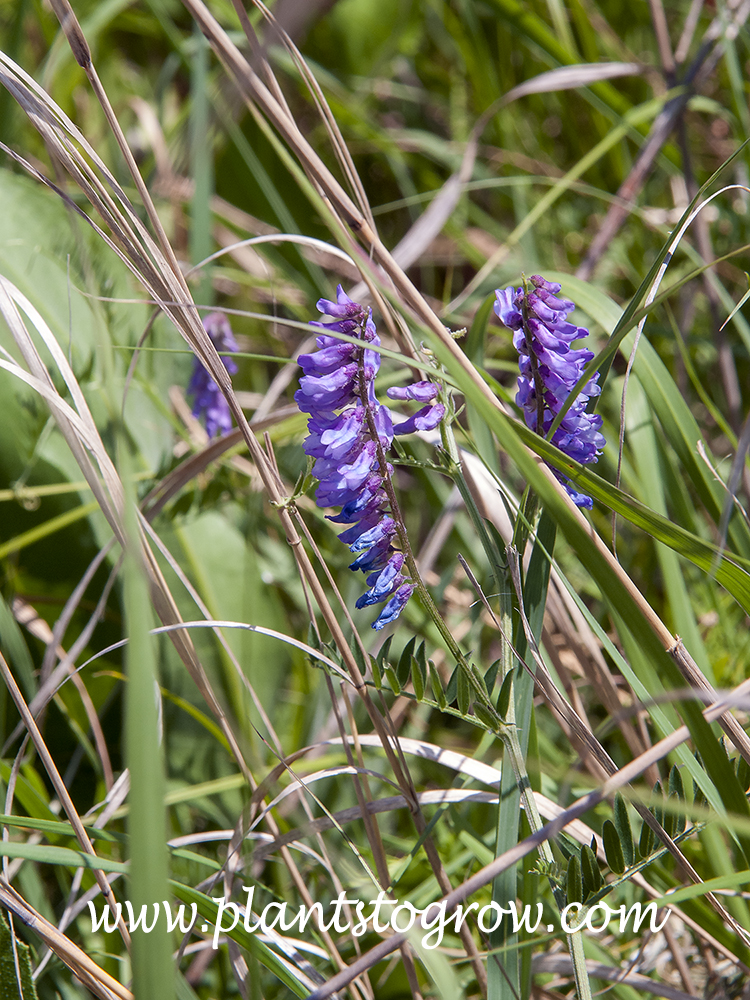
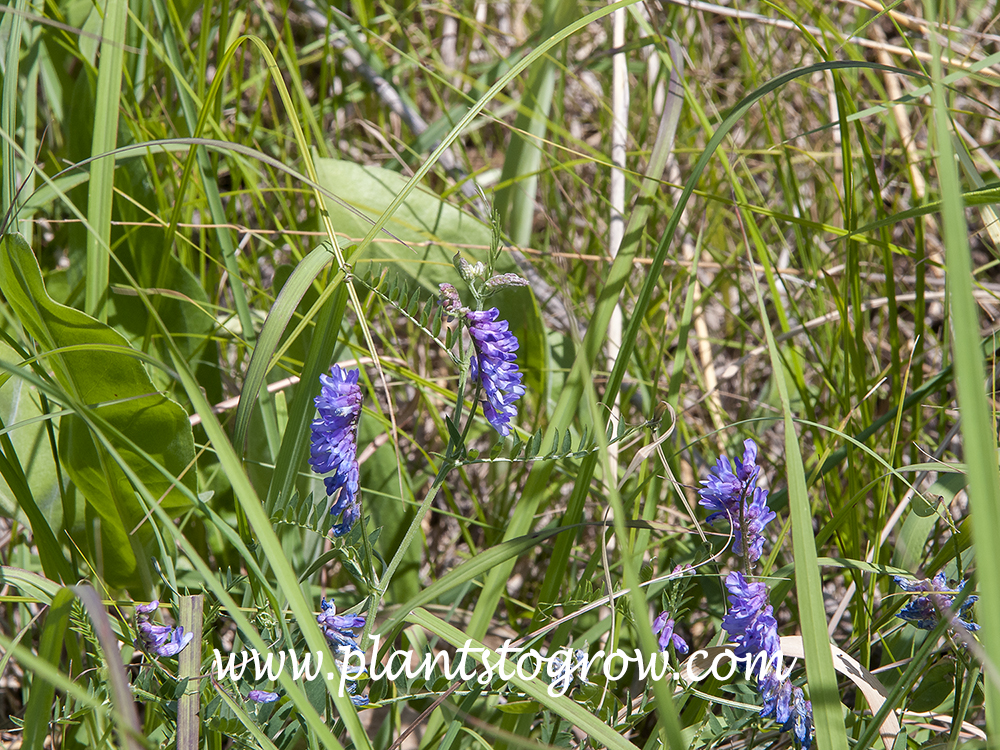
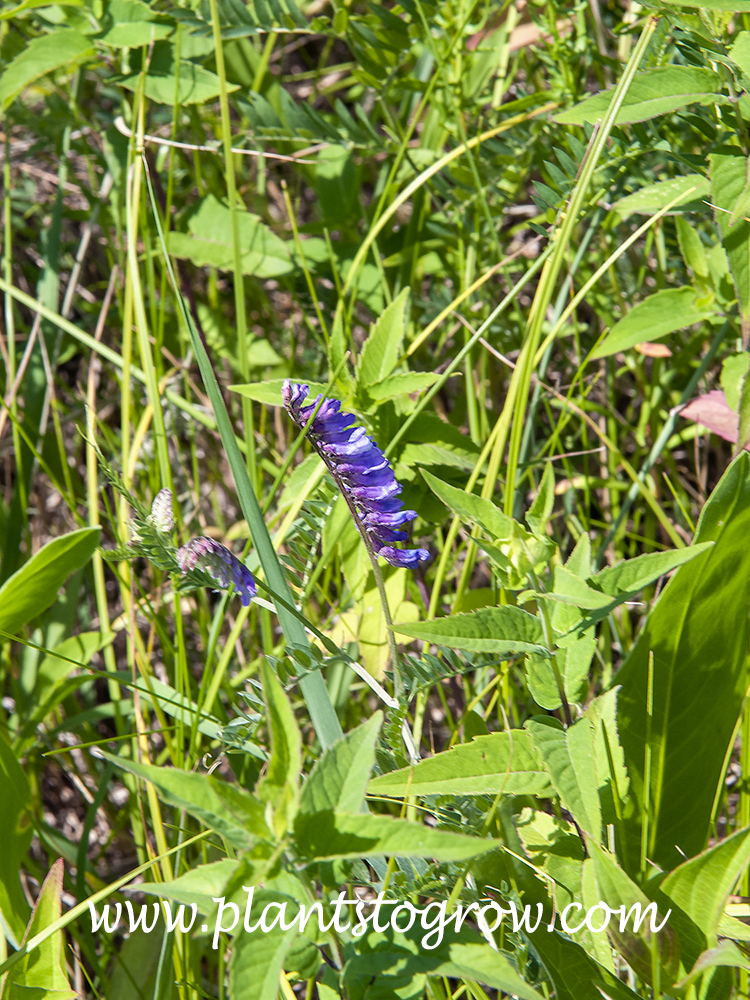
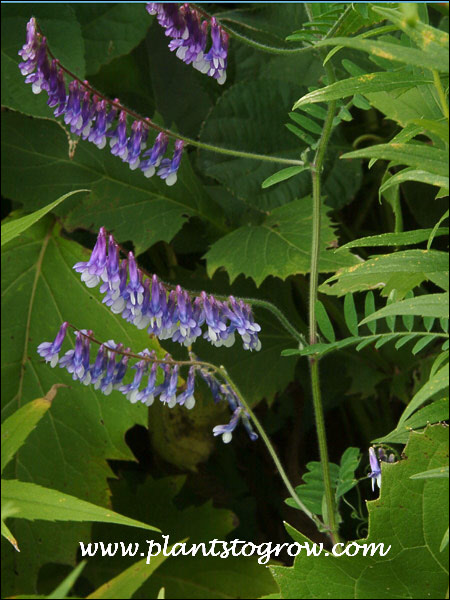
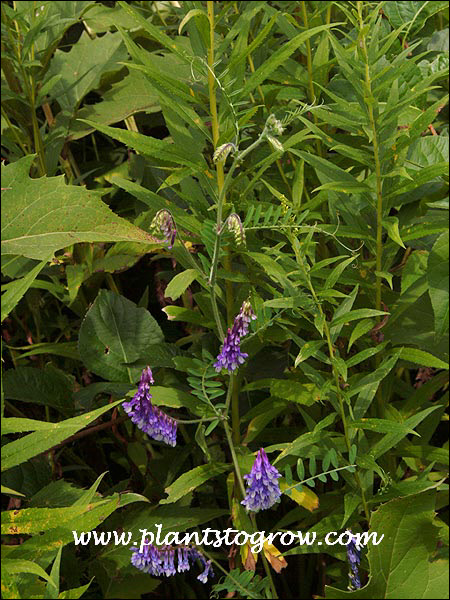
| Description | Hairy Vetch (Vicia villosa) A sprawling member of the Pea family. |
|---|---|
| Plant Type | Wild Flowers |
| Hardiness Zone | 5 |
| Sunlight | full to partial sun |
| Moisture | prefers moist conditions but found in average to dry. |
| Soil & Site | Prefers fertile, loamy soils. Found growing in black soil prairies, grassy meadows, along rivers, in woodlands, edges of croplands, abandon fields, etc. |
| Flowers | one-sided raceme, 5-20 nodding tubular flowers and the color varies from pink to blue-violet. anatomy of a typical pea flower, lives as an annual or biennial |
| Fruit | flat-sided pea pod containing several rounded seeds. |
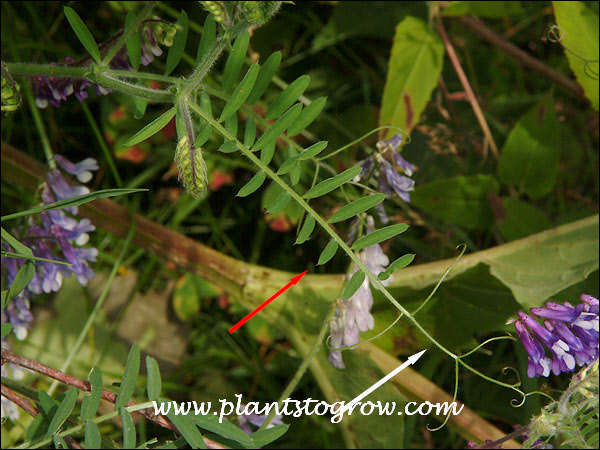
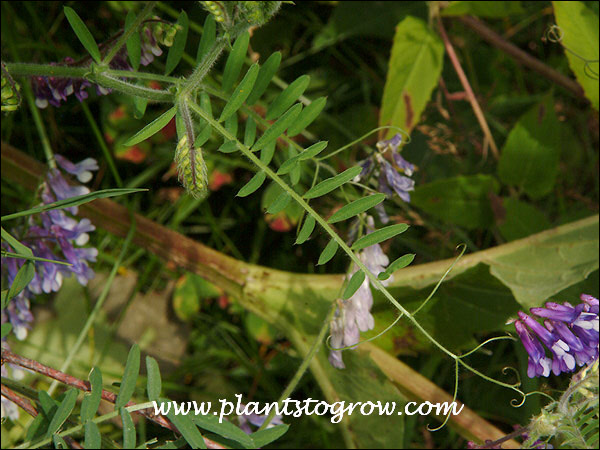
| Leaves | alternate, compound, 8-12 pairs of leaflets, smooth margins, small pointed tips and have a terminal tendril, central stalk of the leaf has white hairs |
| Stems | rhizomes forming colonies |
| Dimensions | 1-3 feet tall and is sprawling needed to be supported by other plants |
| Propagation | Seeds need to be inoculated with the proper strain of Rhizobium bacteria. |
| Misc Facts | Brought to the United States from Europe and was and still is used to some extent as a forage crop. AKA: hairy vetch, fodder vetch or winter vetch |
| Notes & Reference | #153-Illinois Wild Flower (www.illinoiswildflowers.info), #191-Minnesota Wild Flowers (www.minnesotawildflowers.info) |

Cart