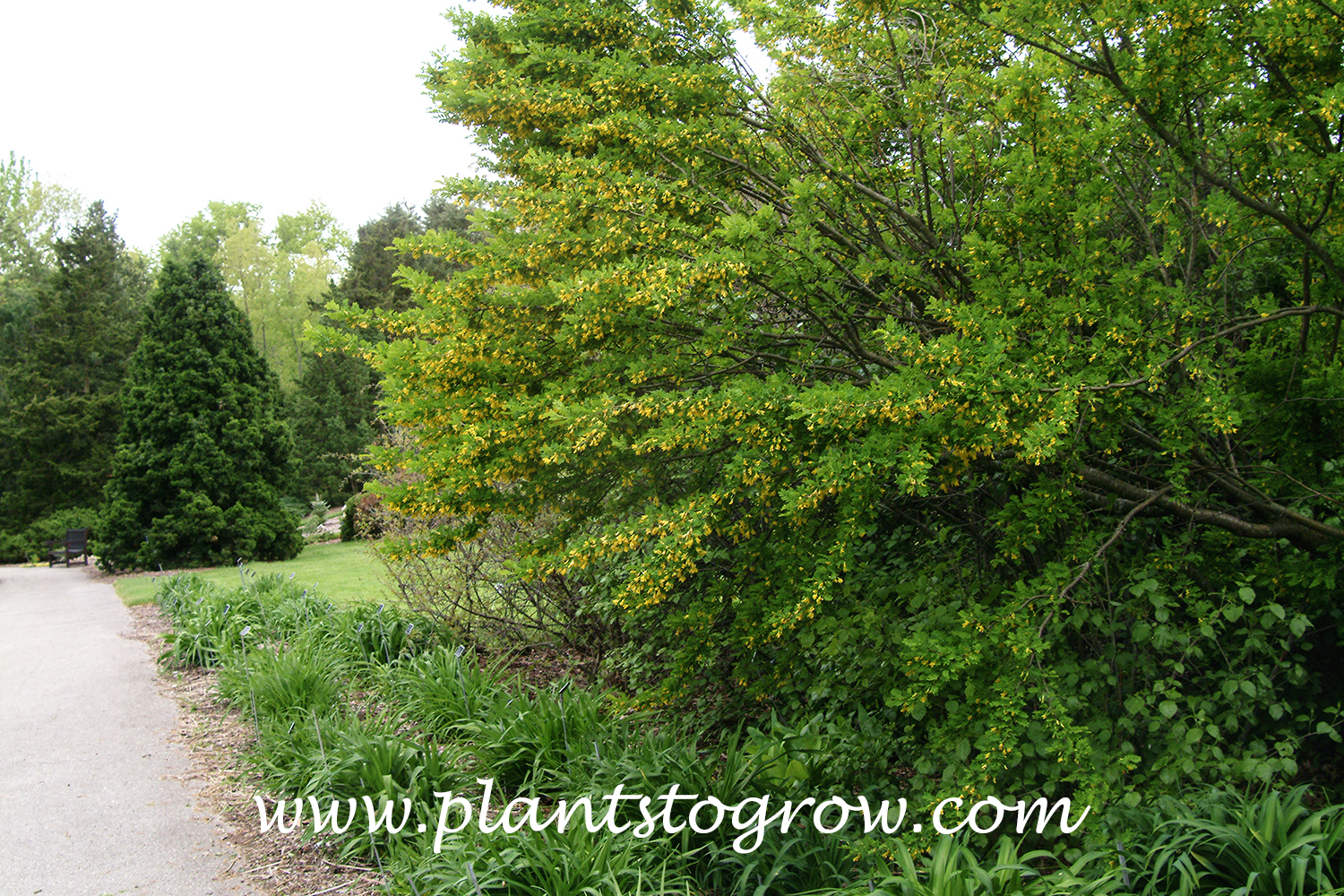
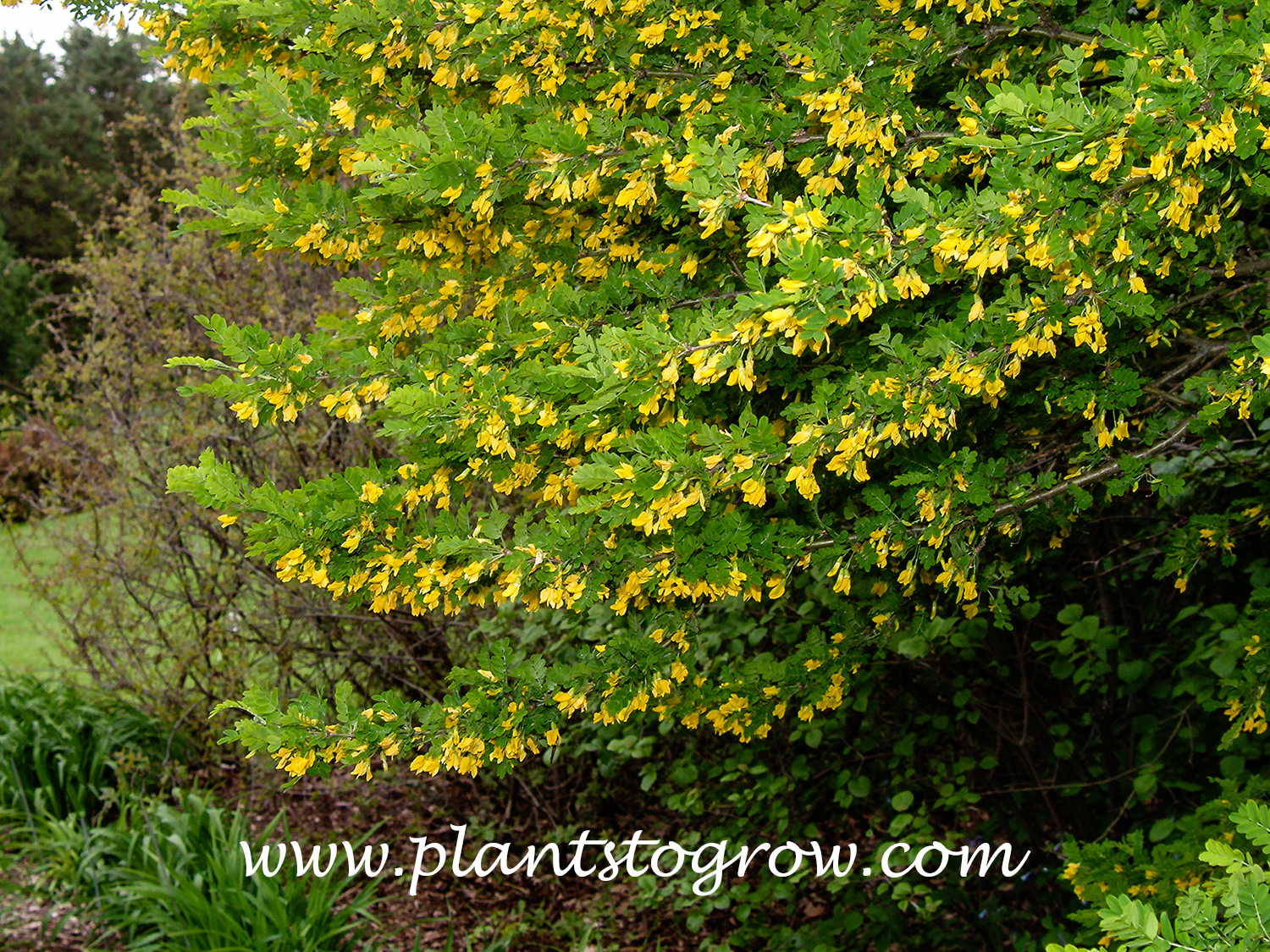
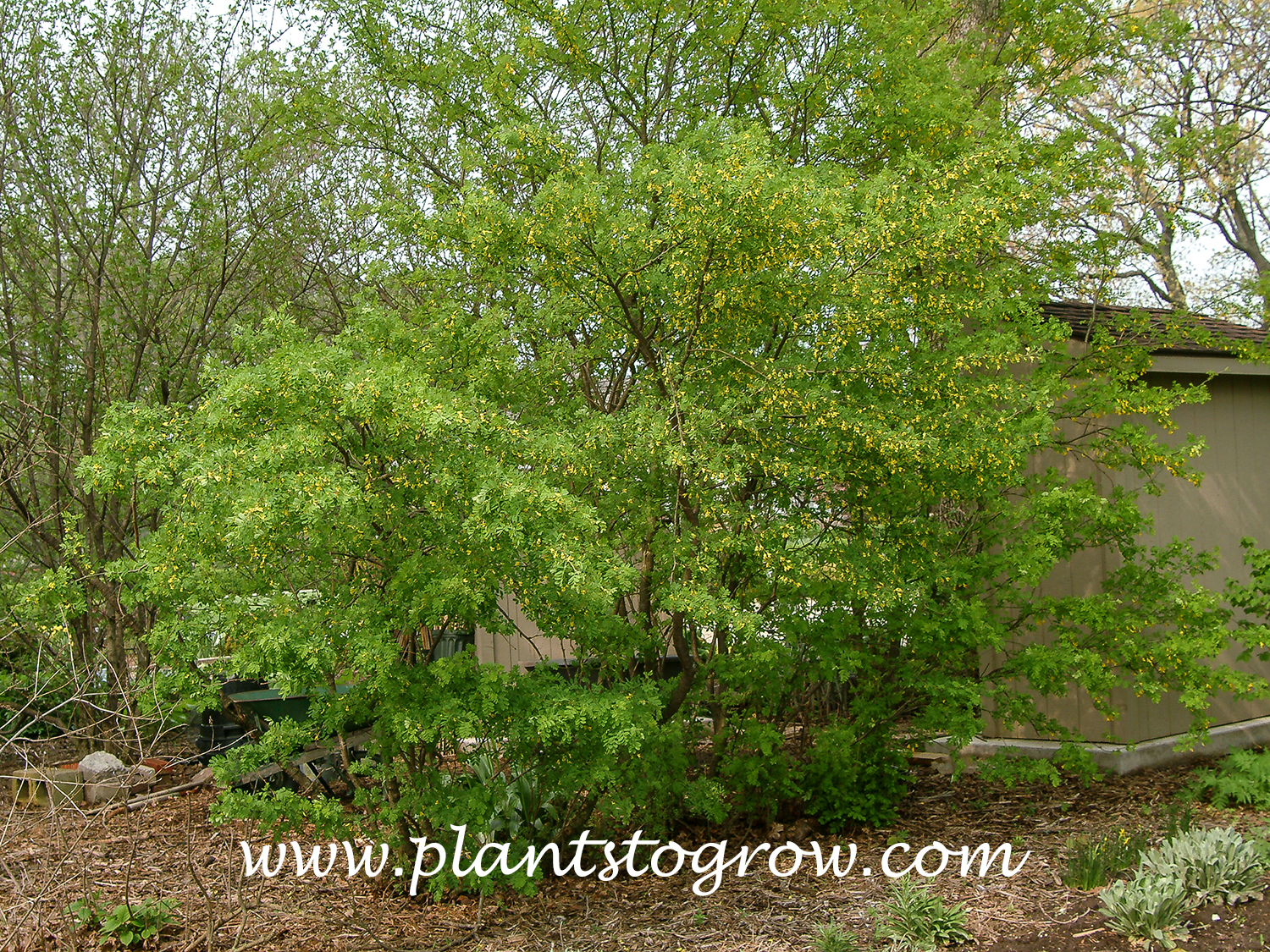
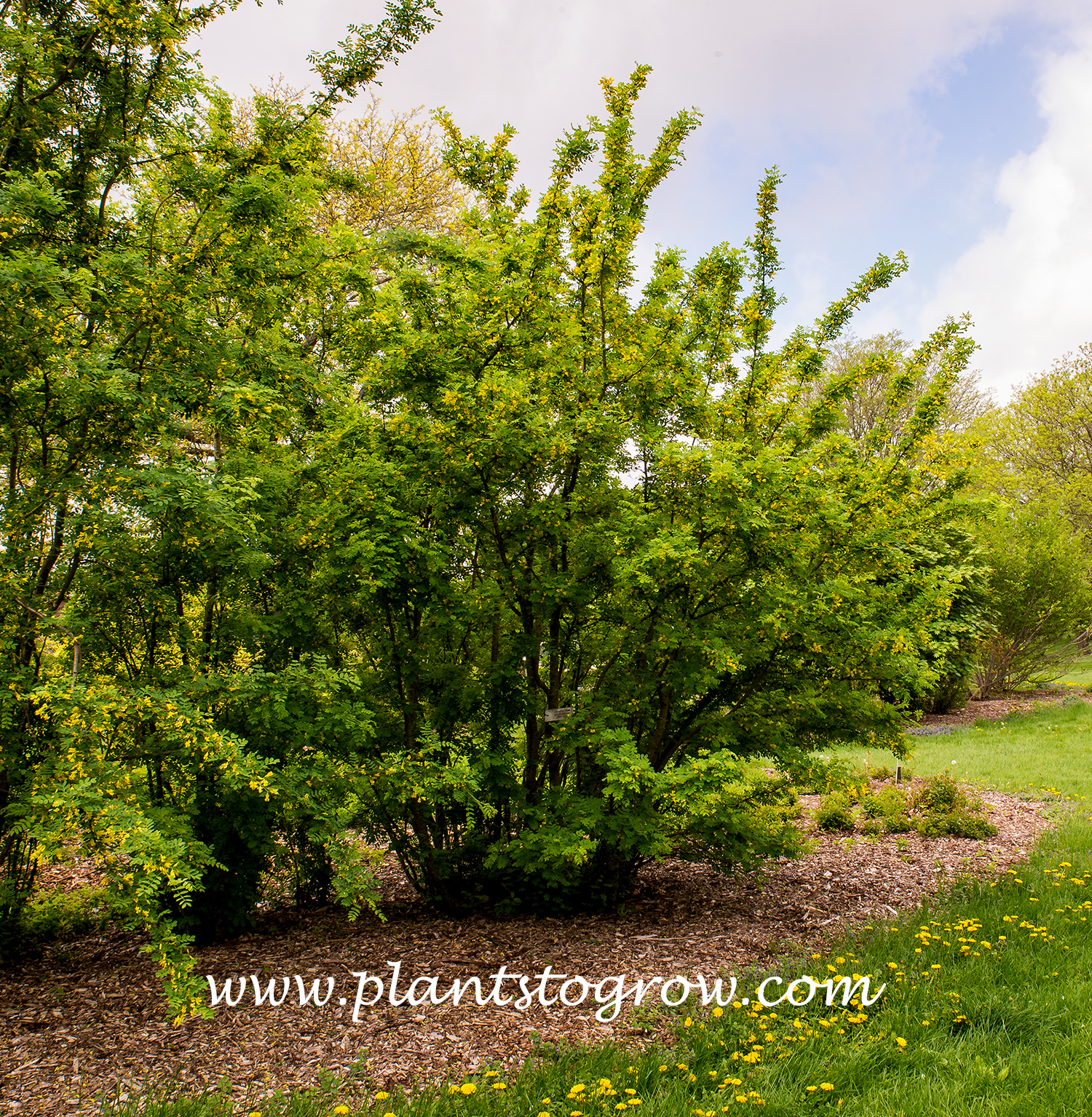
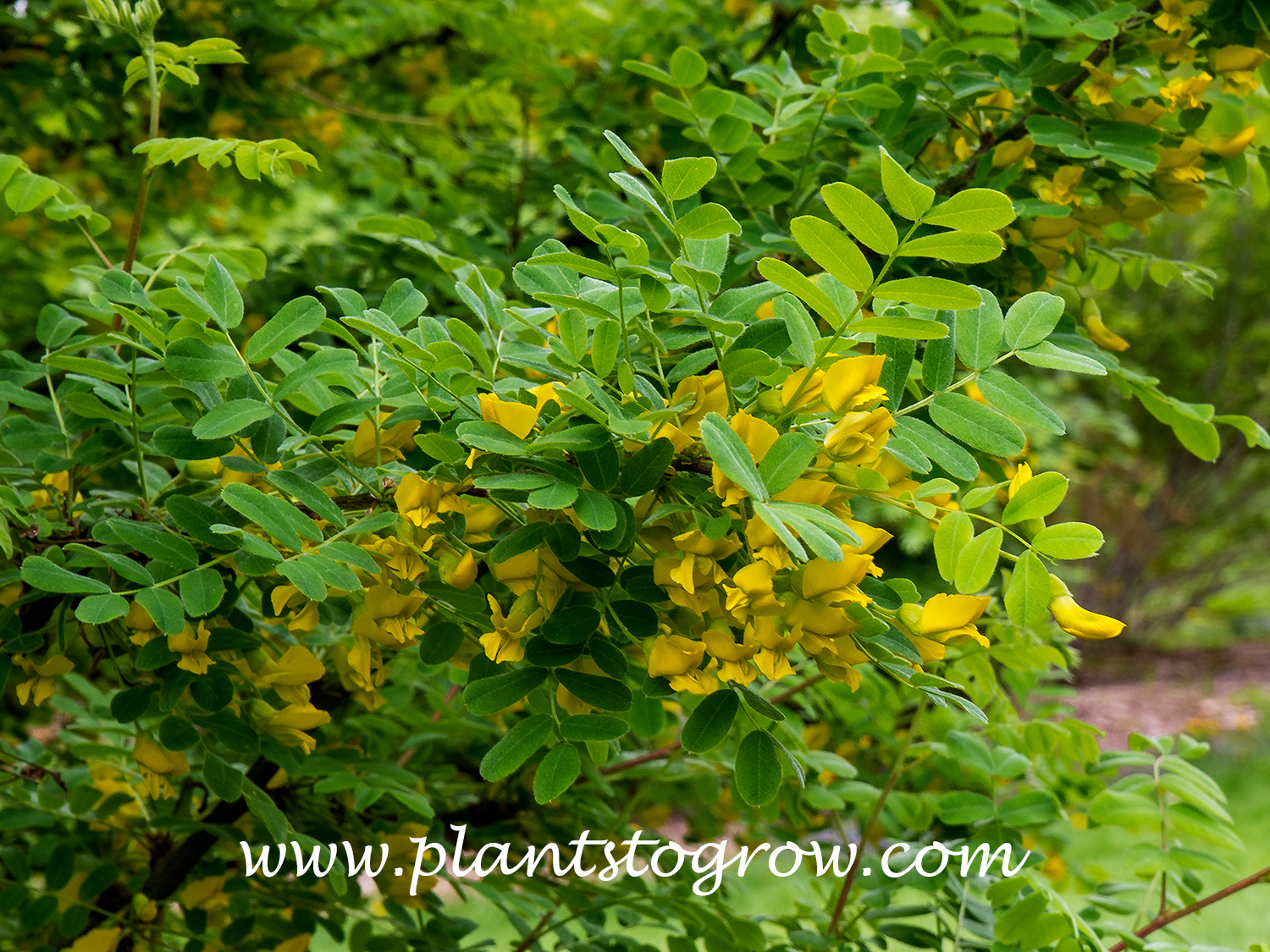
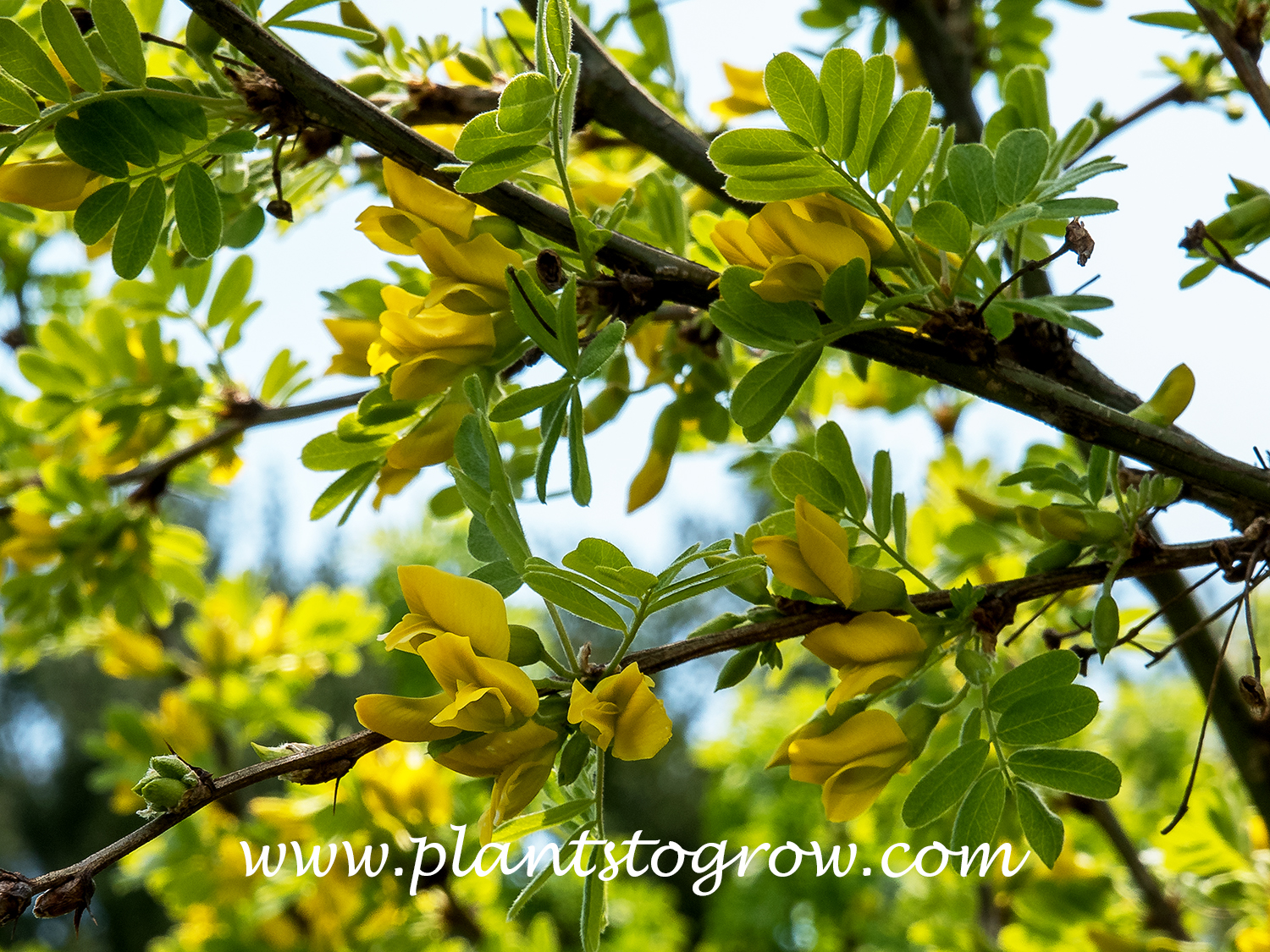
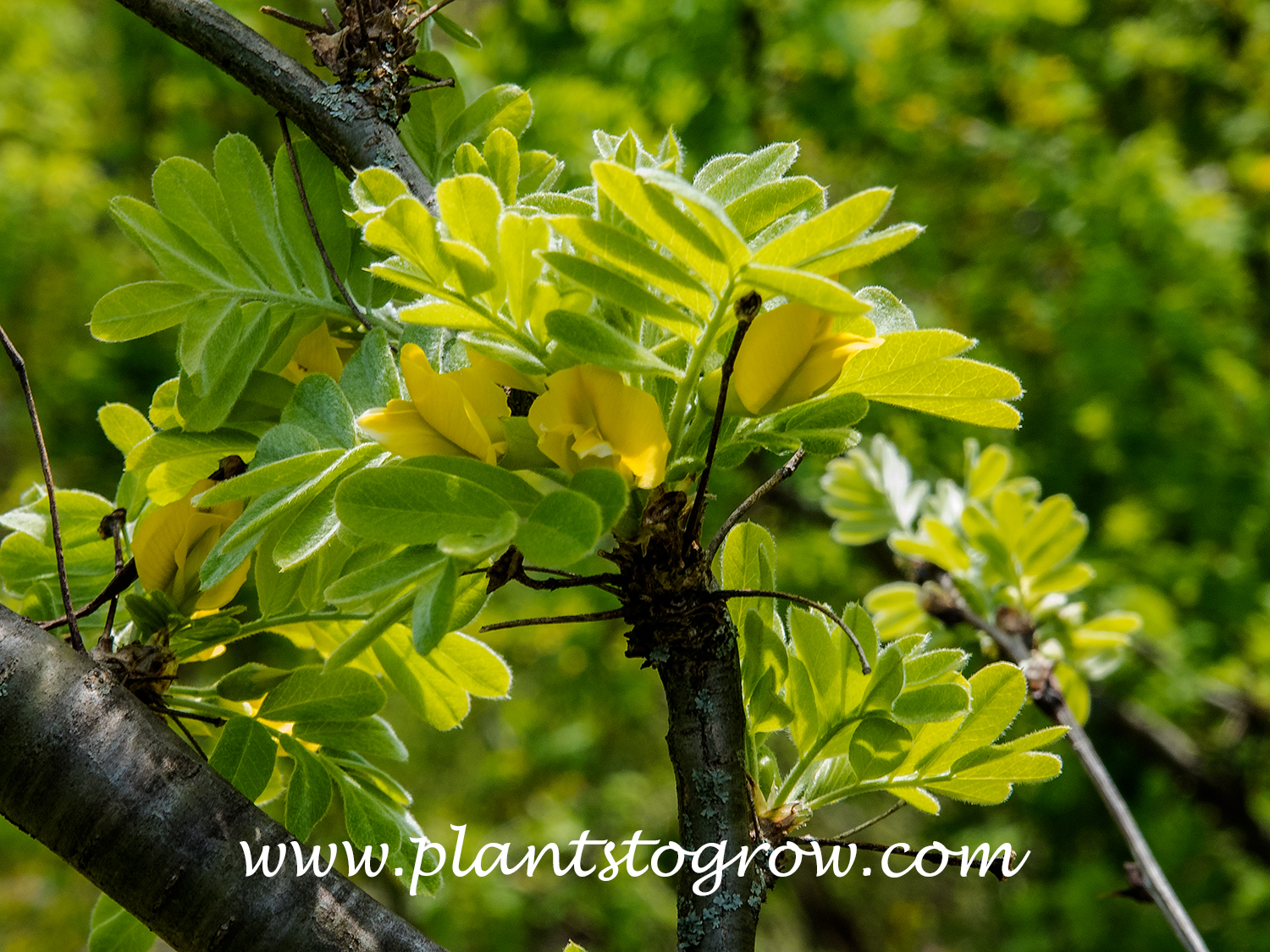
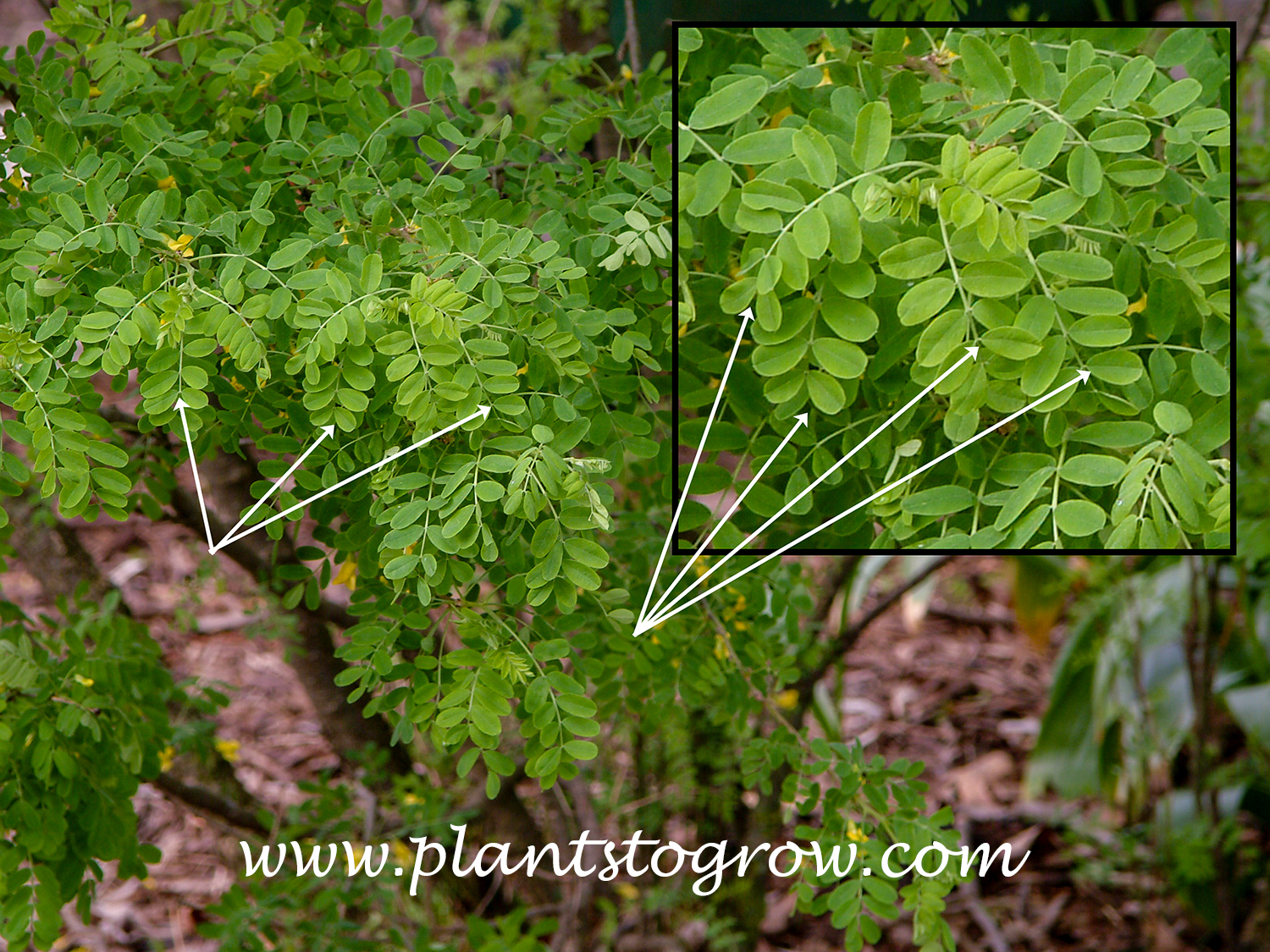
| Description | Siberian Pea-Tree (Caragana arborescens) is a tough small tree or large shrub with yellow flowers. |
|---|---|
| Pronunciation | (kar-uh-GAN-uh)(ar-bo-RES-senz) |
| Plant Type | Shrubs Deciduous, Trees Deciduous |
| Hardiness Zone | 2-7 |
| Sunlight | prefers full sun, will tolerate some shade. |
| Moisture | average to dry |
| Soil & Site | prefers average, very tolerable of poor soils, alkaline soils and salt |
| Flowers | The bright yellow flowers are produced on the previous year's wood. |
| Fruit | Fruits are smooth, 1-2-inch pods with sharply pointed tips. New pods are greenish-yellow but become brownish-red as they mature. Each pod contains about six seeds. |
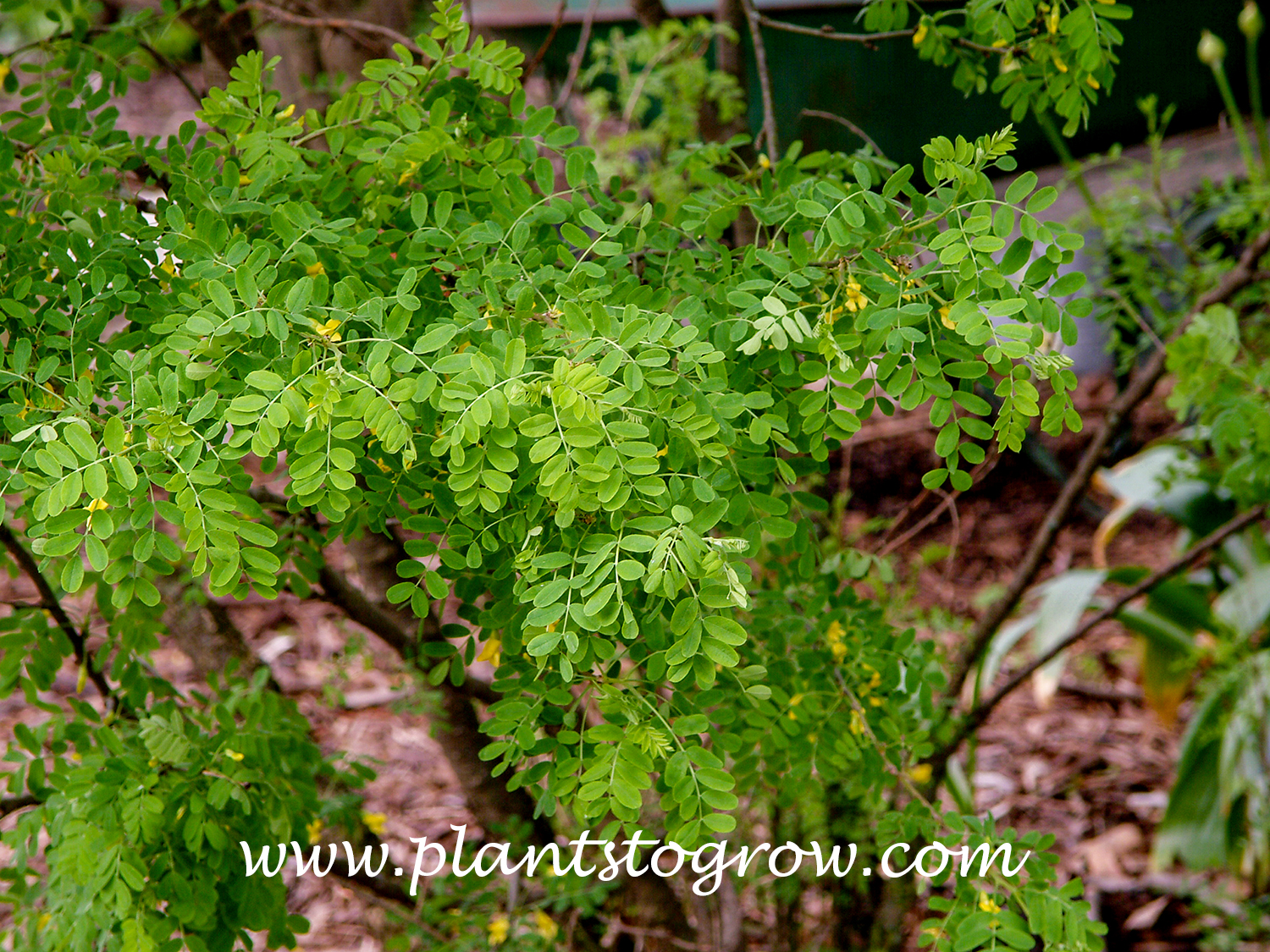
| Leaves | Leaves are alternate, even pinnately compound with 8-12 leaflets, light green in the summer, bright yellow green in the fall. |
| Stems | A multipul stemmed a plant. |
| Roots | Produces a dense root system. The roots have growths called nodules that house bacteria that convert atmospheric nitrogen into a form that plants can use. This process is called nitrogen fixation. |
| Dimensions | Reaches a height of 15-20 feet with a spread of 12-18 feet. A multi-stemmed tree or shrub. |
| Maintenance | The plant is a very prunable shrub, which can be used for large screens or hedges |
| Propagation | seeds |
| Native Site | Native to Siberia, parts of China, Mongolia, and Kazakhstan. |
| Cultivar Origin | Introduced in 1752. |
| Misc Facts | It has become a noxious weed in many areas of the USA. The genus name comes from the Latinized Mongolian name for a species in the genus. The specific epithet means tending to be woody or tree-like. |
| Notes & Reference | #01-Manual of Woody Landscape Plants (Michael Dirr), #03-The Hillier Manual of Trees and Shrubs (Hillier Nursery), #226-Shrubs and Vines for American Gardens (Donald Wyman) |

Cart