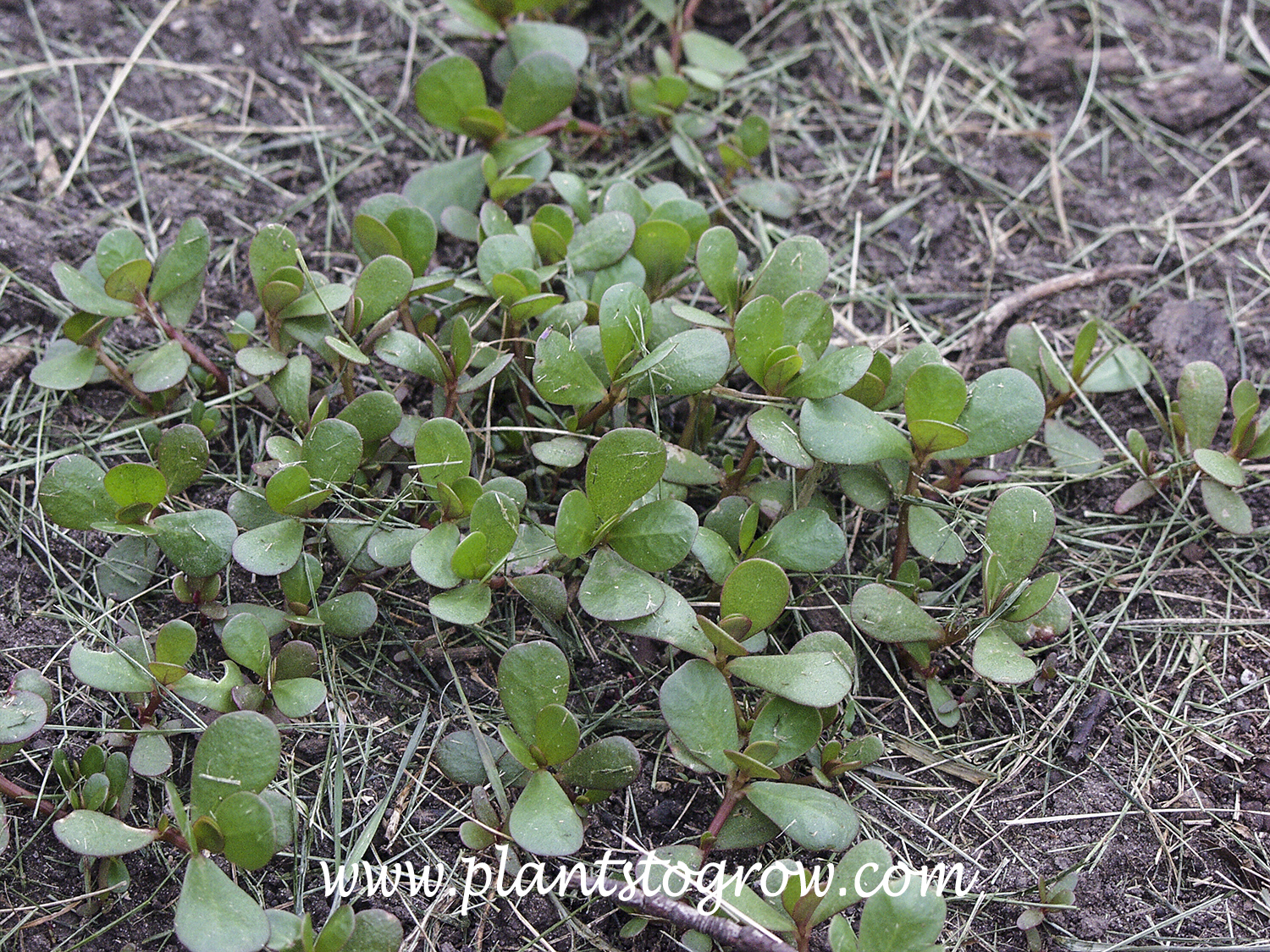
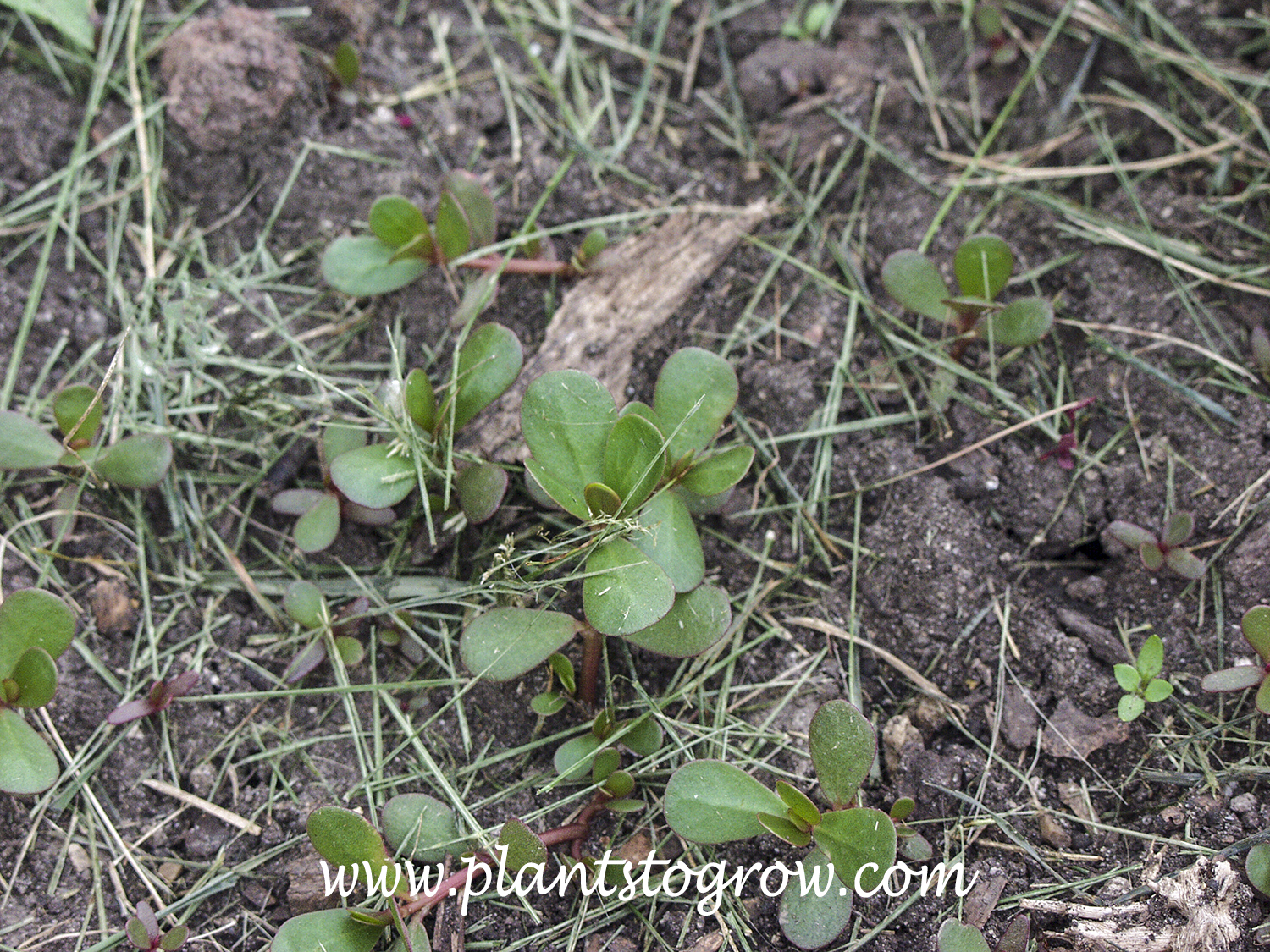
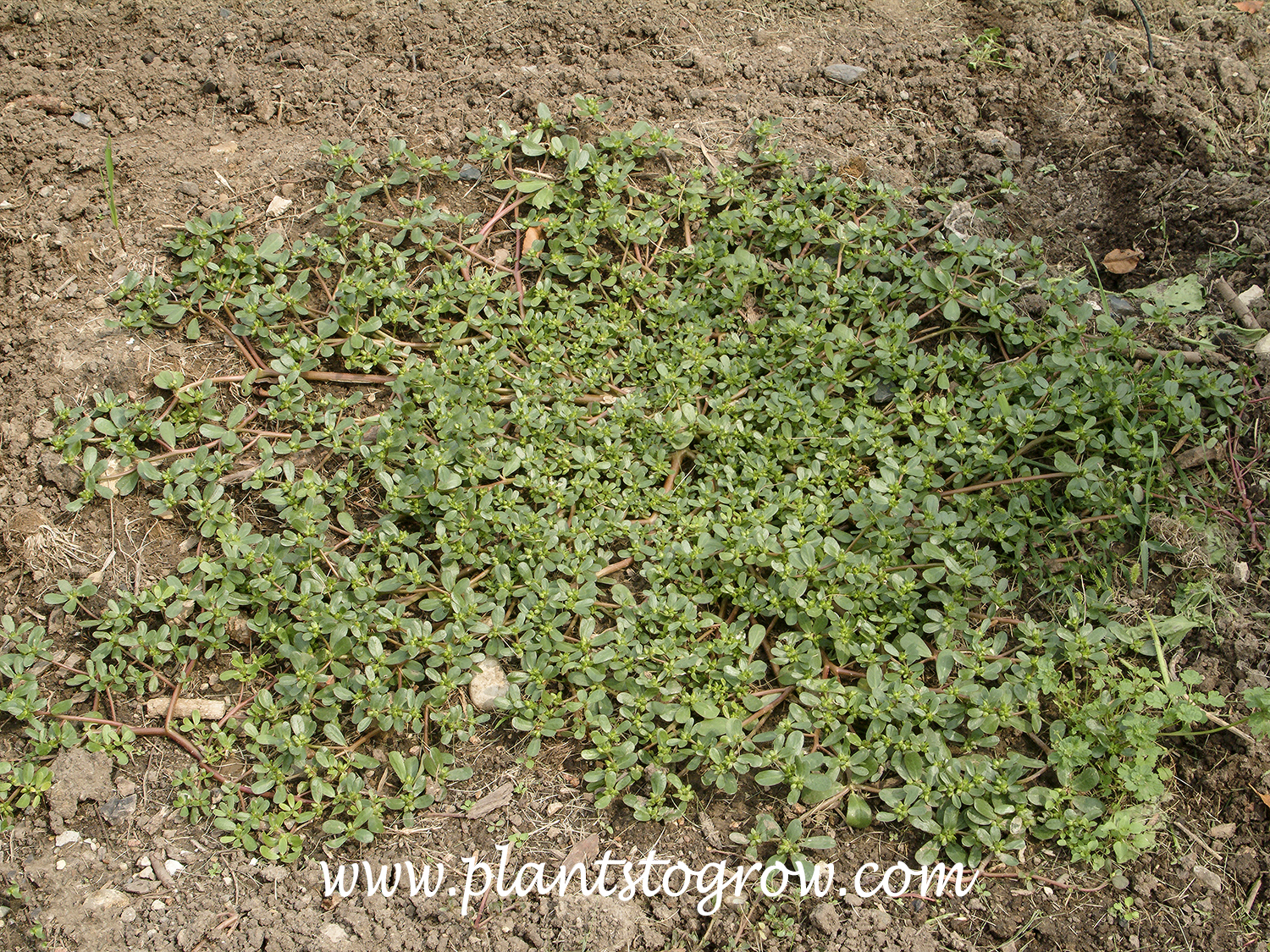
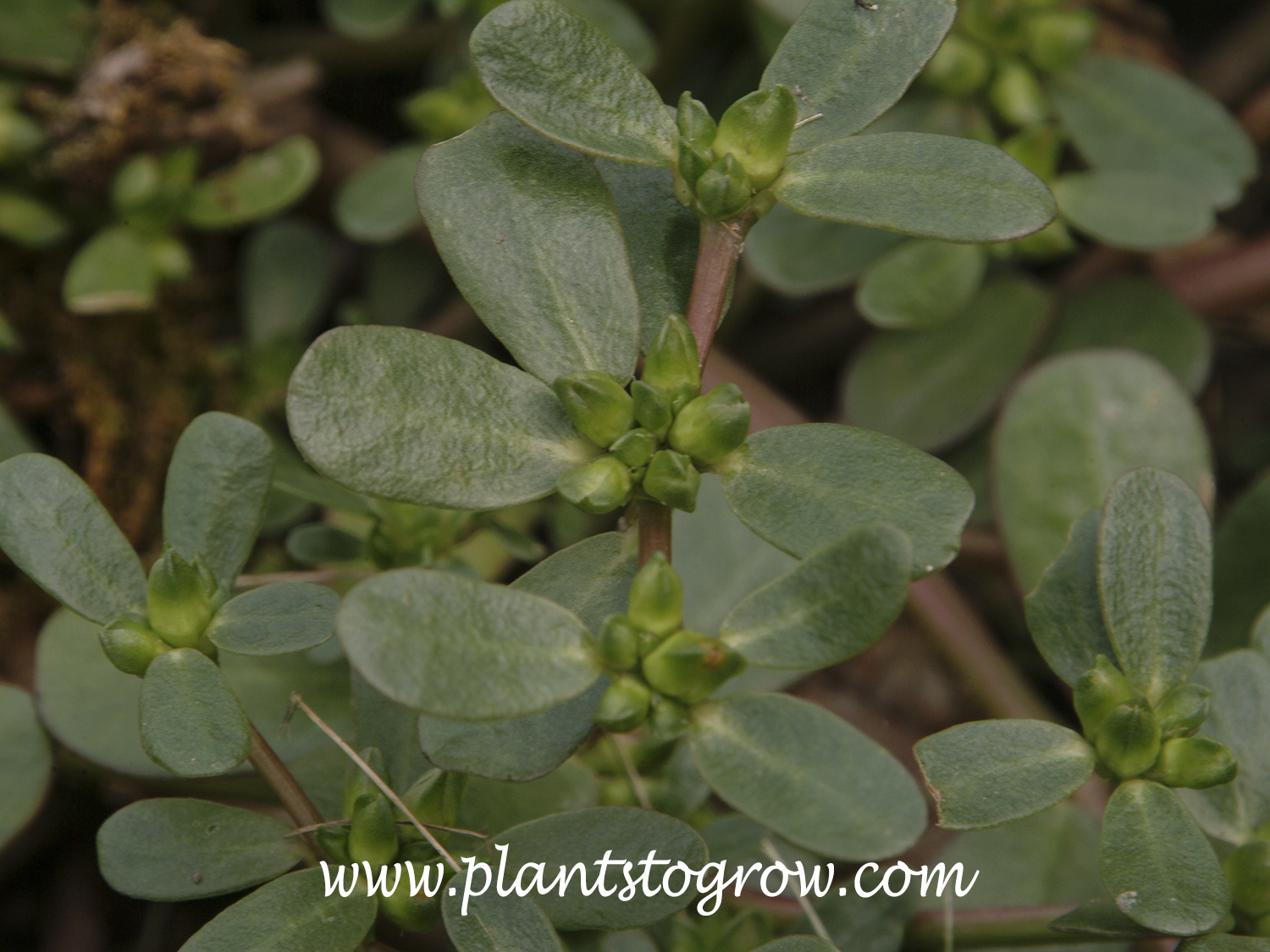
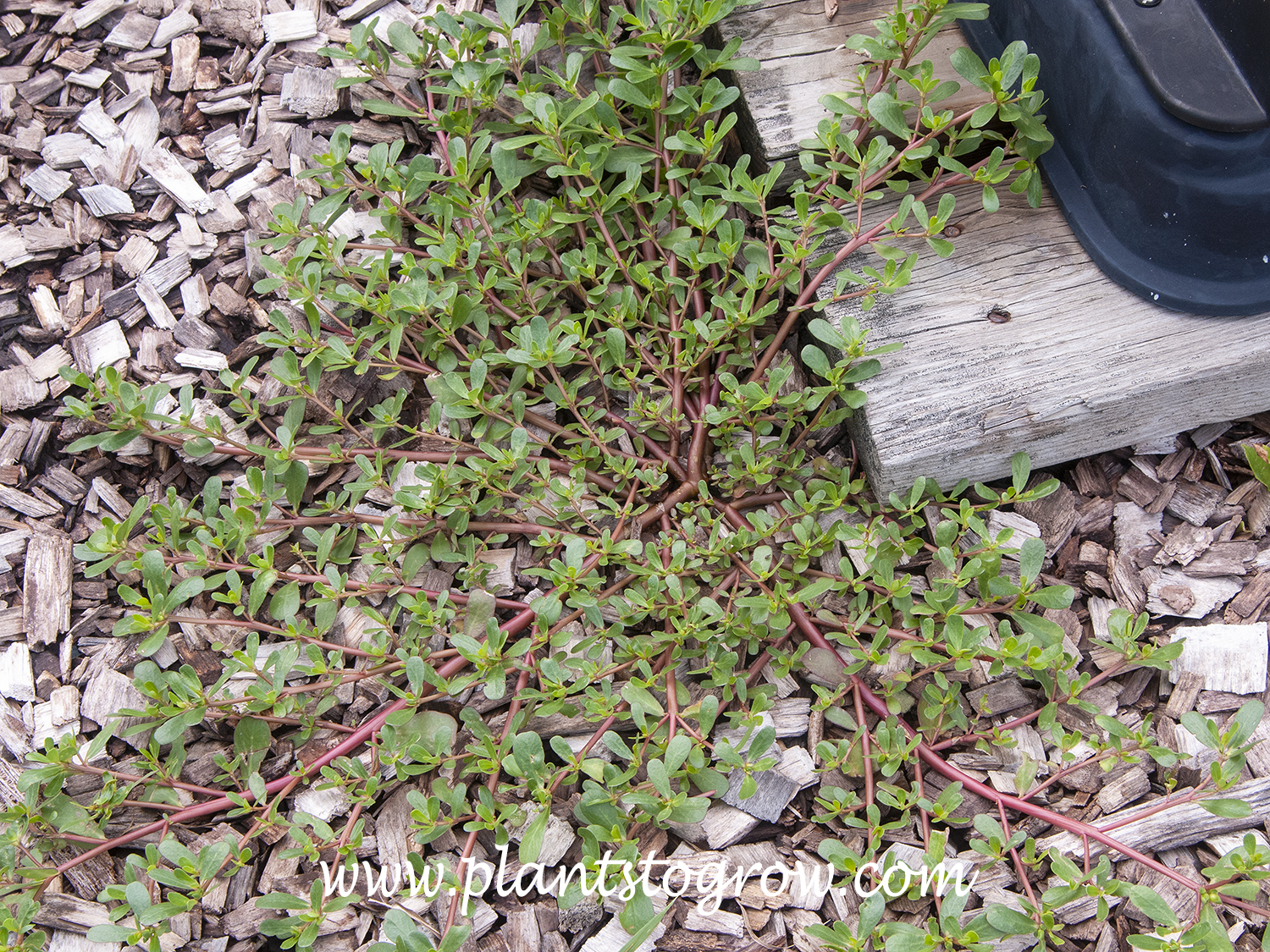
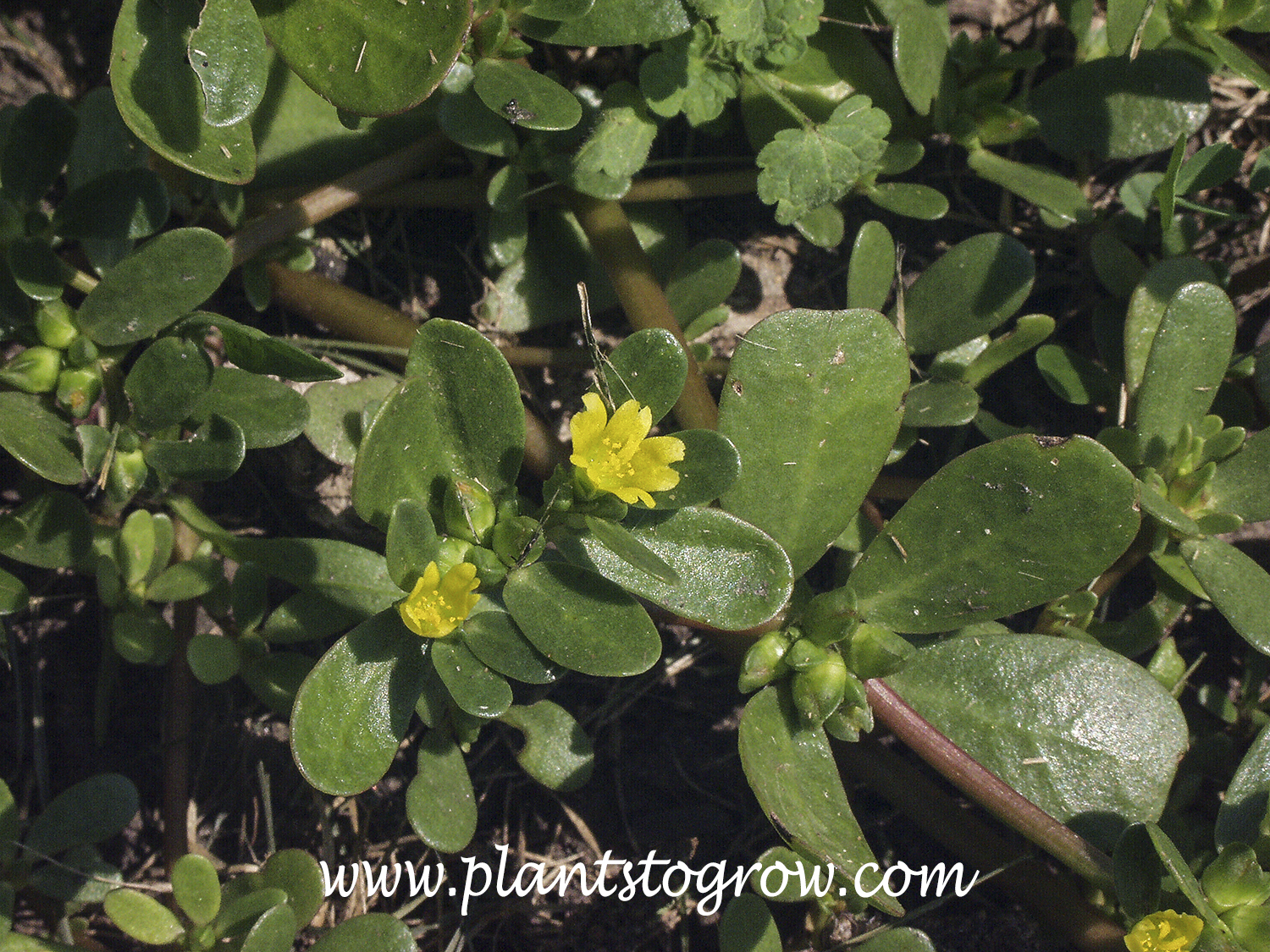
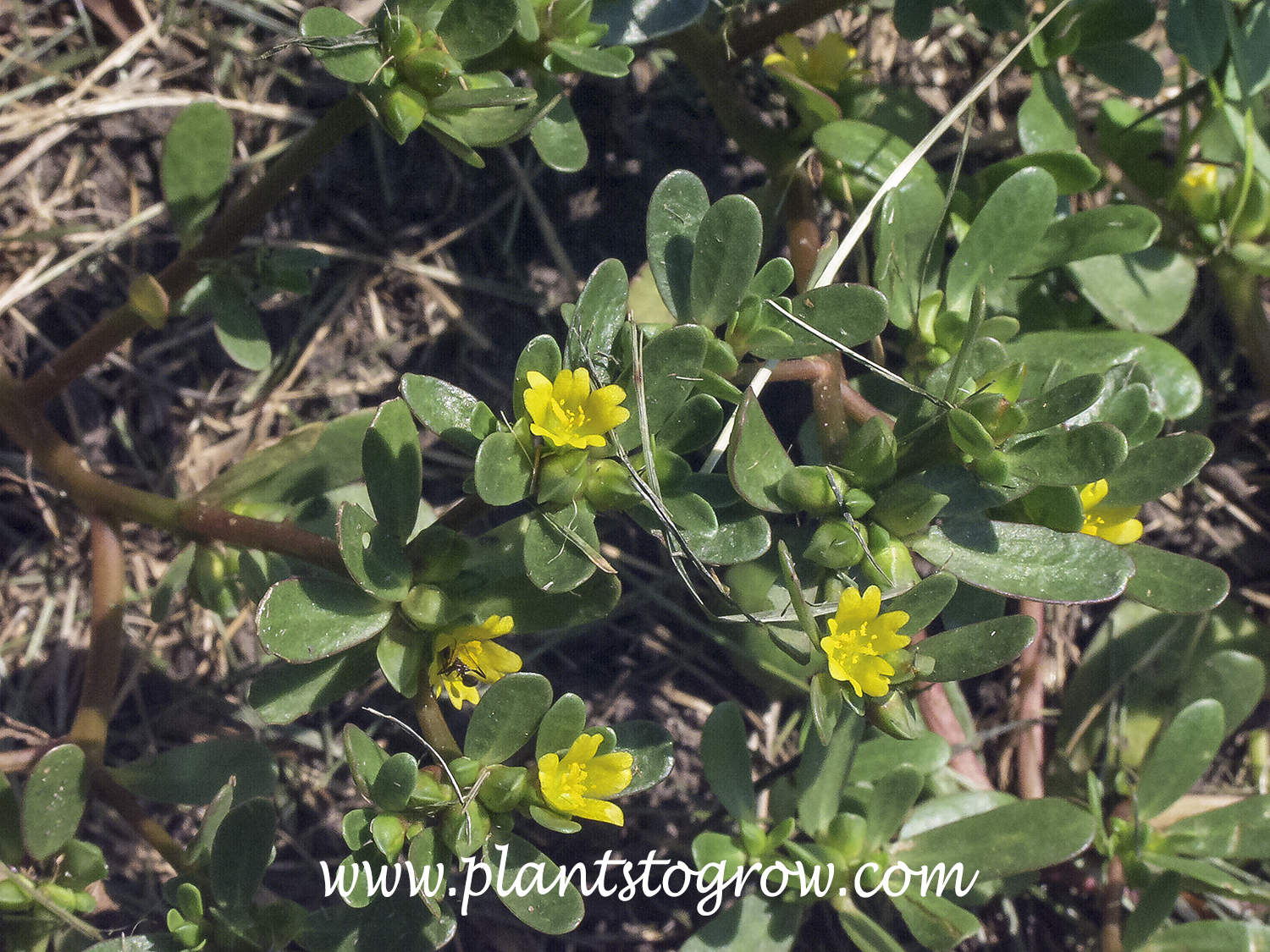
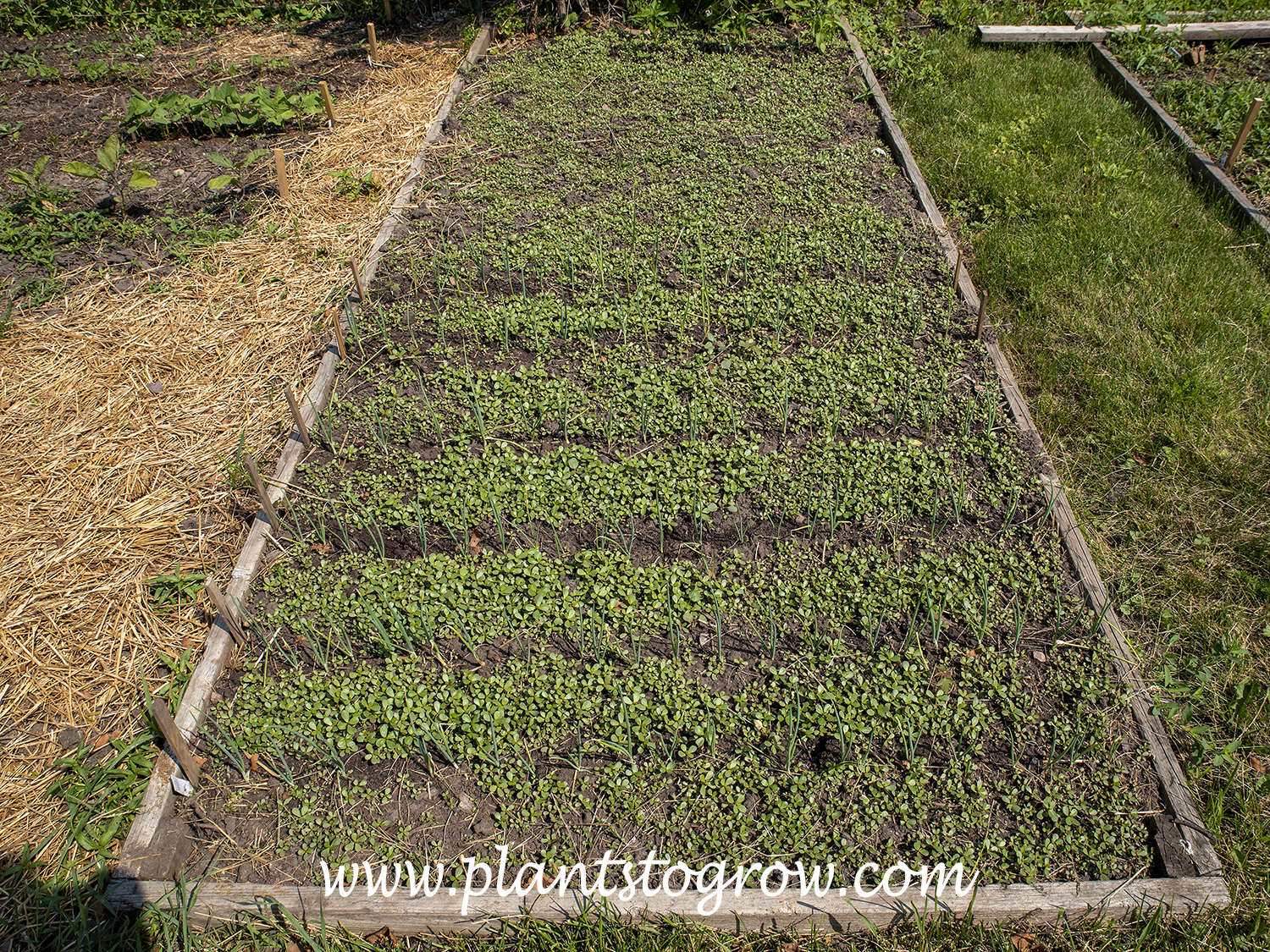
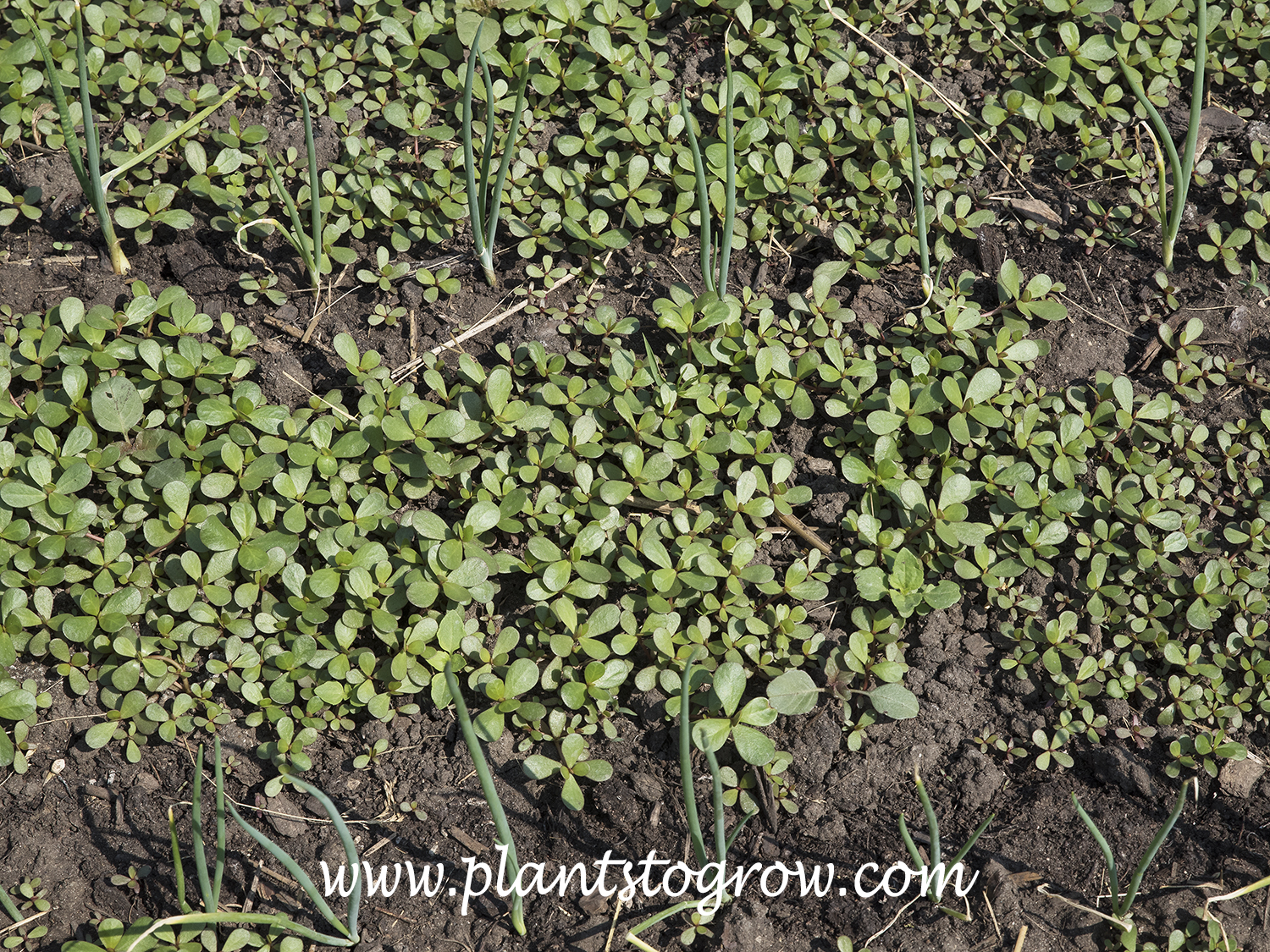
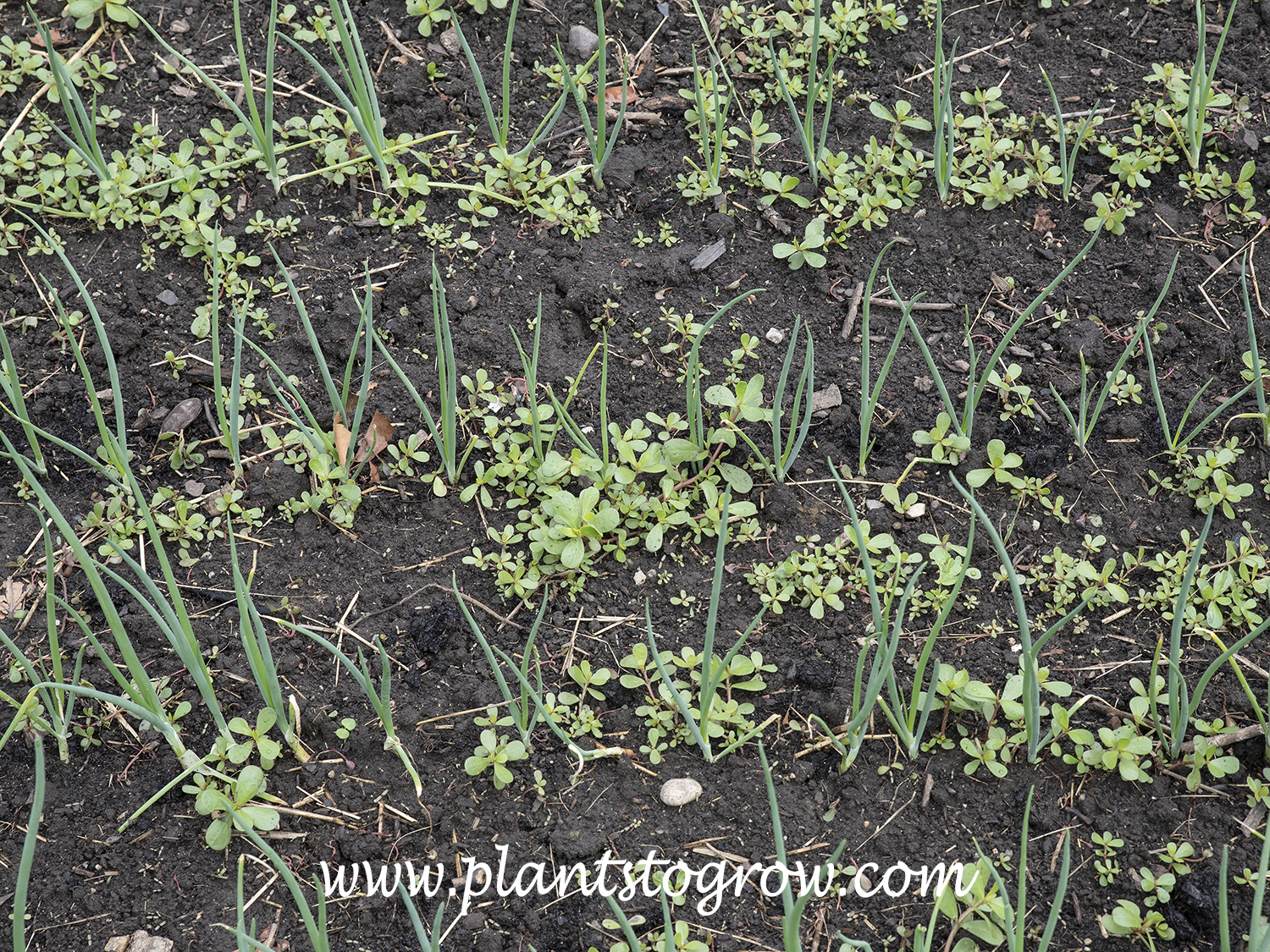
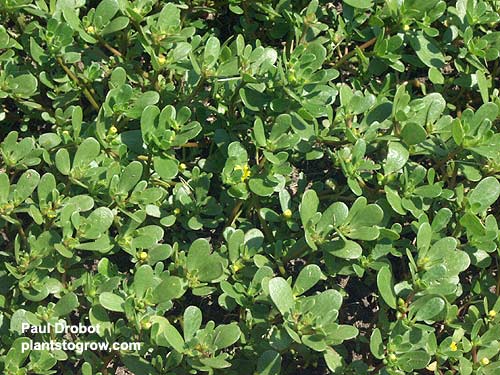
| Description | Common Purslane (Portulaca oleracea) is a mat-forming, succulent plant that can be a weedy pest in gardens. A very difficult plant to rid of in the garden. Cultivated as a culinary herb in many parts of the world |
|---|---|
| Pronunciation | (por-tew-LAK-uh) (awl-lur-RAY-see-uh) |
| Plant Type | All Plants, Weeds |
| Hardiness Zone | 10-11 |
| Sunlight | full |
| Moisture | During dry spells the plant will shrivel but quickly regains it's turgidity when given moisture. Prefers average moisture. |
| Soil & Site | average |
| Flowers | solitary, pale yellow, 5 heart-shaped petals, open during sunny mornings. |
| Fruit | very small black seeds in capsules |
| Leaves | sessile, succulent, entire, green |
| Stems | a prostrate mat of thick succulent foliage, main branches originate from a central point, glabrous, can become reddish to brown |
| Roots | forms a taproot, with fibrous secondary root |
| Dimensions | An estimate of at least 18-24 inches or more in diameter. |
| Maintenance | Since it can root from little pieces of the stem, removing it from a garden can be a problem. Never let them flower since they will build up a seed bank for future generations of plants. |
| Native Site | Native to western Asia. |
| Misc Facts | It is edible being cooked as a vegetable. |
| Author's Notes | In many gardens this plant is a constant problem. |
| Notes & Reference | #19-Common Weeds ( USDA Agricultural Research Service), #49-The History and Folklore of North American Wildflowers (Timothy Coffey), #270-North Carolina Extention Gardener Tool Box (www.plants.ces.ncsu.edu/) |

Cart