| Description | Love-in-a-Mist African Bride (Nigella papillosa) is a hardy annual with ivory-white petals. It has ferny foliage and produces sculptural, ornamental black seed pods. cut flowers |
|---|---|
| Pronunciation | (ni-JEL-a) |
| Plant Type | Annuals, Site author's observations |
| Sunlight | full |
| Moisture | average, tolerates some dryness. |
| Soil & Site | average |
| Temperature | a cool-weather annual |
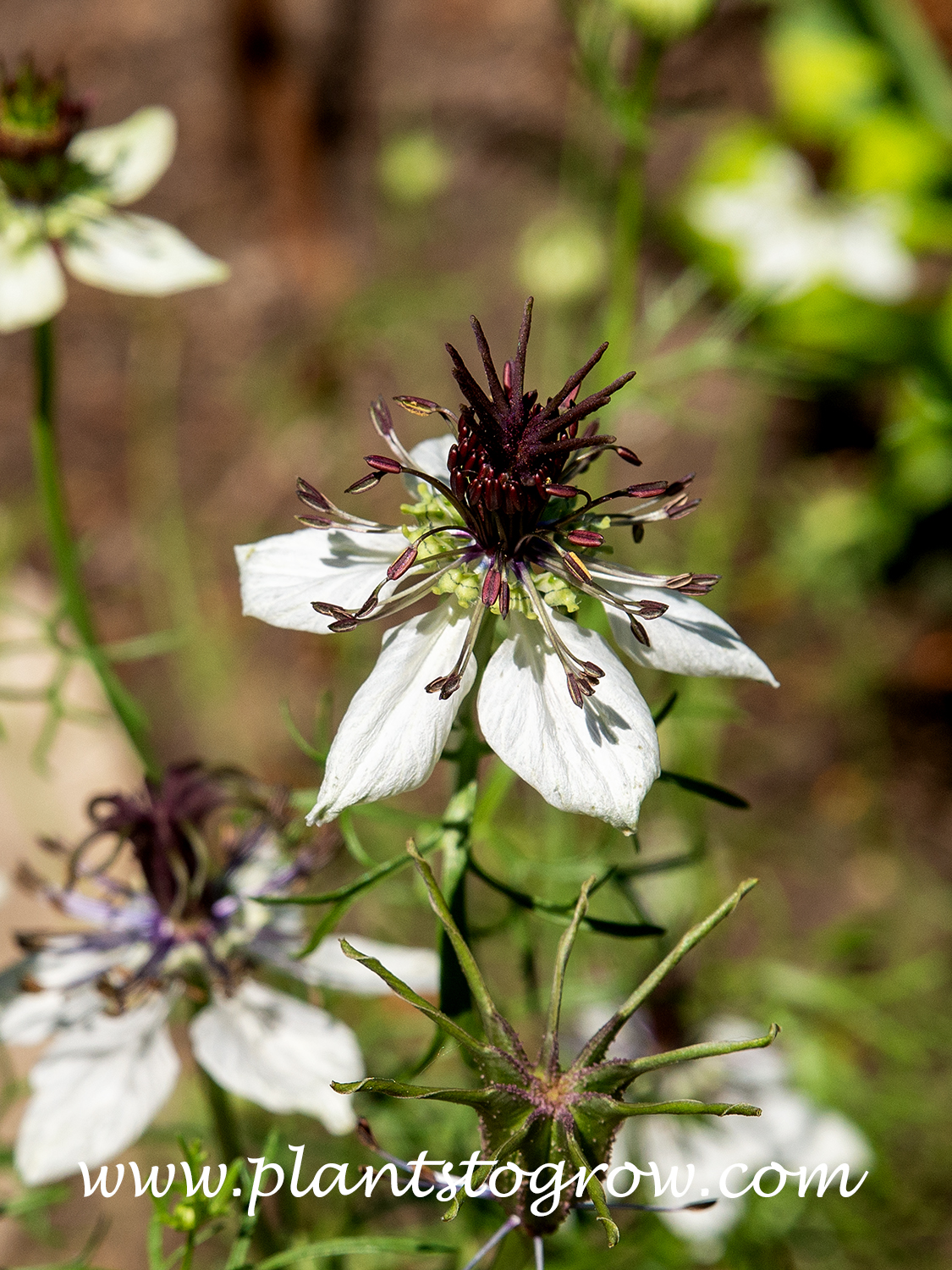
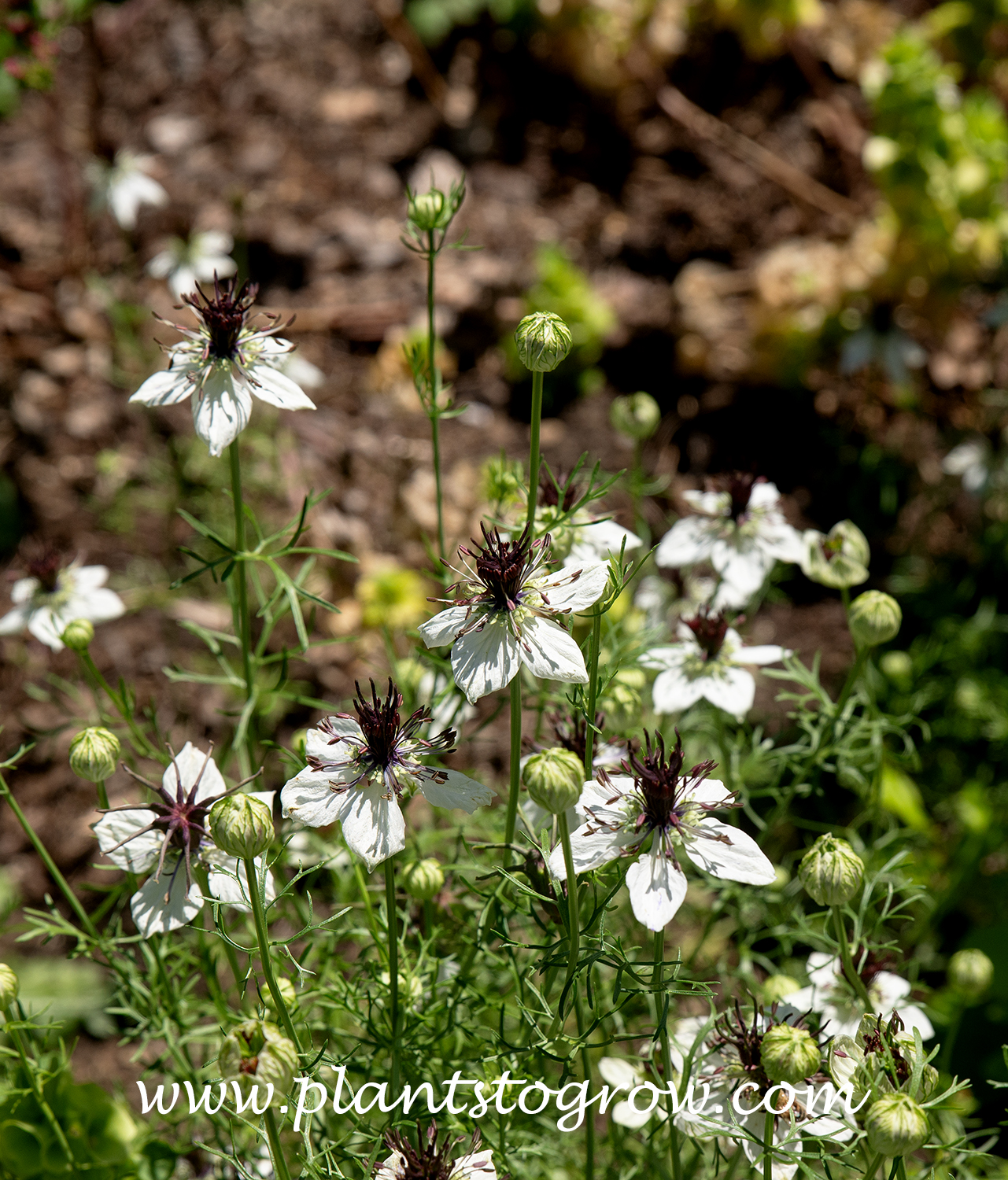
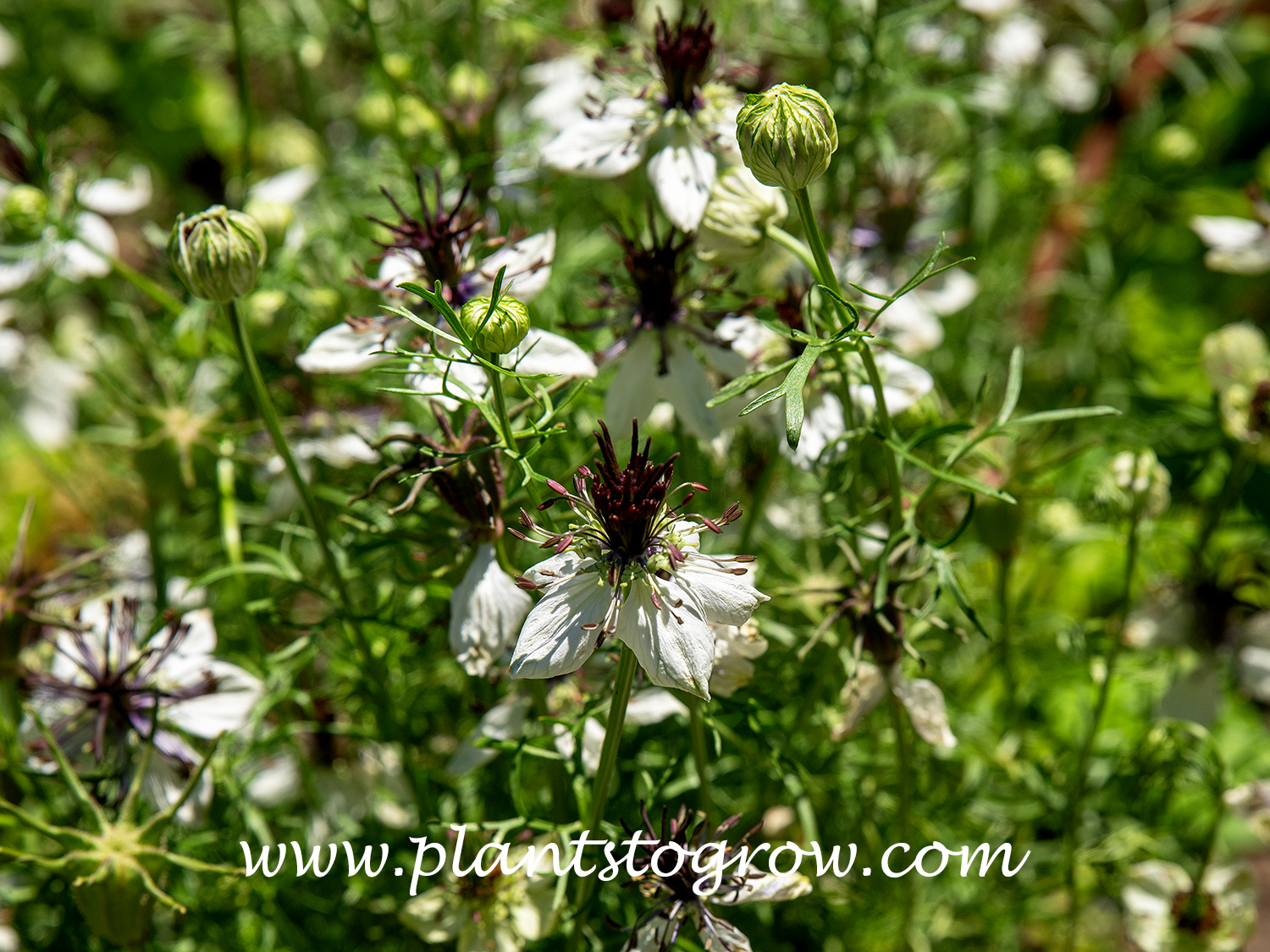
| Flowers | The flowers have large, star-shaped ivory-white petals. A dark, velvety maroon or black center eye sits in the middle. It has plum-purple stamens and pistils. Fine, lacy, fern-like green leaves surround the flowers. |
| Fruit | The seed pods are large, inflated, multi-fused, balloon-shaped capsules that look like an inflated lantern, marked with striking dark purple or burgundy stripes and crowned with distinct star-like horns. As they mature from green to tan, they become rigid and paper-dry, and are a favorite for fresh and dried floral arrangements. |
| Leaves | The simple green leaves are pinnately divided many times into thin segments, have a feathery look, and are finely dissected. |
| Stems | Stems are weak, and as the plant starts flowering, its weight may need support. |
| Roots | Forms a long, thin taproot. |
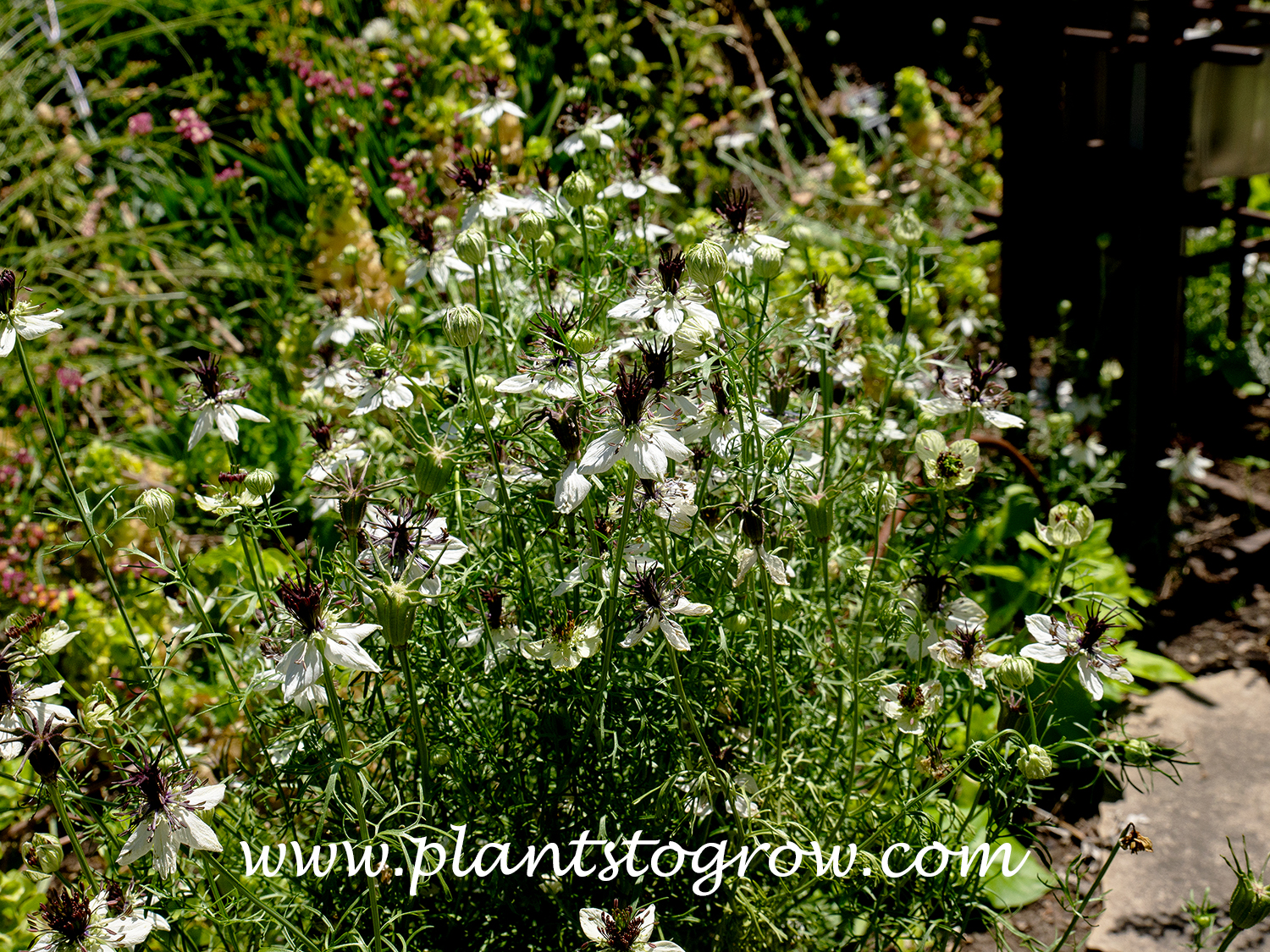
| Dimensions | Can reach 2 by 1 feet (HS), probably smaller in cooler climates. Has a bushy growth form. |
| Maintenance | It will reseed in the garden and may need to be removed. |
| Propagation | Can be seeded in situ (directly seeded in the garden) or started indoors. I have started these indoors in peat pots. But since they form taproots, don't let them stay in the pots too long. Also, I like to pull apart the bottom of the pot. |
| Native Site | The plant species Nigella papillosa is native to the Azores, Morocco, Algeria, Tunisia, Portugal, Spain, and Sicily, |
| Cultivar Origin | This variety of Nigella was formed from a garden selection. |
| Misc Facts | In the past, people mixed Nigella seeds with vinegar and applied the mixture to their freckles as a remedy. They also used them as an aromatic in various recipes. |
| Notes & Reference | #40-Herbaceous Ornamental Plants (Steven Stills), #28-Cottage Garden Annuals (Clive Lane), #270-Gardenia (www.gardenia.net), #284-University of Wisconsin-Madison (hort.extension.wisc.edu) , #274-Site Authors' observations and growing experiences |

Cart