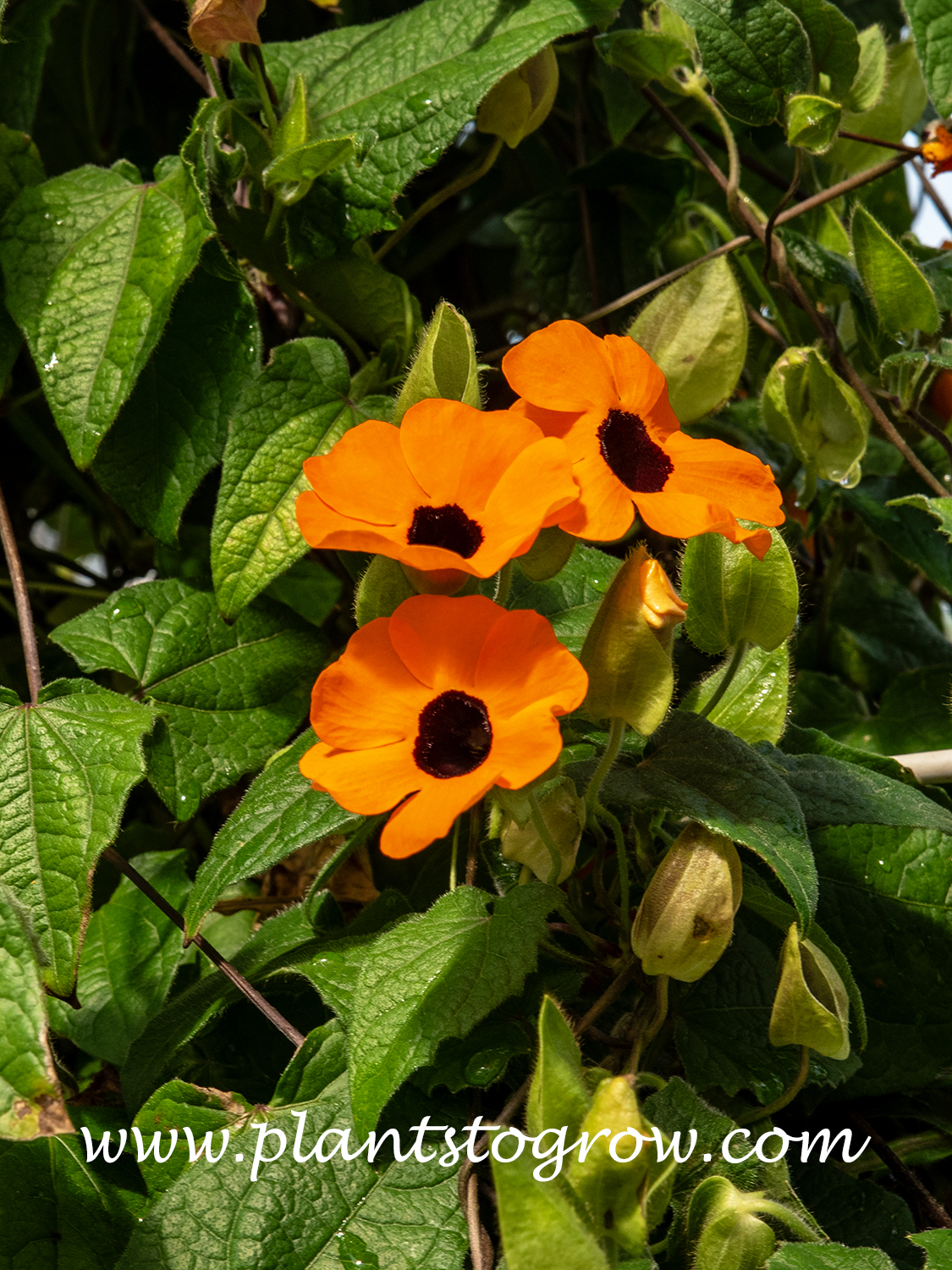
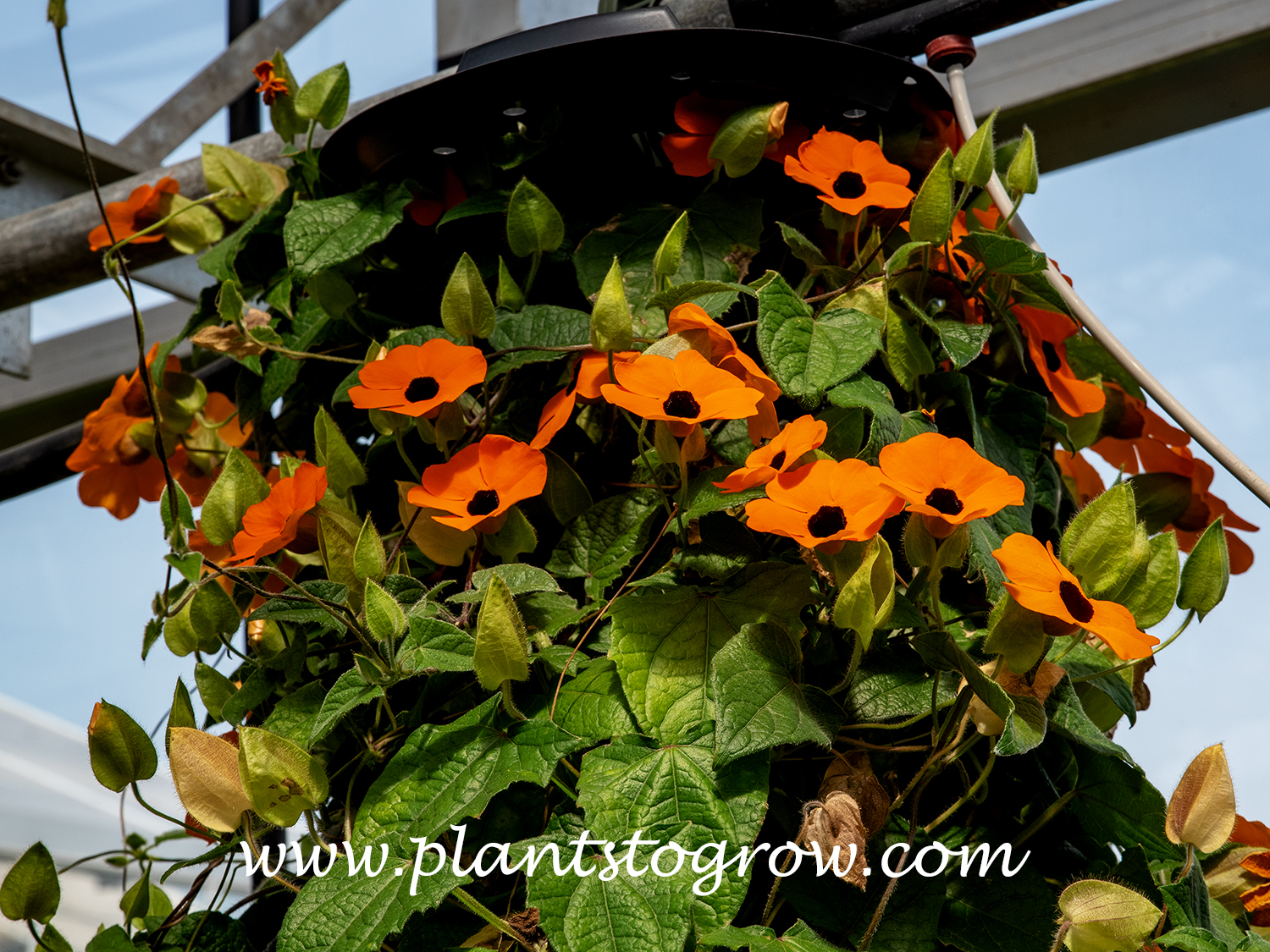
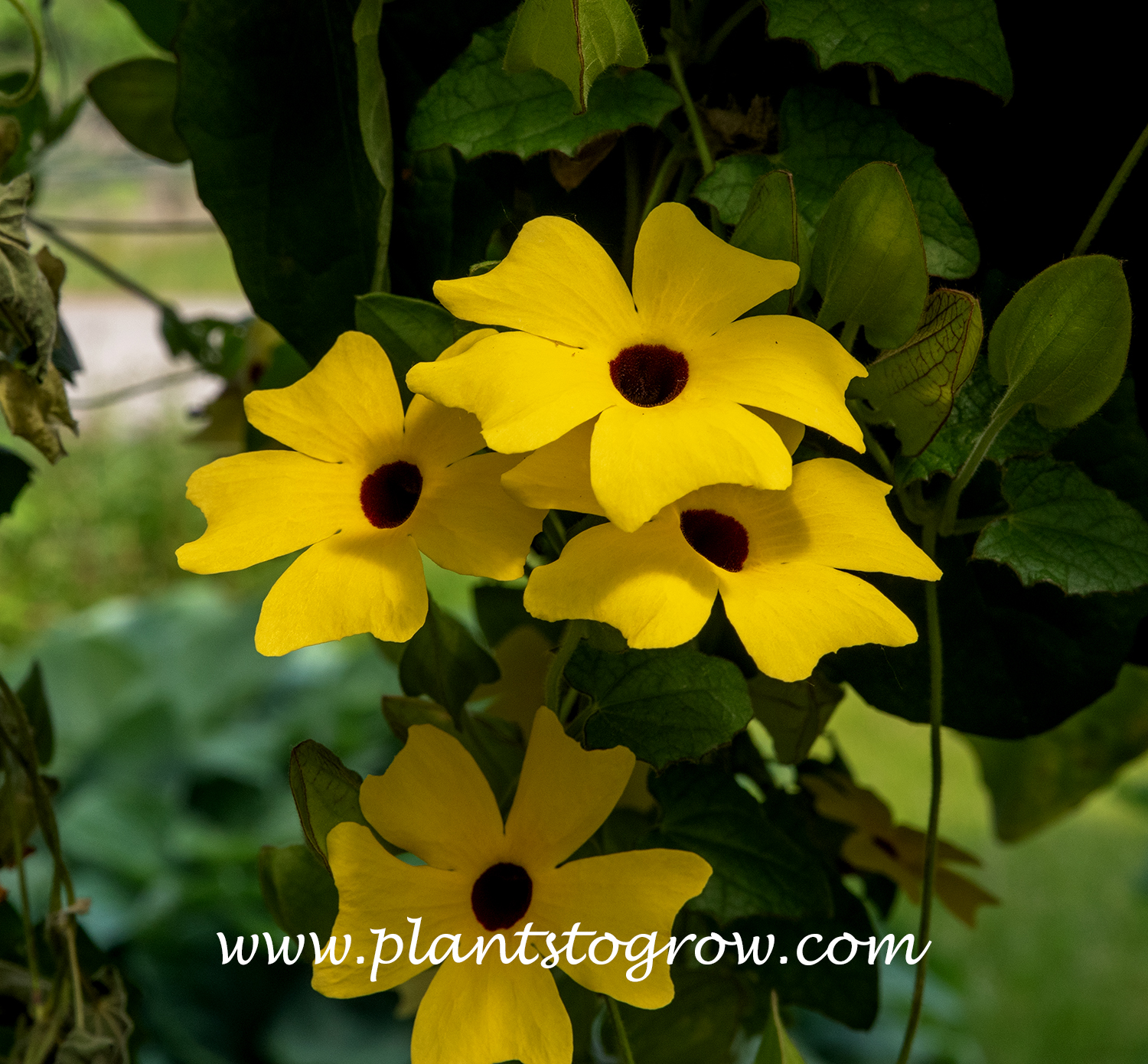
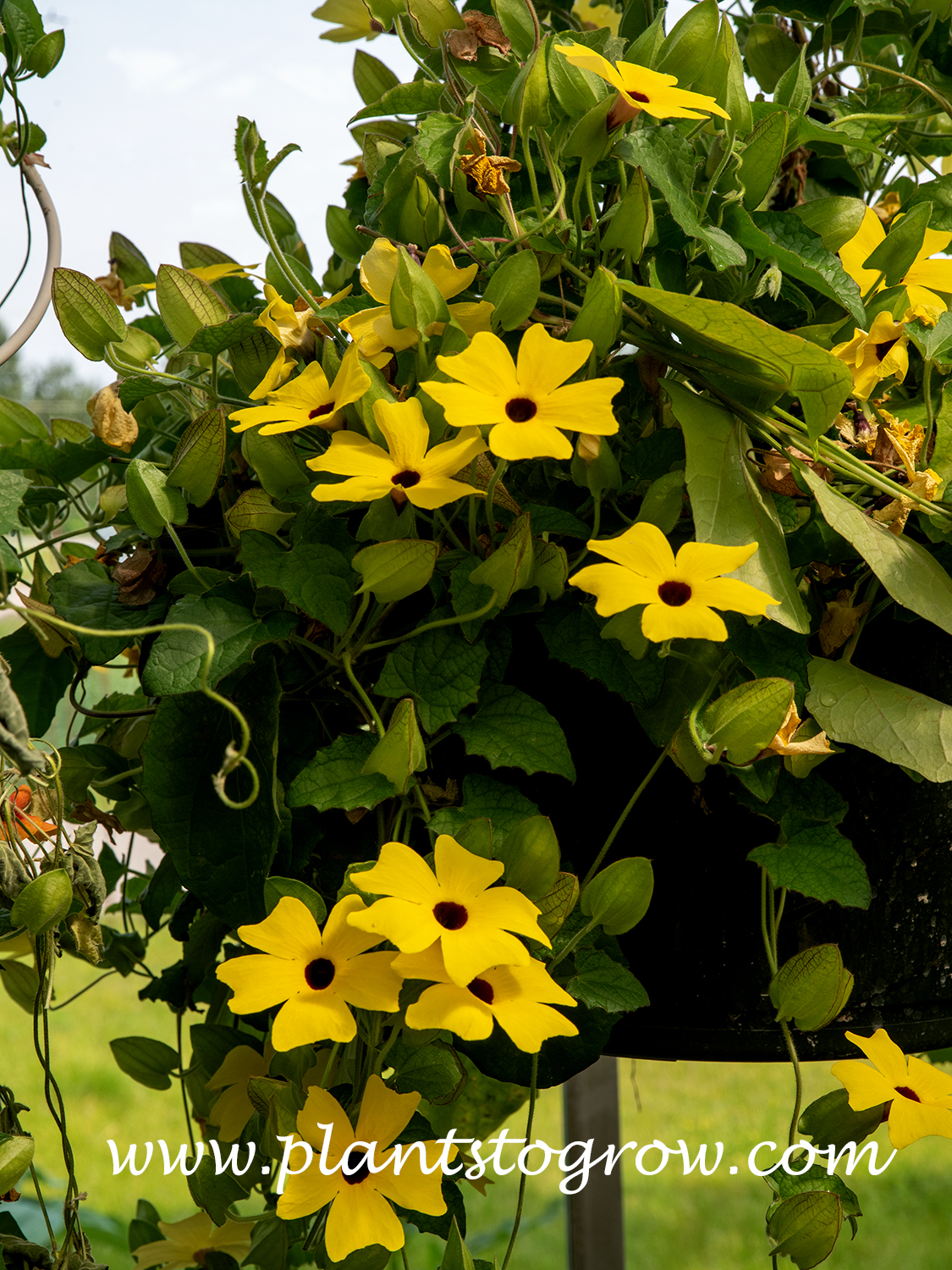
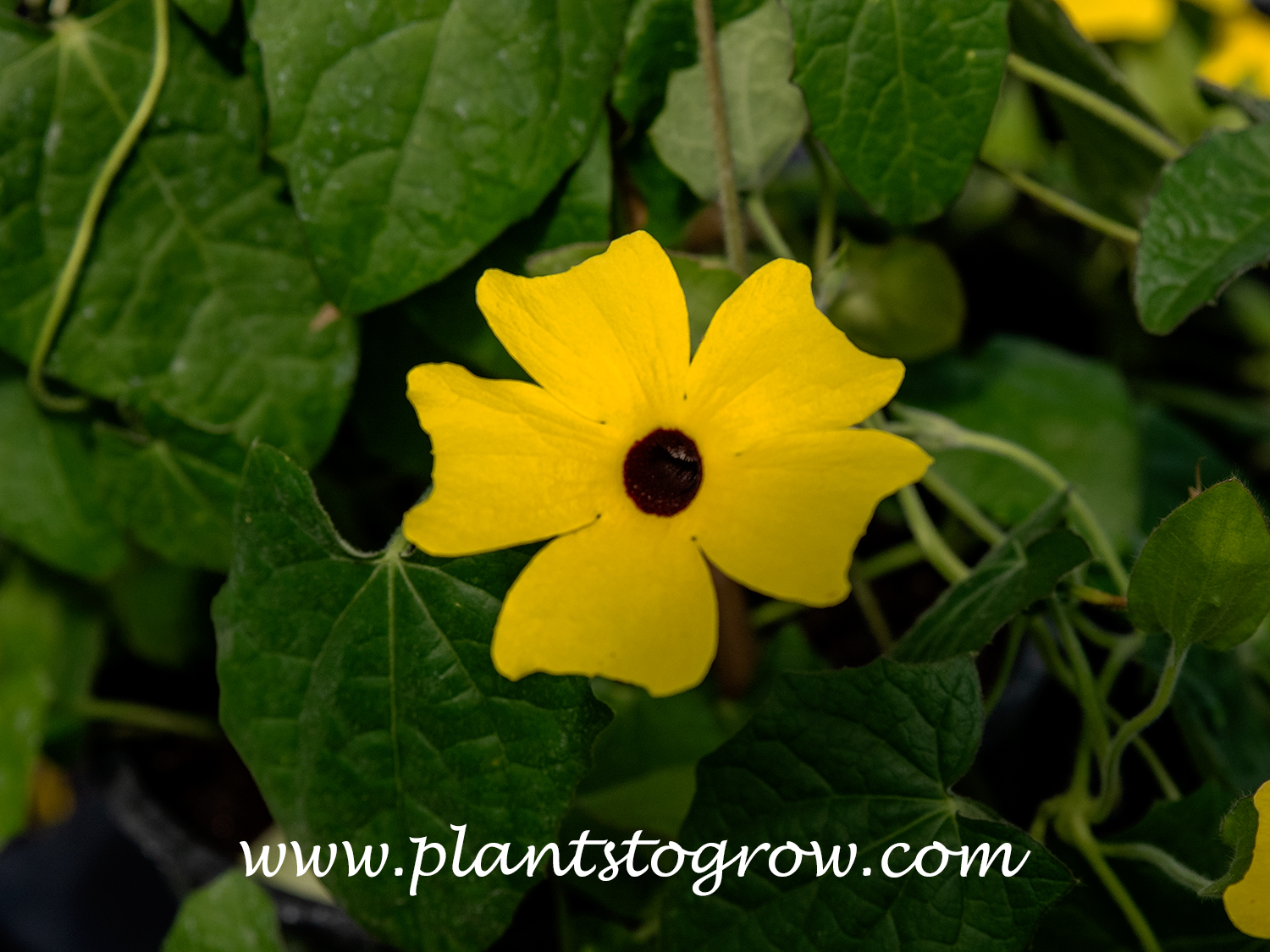
| Description | Black Eye Susan A peel series (Thunbergia alata) is a vigorous, fast-growing climbing annual vine. Colors are Orange, Yellow, tangerine, and white. |
|---|---|
| Pronunciation | (thun-BUR-jee-uh)(uh-LAH-tuh) |
| Plant Type | Annuals, Perennial Tender, Vines |
| Hardiness Zone | tender perennial zone #8 |
| Sunlight | full, mostly sunny |
| Moisture | Plants that grow in the soil need average to moist conditions. As the season progresses, plants growing in containers, especially hanging baskets, will become filled with roots and, along with the plant size, will require constant watering. The plants will wilt when dry. |
| Soil & Site | average, moist |
| Growing Media | Average container growing media |
| Temperature | In zone #5, the Memorial Day weekend is about as quick as this plant should be moved outdoors. |
| Flowers | The flower consists of five petals. At the base of the corolla is the winged petiole. The flowers are solitary on a long pedicel. The colors in this series are orange, lemon, tangerine, etc. The plants are floriferous with a dark center throat. |
| Leaves | Leaves are opposite, oval to triangular or heart-shaped, reaching 3 inches long on winged petioles. They are dull dark green on the upper surface and pale green with prominent veins below, with slightly toothed margins. |
| Stems | The stems are rambling, climbing by twining their stems around a support. They are clinging by using tendrils to coil around something. |
| Roots | fiborus |
| Dimensions | A rapid grower that can reach over 3-5 feet in one summer. In warmer climates, it may reach over 10-12 feet. |
| Maintenance | The plants will need a structure to grow on, such as a trellis, fences, or arches. Some pruning may be needed to maintain shape and tidiness. |
| Propagation | Soaking seeds will help germination. |
| Native Site | Originally from tropical regions of East and South Africa, this species has also become widespread in Brazil, Australia, Hawaii, and the southern United States. |
| Misc Facts | The common name likely comes from an old 18th-century English ballad by poet John Gay titled "Black-Eyed Susan", which later became attached to these distinct yellow and dark-centered wildflowers. The genus thunbergia was named after Carl Peter Thunberg, a student of Linnaeus. |
| Notes & Reference | #51-Armitage's Manual of Annuals, Biennials, and Half-Hardy Perennials (Alan Armitage), #62-Manual of Climbers and Wall Plants (J K Burras, Mark Griffiths), #274-Site Authors' observations and growing experiences of different Black-eyed Susans. |

Cart