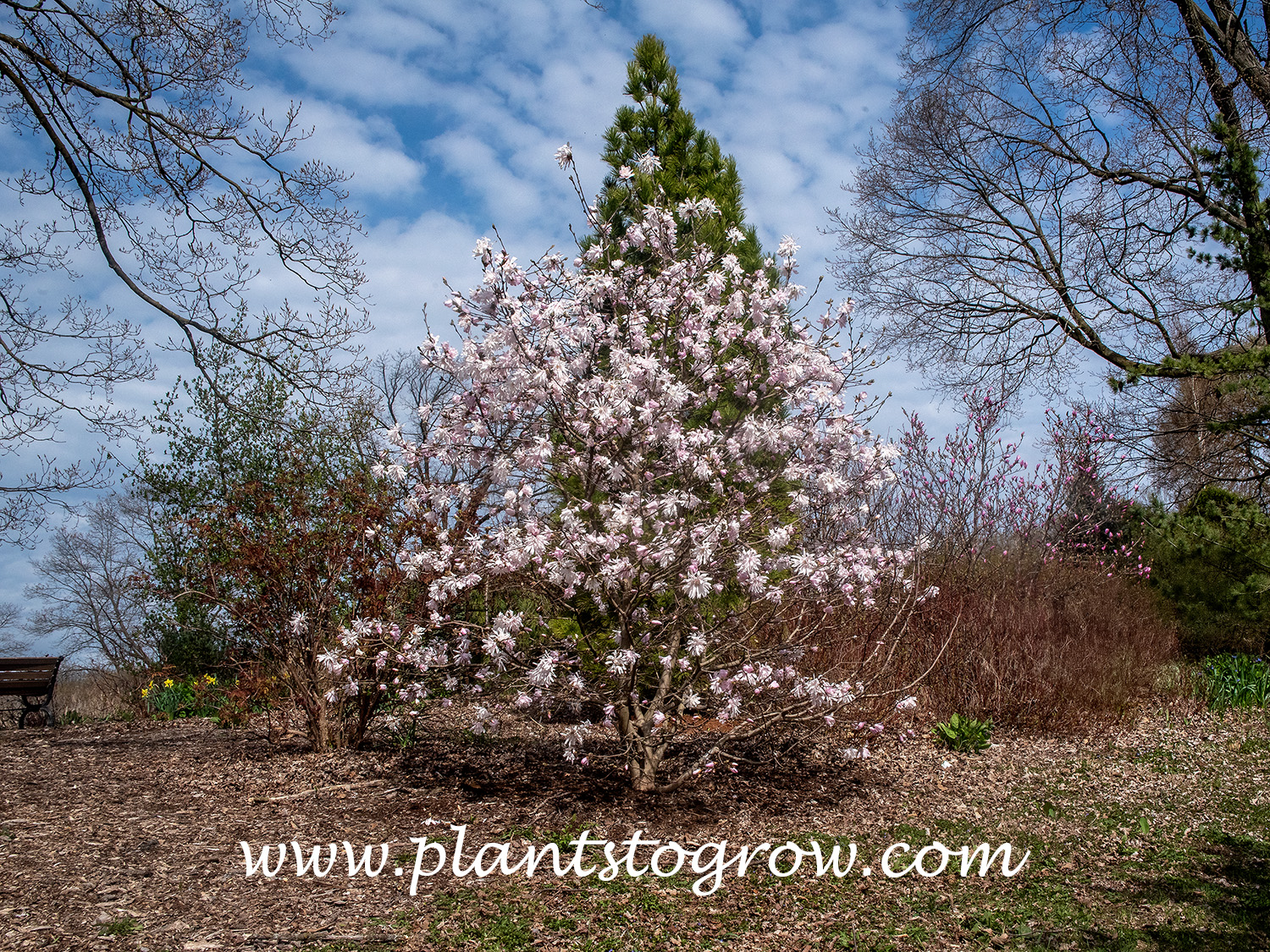
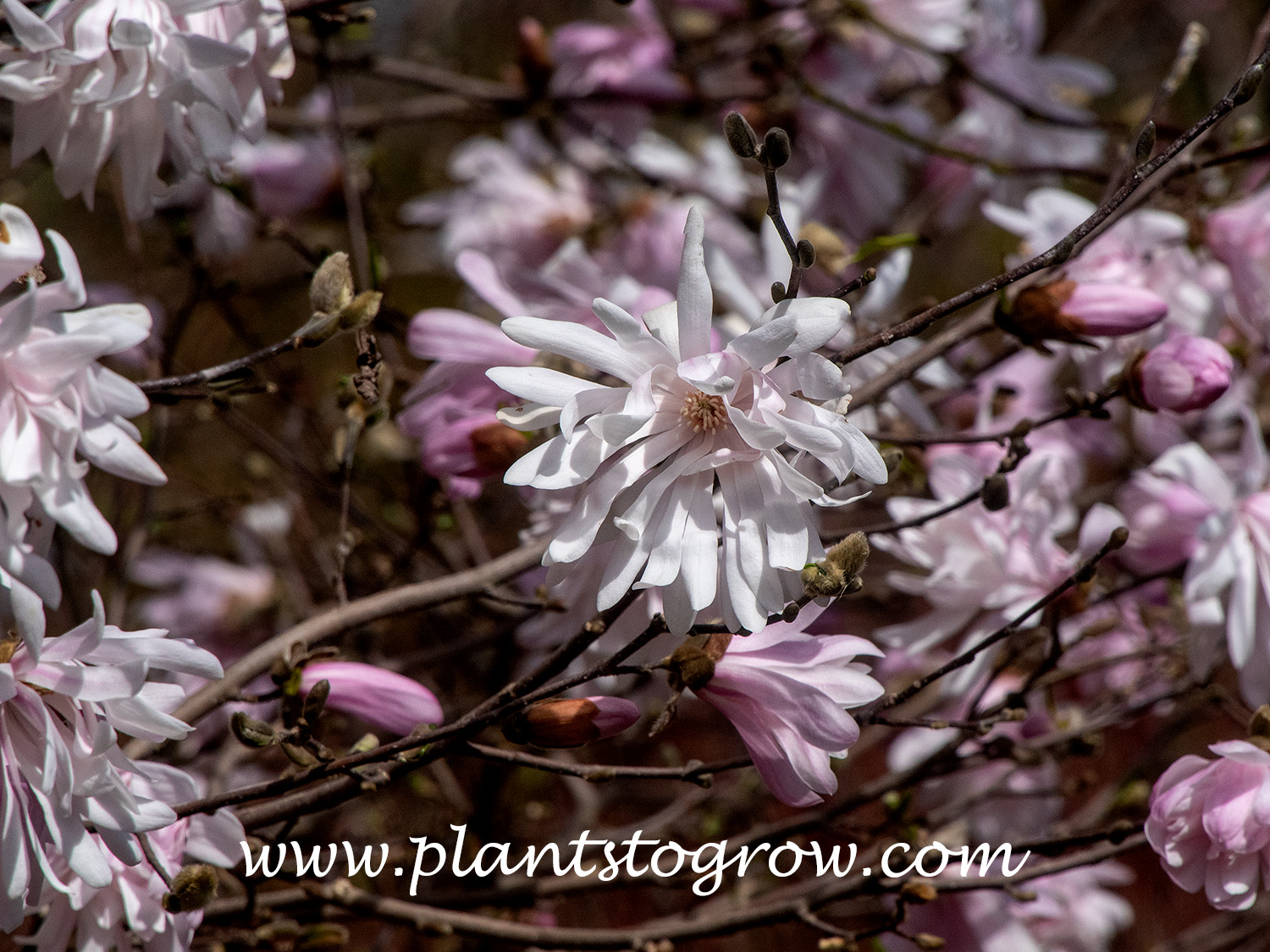
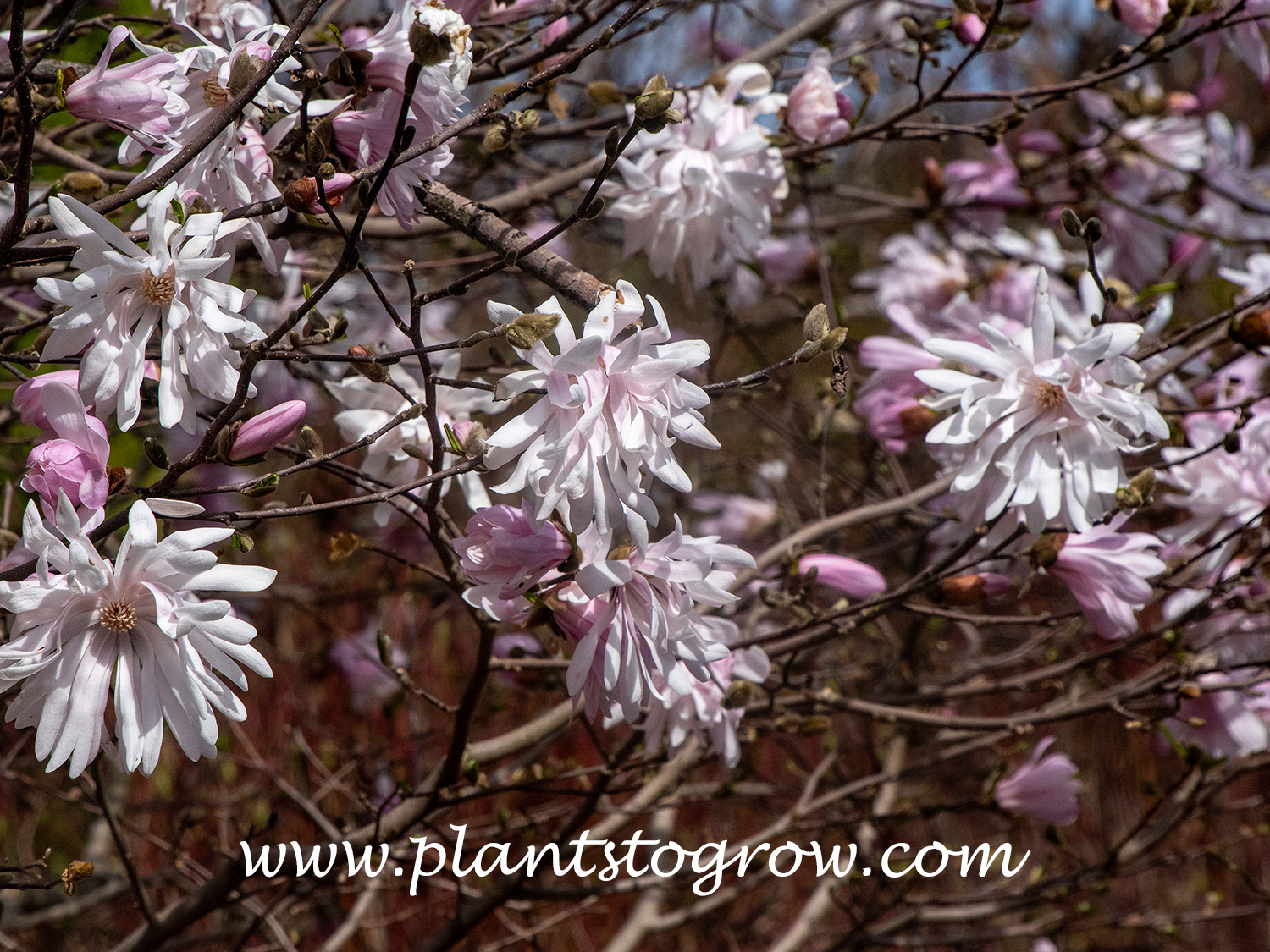
| Description | Magnolia 'Pink Perfection' (Magnolia x loebreri) is a small deciduous tree. In the spring, it will be loaded with white/pink flowers. |
|---|---|
| Pronunciation | (mag-NO-li-ah)(LEEB-ner-eye) |
| Plant Type | Shrubs Deciduous, Site author's observations |
| Hardiness Zone | (4a) 5a |
| Sunlight | full, tolerates some shade |
| Moisture | average, moist |
| Soil & Site | average, moist, slightly acidic |
| Flowers | Highly fragrant, star-shaped lilac-pink blooms with up to 40-48 tepals (petals). Bloom before the leaves appear. This is called hysteranthous. The length of bloom depends a lot on the weather. The cooler, brighter, and less windy, the longer the bloom. |
| Fruit | Created an aggregate of follicles. |
| Leaves | Simple alternate, dark green leaves. |
| Stems | The trunk is silvery gray, smooth, and sculptured on older trunks. |
| Dimensions | Reaches 15-20 feet with a rounded form. |
| Maintenance | Relatively low-maintenance, requiring minimal pruning, and naturally deer-resistant. |
| Cultivar Origin | From August Kehr. Selected as a self-sown seedling of Magnolia 'Encore'. Magnolia x loebneri is the result of a cross between M. kobus and M. stellata made by Max Lobner of Germany shortly before the start of World War I. |
| Misc Facts | The genus name honors Pierre Magnol, a French botanist (1638-1715). |
| Author's Notes | I live in zone 5B, and Magnolias are among the most dependable and earliest-blooming trees in spring. In winter, they also have a good architectural form. |
| Notes & Reference | #01-Manual of Woody Landscape Plants (Michael Dirr), #86-Magnolia: A Gardener's Guide (Jim Gardiner), #274-Site Authors' observations |

Cart