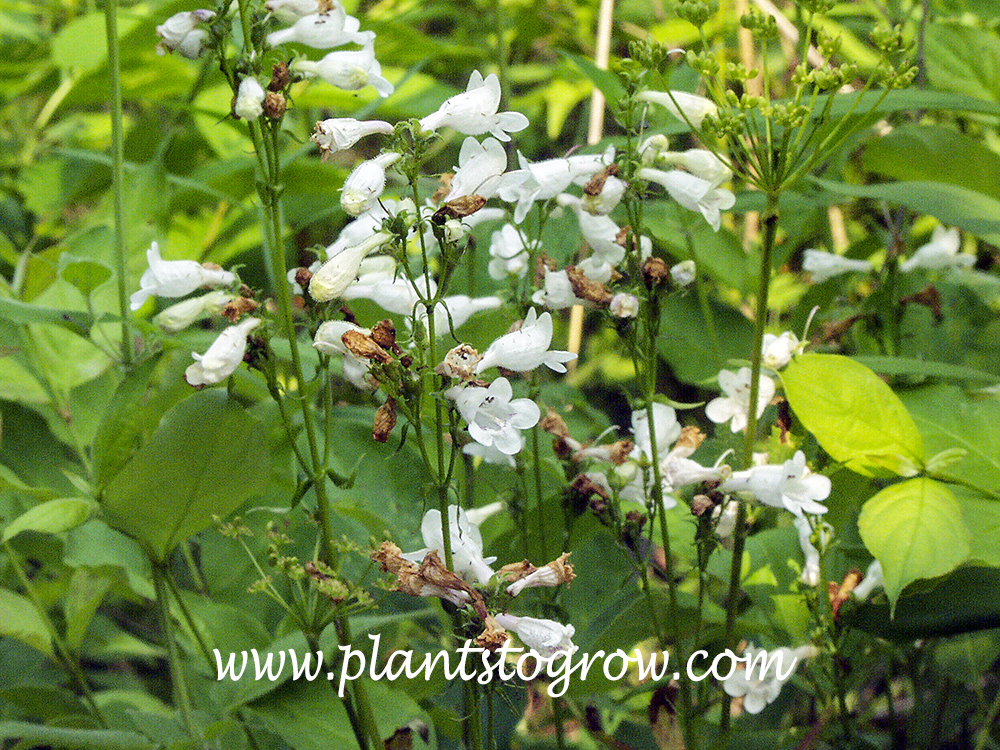
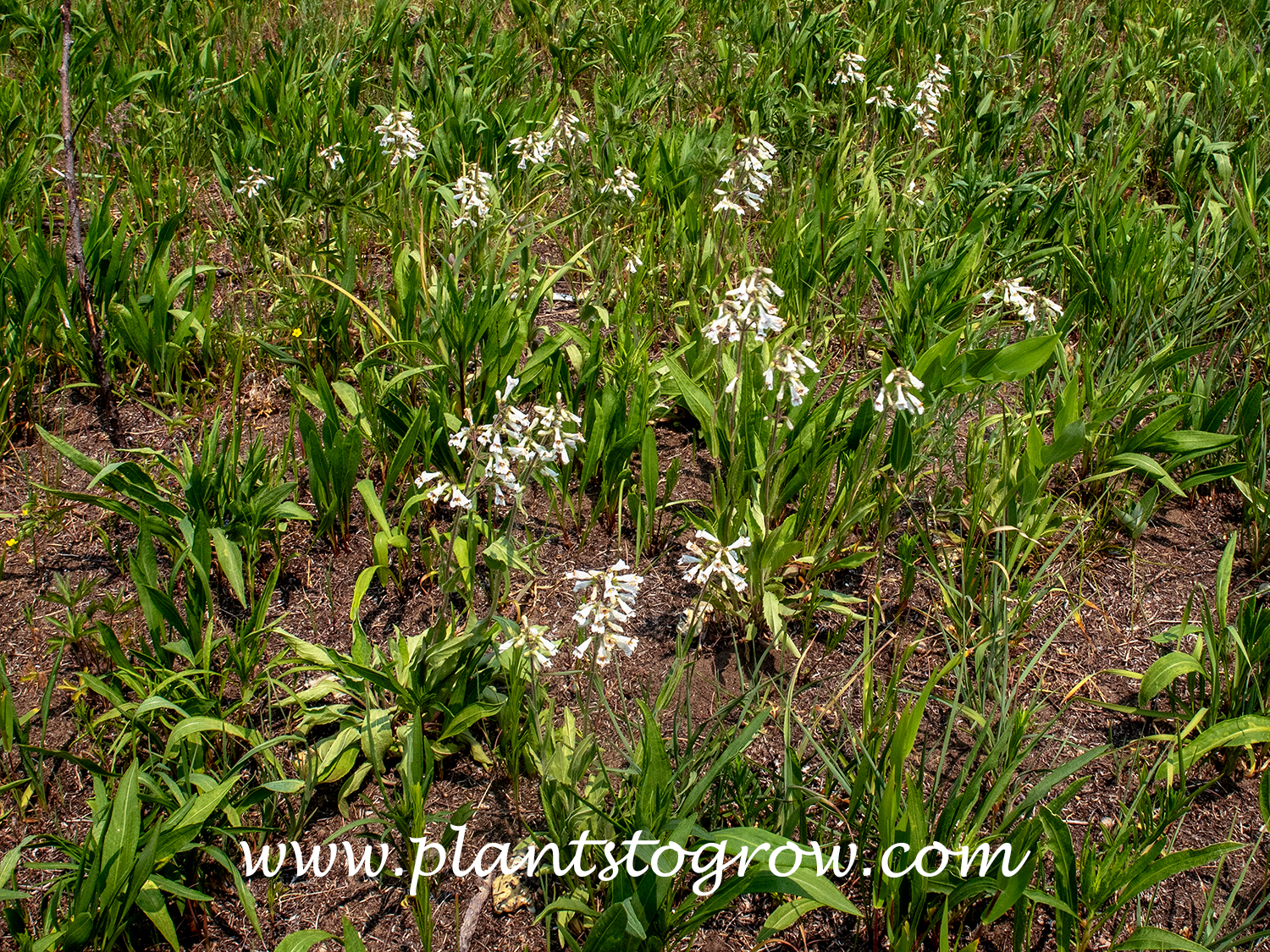
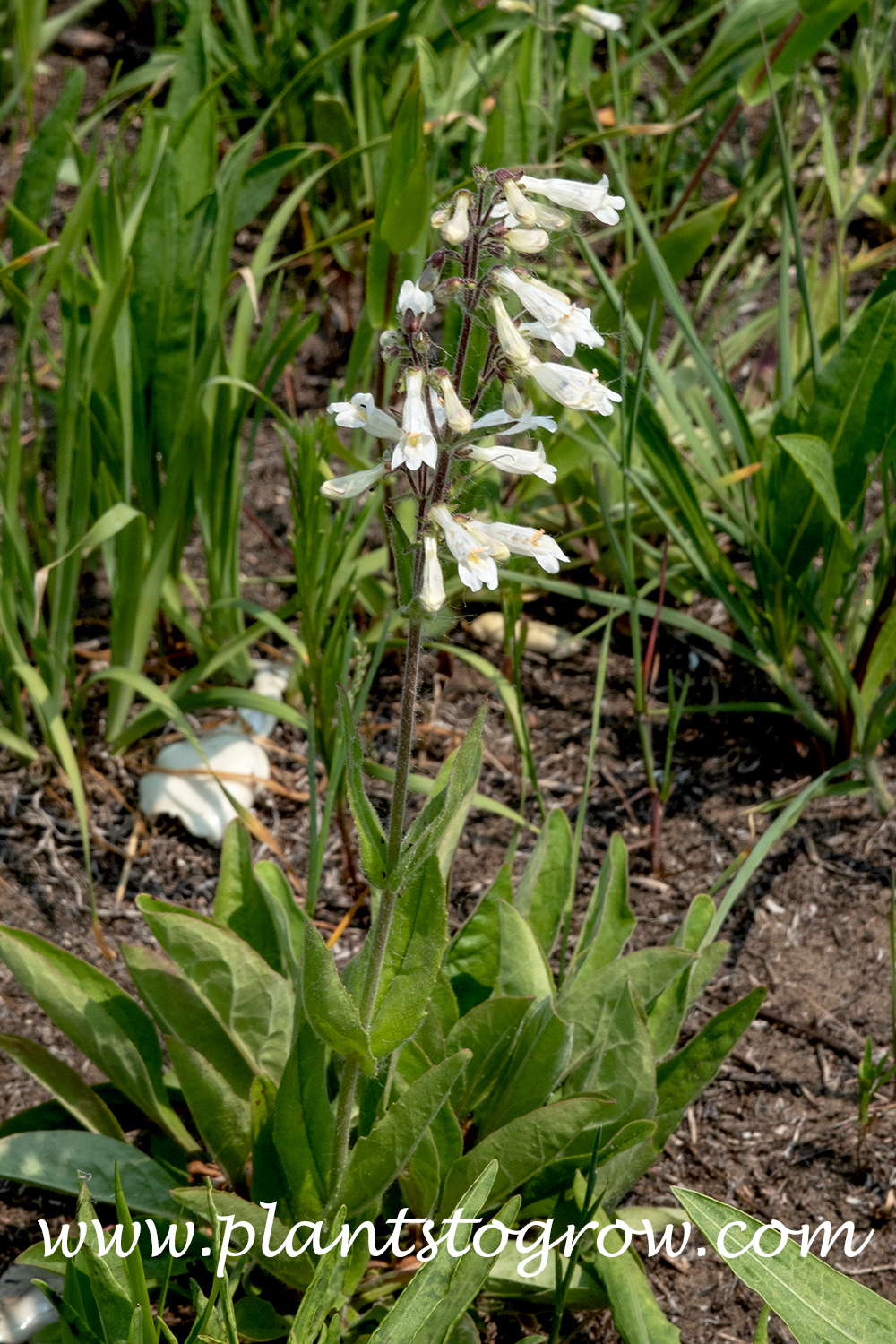
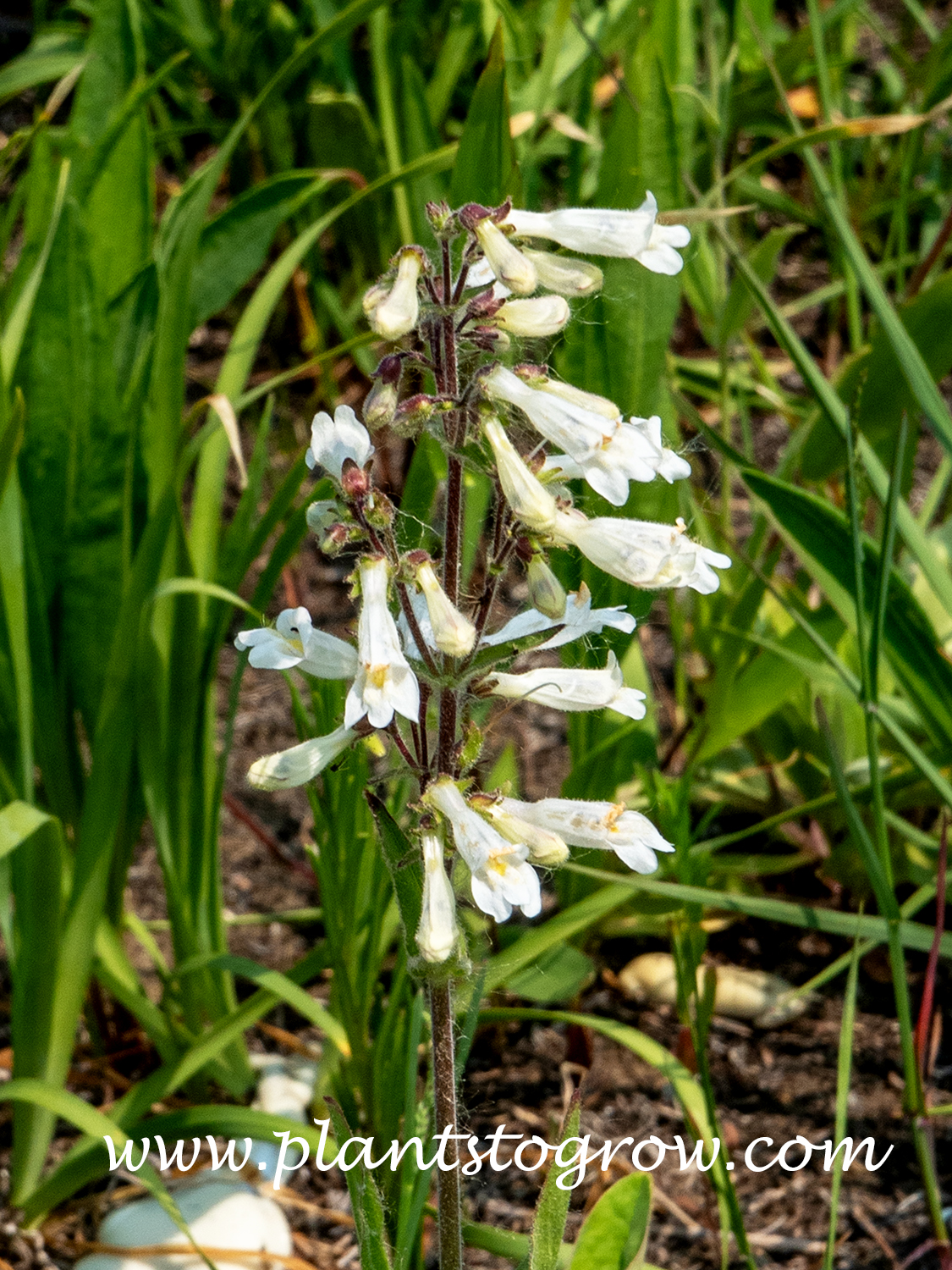
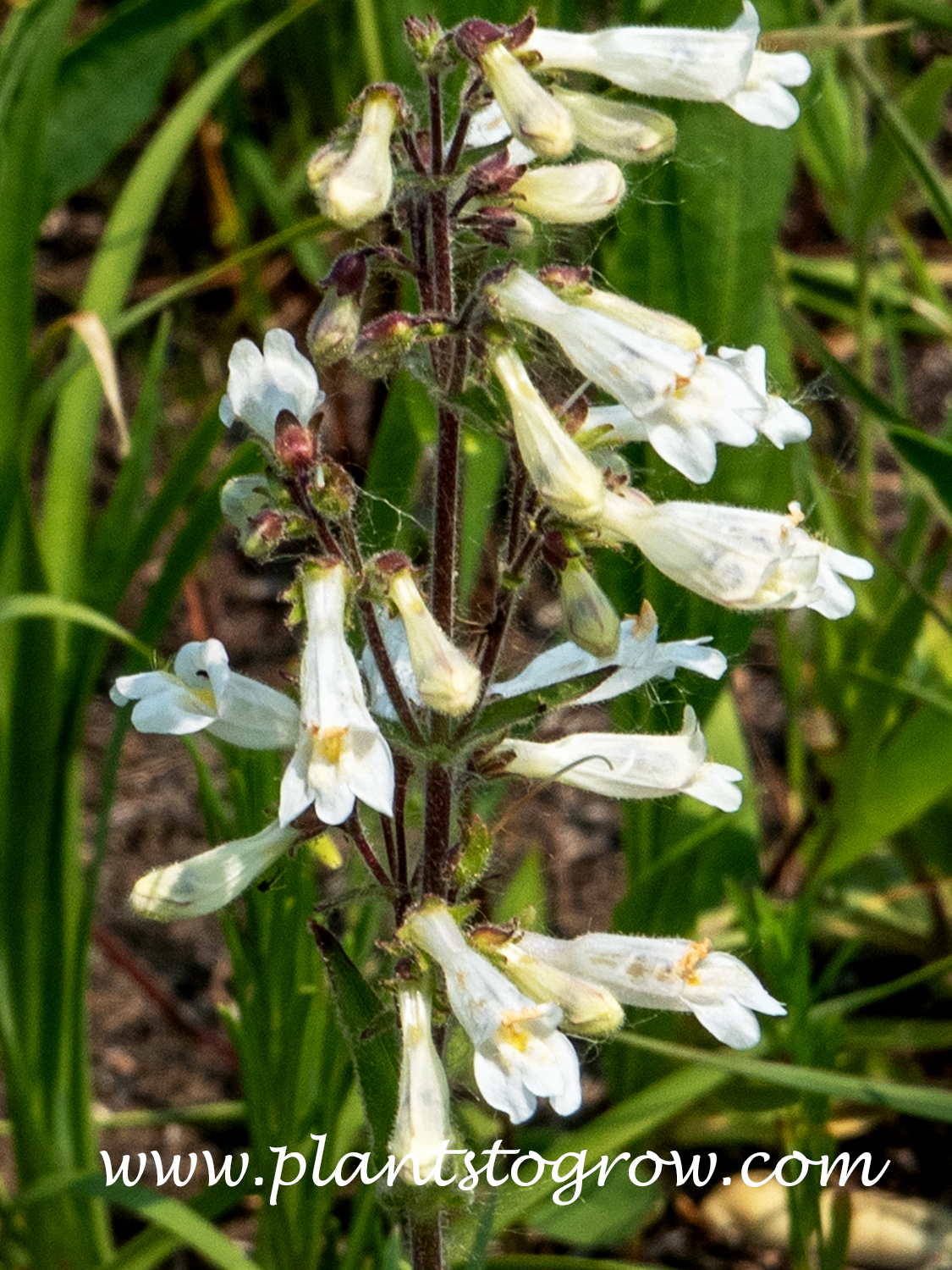
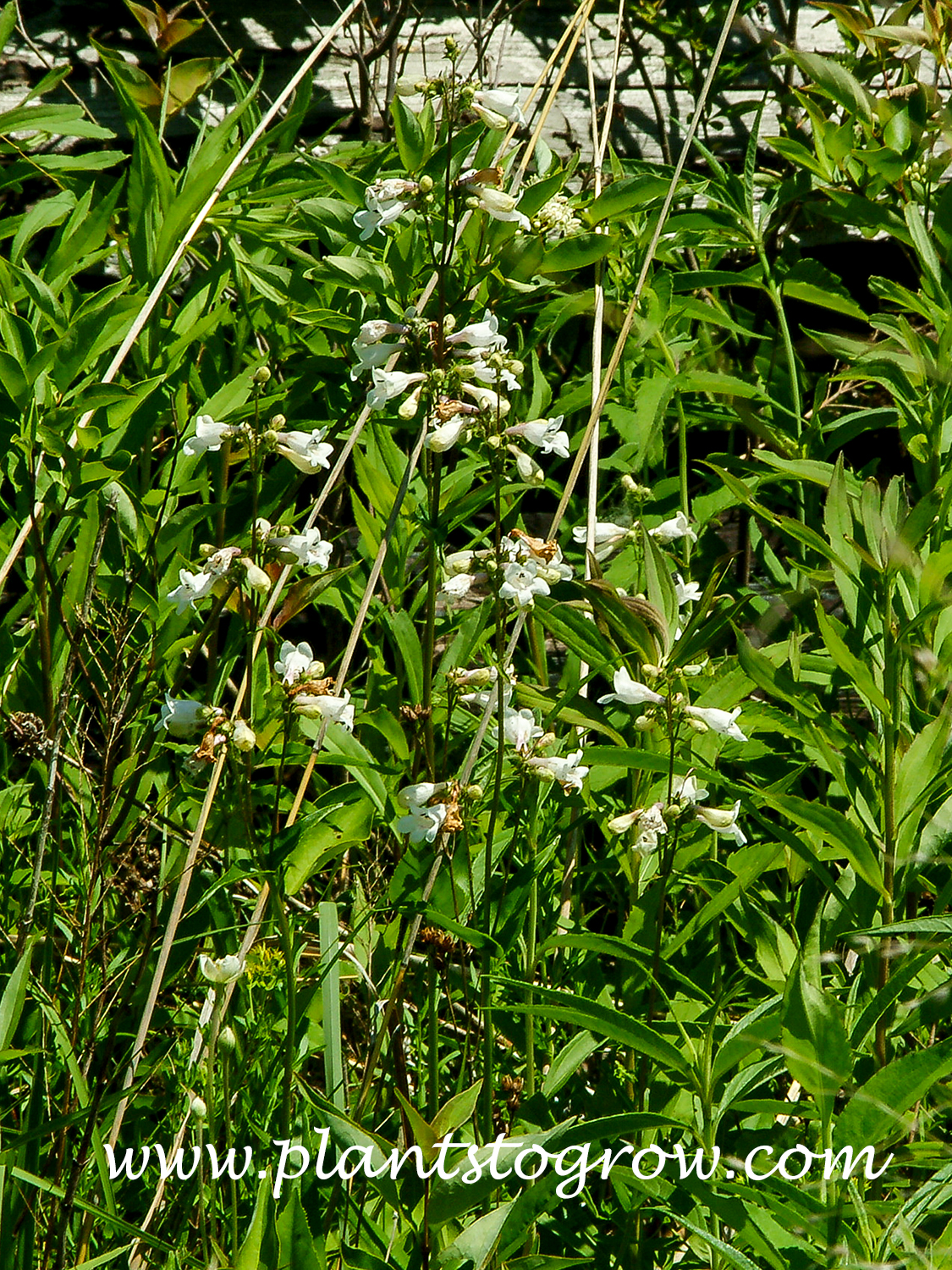
| Description | Pale Beardedtongue (Penstemon pallidis) likes drier soils; rocky, gravel, or sand, and blooms earlier than most other Penstemons. Has tubular white flowers. |
|---|---|
| Plant Type | Perennials Hardy, Wild Flowers |
| Hardiness Zone | 4-8 |
| Sunlight | full |
| Moisture | average, dry, tolerant of drought |
| Soil & Site | drier soils; rocky, gravel, or sand, avoid wet soil |
| Flowers | The individual flower is formed from a white tubular calyx reaching about 2 inches. The upper lip of each flower has two lobes, and the lower lip has three lobes. The flowers can have a pink tinge near the base early. |
| Fruit | Has small ovoid seed capsules (1/4" long) which split open when ripe, releasing numerous tiny seeds. |
| Leaves | Basal leaves form a rosette from which rises a central stem clad with narrow, lanceolate, partially-clasping, medium green stem leaves |
| Roots | Consists of a crown with fibrous roots or a taproot. |
| Dimensions | 1.5-2.5 by1.0-1.5 feet |
| Maintenance | Remove spent flowering racemes to prolong bloom. After flowering, plants can be cut back to basal foliage to improve the appearance of the planting. |
| Propagation | seeds |
| Native Site | Native to a variety of habitats, including dry or rocky open woods, glades, sandy soils on prairies, bluffs, rocky cliffs, abandoned fields, and along railroads. Found in the eastern and central U.S., from Maine to Michigan and Minnesota, south to Georgia, Mississippi, Arkansas, and Kansas. |
| Misc Facts | The specific epithet comes from Latin, meaning "pale," in reference to the pale white flowers and pale green foliage. Penstemons are sometimes commonly called beardtongues because the unusual sterile stamen contained in each flower has a tuft of small hairs. |
| Notes & Reference | #153-Illinois Wild Flower (www.illinoiswildflowers.info), #168-Missouri Flora web site (www.missouriplants.com), #191-Minnesota Wild Flowers (www.minnesotawildflowers.info) |

Cart