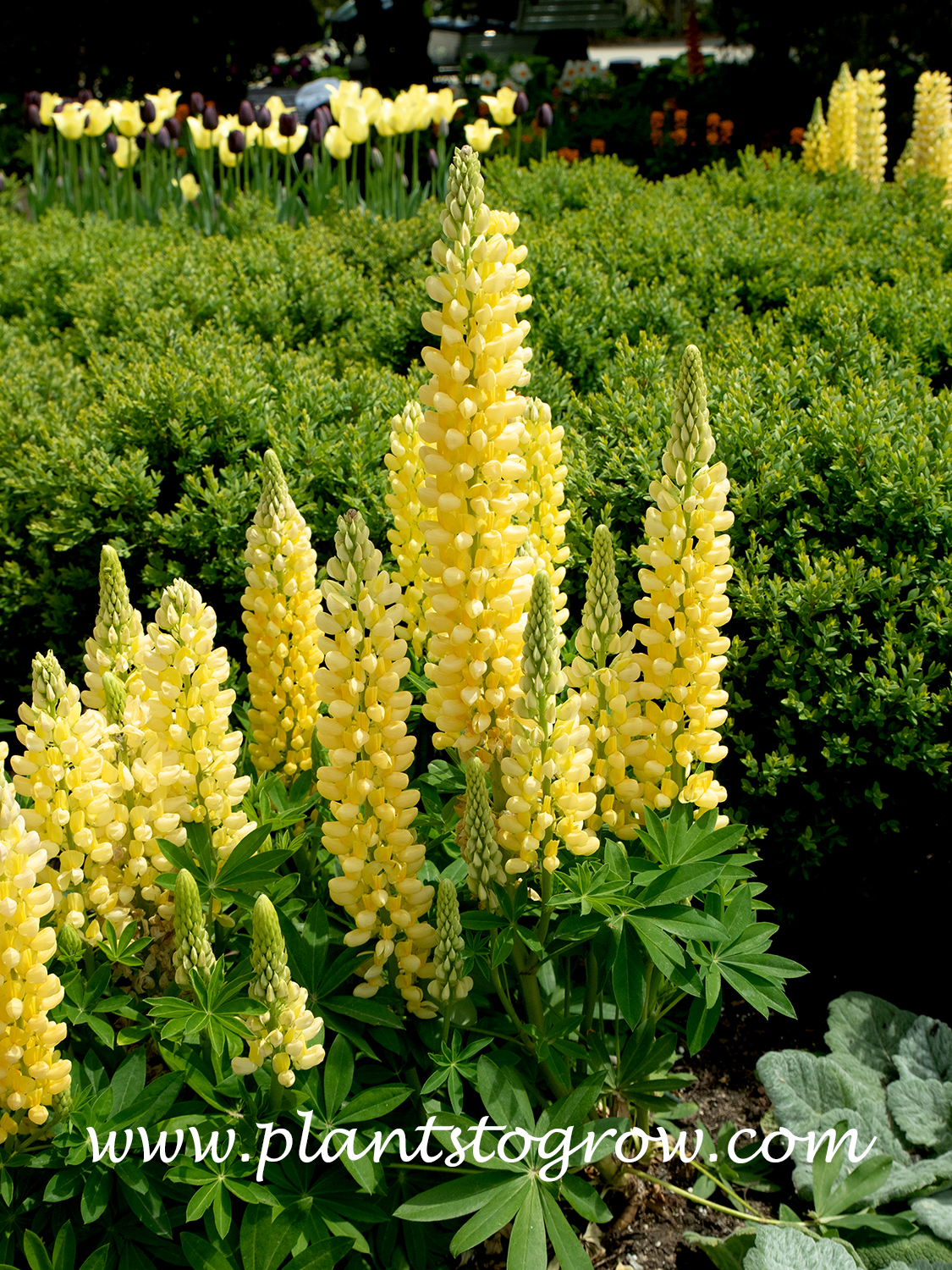
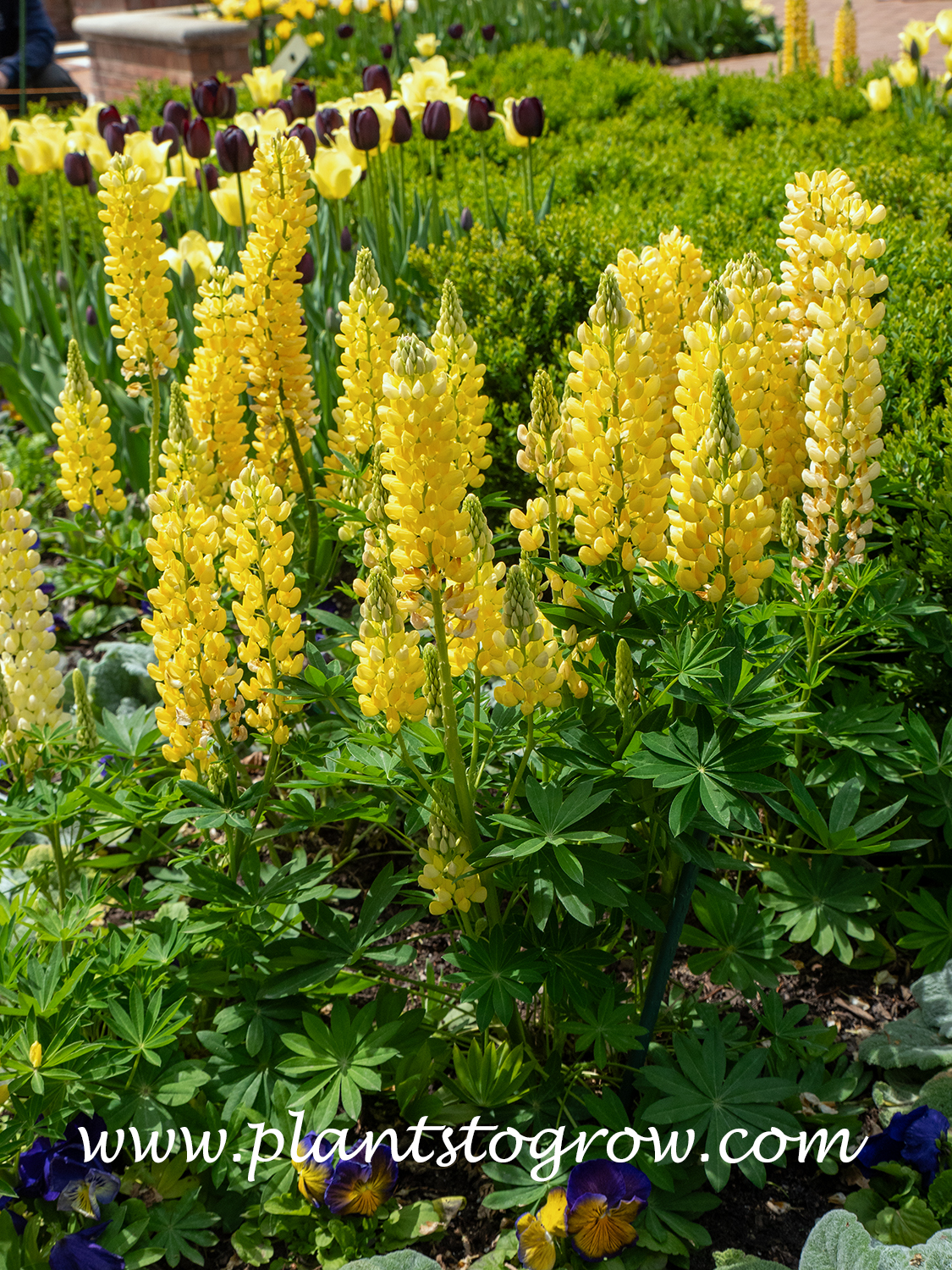
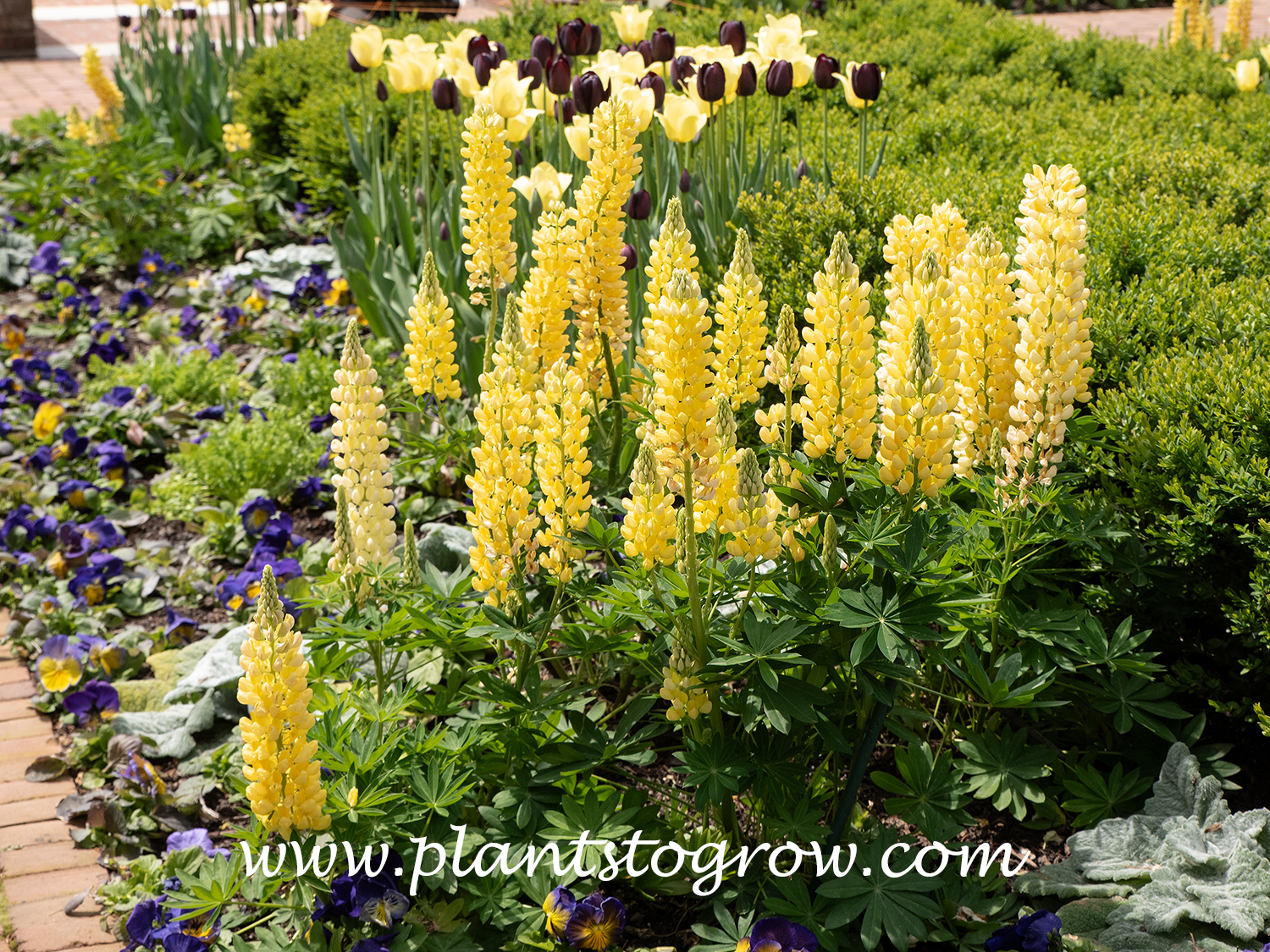
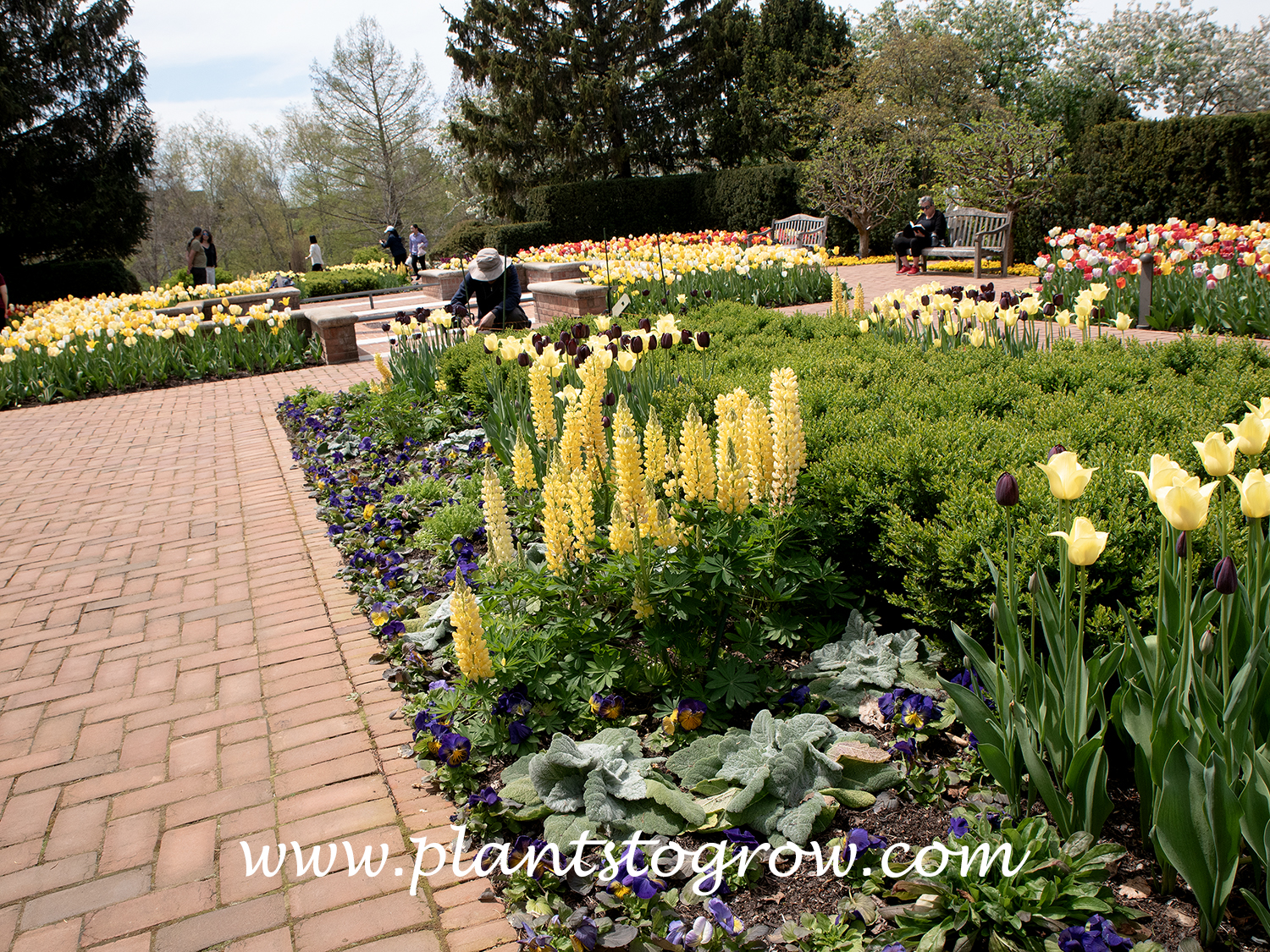
| Description | Yellow Mini Gallery Lupine (Lupinus polyphyllus) is a short-lived perennial that produces spikes of sunshine yellow flowers. |
|---|---|
| Pronunciation | (luu-PIE-nus) |
| Plant Type | Perennials Hardy, Short lived perennials |
| Hardiness Zone | 4-9 |
| Sunlight | Grows best in full sun but will tolerate some shade. |
| Moisture | Prefers moist soil. |
| Soil & Site | Prefers well-drained, moist, slightly acidic soil. It commonly grows along streams and creeks, preferring moist habitats. |
| Temperature | Grow best in the cooler zones. |
| Flowers | The flower inflorescence is a raceme. Also referred to as a spike-like raceme, erect conical spire, raceme, or a spike (which is botanically incorrect). Each of the little florets (lupine flowers) is attached by short pedicels to the central stalk, confirming it is a raceme. Spike inflorescences have florets attached directly to the central stalk. The flowers spiral around the central stalk, blooming from the bottom to the top. The flowers are pure yellow. The flowers are called pea-like flowers. |
| Fruit | A legume or a pod, similar to a pea pod. Pods are typically flattened, elongated, often hairy, and turn black or dark brown. At maturity, they dry and split open to release their seeds. |
| Leaves | Green with long petioles and a palmately compound blade. |
| Stems | The stems are hollow, generally erect, stiff, and grow in clumps. Generally unbranched or compactly branched. Covered with grayish-white or silvery hair. |
| Roots | Forms a tap root, making it difficult to move once established. |
| Dimensions | 18-24 x 12-16 inches (HS) |
| Maintenance | Deadheading will extend bloom time. They are deer-resistant. |
| Propagation | It is primarily propagated through seeds. To grow from seed, soak the seeds or nick (scarify) them to help germination. Mature seeds are dark brown or blackish-brown and rather large. |
| Native Site | The species plant is native to western North America, from southern Alaska and British Columbia, and western Wyoming, and south to Utah and California. It commonly grows along streams and creeks, preferring moist habitats. |
| Cultivar Origin | The Mini Gallery series was bred in France by HM Clause to be more compact and floriferous than older cultivars. |
| Misc Facts | Lupine is a derivation of lupus, for wolf. |

Cart