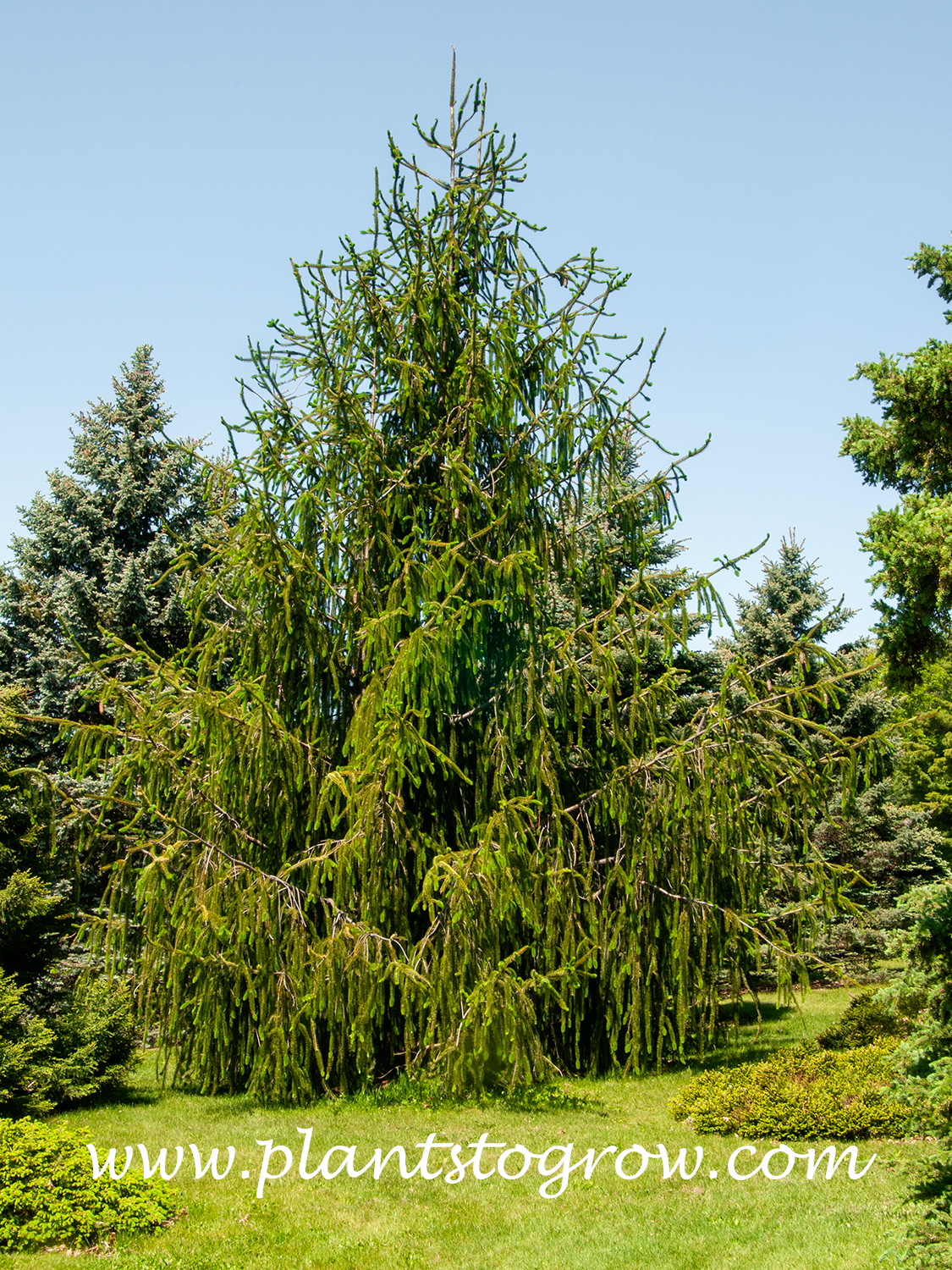
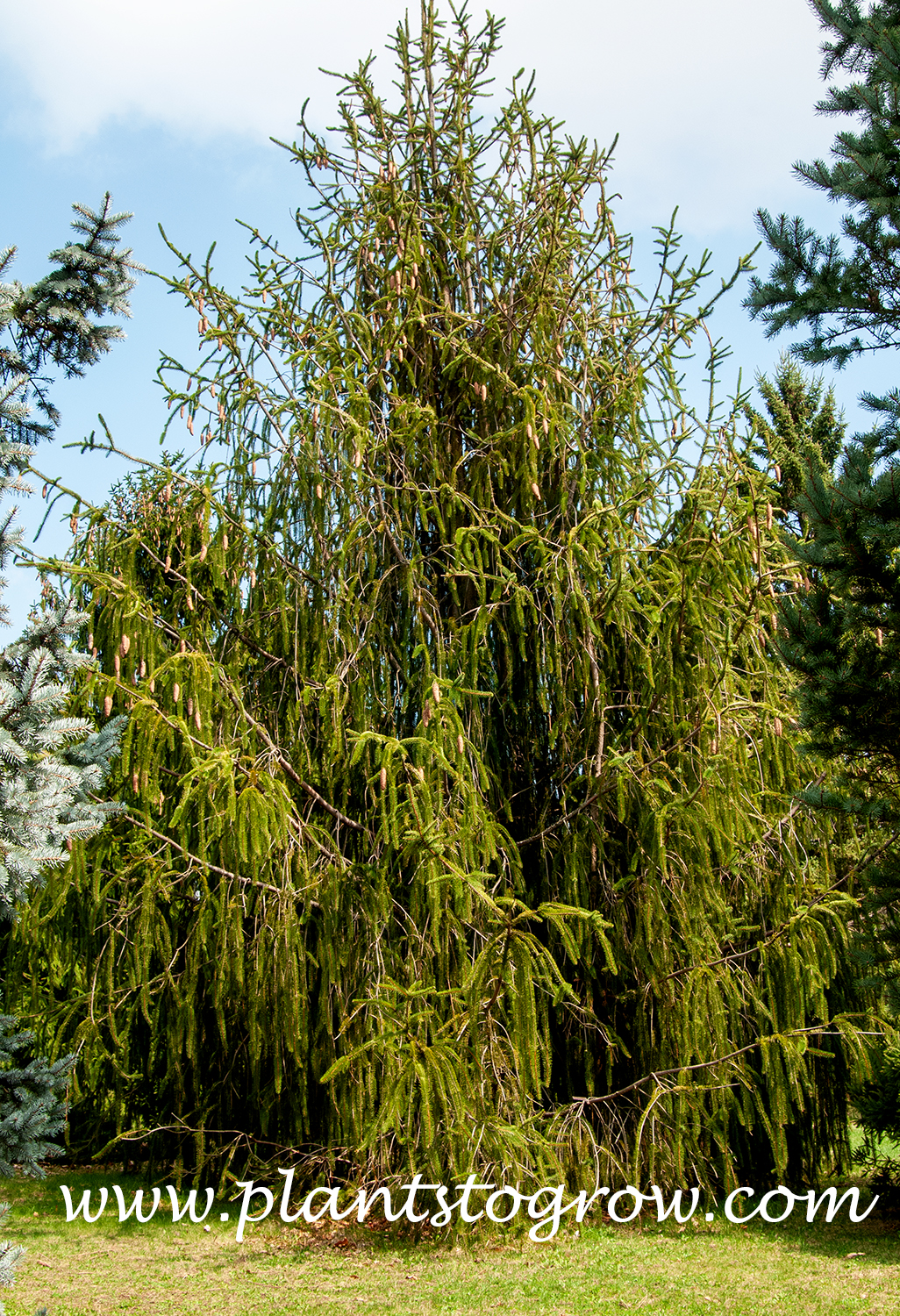
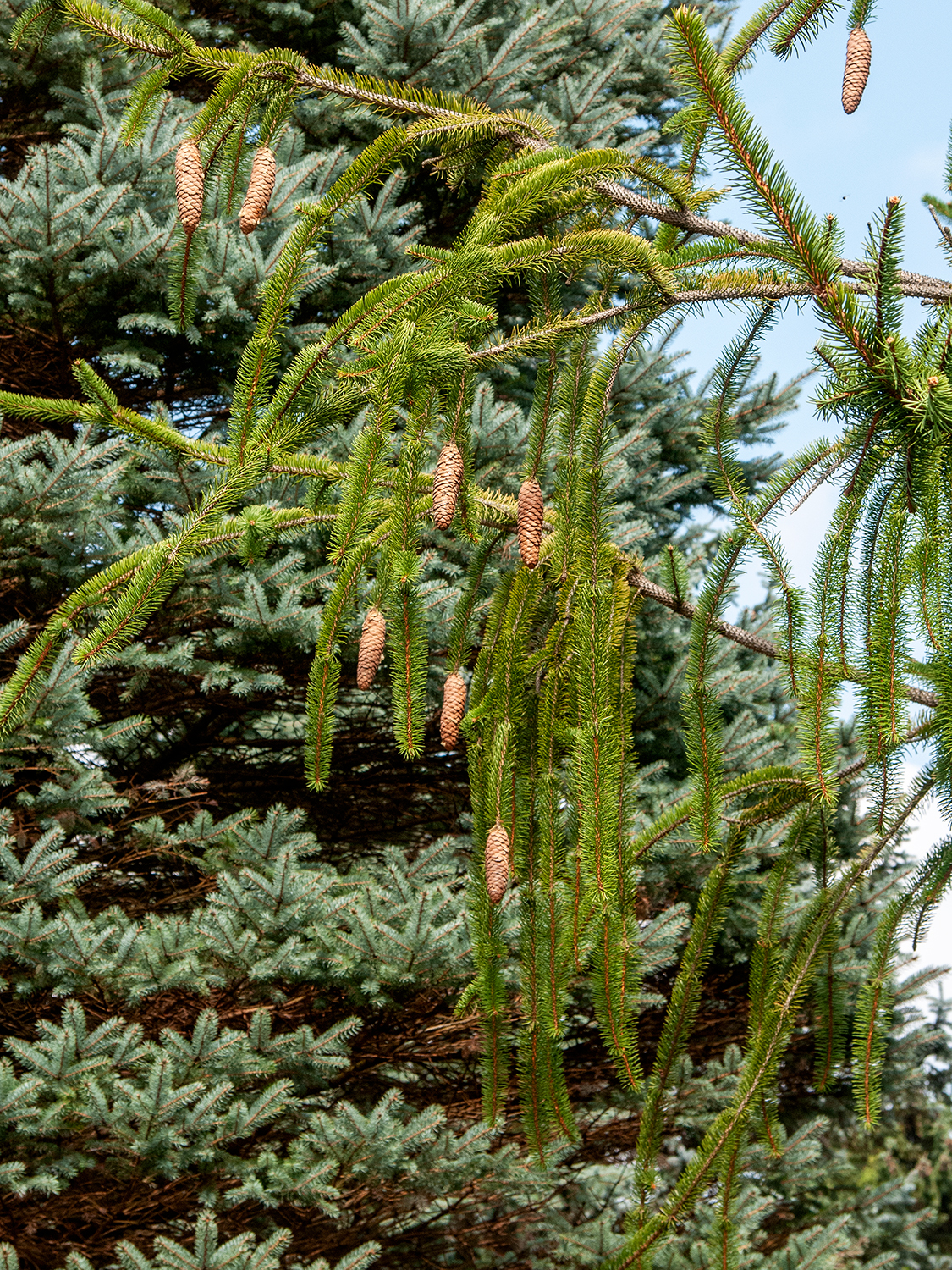
| Description | Snake-Branch Spruce (Picea abies Virgata) is a Norway Spruce cultivar. with long, whip-like, sparsely branched limbs with few if any lateral branches that give it an irregular appearance. |
|---|---|
| Pronunciation | (PY-see-uh)(A-bees) |
| Plant Type | Shrubs Coniferous |
| Hardiness Zone | 4-6 |
| Sunlight | full |
| Moisture | average |
| Soil & Site | average |
| Flowers | not ornamental |
| Fruit | scaly cone |
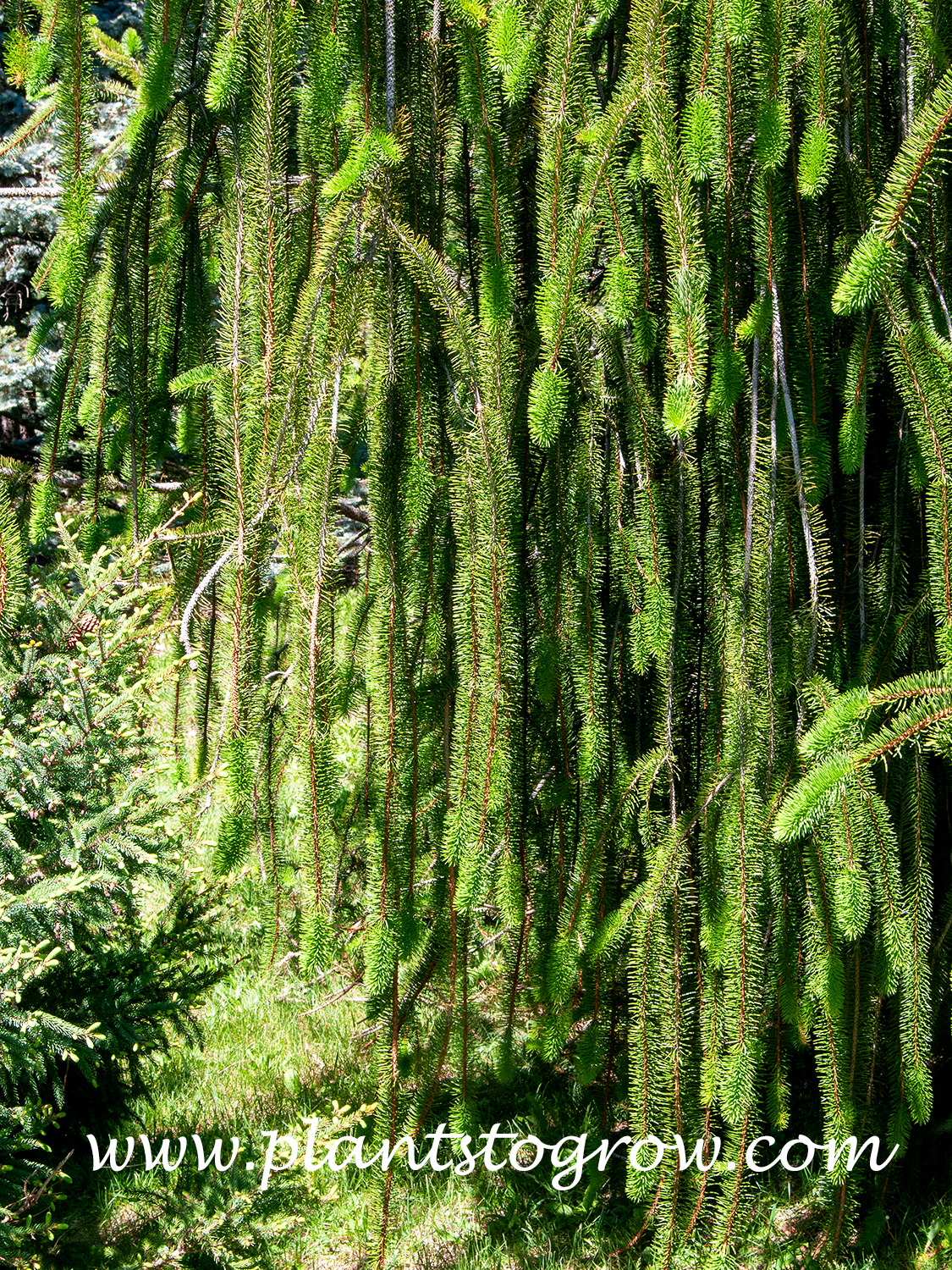
| Leaves | Four-sided, needle-like, deep green leaves that are attached at their bases to tiny pegs |
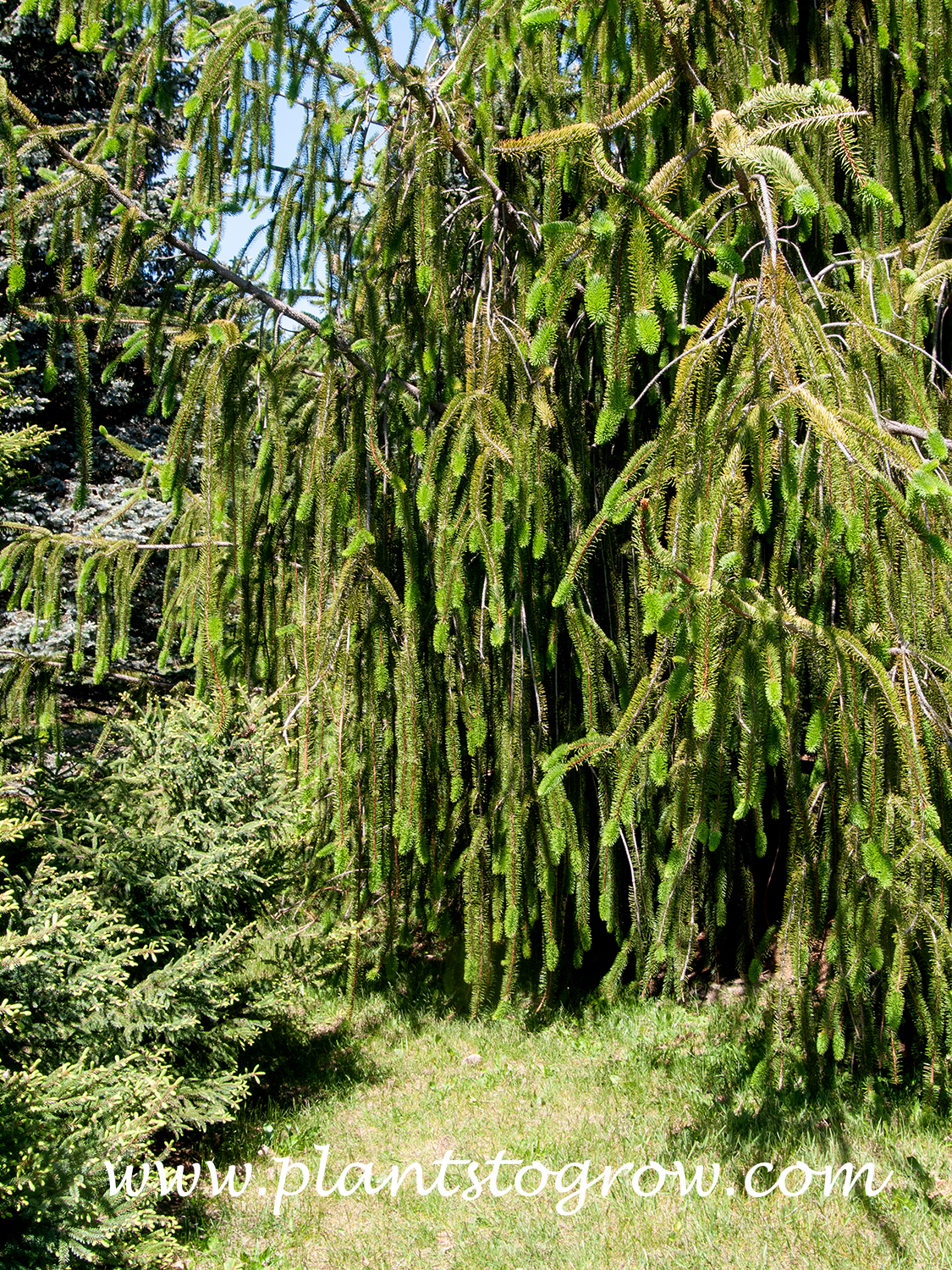
| Stems | Has whip-like, sparsely branched limbs that give it a dramatic, irregular appearance. Has long trailing branchlets. |
| Dimensions | Reaches 18-20 by 10-15 feet (HS) or taller. Instead of the pyramidal shape normally seen in the species, Snakebranch Spruce has sparse, undulating, snake-like branches laden with clusters of long trailing branchlets. |
| Propagation | Reported to be sterile and reproduces by layering in nature. Commonly propagated through cuttings and grafting. |
| Native Site | A naturally occurring mutation of Norway spruce (Picea abies), which is native from the mountains of northern and central Europe to the Ural Mountains of western Russia. |
| Cultivar Origin | It was selected and introduced to horticulture from naturally occurring mutations in Europe before 1853. It is a rare type of Norway spruce known for its long, sparse, snake-like branches. |
| Misc Facts | The cultivar name ‘Virgata’ is from the Latin word virga, meaning “rod”. |
| Notes & Reference | #144-Missouri Botanical Gardens website (www.missouribotanicalgarden.org), #274-Site Authors' observations, VaDusen Botanic Gardens, Vancouver, Canada (https://www.vandusengarden.org/wp-content/uploads/2015/02/March2016-TOTM.pdf) |

Cart