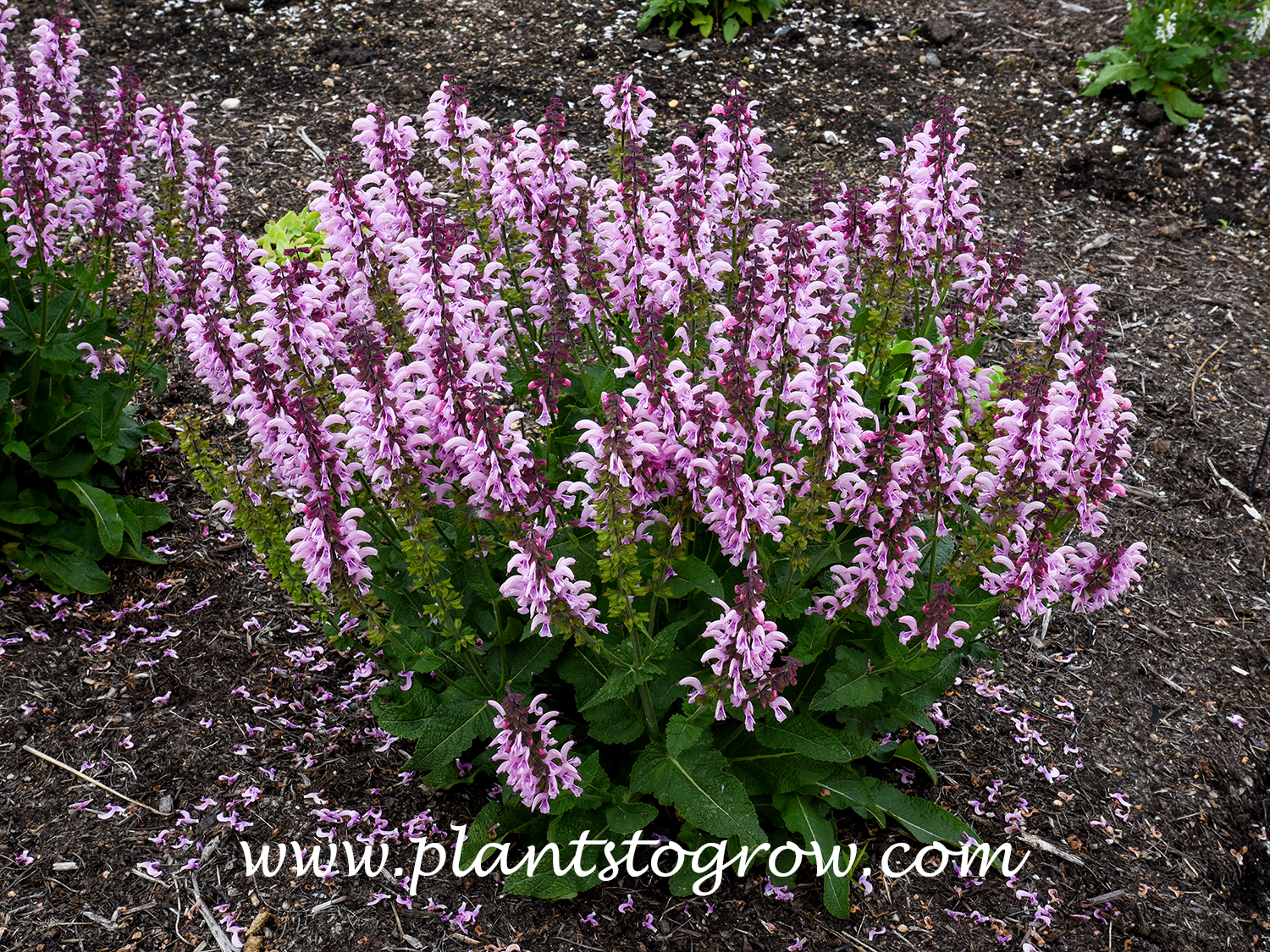
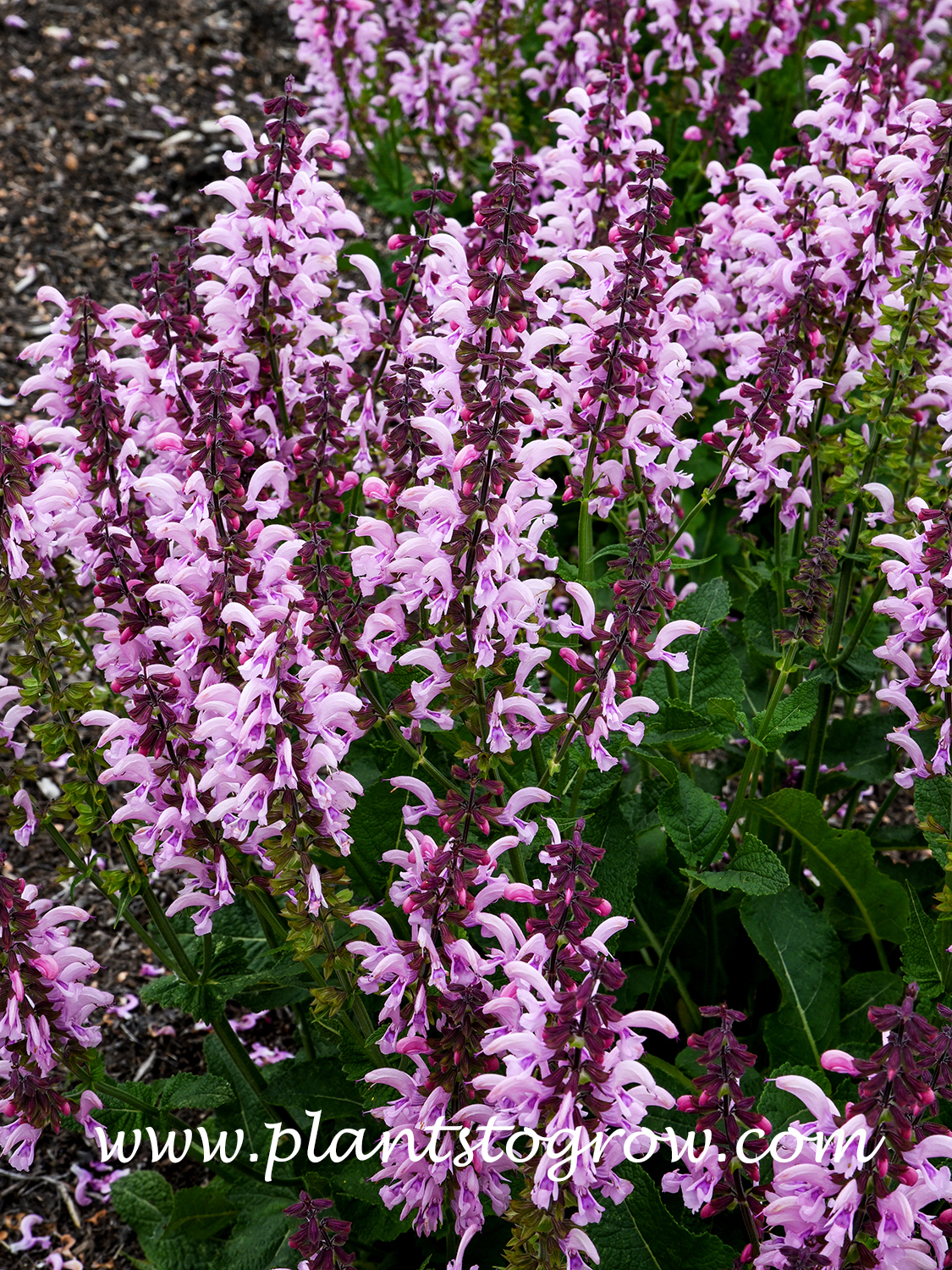
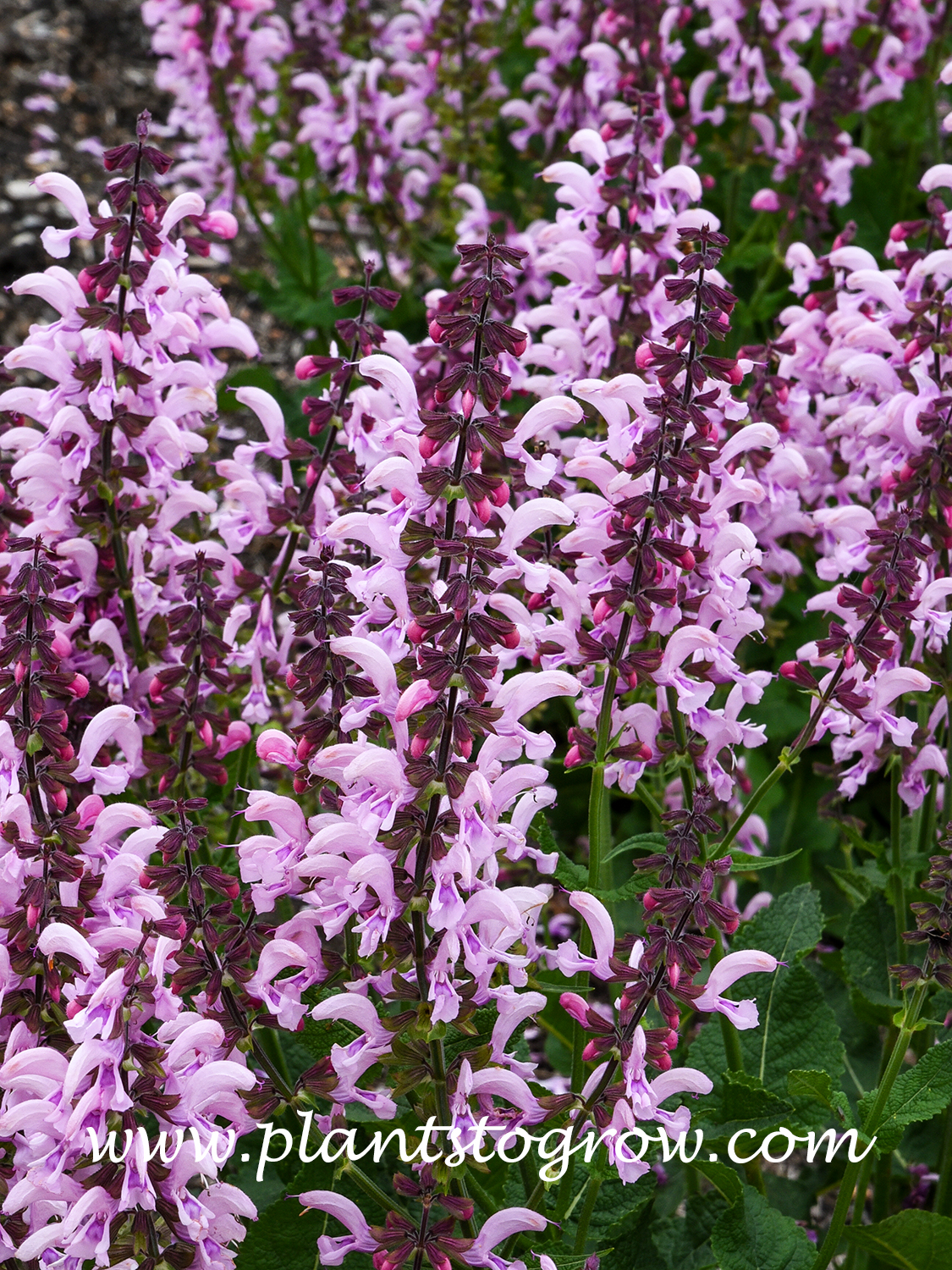
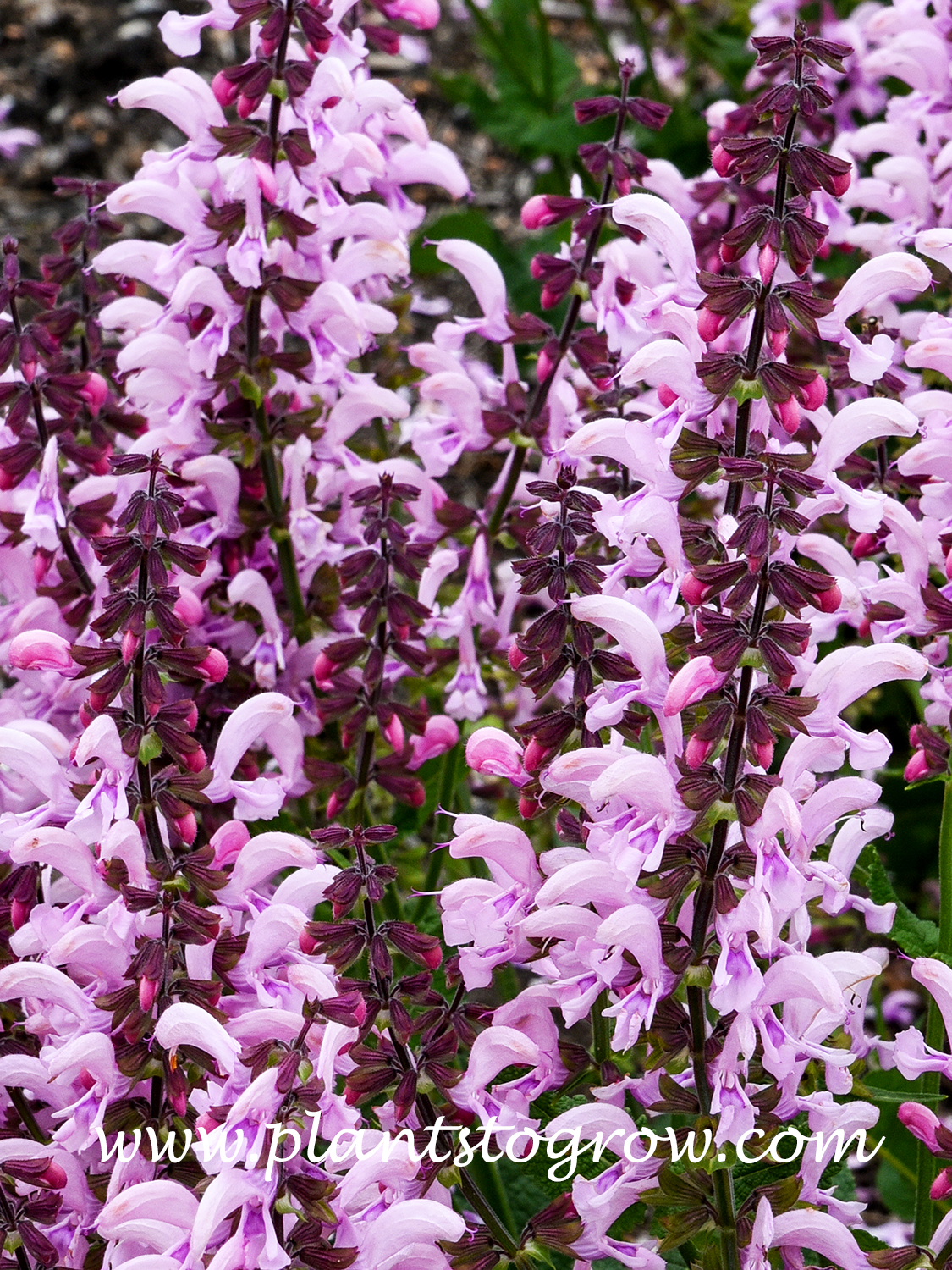
| Description | Ballerina Pink Salvia (Salvia pratensis) is a clump-forming herbaceous perennial with a spike of soft pink flowers that are held by dark mauve pink calyxes. |
|---|---|
| Pronunciation | (SAL-vee-uh)(pray-TEN-sis) |
| Plant Type | Perennials Hardy, Site author's observations |
| Hardiness Zone | (4)5-9 |
| Sunlight | full, mostly sunny, light shade |
| Moisture | average, tolerant of dry once established |
| Soil & Site | Grows in average to well-drained soil. For winter survival, they need well-drained soil. |
| Flowers | Has a spike of soft pink flowers held by dark mauve-pink calyxes. A very nice color combination. |
| Fruit | The schizocarp breaks apart into four nutlets. They are held in the calyx until released by wind or taken by birds |
| Leaves | Deep green, aromatic, large, ovate to oblong leaves that are generally slightly wrinkled or rugose in texture. Forms a low-growing basal rosette with smaller, opposite, pointed leaves further up the square-shaped flowering stems. |
| Stems | Square, erect stems are a common trait of Salia. |
| Roots | fiborus |
| Dimensions | 18-20 by 16-18 inches (HS) |
| Maintenance | After blooming, the foliage starts to deteriorate; cut it back to a few inches above the soil. The plants will quickly grow a basal flush of fresh foliage. The plant is rabbit and deer-resistant. |
| Propagation | Will not true from seeds, propagate by cuttings or careful division. |
| Native Site | The species plant Salvia pratensis is found growing throughout most of Europe. |
| Cultivar Origin | Developed by Walters Gardens, Zeeland, Michigan, USA., and introduced around 2018 (patent applied in 2017) |
| Notes & Reference | #87-The New Book of Salvias (Betsy Clebsch), #270-North Carolina Extension Gardener Tool Box (https://plants.ces.ncsu.edu/plants), #274-Site Authors' observations and growing experiences of perennial Salvias |

Cart