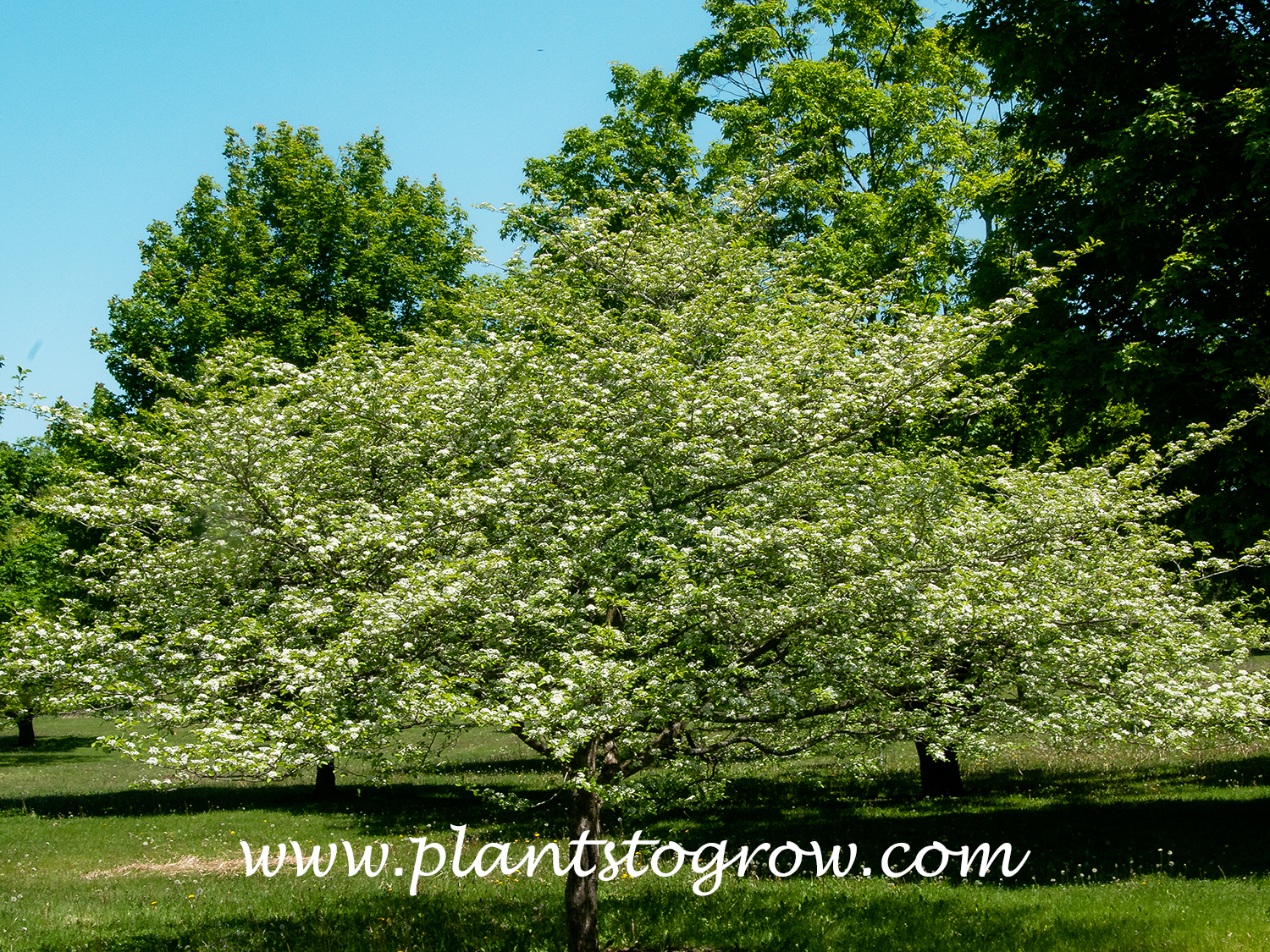
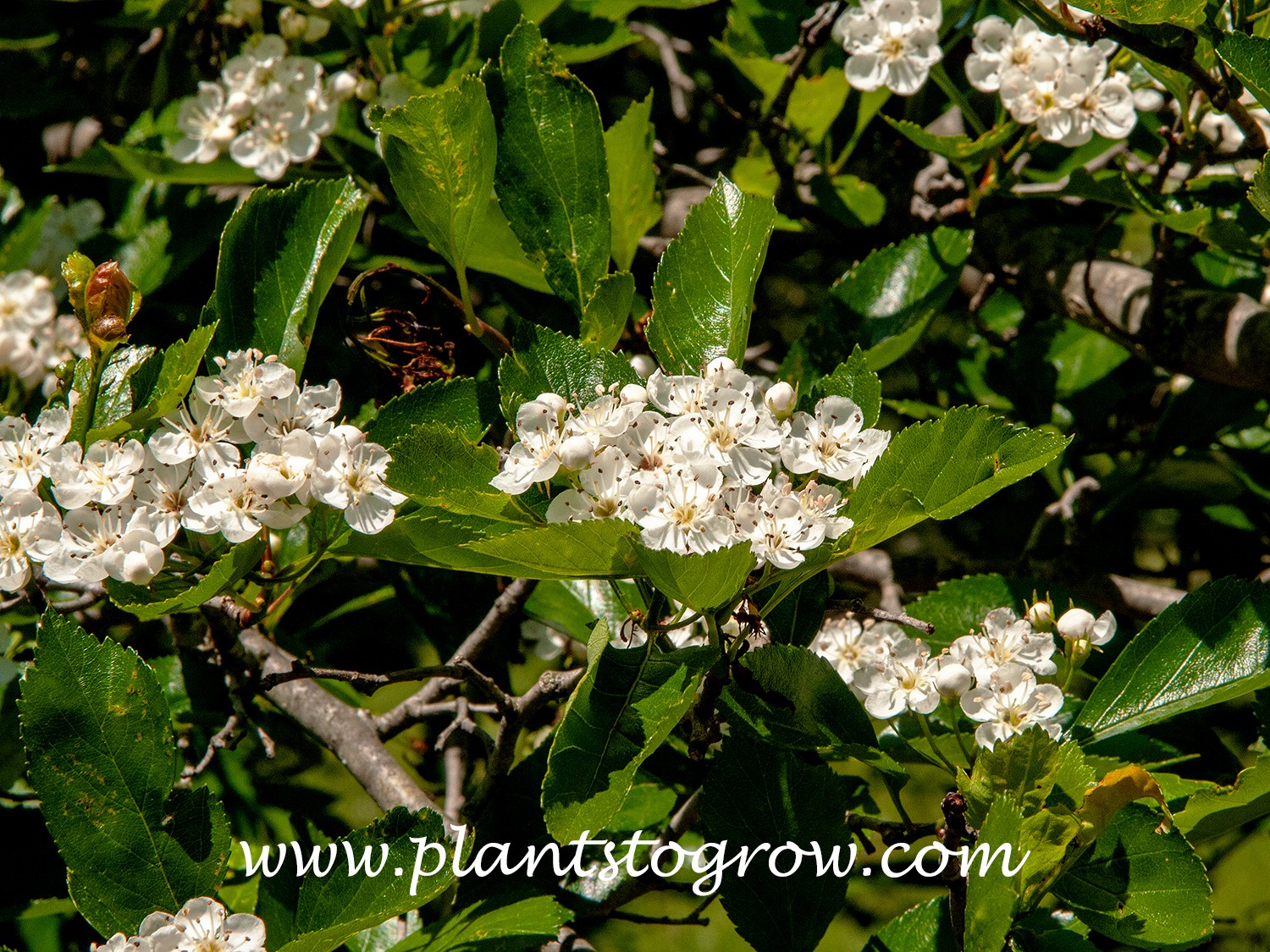
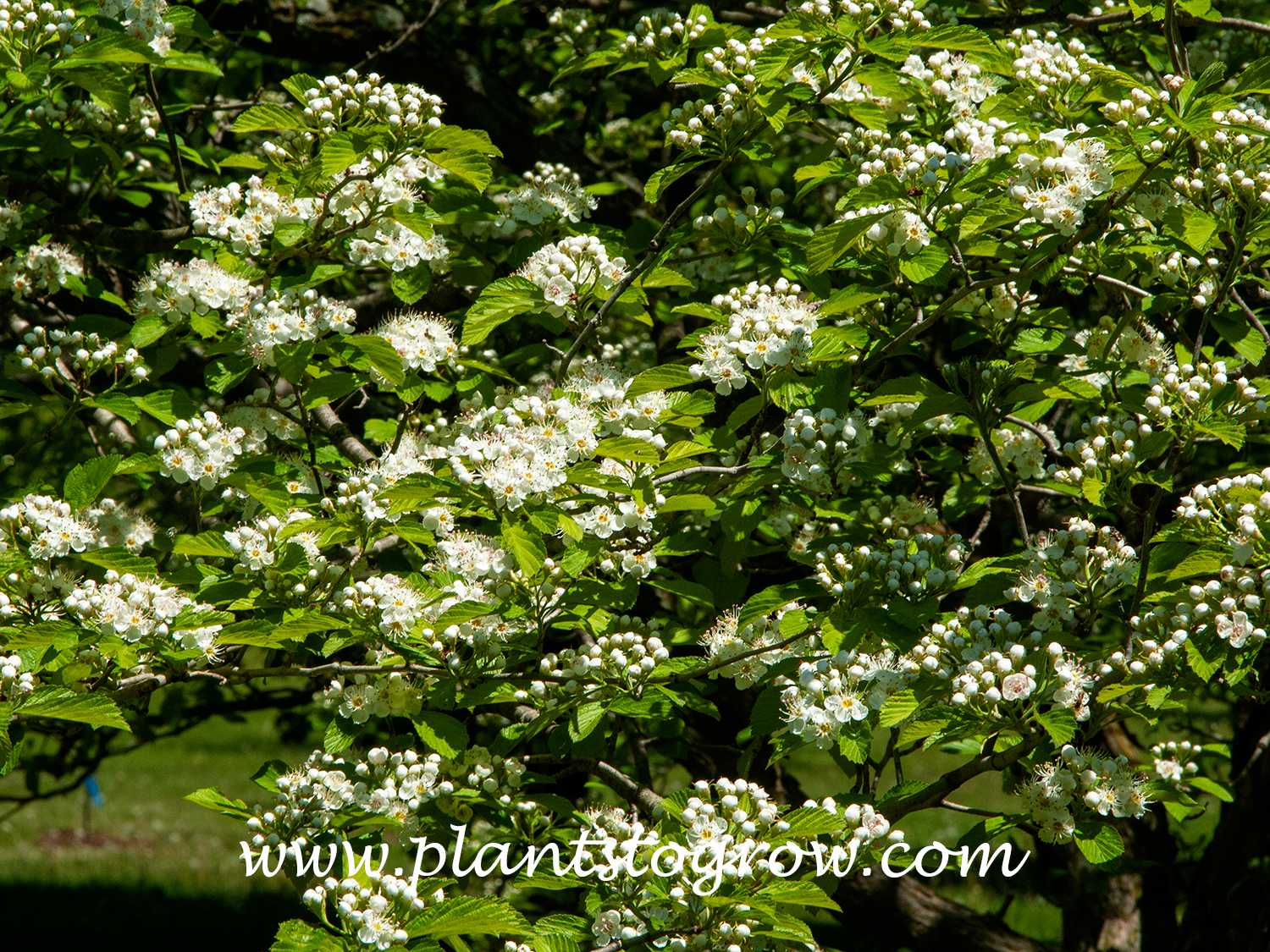
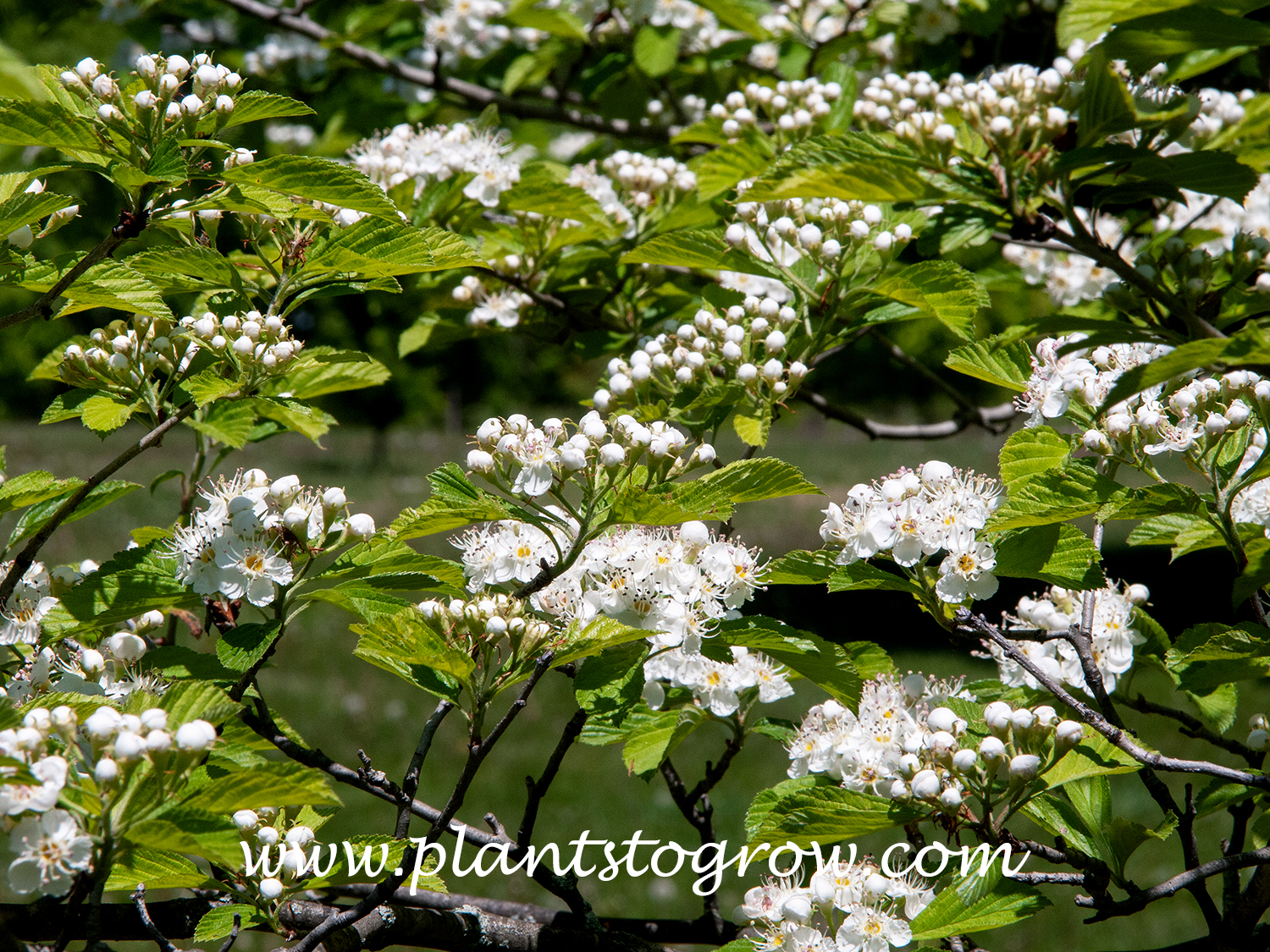
| Description | Hooks Hawthorn (Crataegus crus-galli) a cultivar of the Cockspur Hawthorn with white flowers, glossy leaves, and thorny branches. |
|---|---|
| Pronunciation | (kra-TEE-gus)(krus-GA-li) |
| Plant Type | Trees Deciduous |
| Hardiness Zone | 4-7 |
| Sunlight | full |
| Moisture | average |
| Soil & Site | average |
| Flowers | White flowers in a domed inflorescence called a corymb. Corymb is flat-headed panicles. |
| Fruit | Small, apple-like, red pome fruit that ripens in late summer and fall, and is persistent. |
| Leaves | Glossy green, simple, obovate (spoon-shaped) with serrations on the upper rounded portion of the leaf. The glossy leaves help prevent leaf diseases, which are common on many Hawthorns. |
| Stems | Branches are low, wide-spreading, horizontal, creating a flat-topped or umbrella-like canopy. Bark is fibrous, shredding. Stems will form large thorns. Crataegus crus-galli types are considered thorny trees. |
| Dimensions | A small tree with a wide-spreading, 15-20-foot plant form. |
| Propagation | Since Hooks Hawthorn is a cultivar, it will not come true from seed. Cuttings are difficult to root, and grafting is the main propagation method. |
| Native Site | The species plant Cockspur Hawthorn (Crataegus crusgalli) is native to a large area of the United States and Canada. |
| Misc Facts | The genus name comes from the Greek name for the tree, which means strength, for its strong, hard wood. Crus-galli in Latin means leg of a cock in reference to the purported resemblance of the thorns of this plant to a cock’s spurs. The specific epithet of this plant is sometimes also designated as crusgall. (#144) |
| Author's Notes | Since this is a low-branching tree armed with thorns, proper placement in the landscape is necessary. |
| Notes & Reference | #01-Manual of Woody Landscape Plants (Michael Dirr),#75-Encyclopedia of Nuts, Berries and Seeds (John Heinerman),#93-North American Landscape Trees (Arthur Lee Jacobson) |

Cart