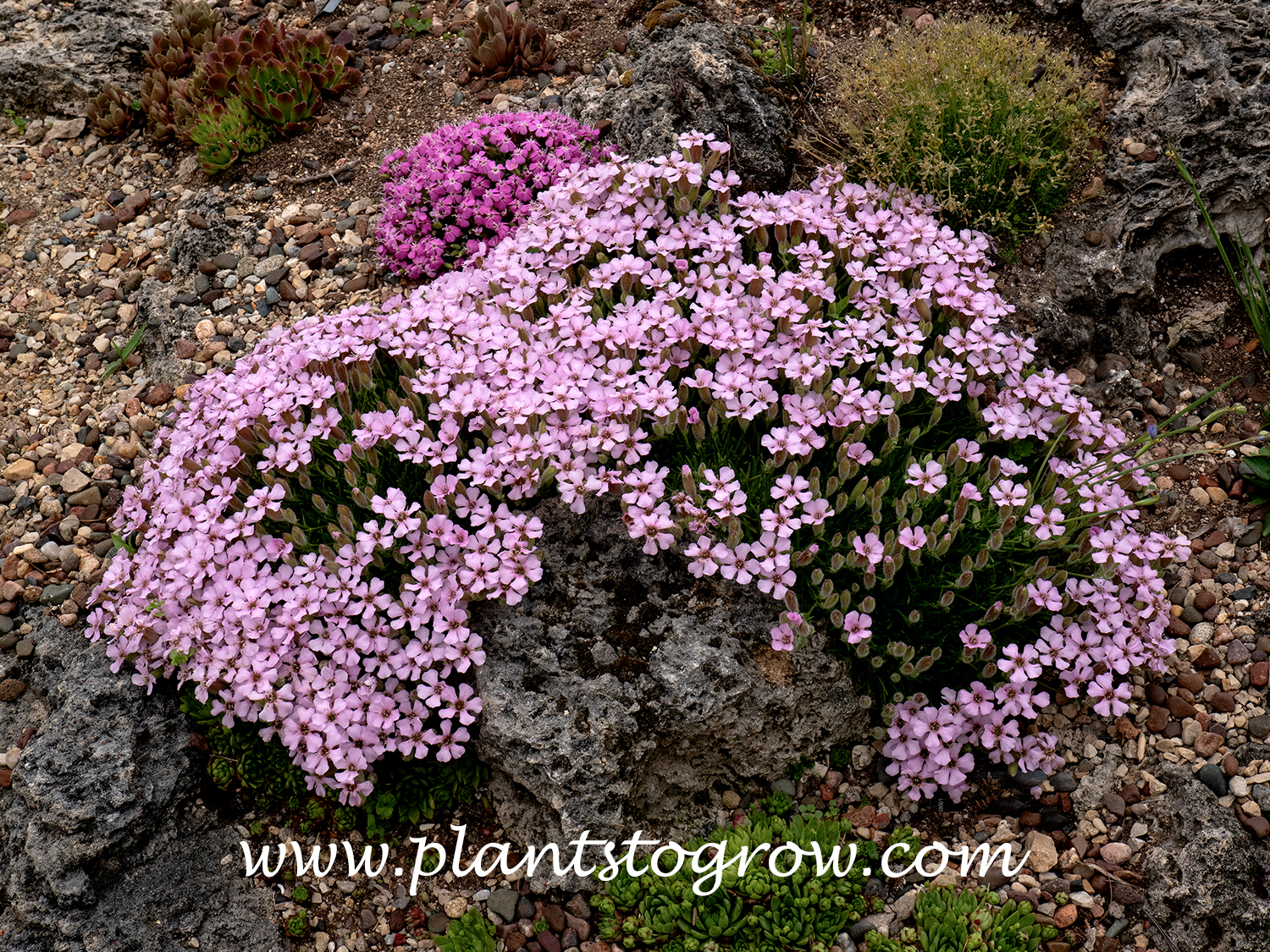
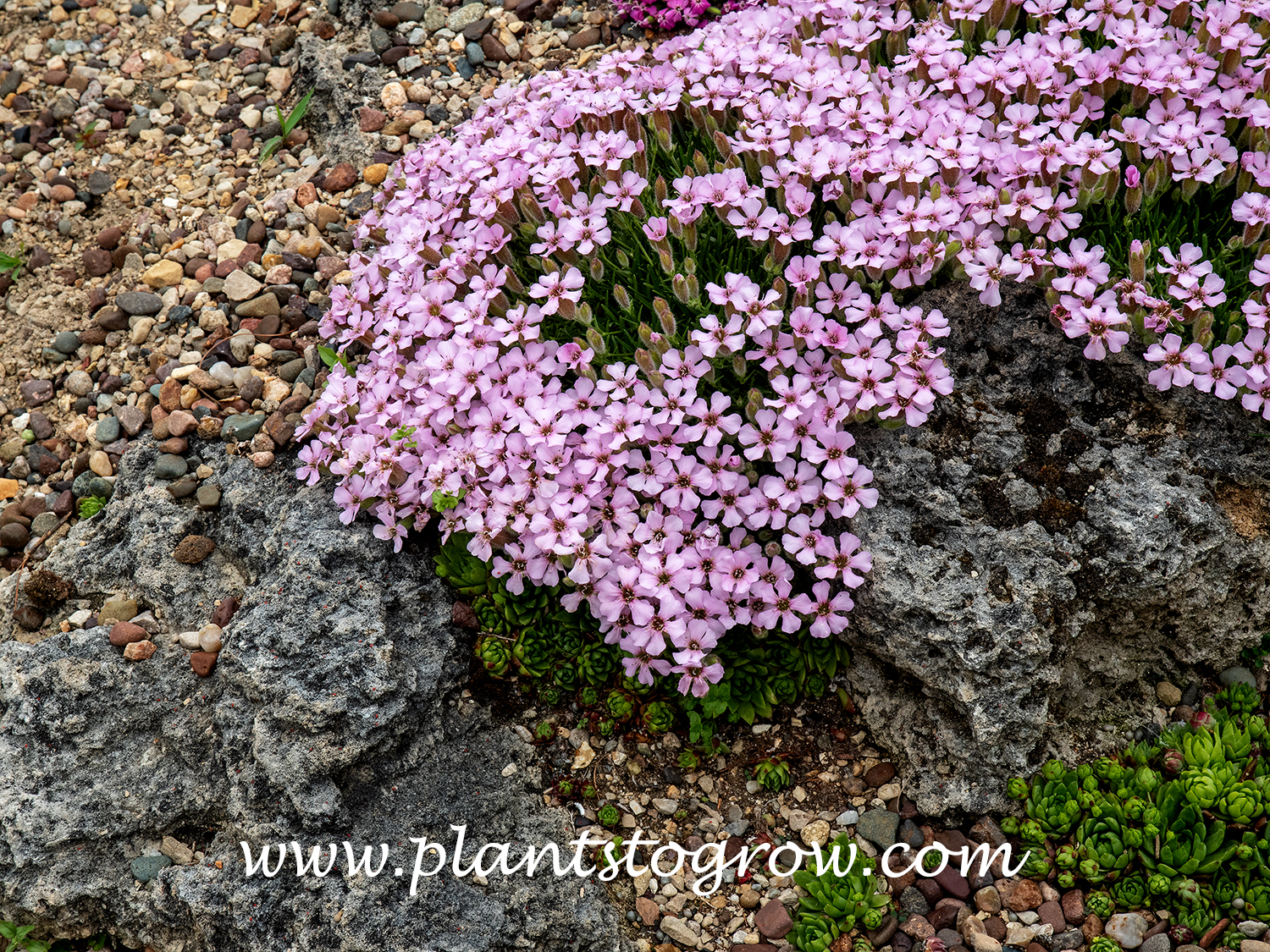
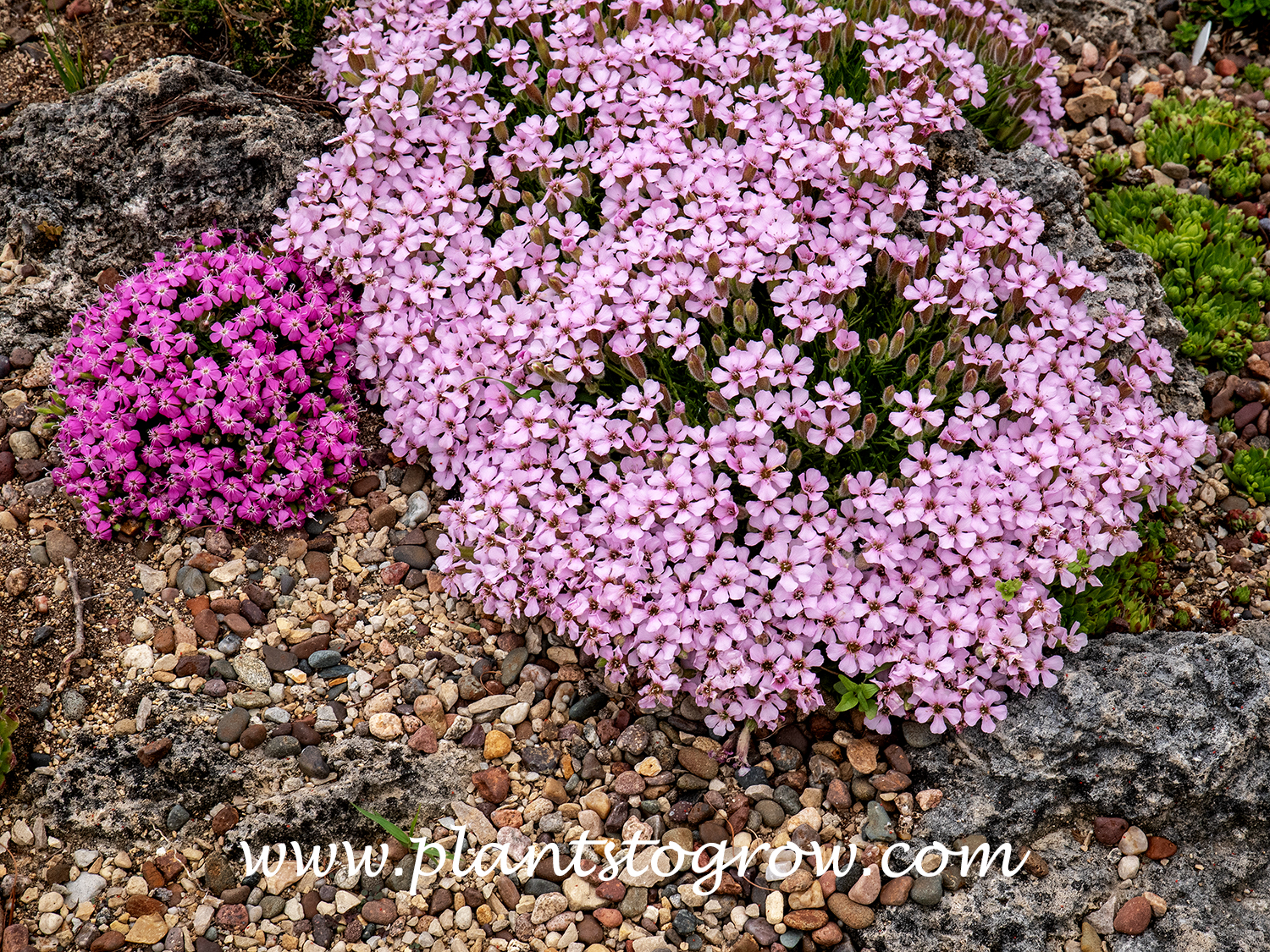
| Description | Bressingham Alpine Sapwort (Saponaria) forms a grassy, green mound of leaves. Has large rose-pink flowers in late spring. Good for rock gardens. |
|---|---|
| Pronunciation | (sap-oh-NA-ri-ah) |
| Plant Type | Perennials Hardy |
| Hardiness Zone | hardy |
| Sunlight | full sun to part shade |
| Moisture | Average to moist, will tolerate some draught |
| Soil & Site | Will grow in average soils, but prefers well-drained, moisture-retentive soil. Will tolerate some dryness. Will grow in gravel scree. |
| Flowers | Bright rose-pink 5-petalled flowers with white centers appear on short stems and start blooming in late spring. |
| Leaves | Forms a mat of semi-severe green leaves. Will cascade over rocks and walls. |
| Dimensions | spreads 12 inches, about 2-4 inches tall |
| Propagation | Since it is a hybrid, it will not come true from seeds, but division can be used to increase the plant. |
| Misc Facts | The genus name Saponaria is derived from the Latin word sapo, meaning soap. The juice of the plant contains saponin which produces suds and also dissolves fats and oils. Being used as a cleaning agent has given it many other names such as latherwort, scourwort, bruise wort, soap root, etc. It also was used in homemade toothpastes and shampoos. |
| Author's Notes | This is listed as a 'Steppable' at the Steppables website (https://www.stepables.com) |

Cart