-03cm.jpg)
-04cm.jpg)
-05cm.jpg)
-06cm.jpg)
-07cm.jpg)
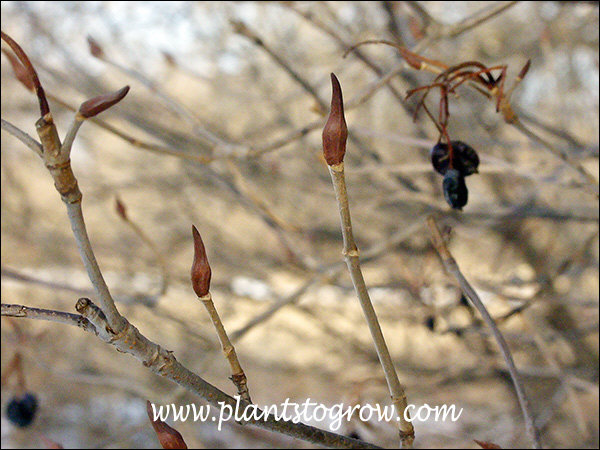
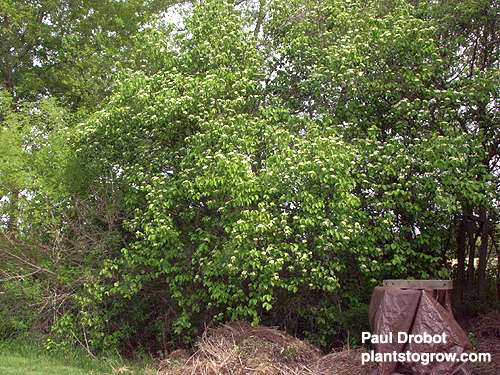
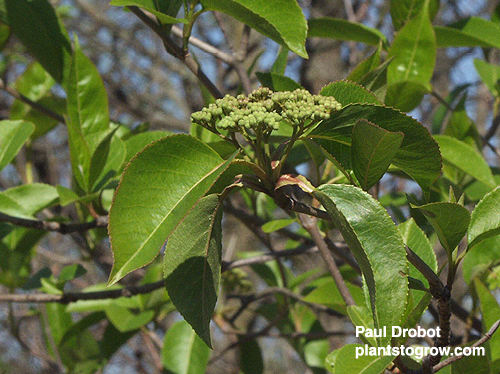
| Description | Nannyberry Viburnum (Viburnum lentago) is a large native shrub found in moist woodlands, thickets, and the borders of wet areas. Good in naturalized areas, providing food for birds. |
|---|---|
| Plant Type | Shrubs Deciduous |
| Hardiness Zone | 3-7 |
| Sunlight | full to semi-shade |
| Moisture | average to moist |
| Soil & Site | average to moist |
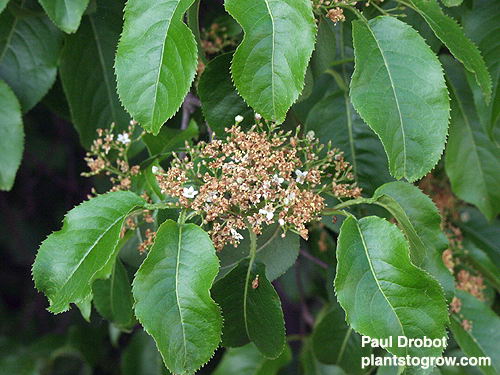
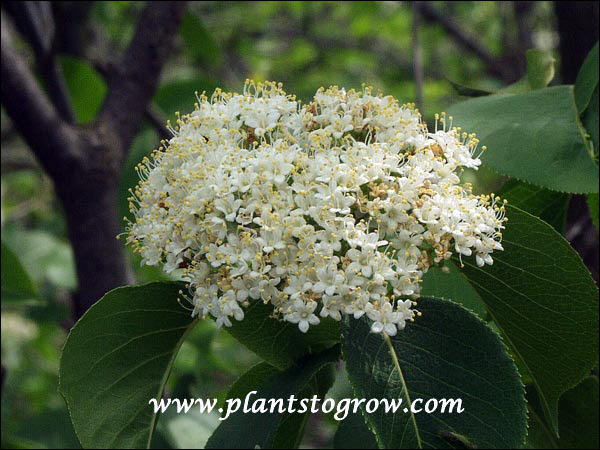
| Flowers | Creamy white flowers on a 3 to 4 in. flat-topped cyme. Individual flowers are 1/4 inch across with 5 petals and long stamens. |
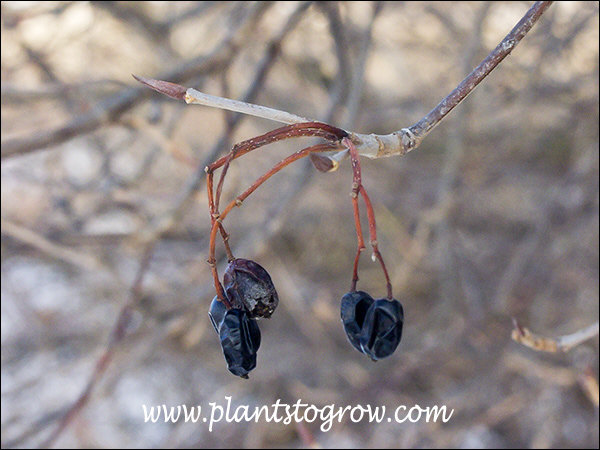
| Fruit | Oval-shaped, bluish black, drupes ripening in the fall. The fruit is edible by humans and many birds. The plants in my hard produce fruit, but not in abundance. |
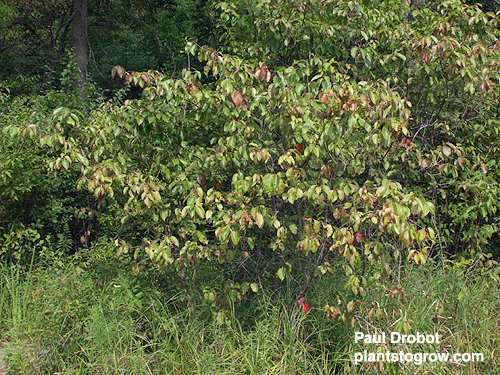
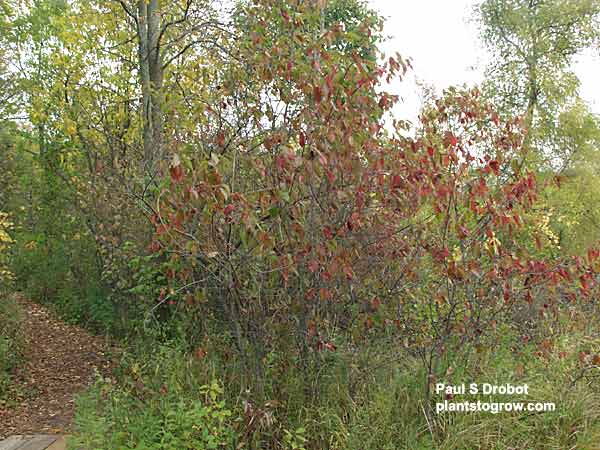
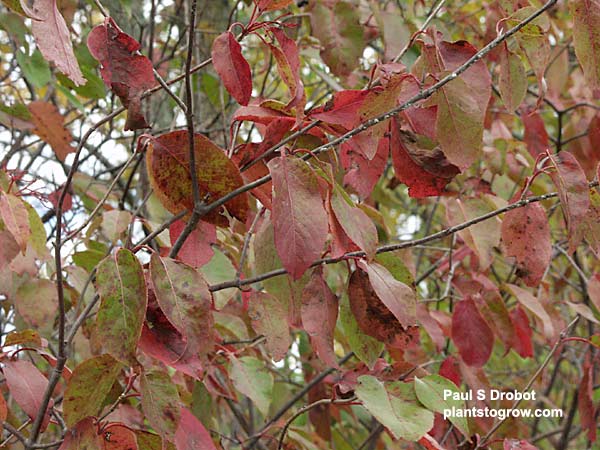
| Leaves | Leaves are green, oval to egg-shaped, pointed, opposite, finely serrated, and dull beneath. Fall color can be a nice purplish red (not a guarantee). Will develop mildew on the leaves in the fall and can have early leaf drop. |
| Stems | The terminal buds are lead gray, fat at the base, tapering to a tip (good winter ID characteristic). The apical buds are an easy-to-identify feature of this plant in the winter. The buds have valvate scales, meaning the scales touch but don't overlap. |
| Dimensions | 5-15+ feet tall, spread about 1/2 the height, space 6-8' on center, can be pruned to a single stem tree |
| Propagation | seeds, cuttings |
| Native Site | Native to eastern North America and Canada from Quebec to Ontario. |
| Cultivar Origin | Introduced into cultivation around 1761. |
| Misc Facts | The name "Nannyberry" comes from the rank odor of the wood. |
| Author's Notes | Have a couple of these in the fence line around the property. One is 15 plus feet tall. Have seen them even taller. Mine are always loaded with mildew in the fall. As bad as the common Lilac. Nice purple red fall color. |
| Notes & Reference | #01-Manual of Woody Landscape Plants (Michael Dirr), #03-The Hillier Manual of Trees and Shrubs (Hillier Nursery), #106-Viburnums (Michael Dirr), Classic Viburnums (www.classicviburnums.com) |

Cart