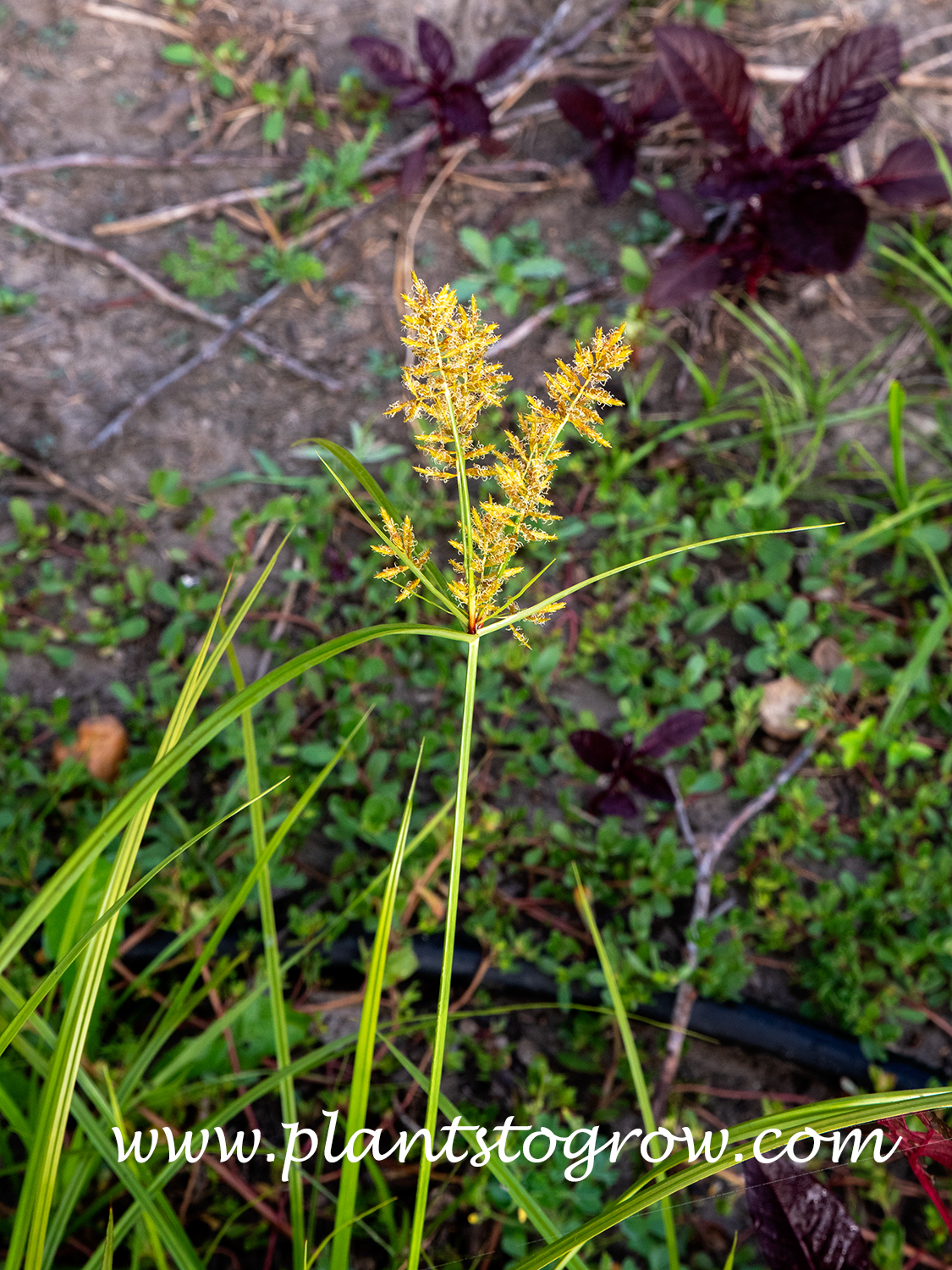
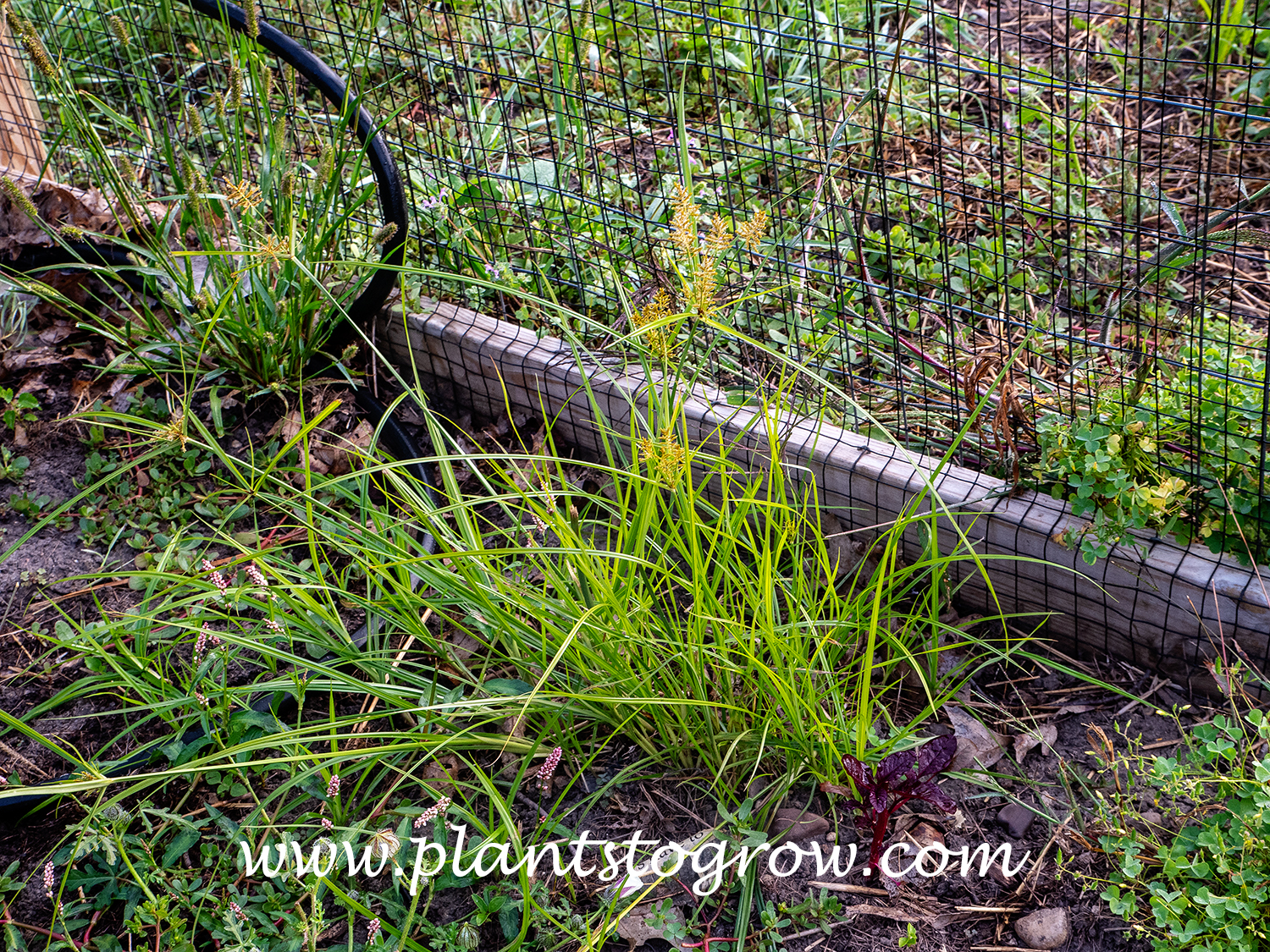
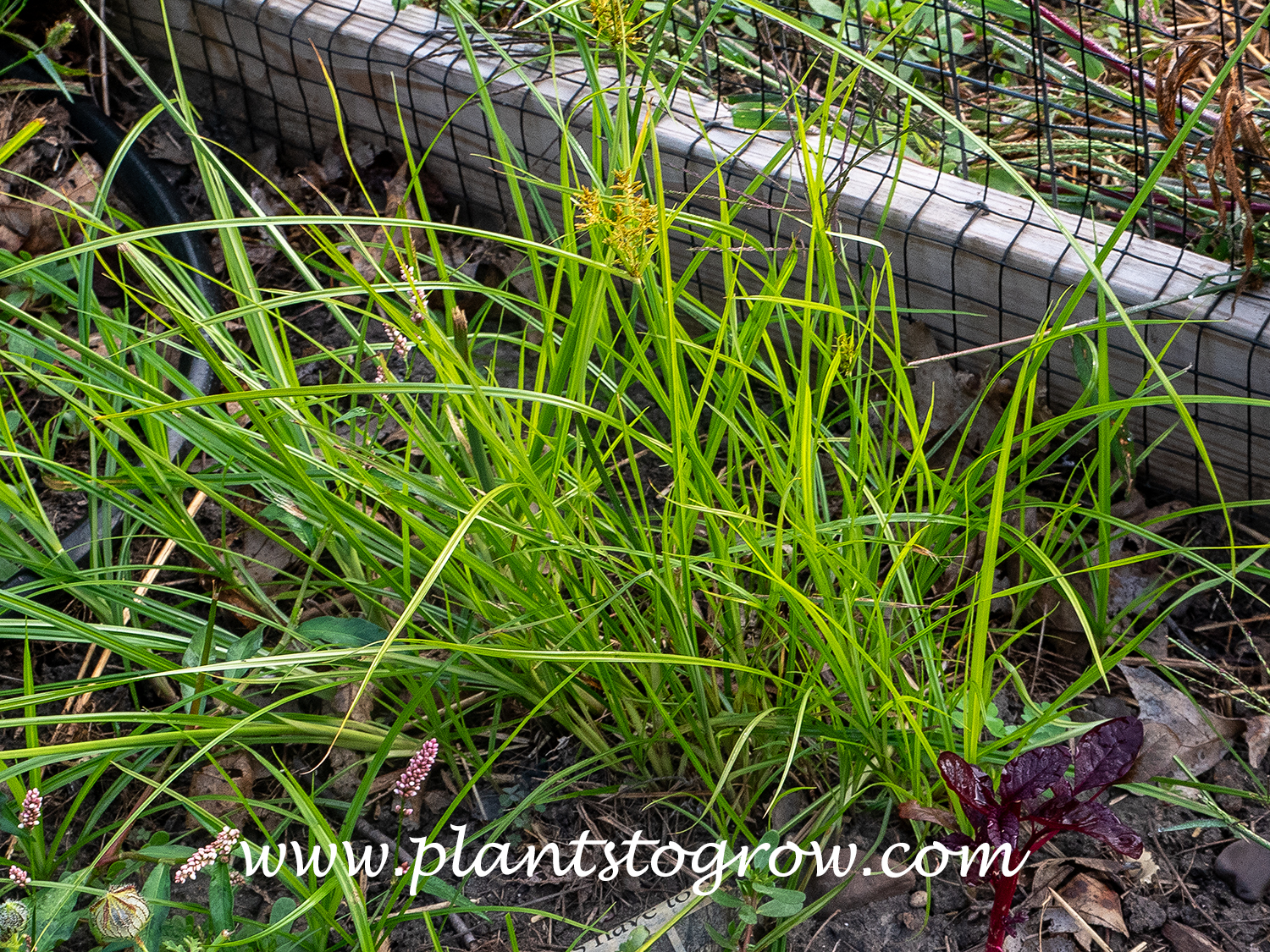
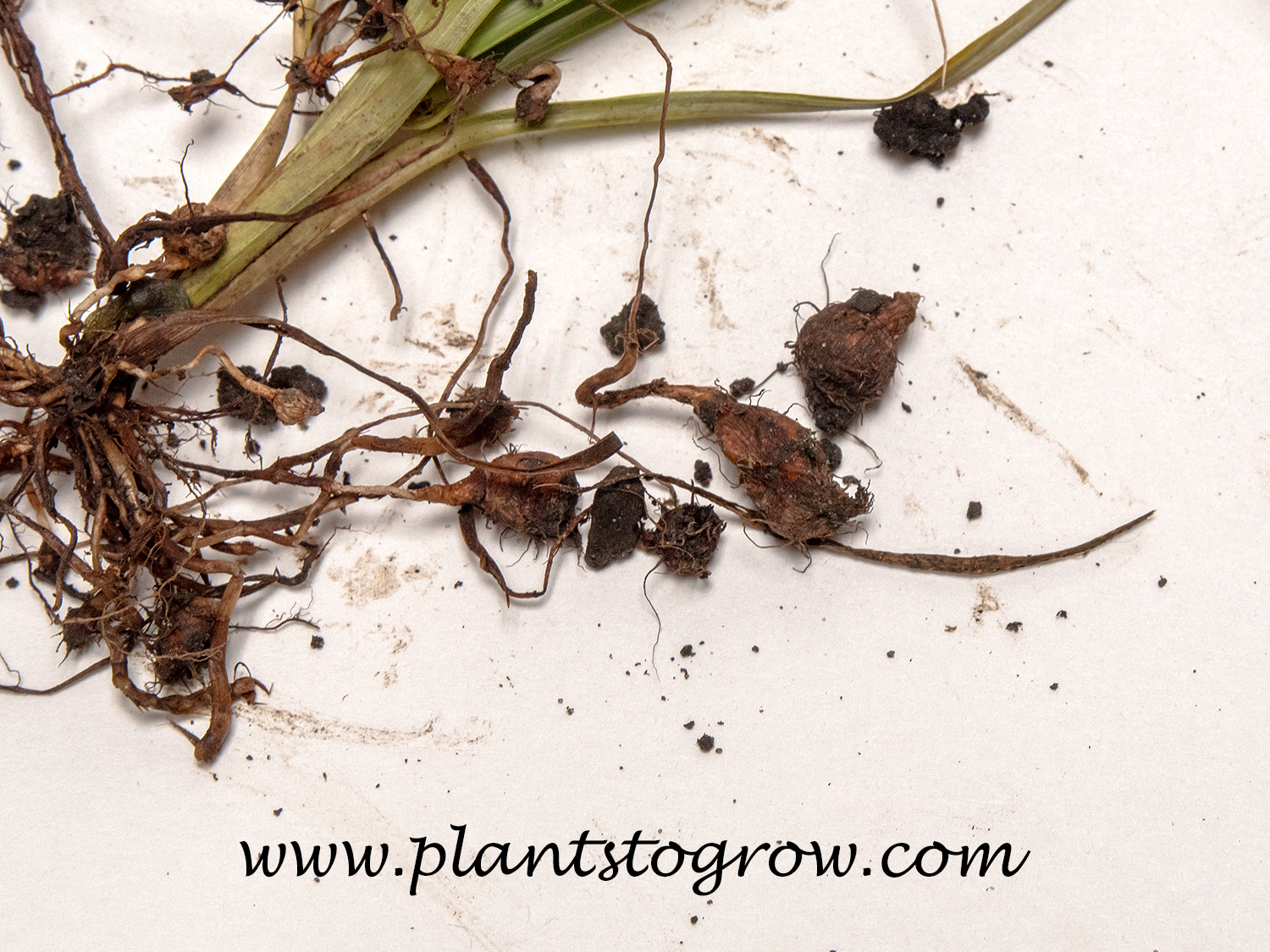
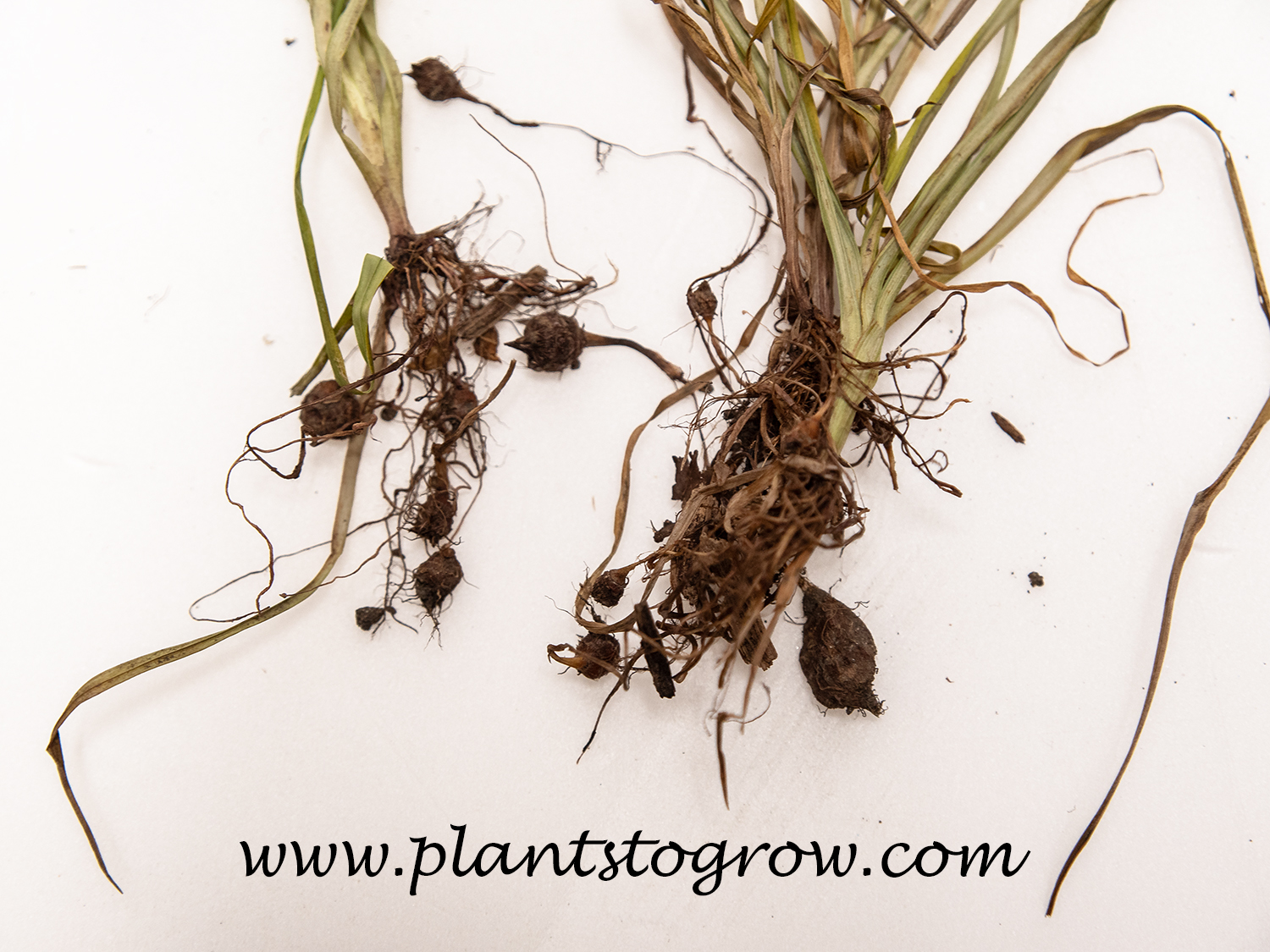
| Description | Yellow Nutsedge (Cypress esculentus) is an aggressive invasive weed. Very difficult to control. Spreads by the underground tubers, rhizoms and seeds. |
|---|---|
| Pronunciation | (sy-PEER-us)(es-kew-LEN-tus) |
| Plant Type | Perennials Hardy, Weeds, Site author's observations |
| Hardiness Zone | 8-10 |
| Sunlight | Full sun to partial shade. |
| Moisture | average to moist |
| Soil & Site | Grow best in sandy, moist soils, but is very tolerant of most any soil type. |
| Flowers | Produces yellow, cylindrical spikelets arranged in clusters. The spikelets are arranged in a bottle-brush fashion around the cluster. |
| Fruit | Forms achenes with brown seeds. |
| Leaves | Leaves are light green/yellowish, smooth, glossy, long, V-shaped, and narrow. The leaves can reach over 12 inches. They have whitish-green leaf sheaths. |
| Stems | Smooth, erect, triangular branching into three stems. Has rhizomes and stolons that form hard tubers. Tubers develop at the tip of the rhizomes. |
| Dimensions | Spreads by the spreading rhizomes forming patches. Plants can reach from 6 to 12 inches. |
| Maintenance | Difficult to remove because every tuber left behind will form a new plant. Best to dig them out in the spring and continue removing throughout the season. |
| Propagation | It naturally propagates from the tuber, but also from seeds. |
| Misc Facts | "Tubers can be eaten raw, cooked, or dried and ground into a powder and used in confectionery. A nut-like flavor, but rather chewy and with a tough skin. A beverage is made by mixing the ground tubers with water, cinnamon, sugar, vanilla, and ice. An edible oil is obtained from the tuber that compares favourably with olive oil. The roasted tubers are a coffee substitute" (#270) |
| Author's Notes | I have seen this plant listed as one of the worst weeds in the world. Once in the garden or lawn, it is difficult to remove. |
| Notes & Reference | #191-Minnesota Wild Flowers (www.minnesotawildflowers.info), #270-North Carolina Extention Gardener Tool Box (https://plants.ces.ncsu.edu/plants) |

Cart