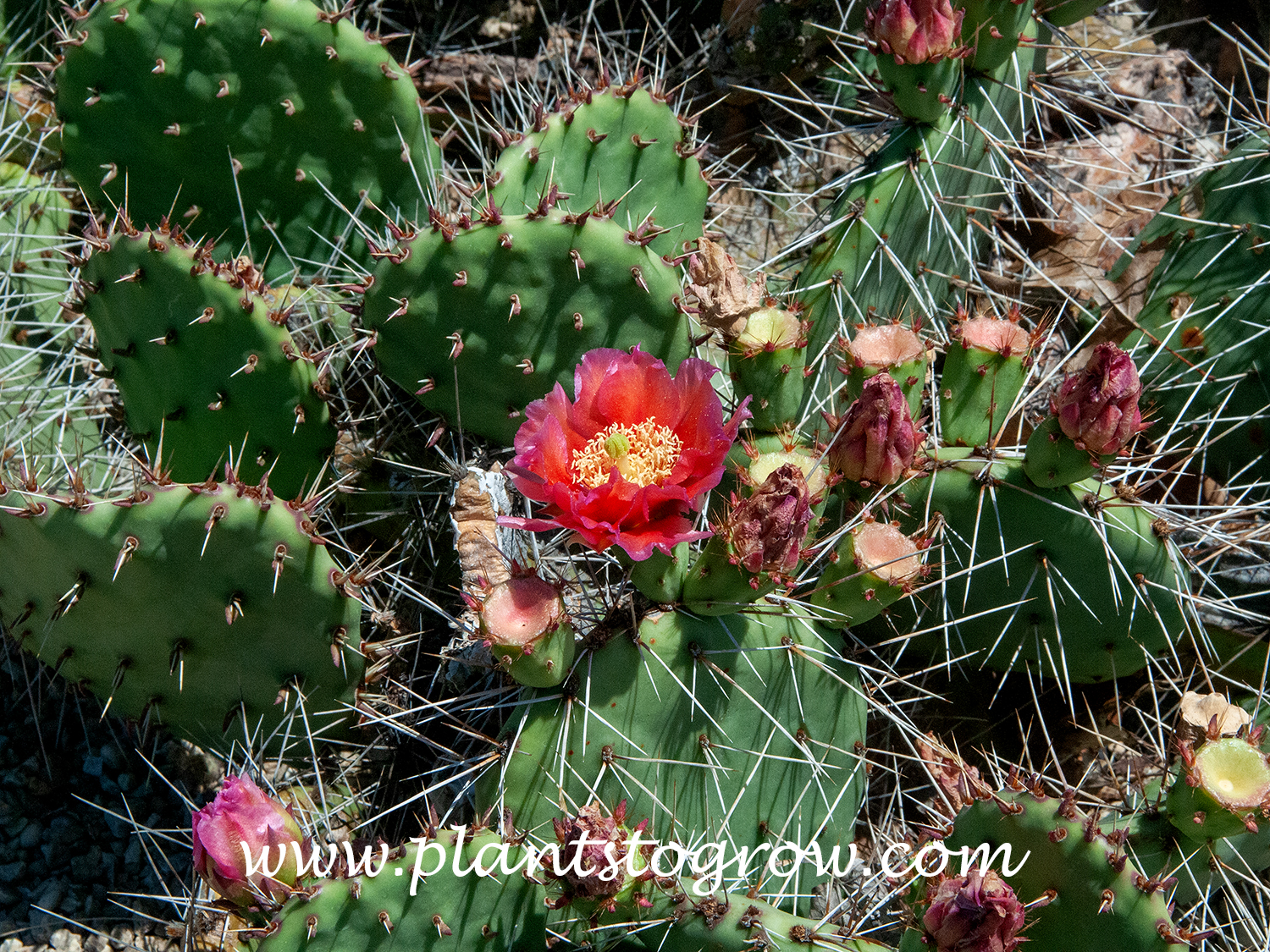
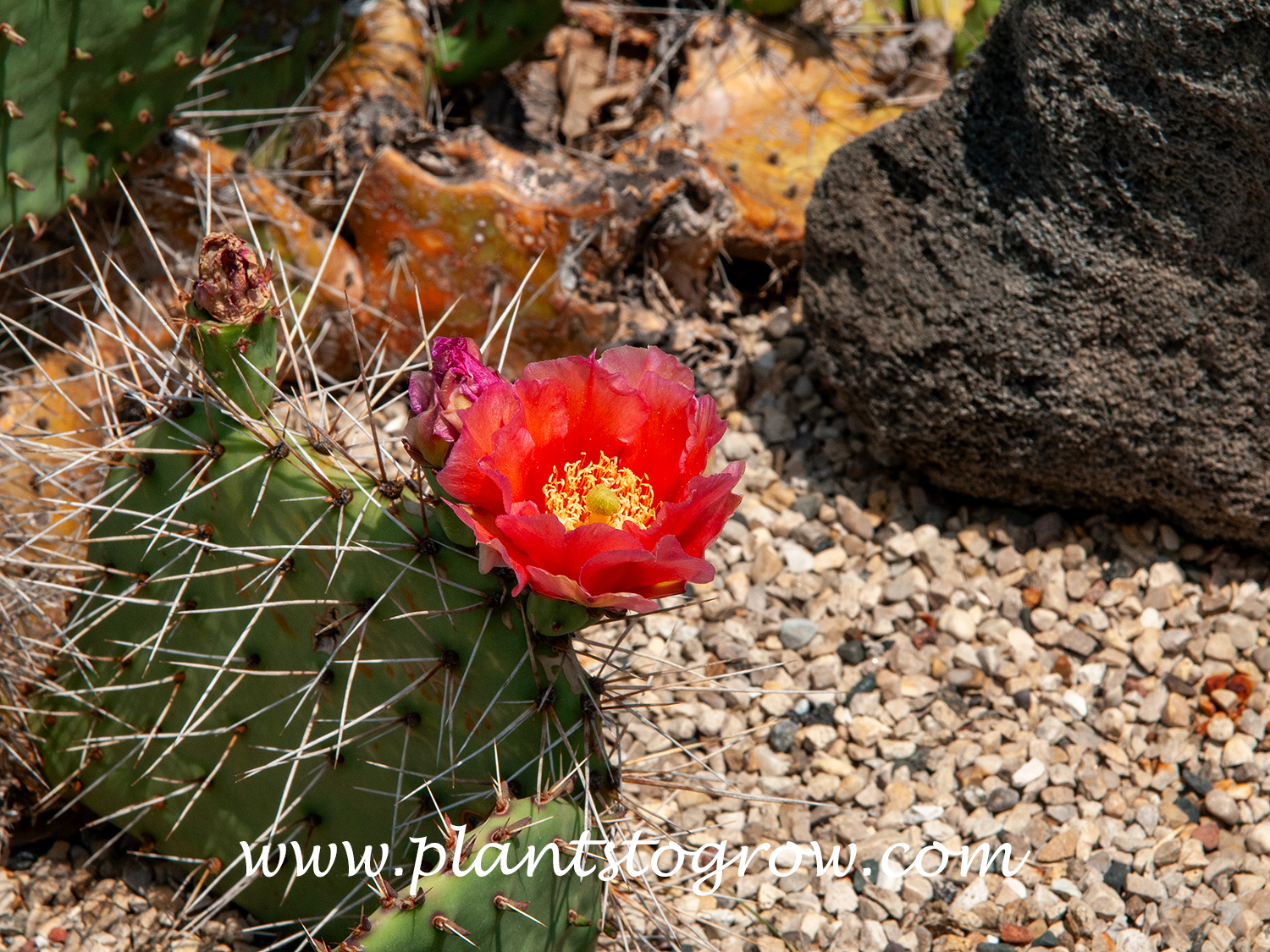
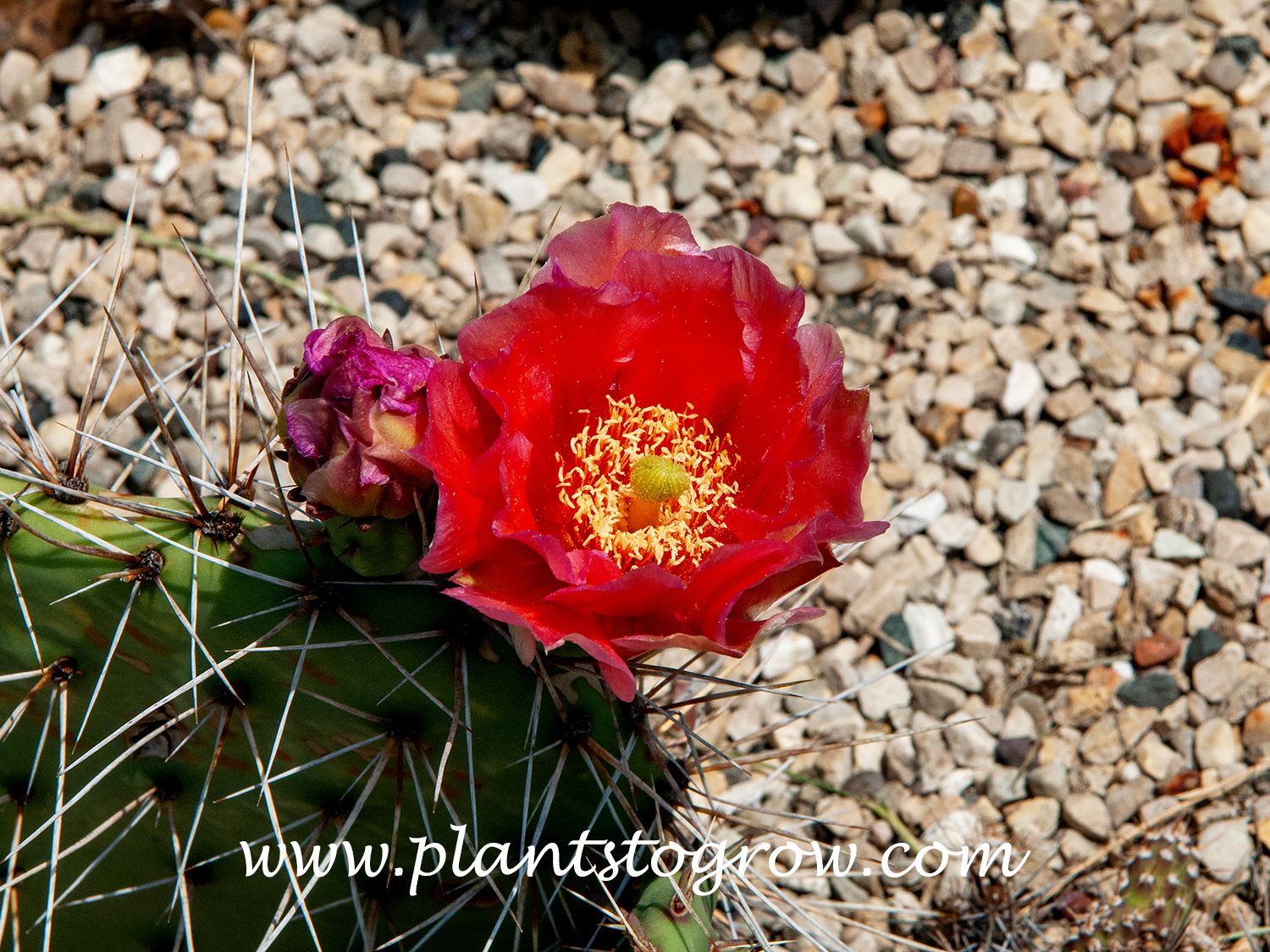
| Description | Plains Prickly Pear (Opuntia polyacantha major) is a very cold-hardy cactus common in Utah's grasslands, forms low mats with varied, colorful spines, and yellow, pink, magenta flowers. |
|---|---|
| Plant Type | Perennials Hardy |
| Hardiness Zone | 4 |
| Sunlight | full |
| Moisture | average, dry |
| Soil & Site | Grow best in dry, sandy, and well-drained soil. |
| Temperature | Hardy to zone 4. |
| Flowers | The flowers are large, reaching up to 3.5 inches, and range from bright yellow to magenta, blooming in spring/early summer. |
| Fruit | A fleshy, often oblong or oval berry that develops from the cactus's flowers. The fruit is dry and spiny. It is covered in tiny, barbed bristles called glochids. The fruits are also called tunas. |
| Leaves | The areoles hold clusters of stout spines that vary in color and length. The tiny, barbed glochids easily detach and cause irritation. |
| Stems | The flat, light-green, oval pads are cladodes, modified stems. These can easily detach. They are edible. |
| Dimensions | A low-growing, mat-forming cactus, typically reaching only 6 to 12 inches, spreading widely to form dense colonies, sometimes up to 3 feet. |
| Propagation | Rooting detached pads or seeds. |
| Native Site | Widespread across Western Canada, the Great Plains, and the Western U.S., growing in dry, sandy soils, grasslands, sagebrush, and Ponderosa pine forests. |
| Misc Facts | The word major in the name probably comes from the major spines of the plant or its extreme cold-hardiness, vast distribution across North America, and high ecological importance. |

Cart