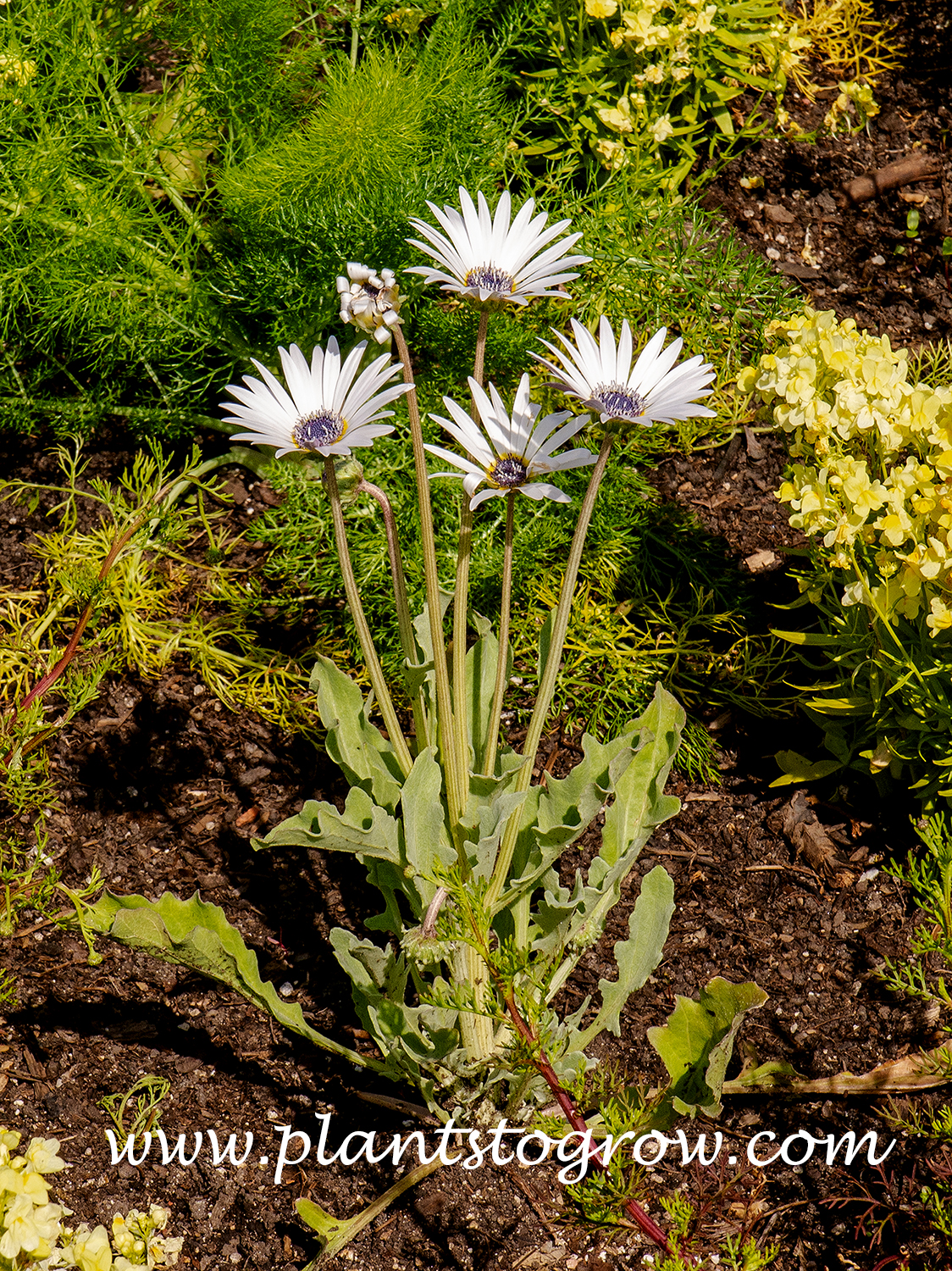
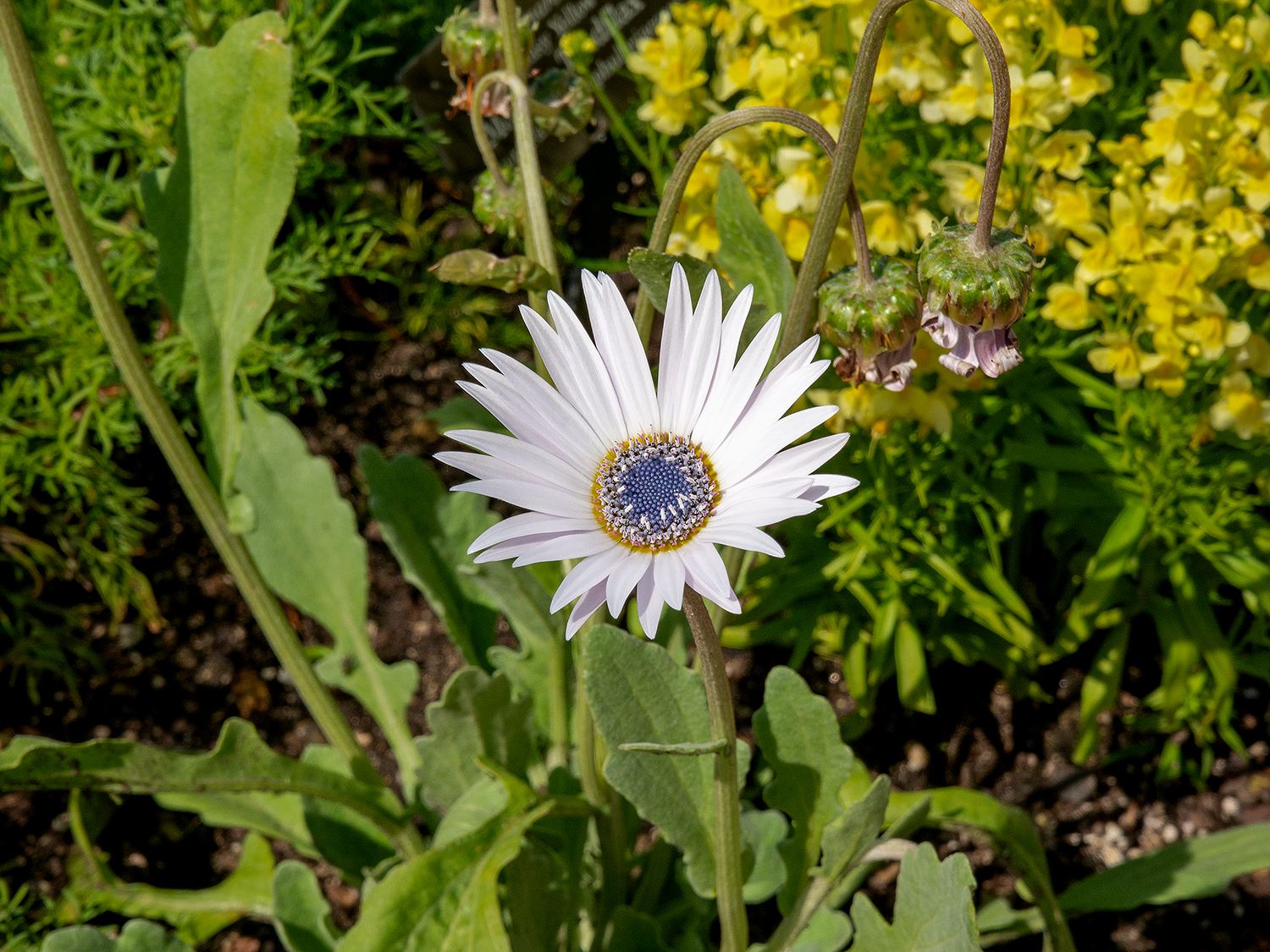
| Description | Blue-eyed African Daisy (Acrtotis venusta) is a tender herbaceous perennial with white petals and a blue center, native to South Africa. |
|---|---|
| Pronunciation | (ark-TOE-tiss) |
| Plant Type | Perennial Tender, Tender perennials often grown as annuals |
| Hardiness Zone | 9-11 |
| Sunlight | full |
| Moisture | average, drought-tolerant |
| Soil & Site | average, well-drained, rocky |
| Temperature | Sensitive to light frosts. |
| Flowers | The daisy-like flower head consists of ray florets (mistakenly called petals) that are creamy white to pink or bronze, with lavender to reddish undersides, and centers filled with bluish disc florets. |
| Fruit | Hard achene with a tuft of plumelike hairs on one end and an array of pappus scales on the other. |
| Leaves | Silver aromatic, heavily lobed leaves. Mostly found in the basal rosset |
| Propagation | seeds |
| Native Site | Native to South Africa and has naturalized in parts of the USA. Found growing in dry stony slopes of southern Africa. |
| Misc Facts | The genus name comes from the Greek words arktos, meaning "bear," and ous or otos, meaning "ear ea. Venusta means beautiful. |

Cart