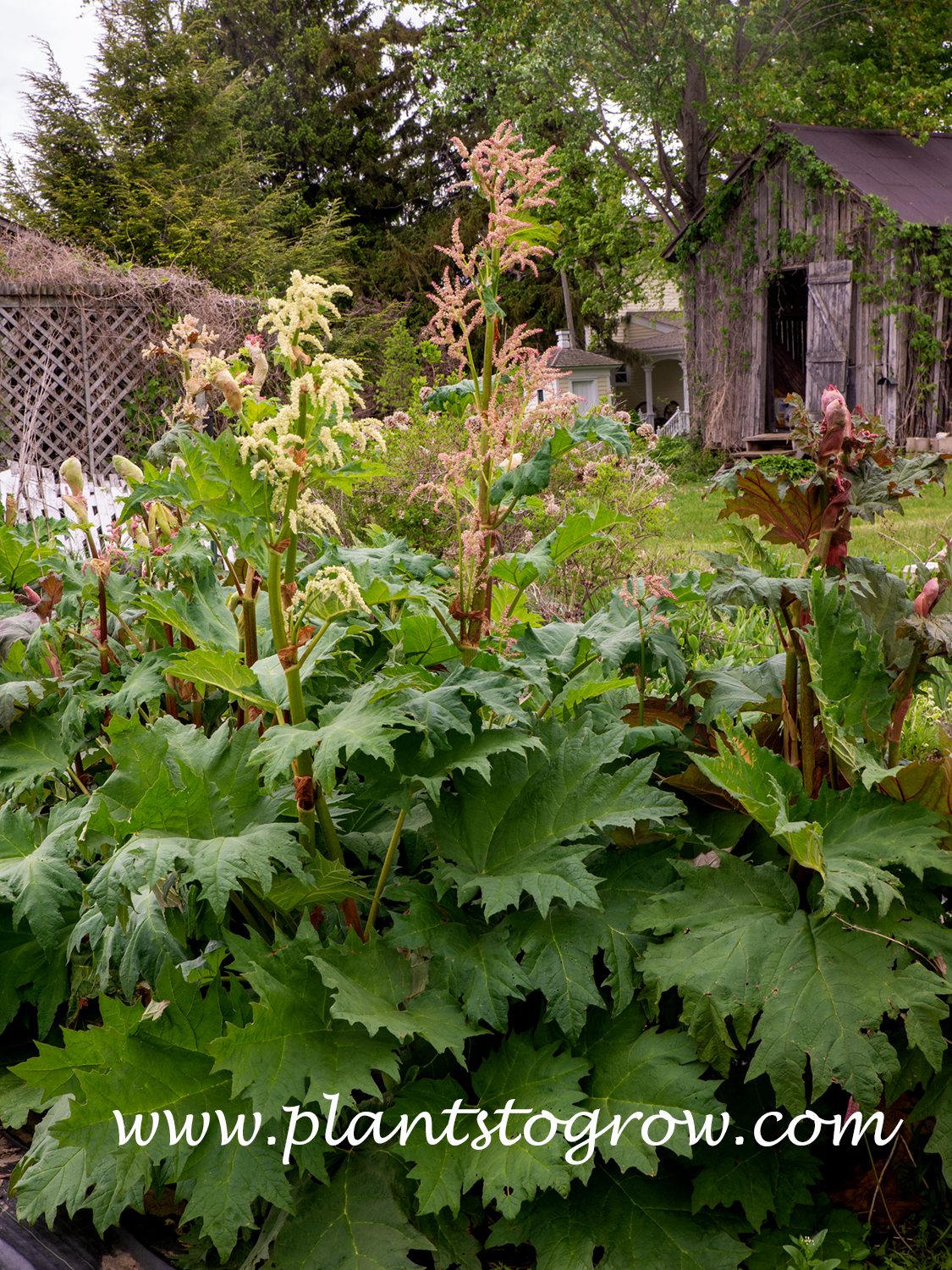
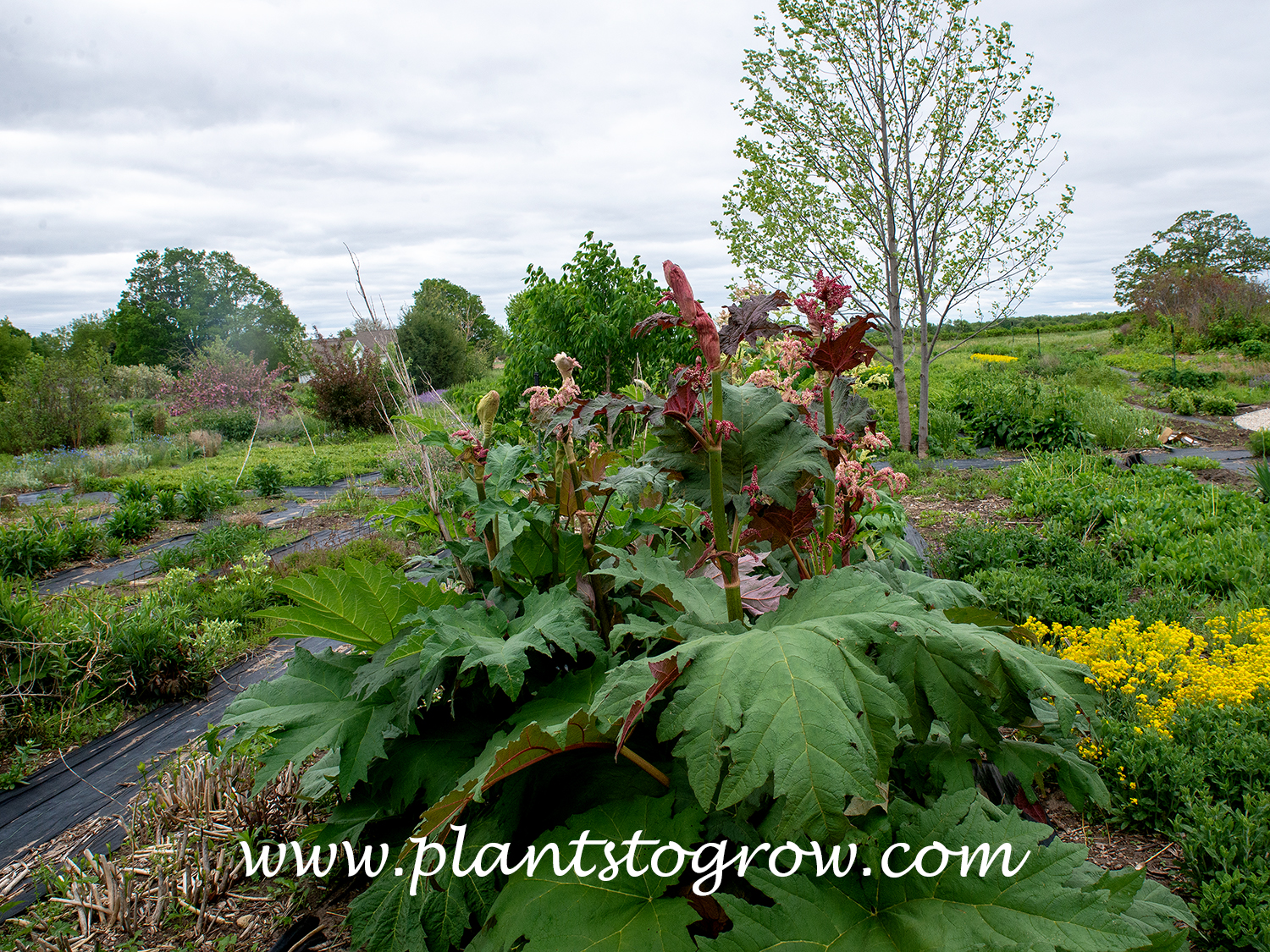
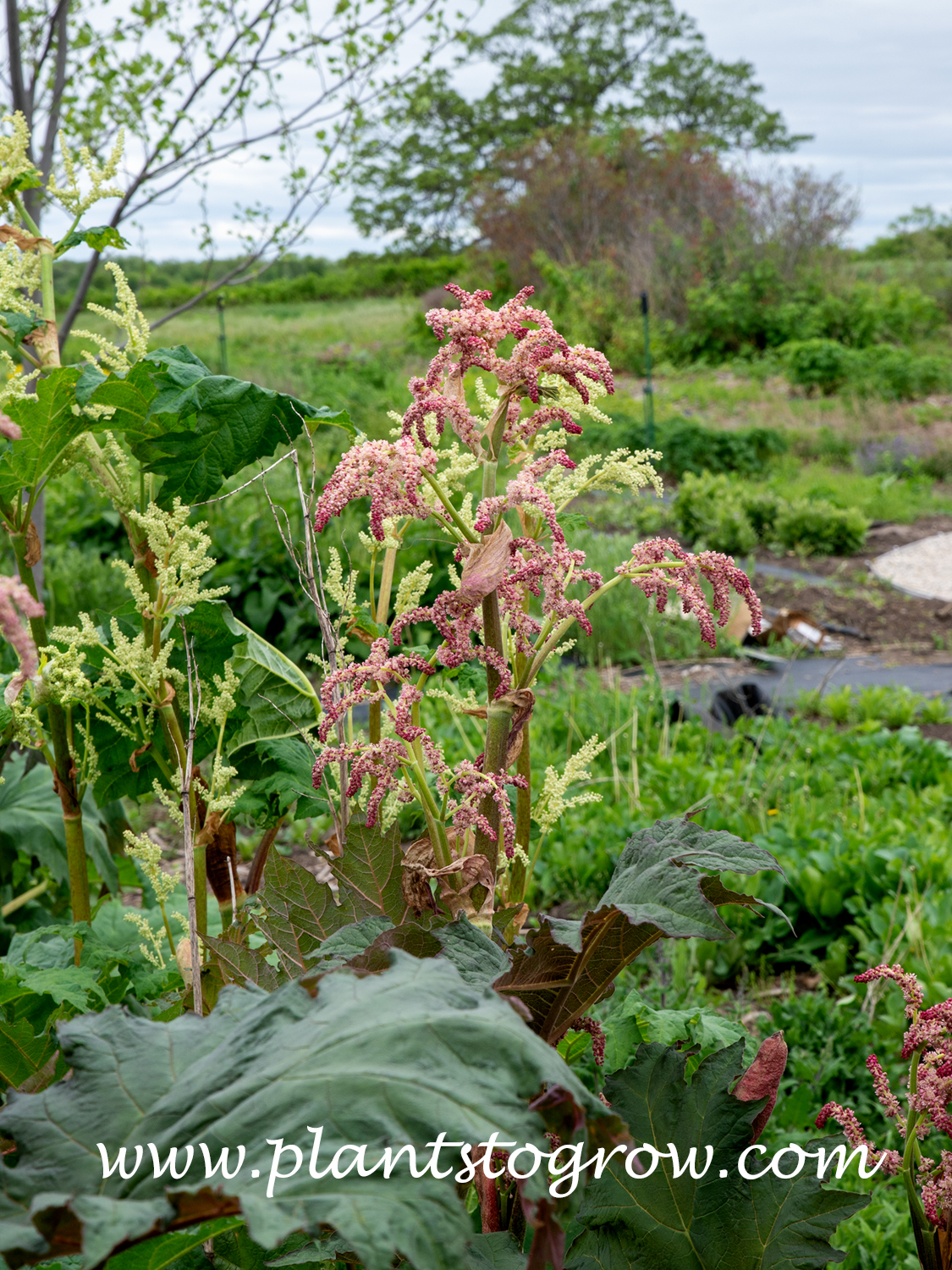
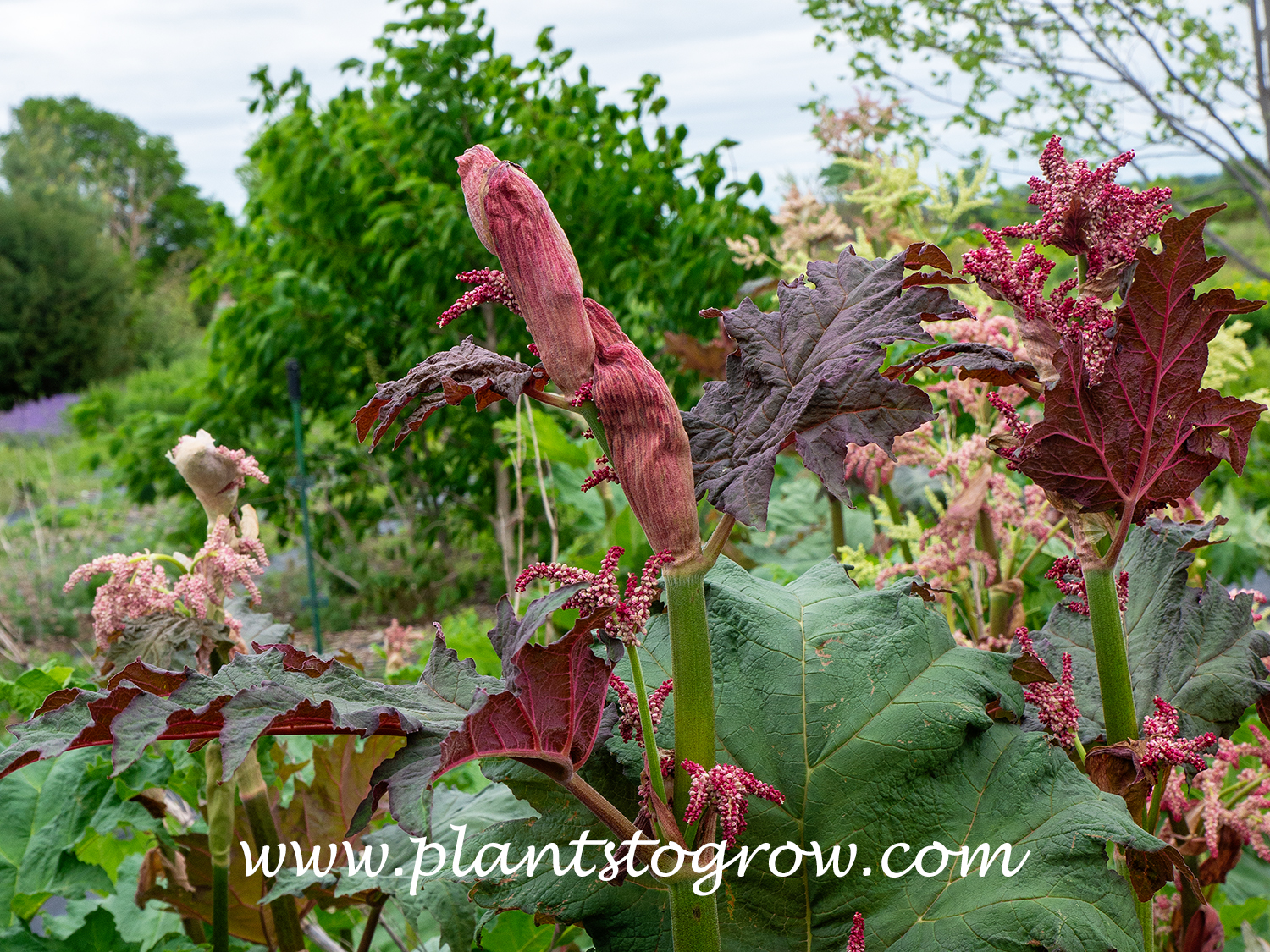
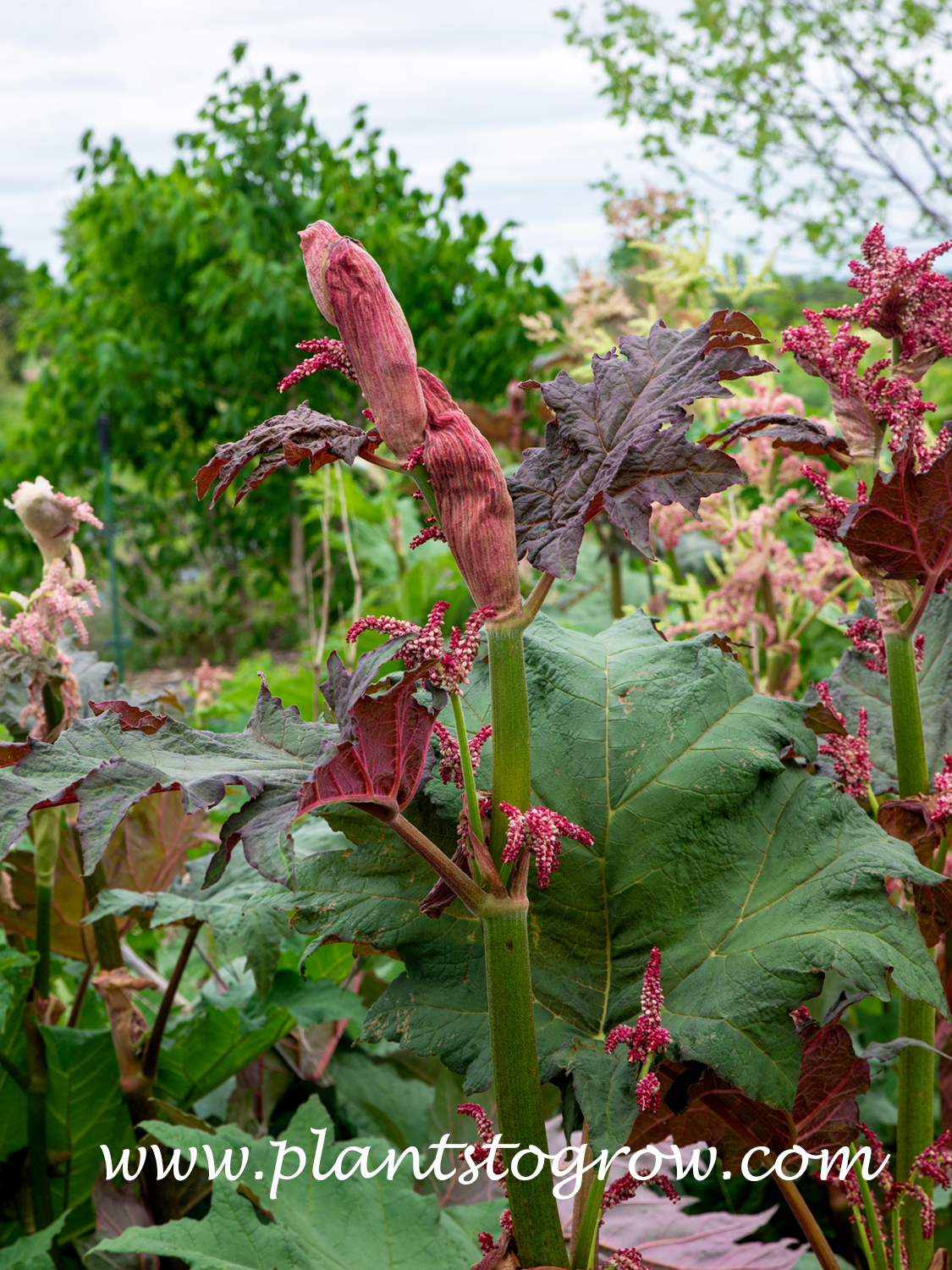
| Description | Tanguticum Rhubarb (Rheum palmatum var tanguticum) is a large, dramatic ornamental perennial known for its huge reddish-bronze leaves and towering red flower spikes, used to make bold garden statements. |
|---|---|
| Plant Type | Perennials Hardy, Bulbs, corms, tubers, rhizoms, etc. |
| Hardiness Zone | (5)6 |
| Sunlight | full sun to partial shade |
| Moisture | Tolerates average conditions but does best in moist conditions. |
| Soil & Site | Best in moist, well-drained soil. Likes boggy soils. |
| Flowers | Its dark pink to white flowers appear on long stalks in panicles and are wind-pollinated. Flowers appear on side shoots rather than on terminal stems. |
| Leaves | Dark green leaves emerge dark red. Palmately veined, orbicular or broadly ovate with pointed lobes and an undulate margin. Large, reaching about 23 by 23 inches. |
| Stems | The stems are underground rhizomes. |
| Dimensions | Reaches over 5 feet by 5 feet. |
| Maintenance | Cut off the panicles when they are done blooming. |
| Propagation | Plants raised from seed will vary. By division, the traits will be maintained. |
| Native Site | Native to eastern Asia, including northwest China. In its native habitat, it grows by streams in scrub. |
| Cultivar Origin | First described in 1874. |
| Misc Facts | This is not an edible rhubarb. Rheum is derived from the Persian rha, the name given to rhubarb. Palmatum is Latin for "palm-like," referring to the leaves. Tanguticum is from the Latin, meaning ‘of or from Tangut, Tibet. |
| Notes & Reference | #04-Herbaceous Perennial Plants (Allan Armitage), #164-Heritage Flower Farm (www.heritageflowerfarm.com) |

Cart