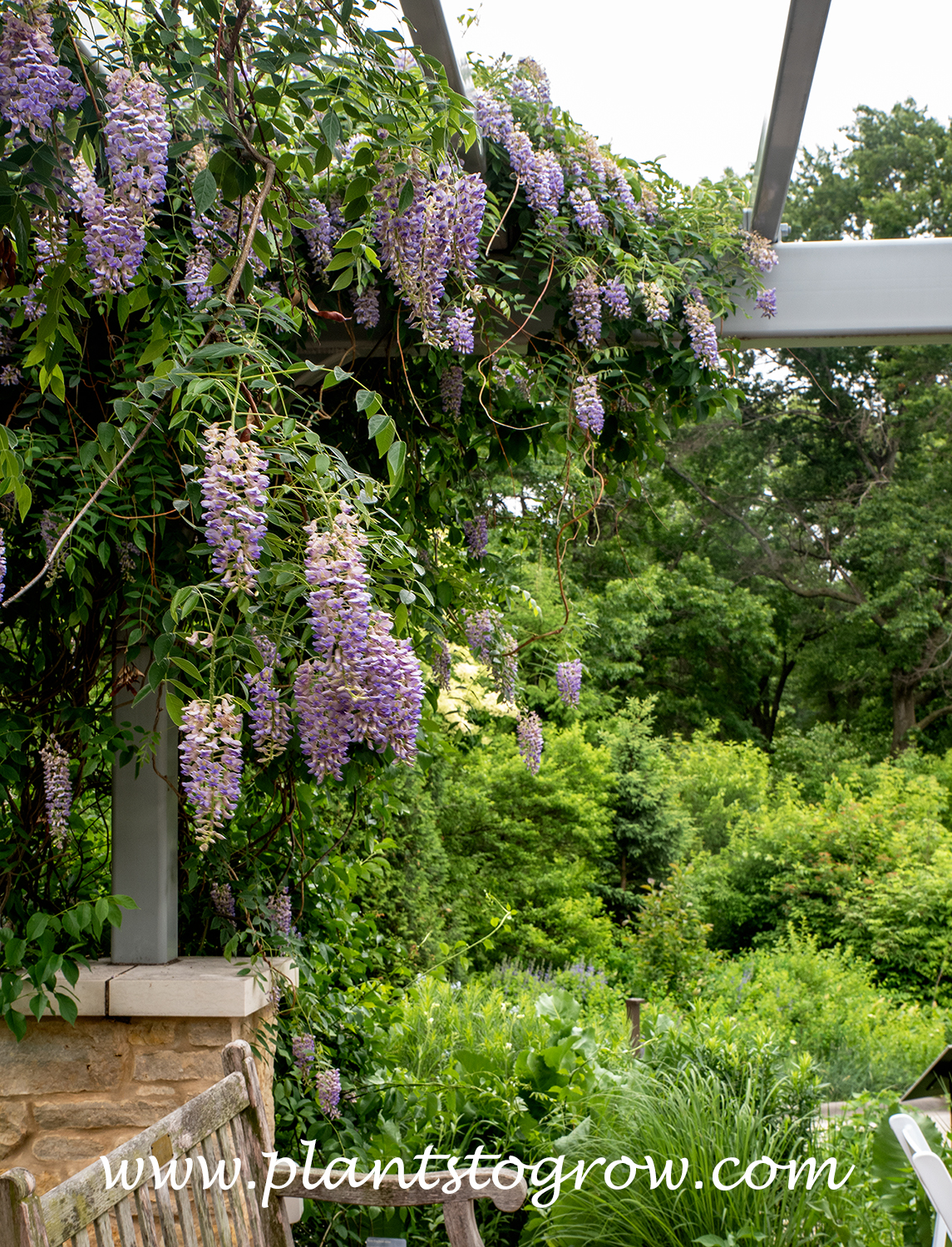
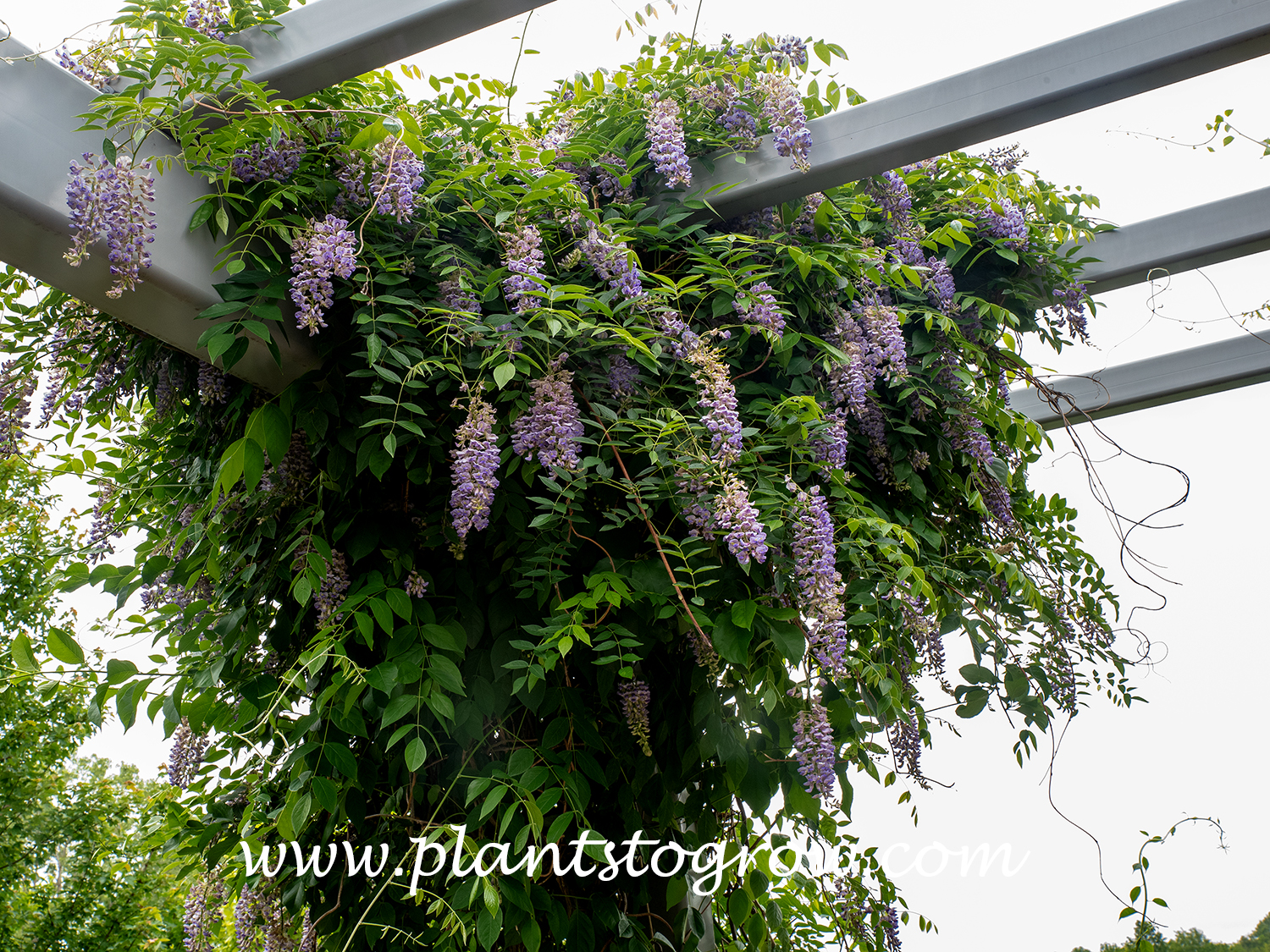
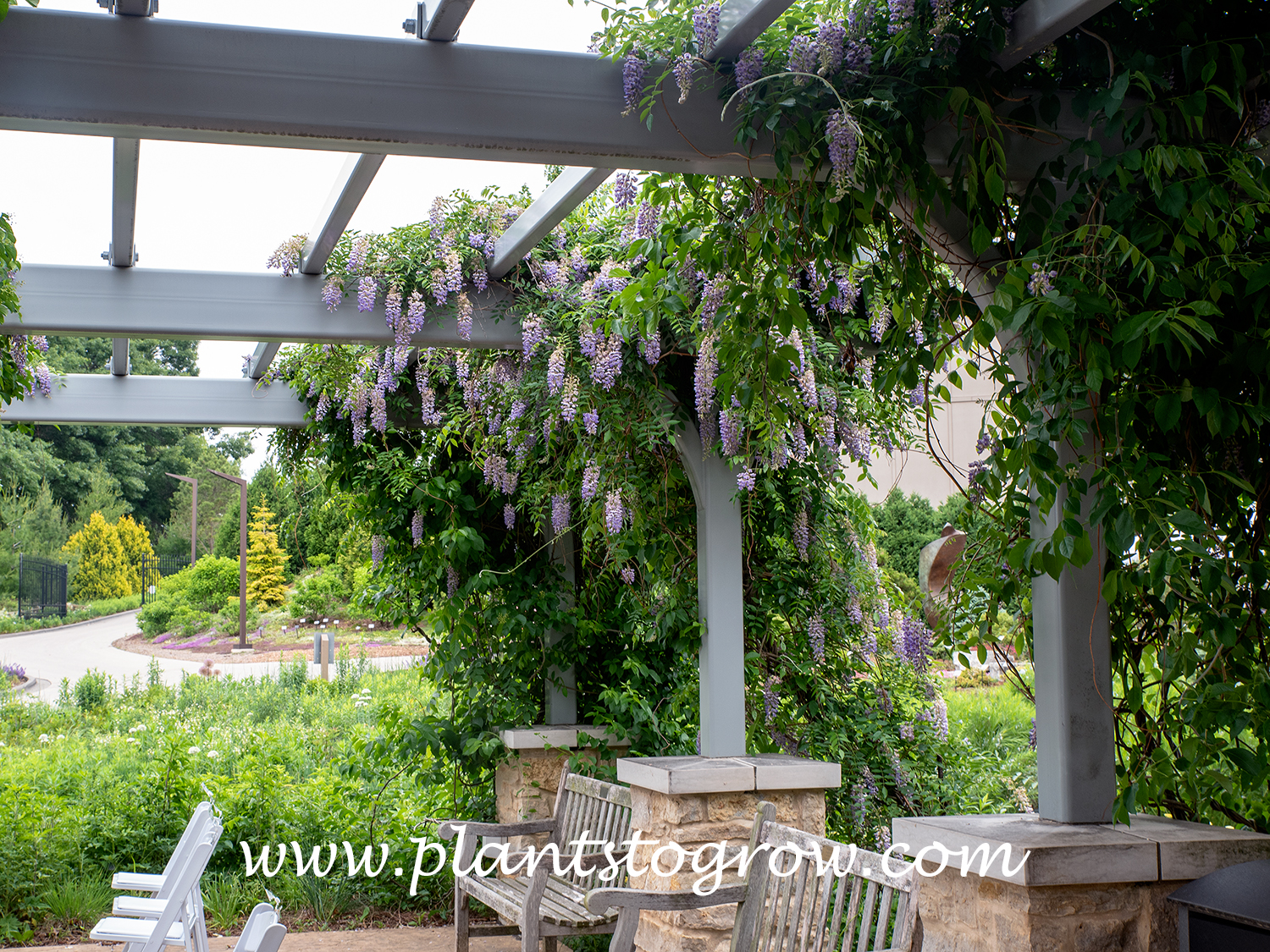
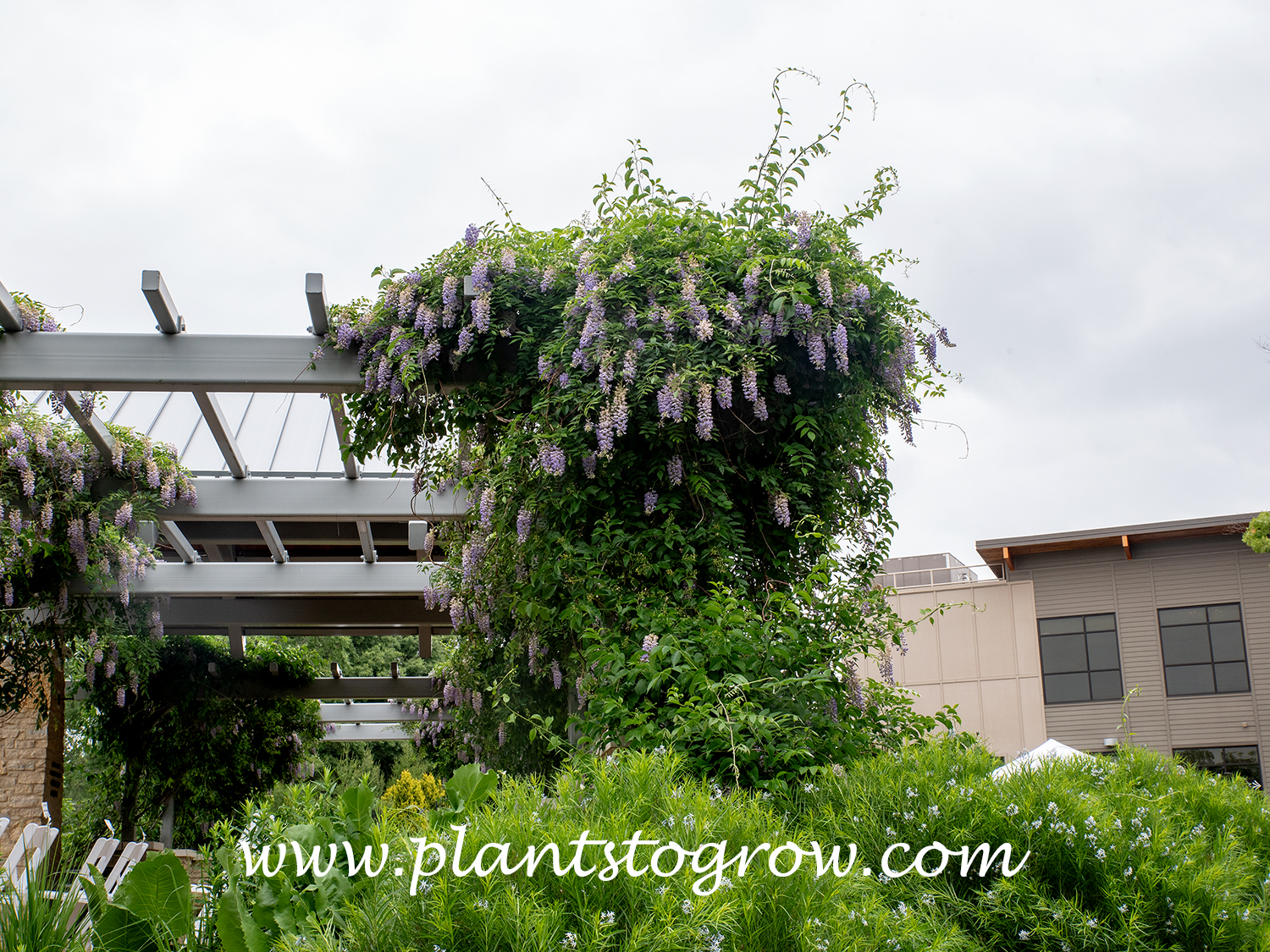
| Description | Summer Cascade Wisteria (Wisteria macrostachya) is a cold-hardy woody vine with cascading lavender-blue flowers. |
|---|---|
| Pronunciation | (wis-TEE-ria)(mak-ro-STAK-ee-a) |
| Plant Type | woody vines |
| Hardiness Zone | 4 |
| Sunlight | full, mostly sunny |
| Moisture | average, moist |
| Soil & Site | average |
| Flowers | Long, cascading, lavender to purple flowers (racemes). |
| Fruit | Develop long bean-like seed pods typical of the Fabaceae plant family. |
| Leaves | green, pinnately compound |
| Stems | Rapid-growing twining stem that becomes gnarled with age. |
| Dimensions | Once established in favorable growing conditions, it can grow 5 to 10 feet in a year. Reported to release 20 feet. |
| Maintenance | Wisteria is an aggressive grower and needs sturdy support to climb on. Plants are twining and will twist around any support. Prune back to a flower bud after blooming. How far you prune depends on the growth rate and the size you want it to get. Also, do maintenance pruning, removing excessive branches and dead wood. |
| Cultivar Origin | Developed by the University of Minnesota, USA, Summer Cascade was bred from a resilient Kentucky wisteria strain and was initially known as ‘Betty Matthews,’ named after a White Bear Lake, Minnesota (USA) resident whose yard it grew in. Released in 2013. |
| Misc Facts | The name Wisteria is named after Caspar Wistar (1761-1818), professor of Anatomy at the University of Pennsylvania, USA. |
| Notes & Reference | #62-Manual of Climbers and Wall Plants (J K Burras, Mark Griffiths), #150- Armitage's Vines and Climbers (Alan Armitage), University of Minnesota (https://mnhardy.umn.edu/wisteria) |

Cart