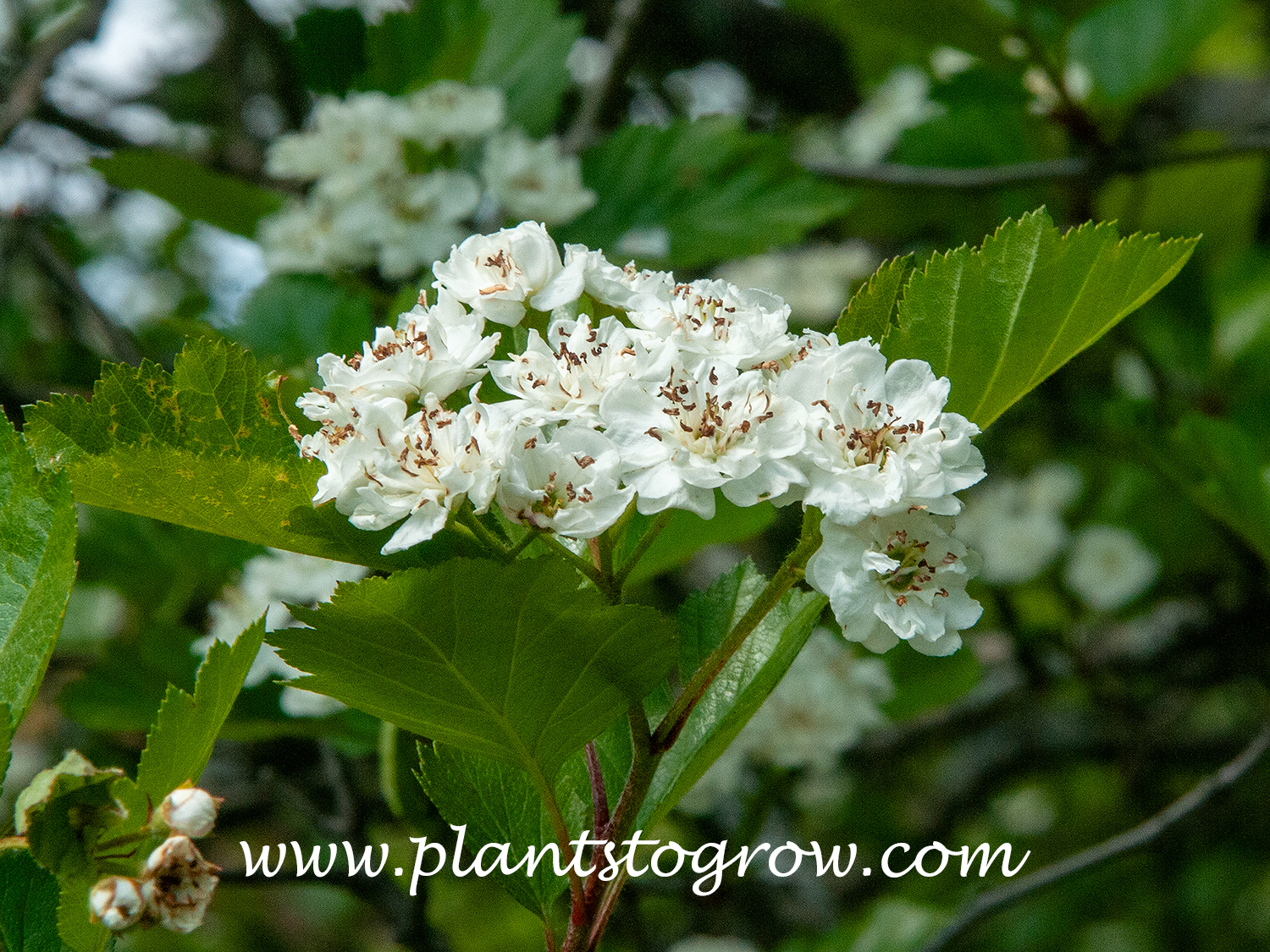
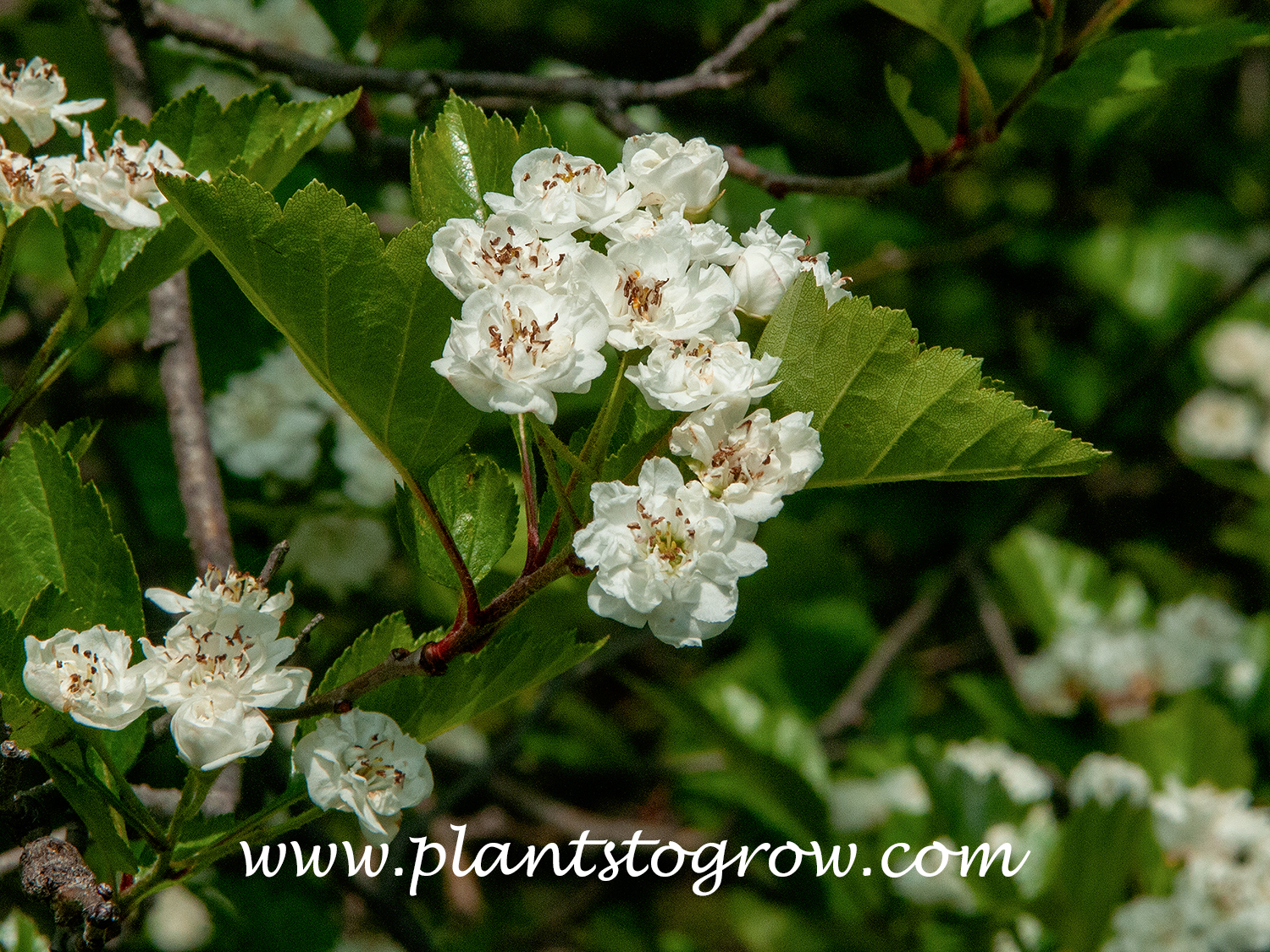
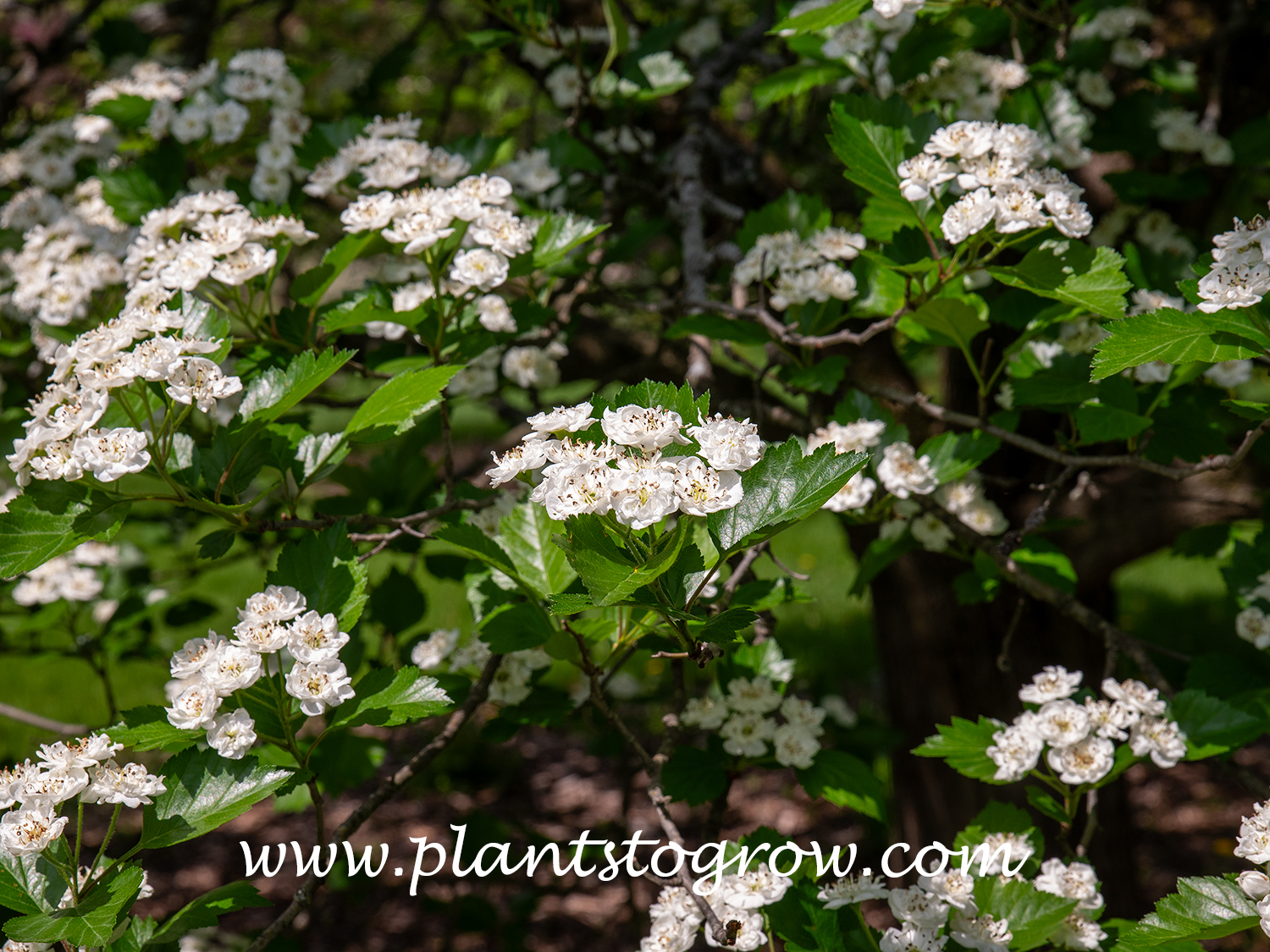
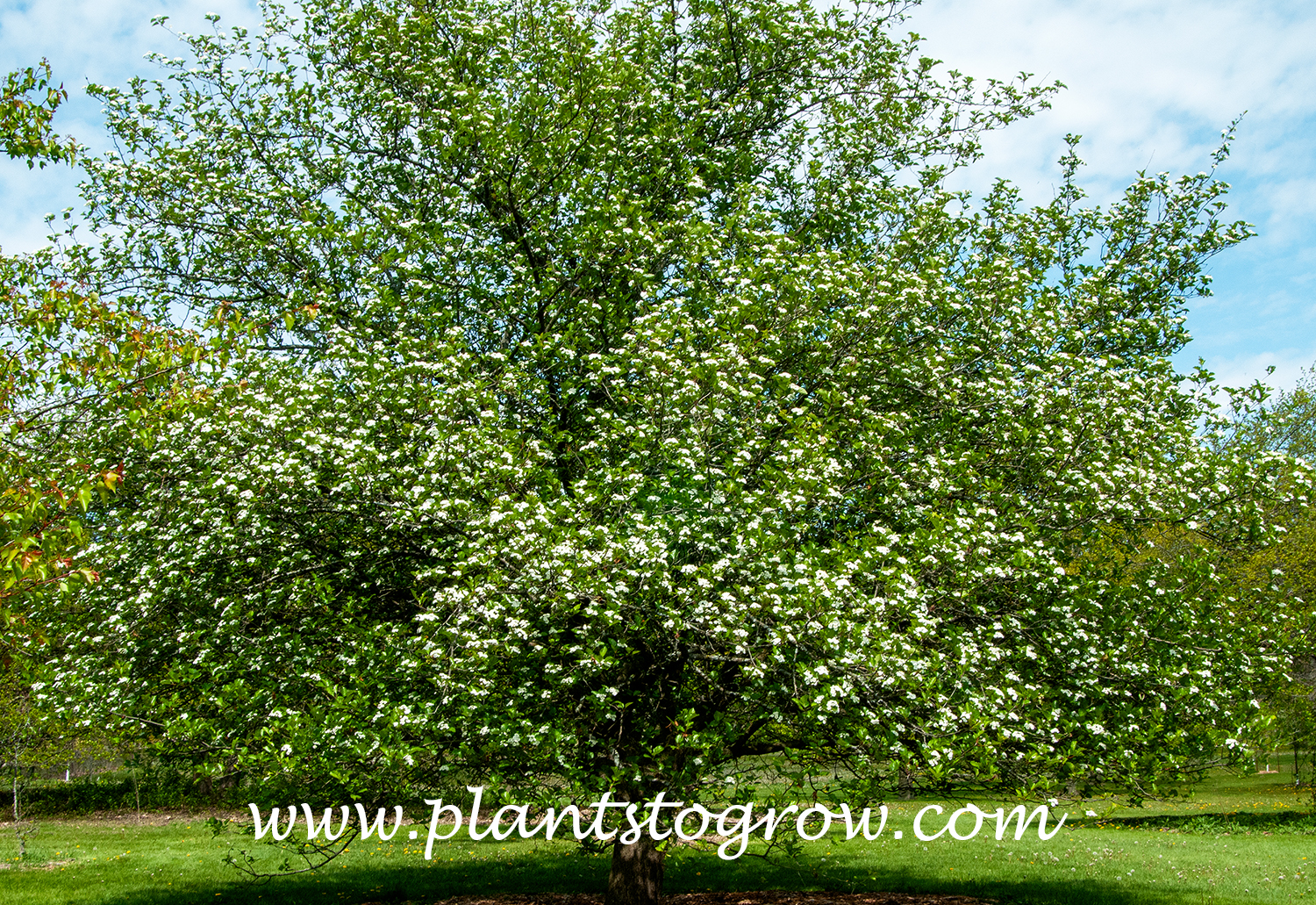
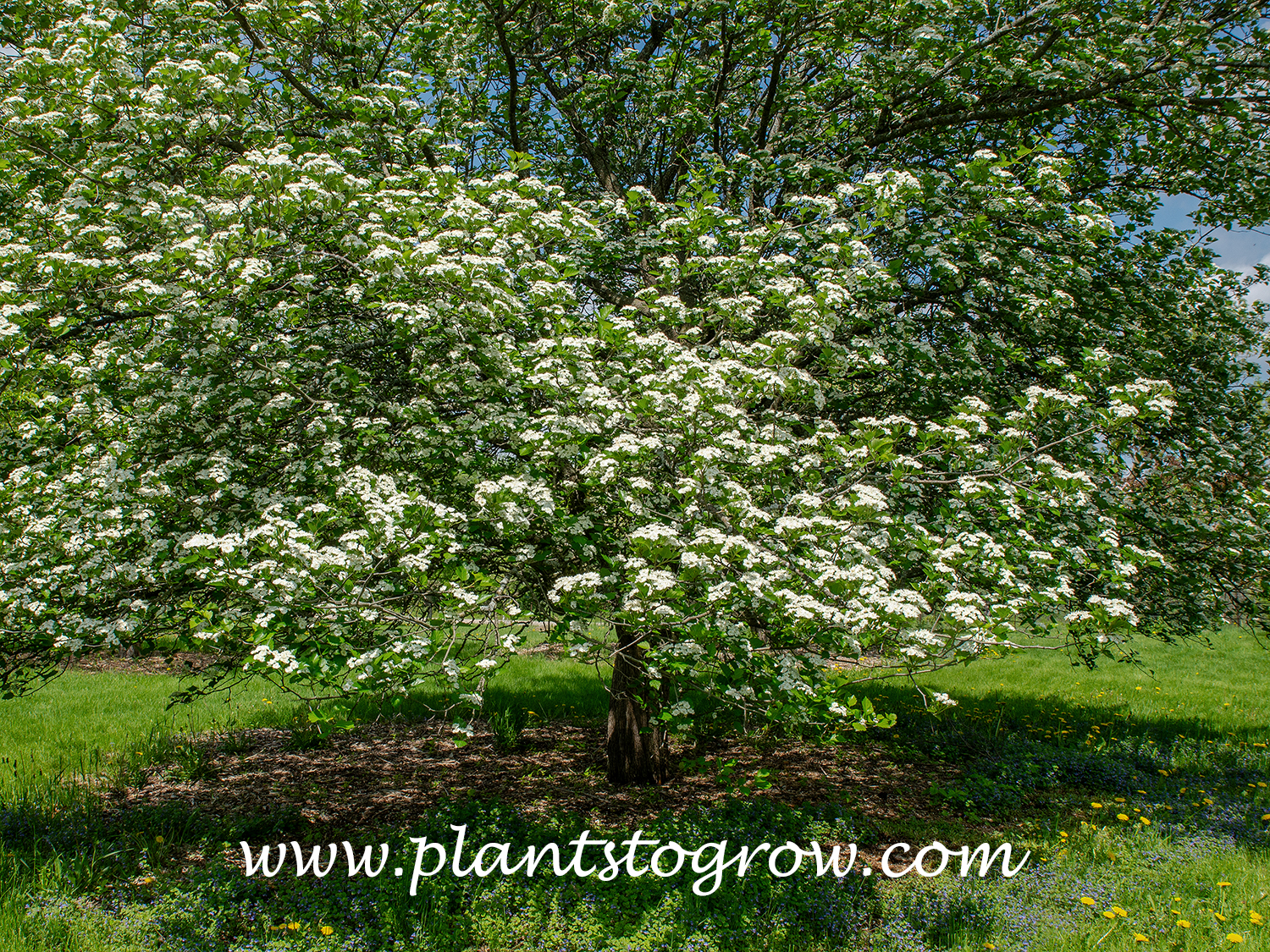
| Description | Snowbird Hawthorn (Crataegus x mordenedsis) is a cold-hardy, smaller tree with fragrant, double white flowers and sharp thorns. |
|---|---|
| Pronunciation | (kra-TEE-gus) |
| Plant Type | Trees Deciduous |
| Hardiness Zone | (3)4-7 |
| Sunlight | full |
| Moisture | average |
| Soil & Site | average |
| Flowers | Produces an abundance of fragrant, double white flowers in the spring' |
| Fruit | Produces small, red pomes. Fruit is sparsely produced.. |
| Leaves | Has green foliage throughout the season; the leaves are serrated and lobed and do not develop any appreciable fall color. |
| Stems | Produces long thorns. |
| Dimensions | A smaller tree getting 18-20 by 12-15 feet (HS) |
| Propagation | cuttings, grafting, probably won't come true from seed |
| Native Site | Introduced in 1967 by Morden Research Station of Manitoba, Canada, this tree originated as an open-pollinated seedling of 'Toba', Introduced by the Canadian Ornamental Plant Foundation. |
| Cultivar Origin | Originated in 1967 from open-pollinated seeds of Crataegus x mordensis 'Toba'. Toba is considered one of the original forms of the modern Hawthorn hybrids. |
| Notes & Reference | #01-Manual of Woody Landscape Plants (Michael Dirr), #110-Hawthorns and Medlars (James Phipps) |

Cart