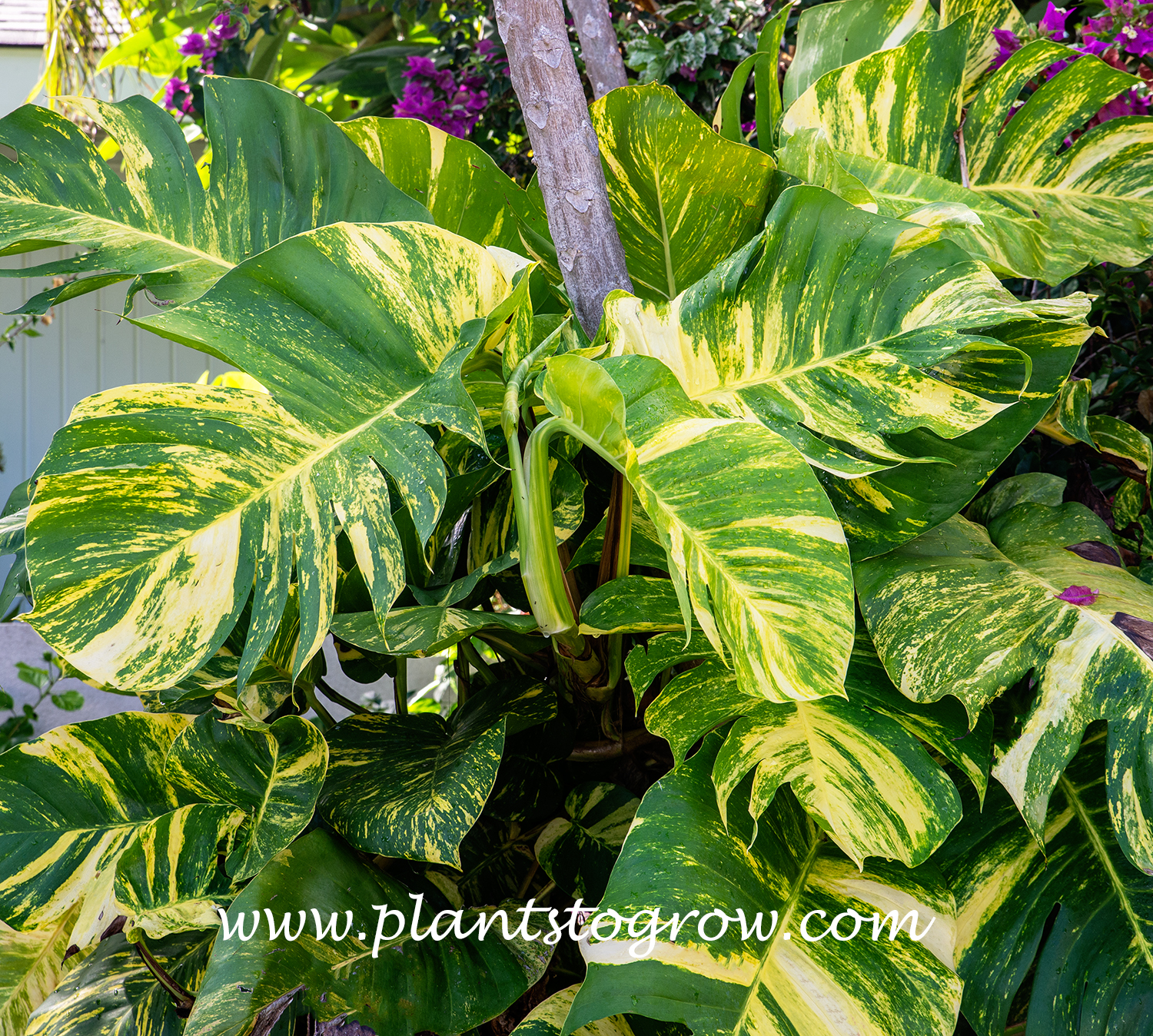
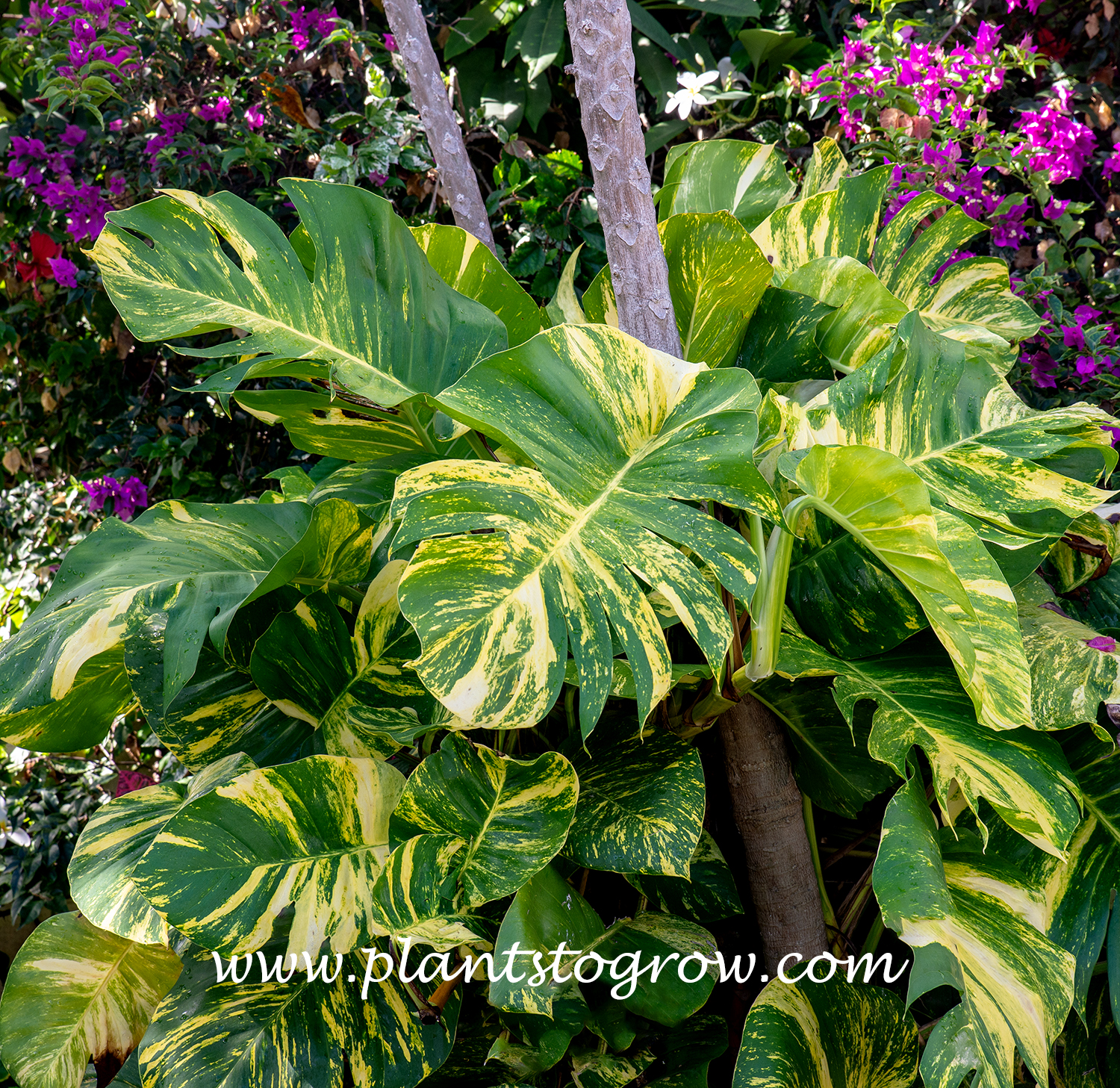
| Description | Variegated Monstera (Monstera deliciosa variegata) |
|---|---|
| Pronunciation | (mon-STAIR-ah)(dee-liss-ee-OH-san) |
| Plant Type | Indoor Foliage, Perennial Tender, Site author's observations, Tropical herbaceous plants |
| Hardiness Zone | 10-12, Tropical |
| Sunlight | Grow indoors in a bright window. They can tolerate a couple of hours of direct light, but avoid extended exposure, as this can burn the leaves. They won't grow properly in areas with no light. |
| Moisture | Evenly moist, approaching dryness. Prefers high humidity but is very adaptable. |
| Soil & Site | average |
| Growing Media | average house potting mix |
| Flowers | Produces a green spathe that will develop into an edible "deliciosa" fruit. It is difficult to bring this plant to fruit unless the growing conditions are tropical year-round. |
| Fruit | The fruit tastes like a cross between a pineapple and a banana. Green fruit contains calcium oxalate crystals, which are irritating to the mouth. |
| Leaves | Mature leaves of this plant are large, glossy, deep green, and uniquely shaped, with cuts and perforations. Juvenile leaves are small and mostly uncut. Variegation varies with growing conditions. Depending on the cultivar, it can be white, cream, or yellow. Evergreen in warm climates. |
| Stems | A climbing, evergreen perennial vine |
| Roots | Produces long adventitious roots that are used for attachment. I have grown these plants on a table, and the adventitious roots have glued the plants to the table. |
| Dimensions | 8-10 by 4-6 feet (HS), |
| Maintenance | It will need to be supported. |
| Propagation | Can be propagated by stem tip cuttings, one leaf with a section of the stem, and cane cuttings |
| Native Site | The species plant (green) is native to tropical areas of Mexico. |
| Misc Facts | "The origin of the genus name is somewhat unclear, but it is believed to come from 'Dracontium,' the name assigned to this group of plants by Linnaeus. The term "Monstera" first appeared in print in 1763, as part of Linnaeus's revision; however, there is no record of why that specific name was chosen. Nonetheless, it was common practice to name aroids after snakes, dragons, and monsters. (#144)" |
| Notes & Reference | #18-House Plant Encyclopedia (Nico Vermeulen), #158-Plantepedia (Maggie Stuckey), #144-Missouri Botanical Gardens website (www.missouribotanicalgarden.org) |

Cart