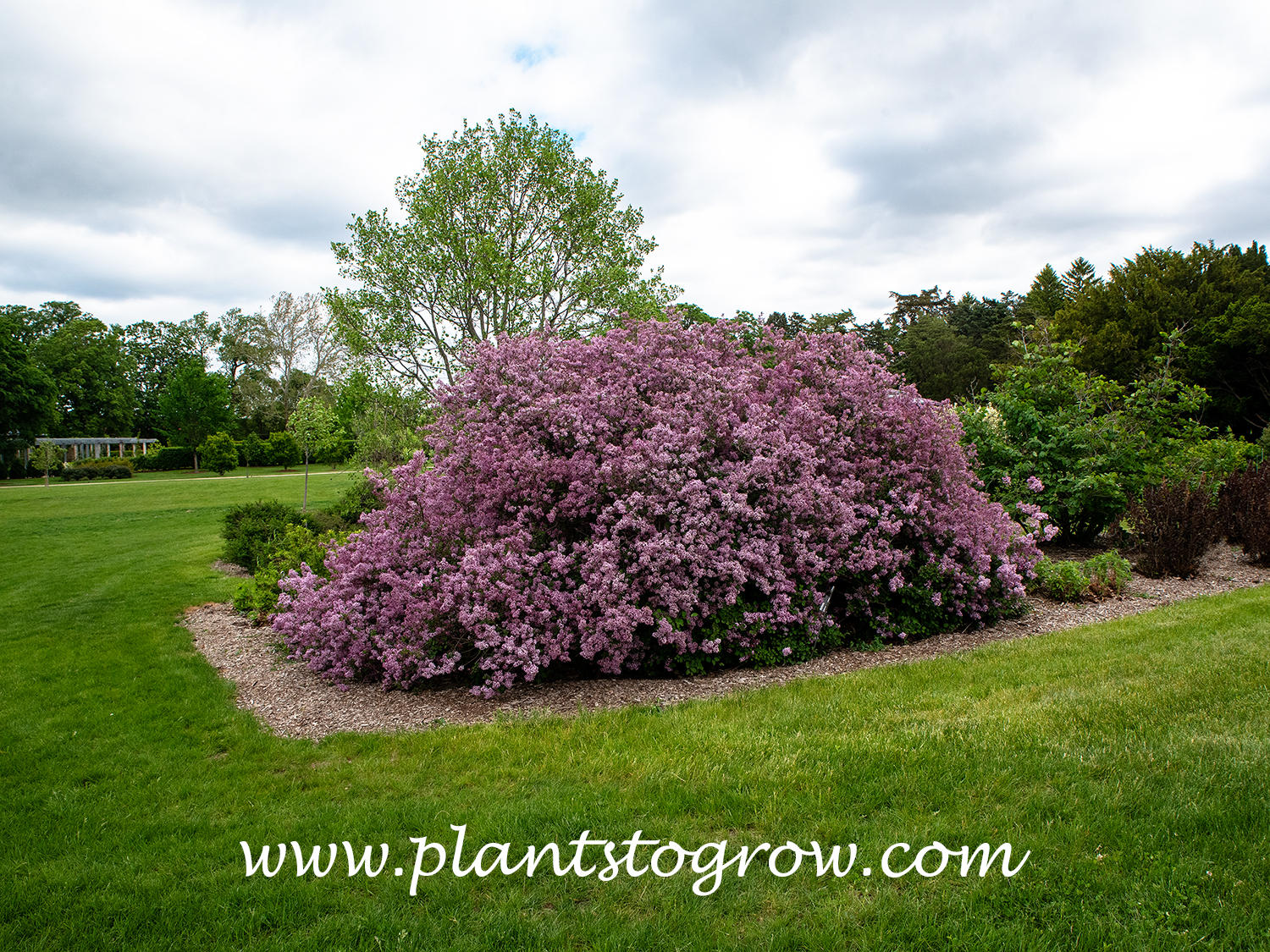
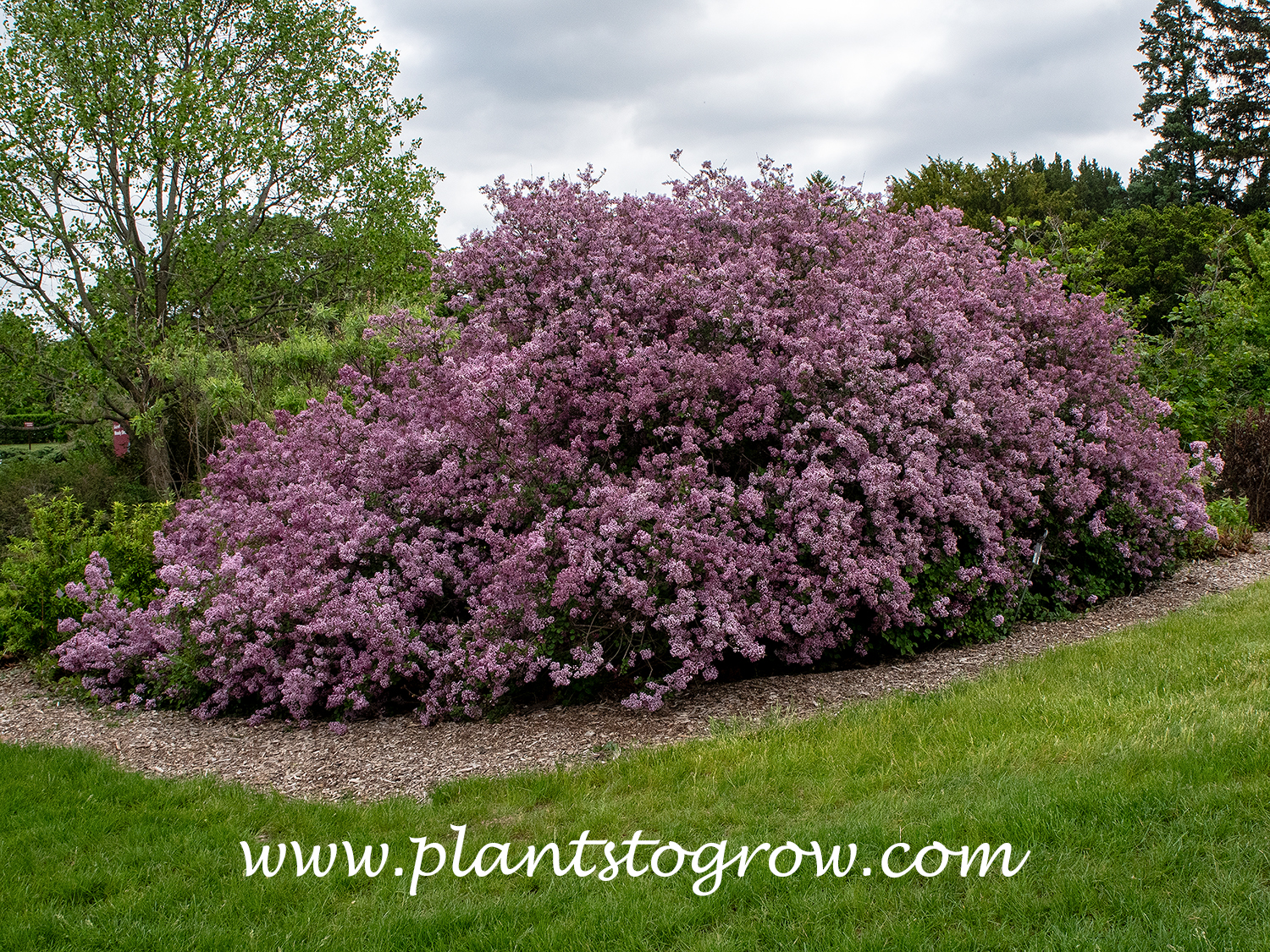
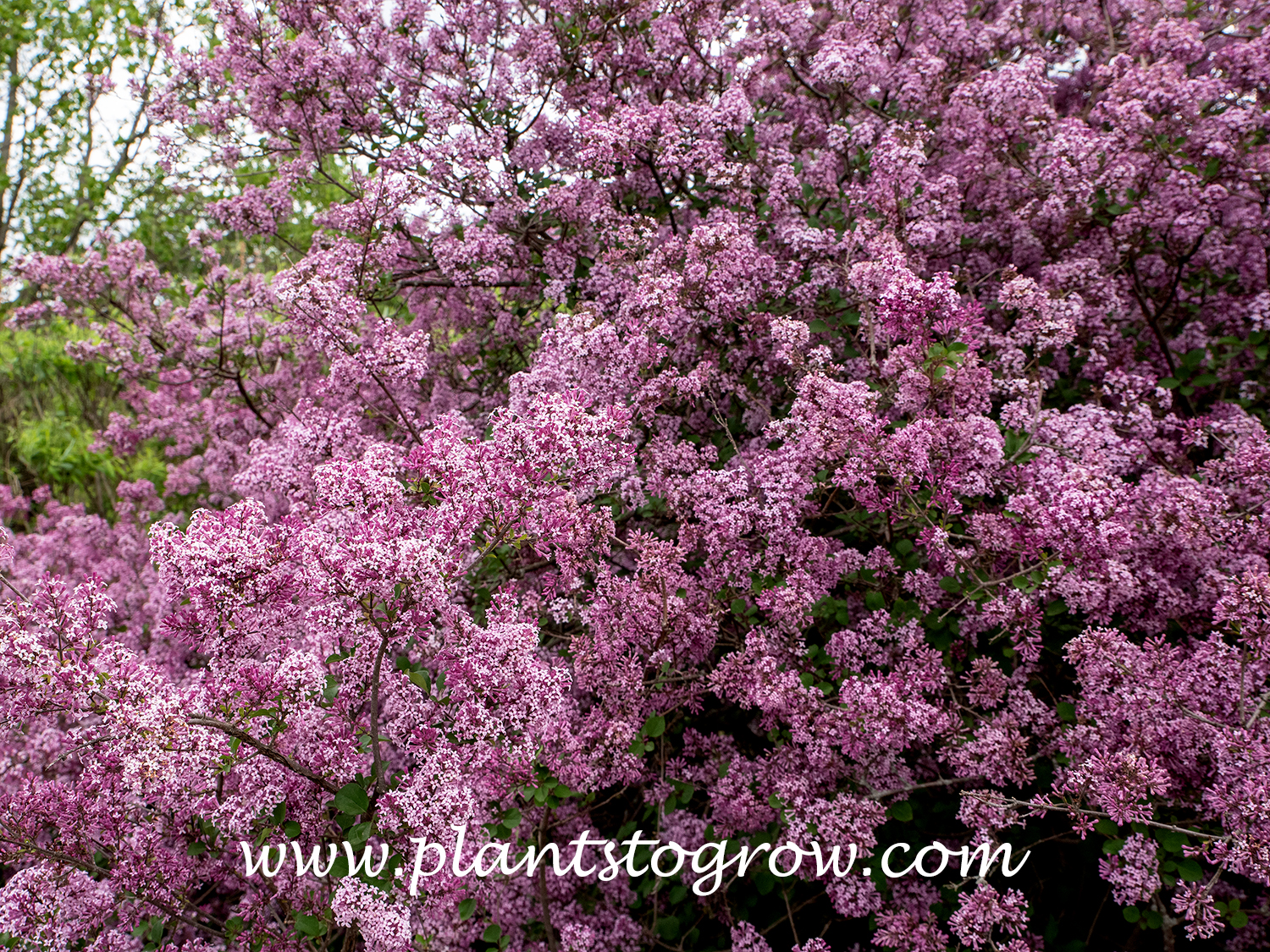
| Description | Red Pixie Lilac (Syringa) is a dwarf shrub that produces small, tubular flowers in dense, highly fragrant clusters. The flowers are reddish-pink, fading to soft pink as they mature. |
|---|---|
| Pronunciation | (si-RING-gah) |
| Plant Type | Shrubs Deciduous |
| Hardiness Zone | 4-8 |
| Sunlight | Best in full sun but will tolerate some shade. |
| Moisture | average |
| Soil & Site | average, doesn't like soggy soils. |
| Flowers | The small tubular flowers begin as deep reddish-pink and fade to pale pink. They are borne in dense panicles. Blooms in spring may rebloom in summer. |
| Fruit | A smooth, flattened, beaked, dehiscent capsule (3/4"), located in large panicles at the ends of branches. The capsules are green and turn brown as they dry. they are divided into two segments, each containing four seeds. |
| Leaves | Simple green leaves. |
| Stems | Has raised lenticels on the stem. |
| Roots | fiberous |
| Dimensions | 4-6 by 4-6 feet or larger (HS) |
| Maintenance | Since Lilacs bloom on next season’s wood, prune after they are done blooming. |
| Propagation | softwood cuttings, division of suckers |
| Cultivar Origin | The 'Red Pixie' lilac comes from a seedling discovered by Max Peterson in 1954, believed to be a hybrid of Syringa julianae Hers and Syringa meyeri. It was found at Meadowlark Hill, near Ogallala Lilacs in Nebraska. |
| Notes & Reference | #01-Manual of Woody Landscape Plants (Michael Dirr), #104-Lilacs “A Gardeners Encyclopedia (Fiala) |

Cart