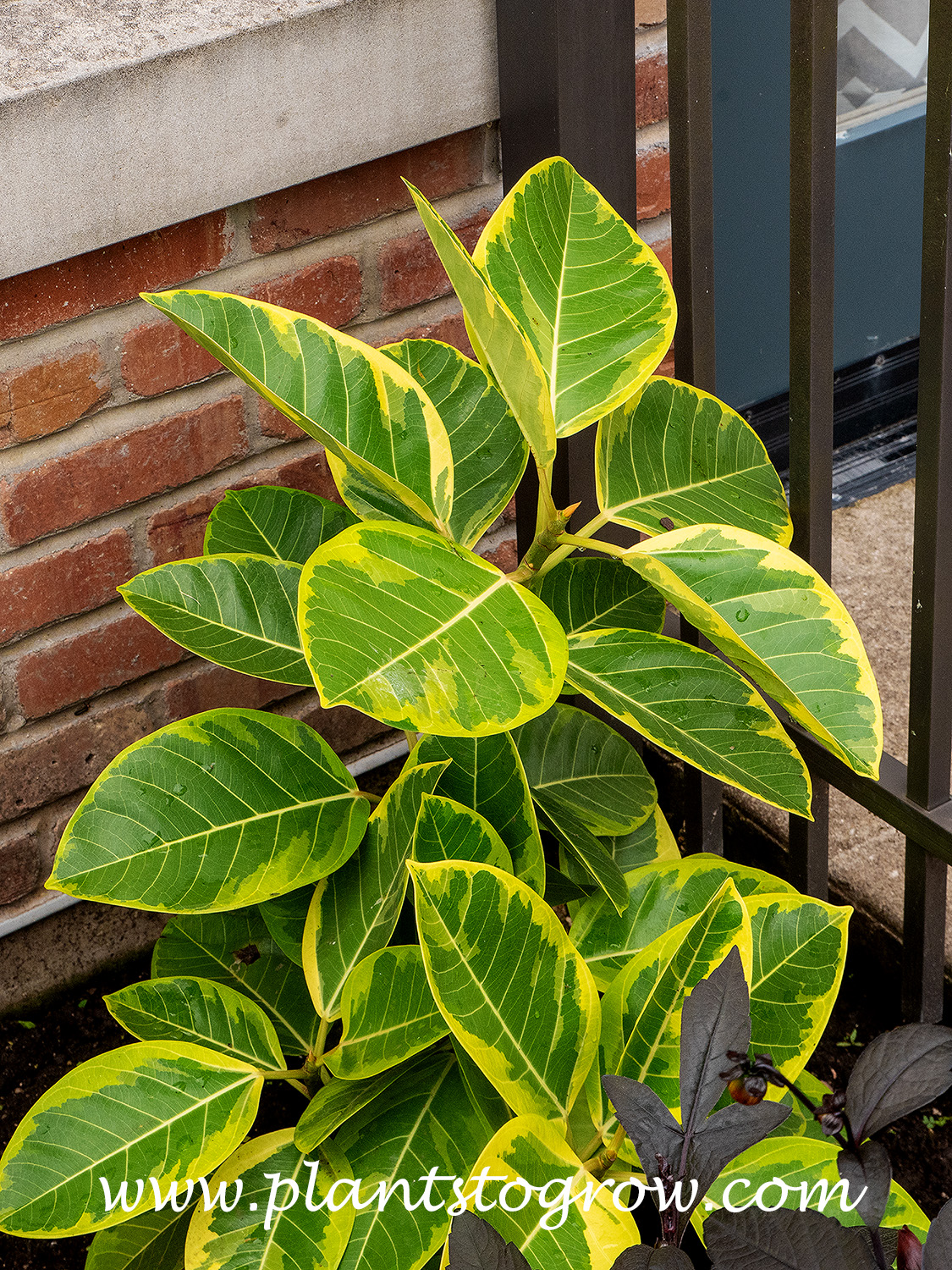
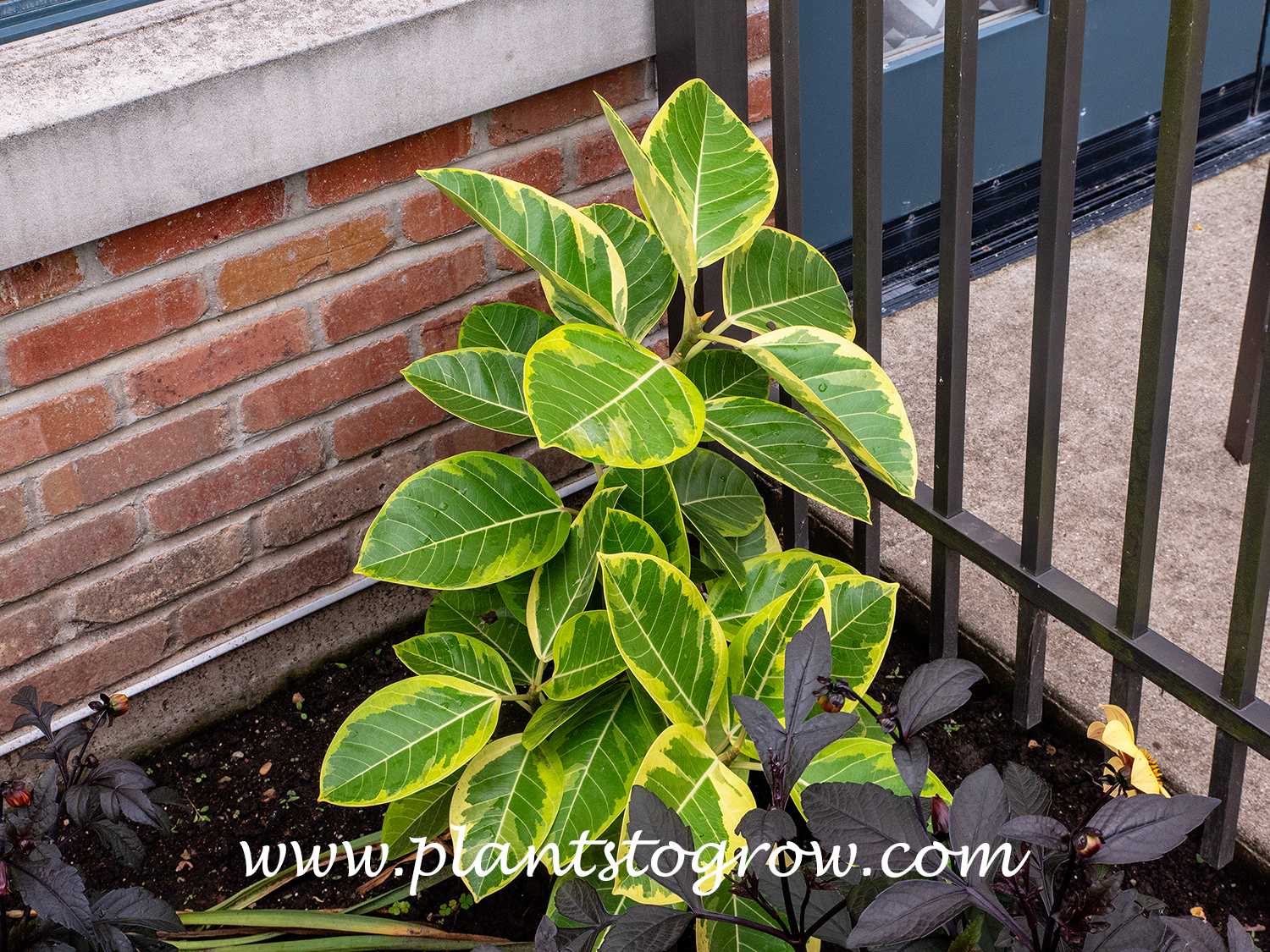
| Description | Yellow Green Rubber Tree (Ficus altissima) is a tropical tree used as a house plant in colder climates and a landscape plant in warmer regions. Has large, leathery, elliptic, green-centered leaves edged in bright gold. |
|---|---|
| Pronunciation | (FI-cus) |
| Plant Type | Indoor Foliage, Broadleaf evergreen, Trees Tropical |
| Hardiness Zone | (9)10 |
| Sunlight | Bright indirect to moderate, brighter light is needed to maintain leaf color. |
| Moisture | Approach dryness since overwatering is one of the main cultural practices that will kill this plant. |
| Soil & Site | average |
| Temperature | Doesn't like cold drafts. |
| Flowers | Probably won't flower unless grown outdoors in zone 9. |
| Leaves | Has large, leathery, elliptic, green-centered leaves edged in bright gold. |
| Stems | Stems will get woody with age. |
| Dimensions | 10-12 by 4-5 feet (HS), will probably get larger when grown as a landscape plant in zone 10. |
| Propagation | cuttings, air layering |
| Native Site | The species of plant is native to the rainforests of India and South America. |
| Cultivar Origin | Ficus altissima was first described by Dutch botanist Carl Ludwig Blume in 1826 from Java. |
| Misc Facts | This plant produces a white sap that will ooze out of any cut or leaf that breaks off. This plant is not the primary source of rubber that is used in tires. The sap from Hevea brasiliensis is the primary source for rubber. |
| Notes & Reference | #158-Plantepedia (Maggie Stuckey), #274-Site Authors' observations and growing experiences of different Rubber Trees. |

Cart