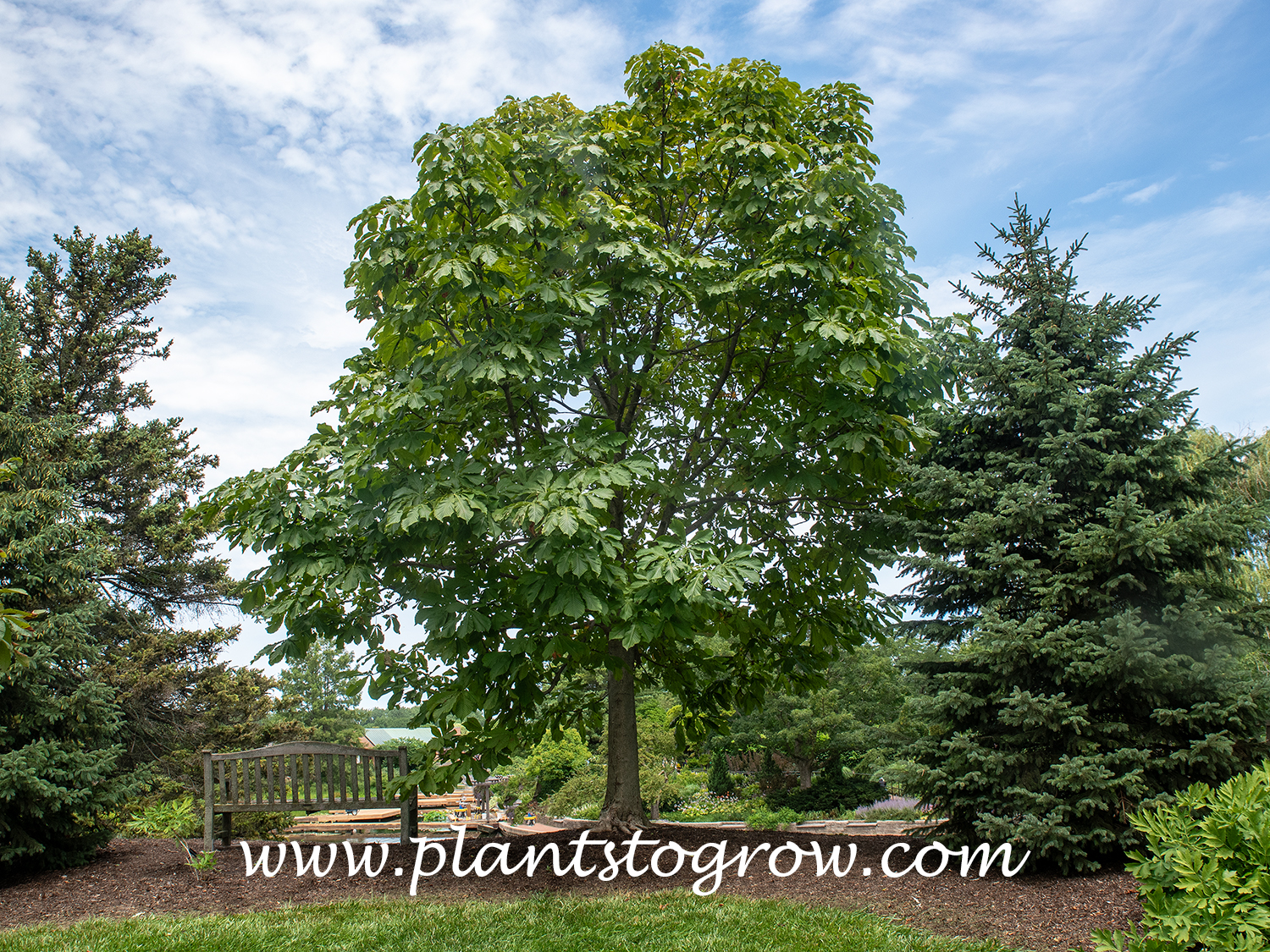
| Description | Japanese Horsechestnut (Aesculus turbinata) is a large deciduous tree with palmately lobed leaves and white flowers borne in a panicle inflorescence. |
|---|---|
| Pronunciation | (ES-kew-lus)(ter-bi-NAH-tah) |
| Plant Type | Trees Deciduous |
| Hardiness Zone | 6-8 |
| Sunlight | full |
| Moisture | average |
| Soil & Site | average, moist |
| Flowers | White flowers borne on 6-10 inch panicles. |
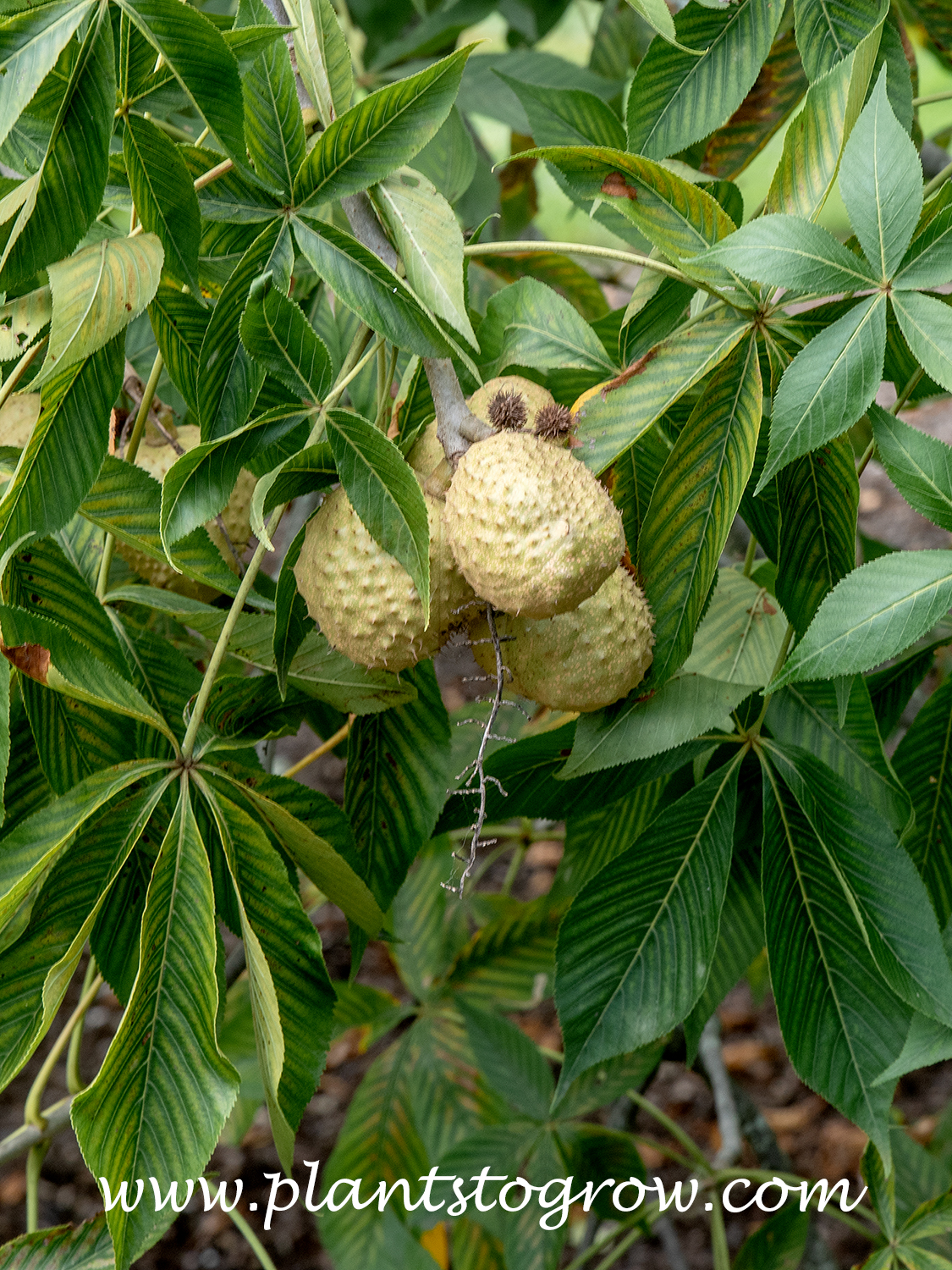
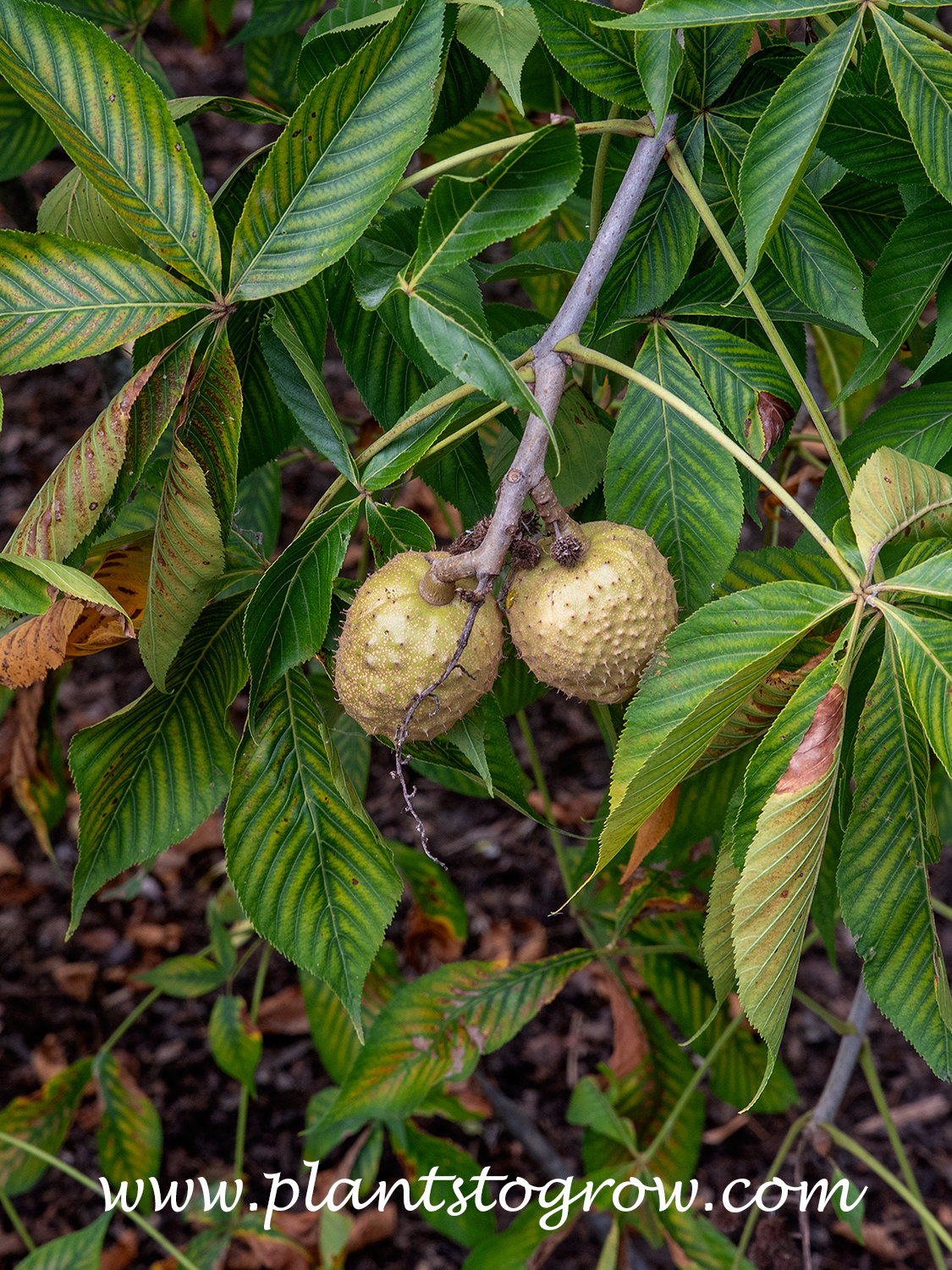
| Fruit | The fruits do not have spines. Inside each fruit are large, brown, smooth, shiny seeds with a prominent hilum. The fruit appears in the fall. The saponins in the seeds can be used as a soap substitute. |
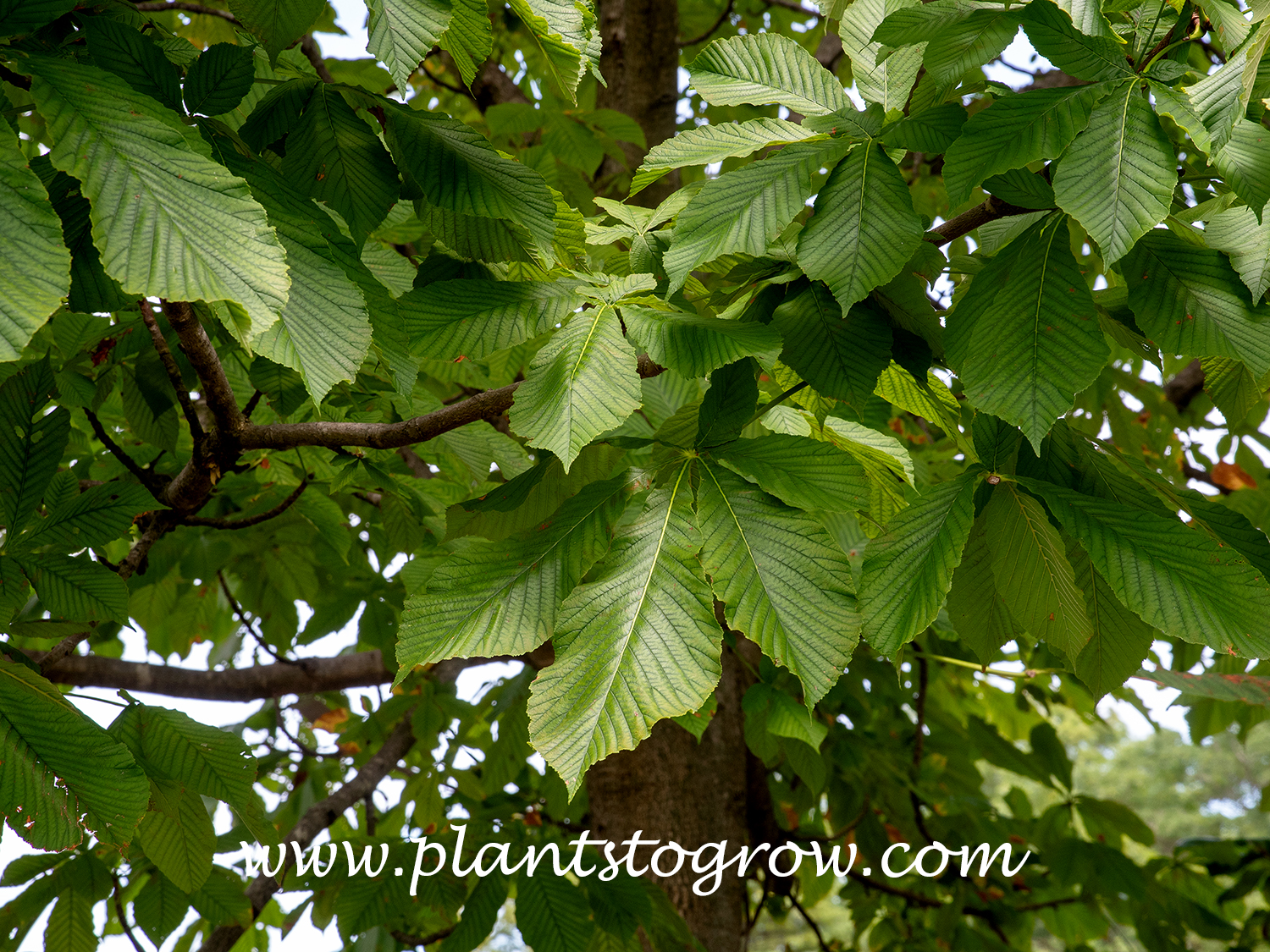
| Leaves | Dark green, palmately compound leaves with 5-7 leaflets. |
| Dimensions | Reaches 40-100 feet tall, on the smaller side when used in the landscape. |
| Propagation | seeds |
| Native Site | Native to Japan. |
| Cultivar Origin | Introduced before 1800. |
| Notes & Reference | #01-Manual of Woody Landscape Plants (Michael Dirr) |

Cart