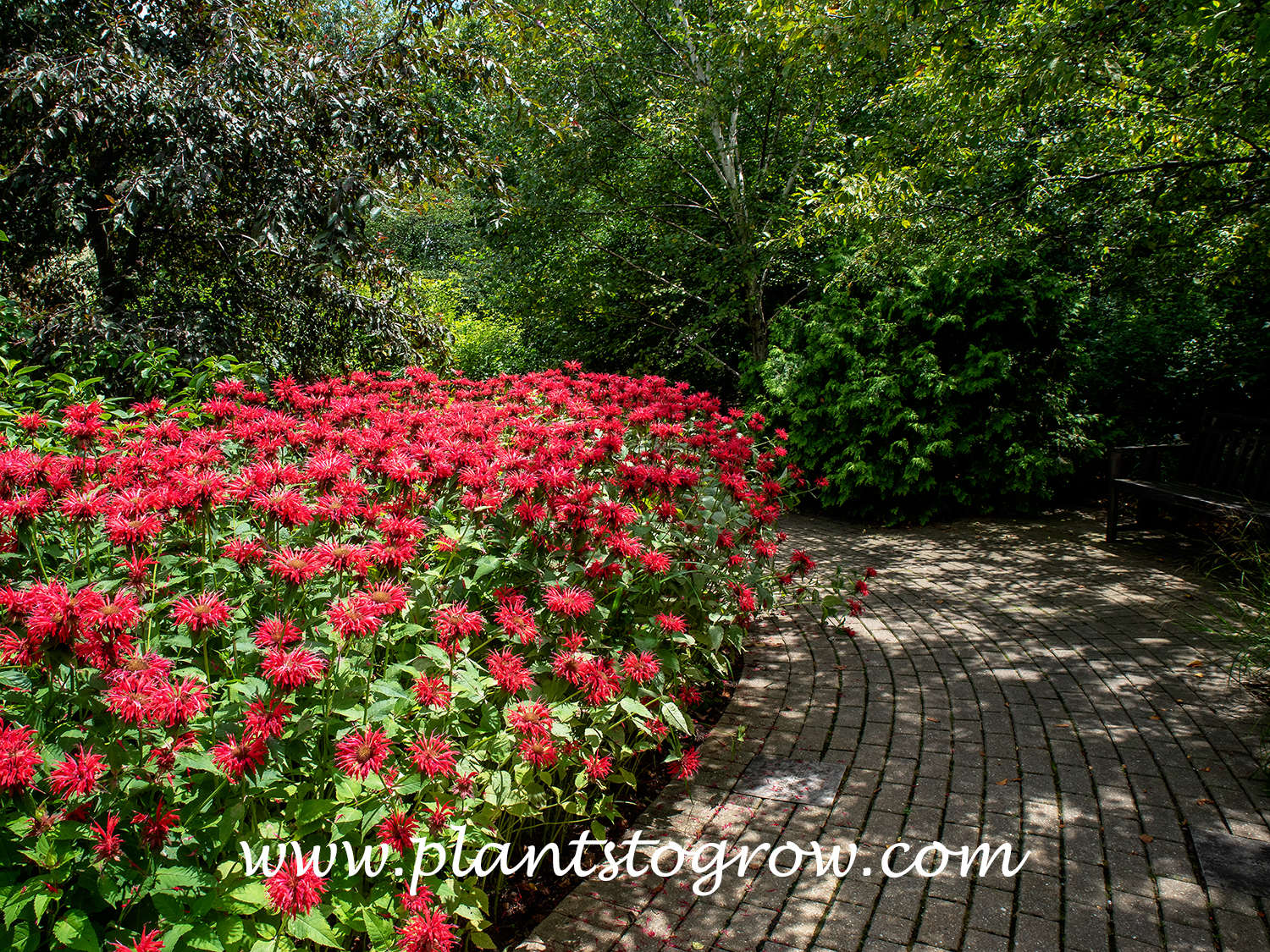
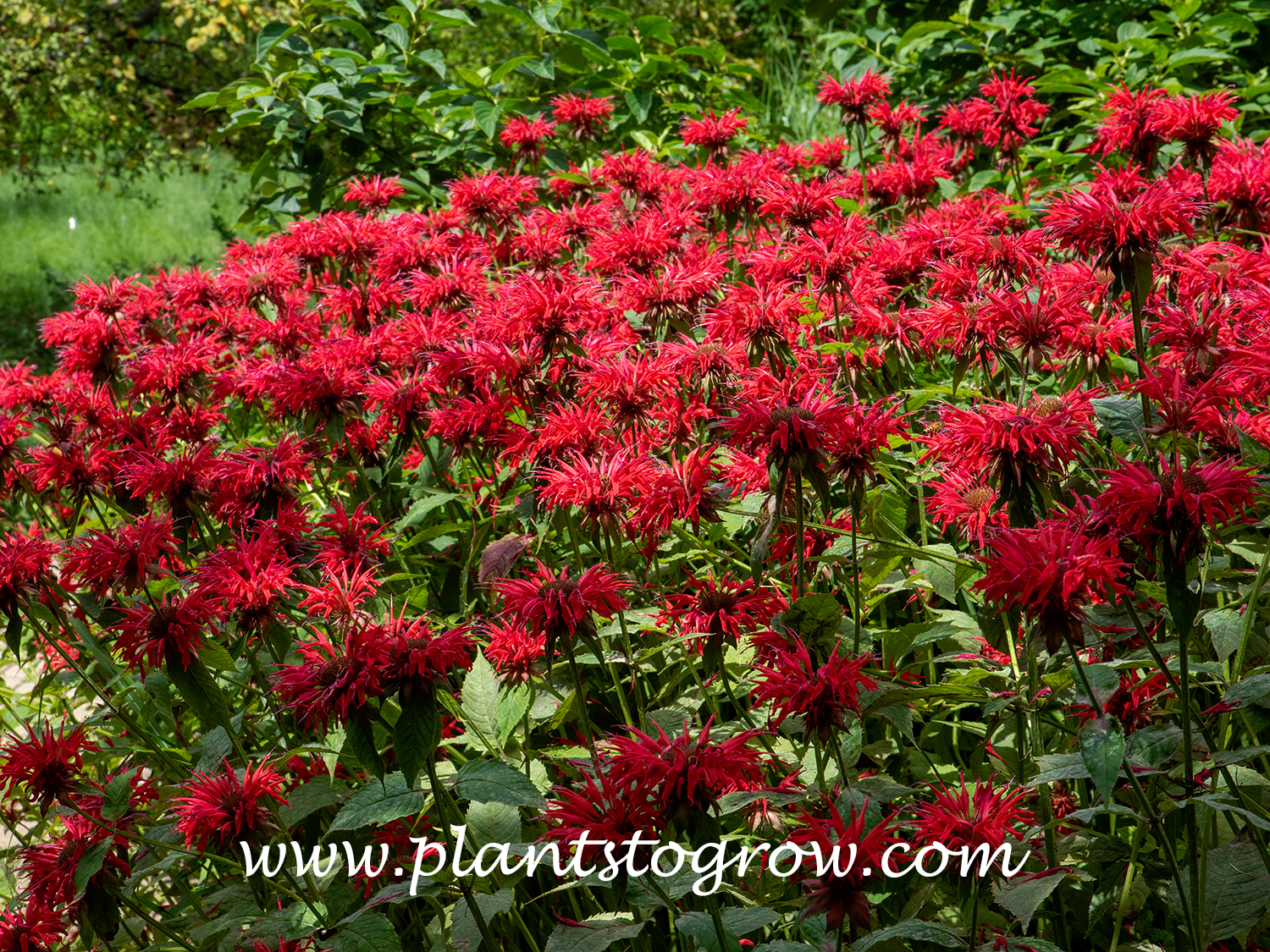
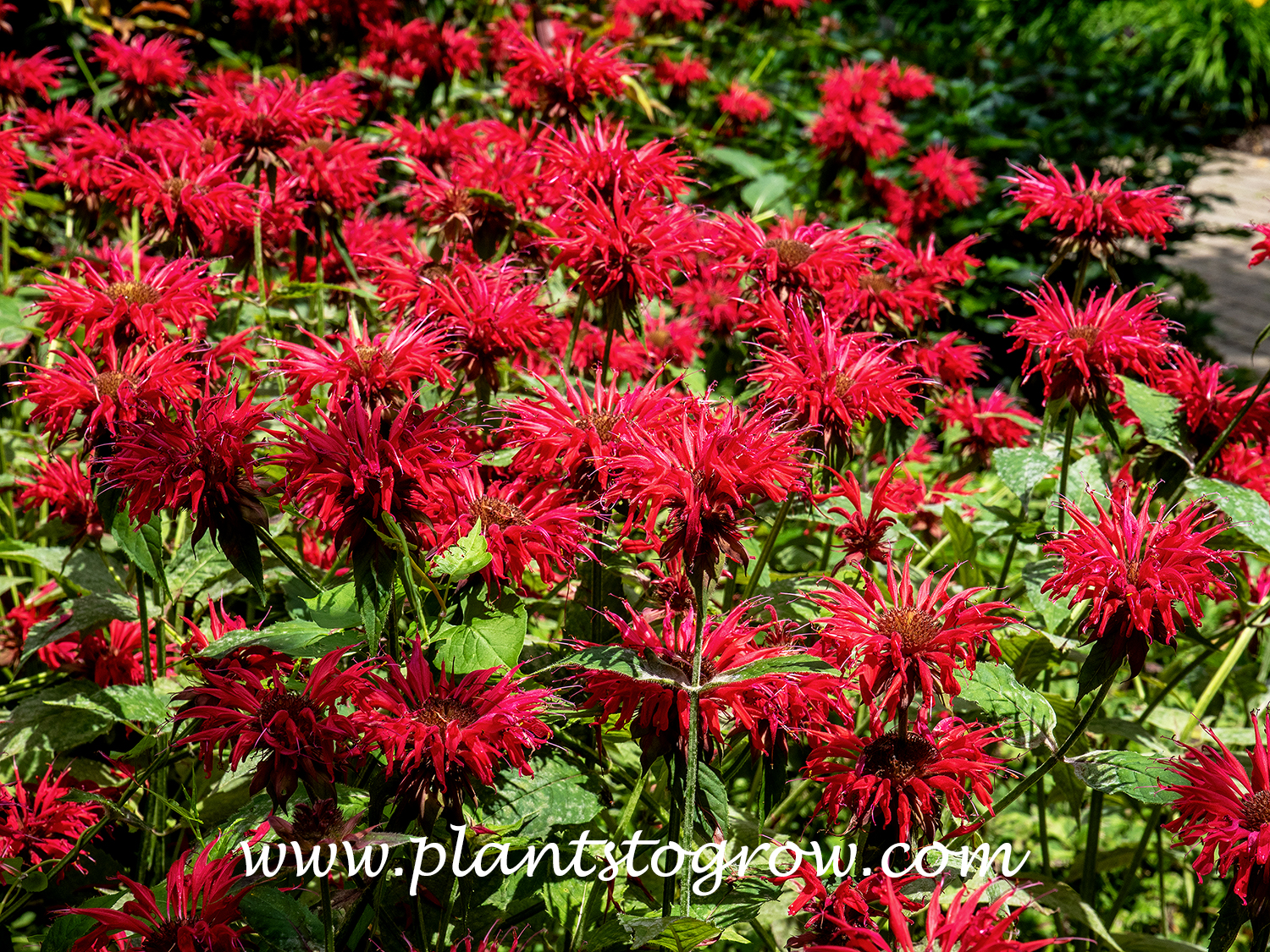
| Description | Gardenview Scarlet Bee Balm (Monarda didyma) is a hardy, upright, spreading perennial with red flowers. Has good resistance to Powdery Mildew. |
|---|---|
| Pronunciation | (mo-NAR-da) |
| Plant Type | Perennials Hardy, Site author's observations |
| Hardiness Zone | 5 |
| Sunlight | full, mostly sunny |
| Moisture | Average, in moist sites, they will expand rapidly, becoming aggressive and invasive. |
| Soil & Site | Average, in moist sites, they will expand rapidly, becoming aggressive and invasive. |
| Flowers | Tubular scarlet red flowers (florets) are whorled around the center dome. The colors appear in mid-July and last through August. Flowers attract bees, Hummingbirds, and other pollinators. |
| Leaves | Ovate to ovate-lanceolate, medium to deep green leaves (3-6” long) with serrate margins. Leaves emit a minty fragrance when bruised or crushed. The leaves are used to make tea. This cultivar has resistance to powdery mildew. |
| Stems | The upright stems are four-angled. Spreads by aggressive rhizomes. |
| Roots | fiborus |
| Dimensions | 2-3 by 2-3 feet (HS), upright clumping and spreading |
| Maintenance | After blooming, cut back to the ground. Cutting back eliminates the bare knee stems and the mildew-laden leaves. Monarda dies out in the center and needs to be divided every 2-3 years. Dig healthy clumps and replant, or dig out the center and fill with compost. The plants will rapidly regrow. It should be placed behind a plant that will cover up the space left when Monarda is cut back. |
| Propagation | Monarda can be grown from seed, but cultivars will not produce true-to-type offspring from seed. Monarda can be easily reproduced by division and also through softwood cuttings. |
| Native Site | Genus is native to North America. |
| Cultivar Origin | Henry Ross at Gardenview Horticultural Gardens, Strongsville, Ohio, USA |
| Misc Facts | Called Oswego Tea because it was discovered by John Betram near Oswego, New York. He used the leaves to make tea. The genus was named after Nicolas Monardes, a 16th-century botanist. |
| Author's Notes | Refer to Monarda ABCs for additional culture information on Monards. |
| Notes & Reference | 04-Herbaceous Perennial Plants (Allan Armitage), #40-Herbaceous Ornamental Plant (Steven Stills), #274-Site Authors' observations and growing experiences of different Monardas |

Cart