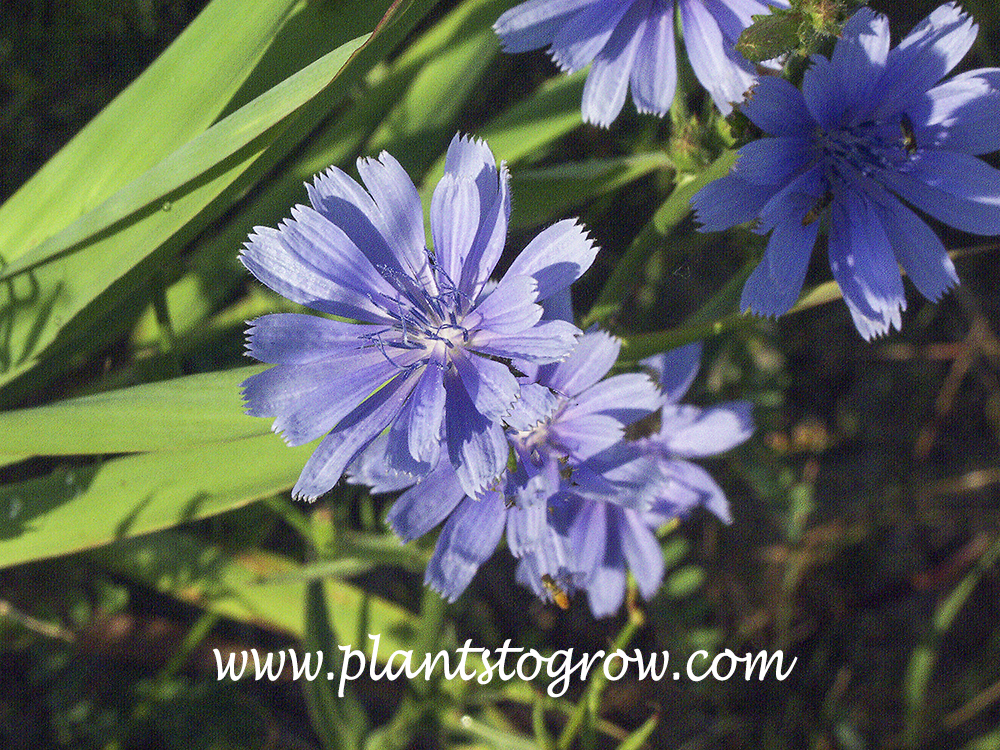
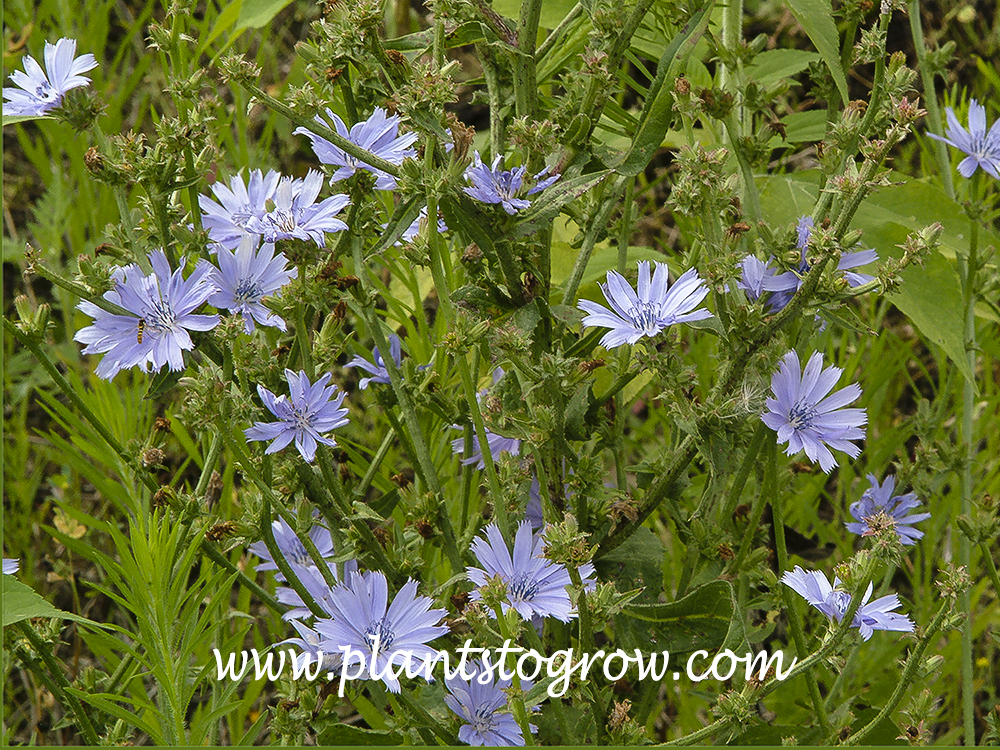
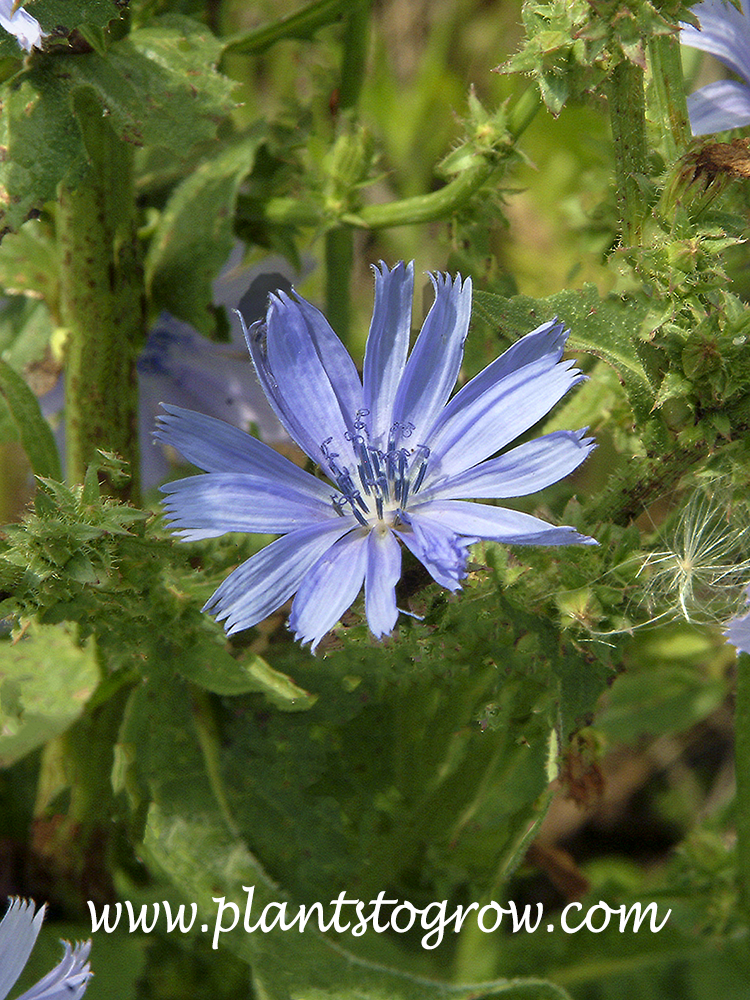
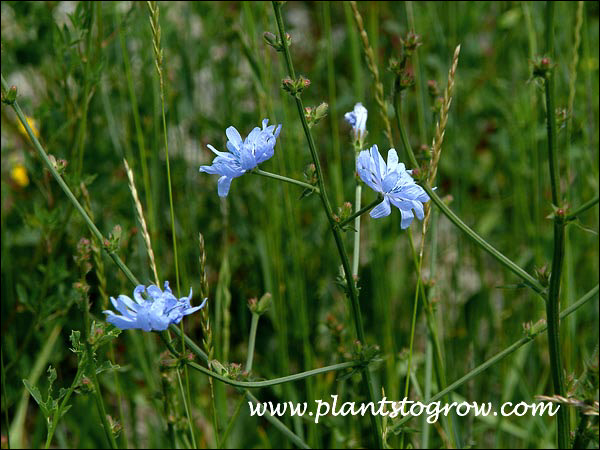
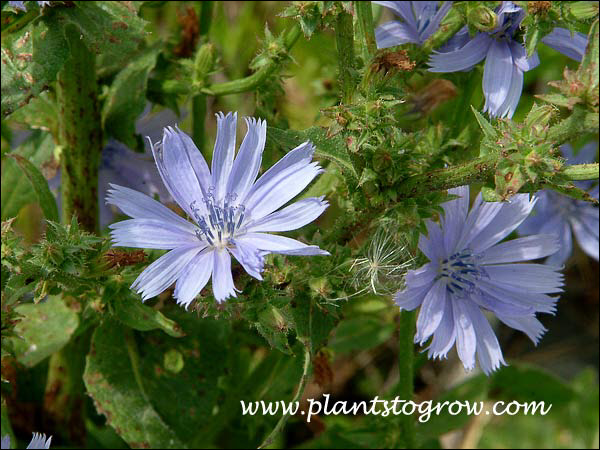
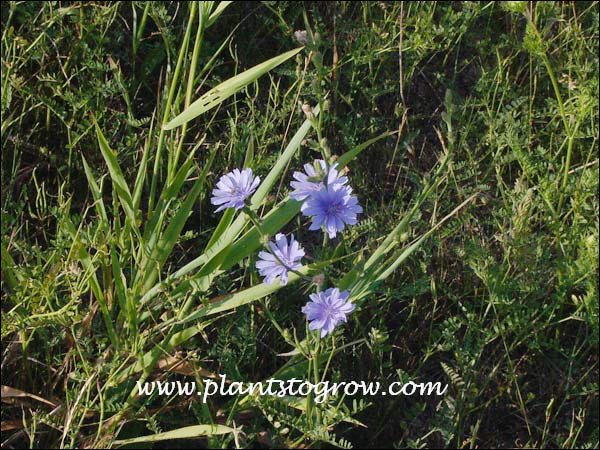
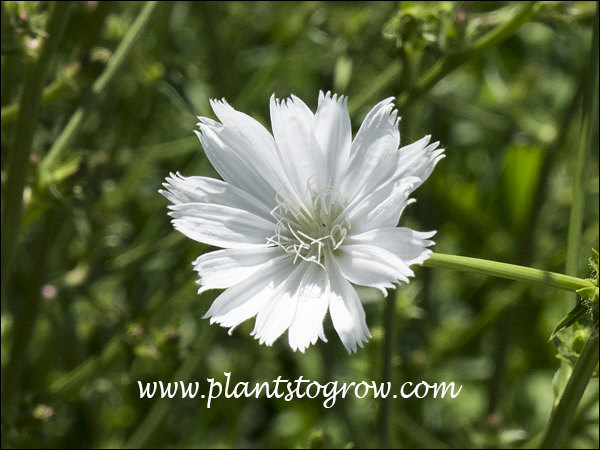
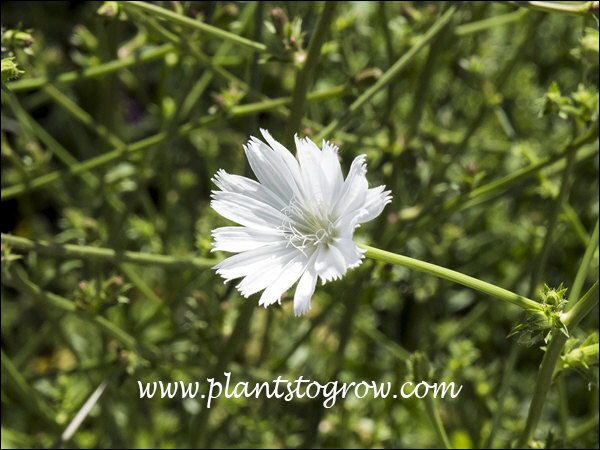
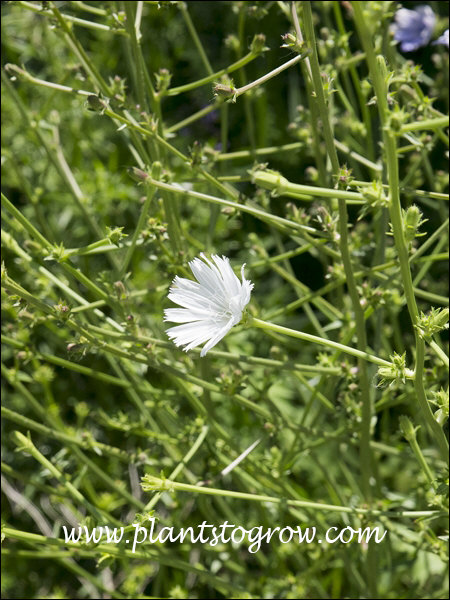
| Description | Chicory (Cichorium intybus) A common but pretty weed with blue, sometimes white flowers. Taproot is dried and used in coffee. |
|---|---|
| Plant Type | Annuals, Weeds, Site author's observations |
| Sunlight | full |
| Moisture | average |
| Soil & Site | average |
| Flowers | Sky blue, sessile, and sparsely occurring on the stem, the petals are square-tipped, have a ragged edge, and only a few flowers bloom at a time, close by late afternoon. Sometimes white, but mostly blue. The petal-like structures are actually a perfect flower called a ligulate flower. The flower is called a ligulate head or ligulate capitula. |
| Leaves | Larger leaves are found at the base of the plant, they are toothed, fewer and smaller as you go up the stem, upward leaves clasp the stem, will form a rosette in mowed lawns. The dead, dried stalks are very crunchy when walked on. |
| Stems | Exude a white milky sap when broken |
| Roots | Have a brown tap root that is dug up, dried, and used in or as coffee. |
| Dimensions | 3' tall |
| Maintenance | A perennial plant that quickly spreads into disturbed sites by seed. |
| Propagation | seeds |
| Native Site | Native to Europe. |
| Misc Facts | The taproot of this plant can be dried and used to make a form of coffee or add to coffee to give it a slightly bitter taste. The leaves are edible but bitter. Many people blanch the leaves to keep away the bitterness. Very popular in France and Belgium. AKA: White Chicory (Cichorium intybus f. album), Succory, Blue Sailor, Ragged Sailor |
| Author's Notes | This plant seems to be most prolific in disturbed sites. Doesn't like competition from other plants. Although blue is by far the most common color, I have come across a few white and even pink flowers. This is a very common plant in Southeastern Wisconsin (USA). |
| Notes & Reference | #14-Hedge maids and Fairy Candles (Jack Sanders) , #41-Wildflowers of Wisconsin (Stan Teikiela), #61-How to recognize Flowering Wild Plants (Grimm) |

Cart