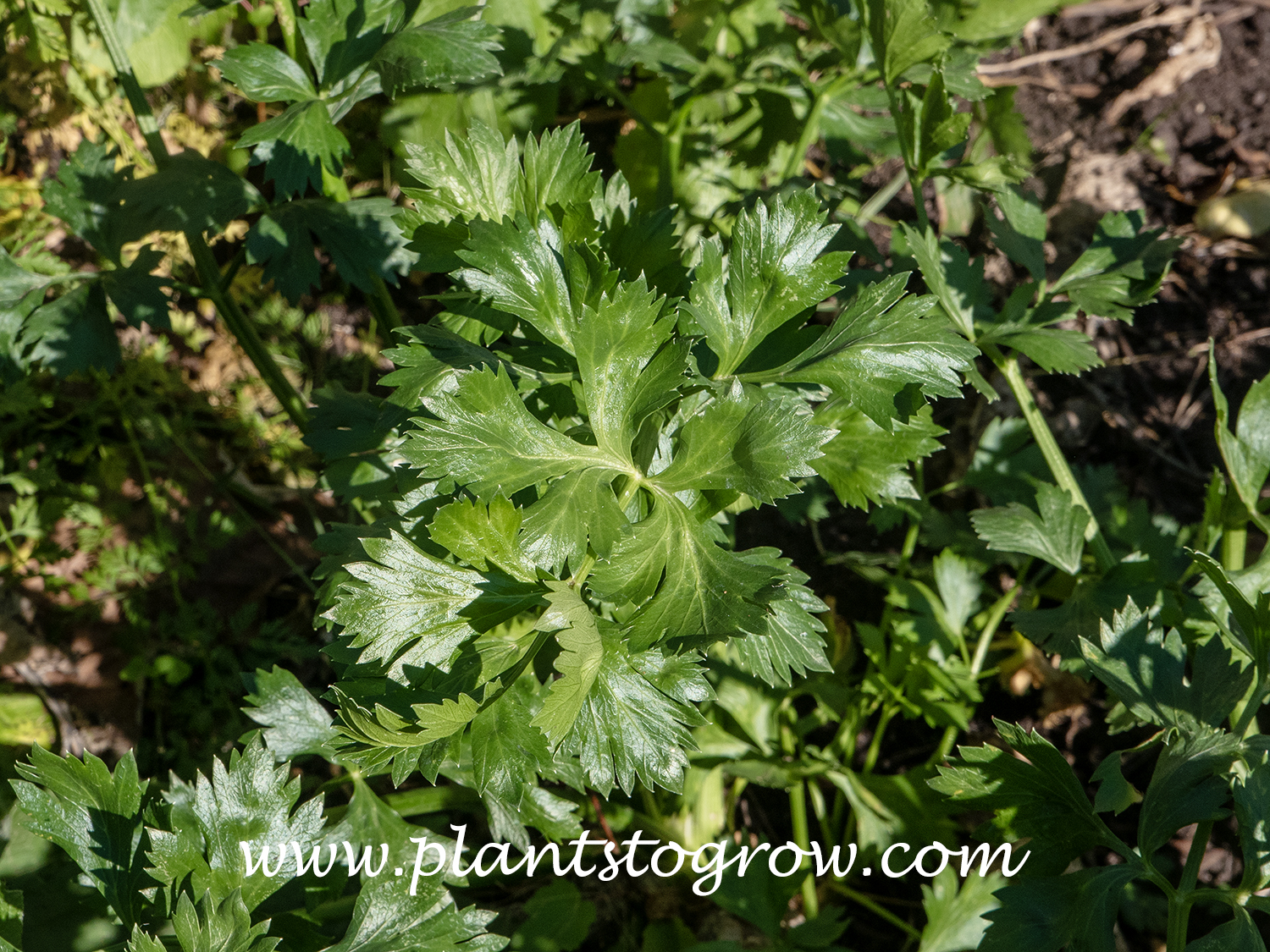
| Description | Celeriac (Apium graveolens var. rapaceum) is a cold, hardy, boulbous-stem vegetable used in soups, stews, and roasted. It has a mild flavor resembling celery but with a starchy, potato-like texture.
|
|---|---|
| Pronunciation | (AY-pee-um)(gra-vee-OH-lenz) |
| Plant Type | Bulbs, corms, tubers, rhizoms, etc., Edibles Vegetables, Site author's observations |
| Sunlight | full |
| Moisture | average, moist |
| Soil & Site | average, organic |
| Temperature | During the best growing season, temperatures fall within the range of 60-75°F. Celeriac tends to bolt if exposed to temperatures of 55°F. |
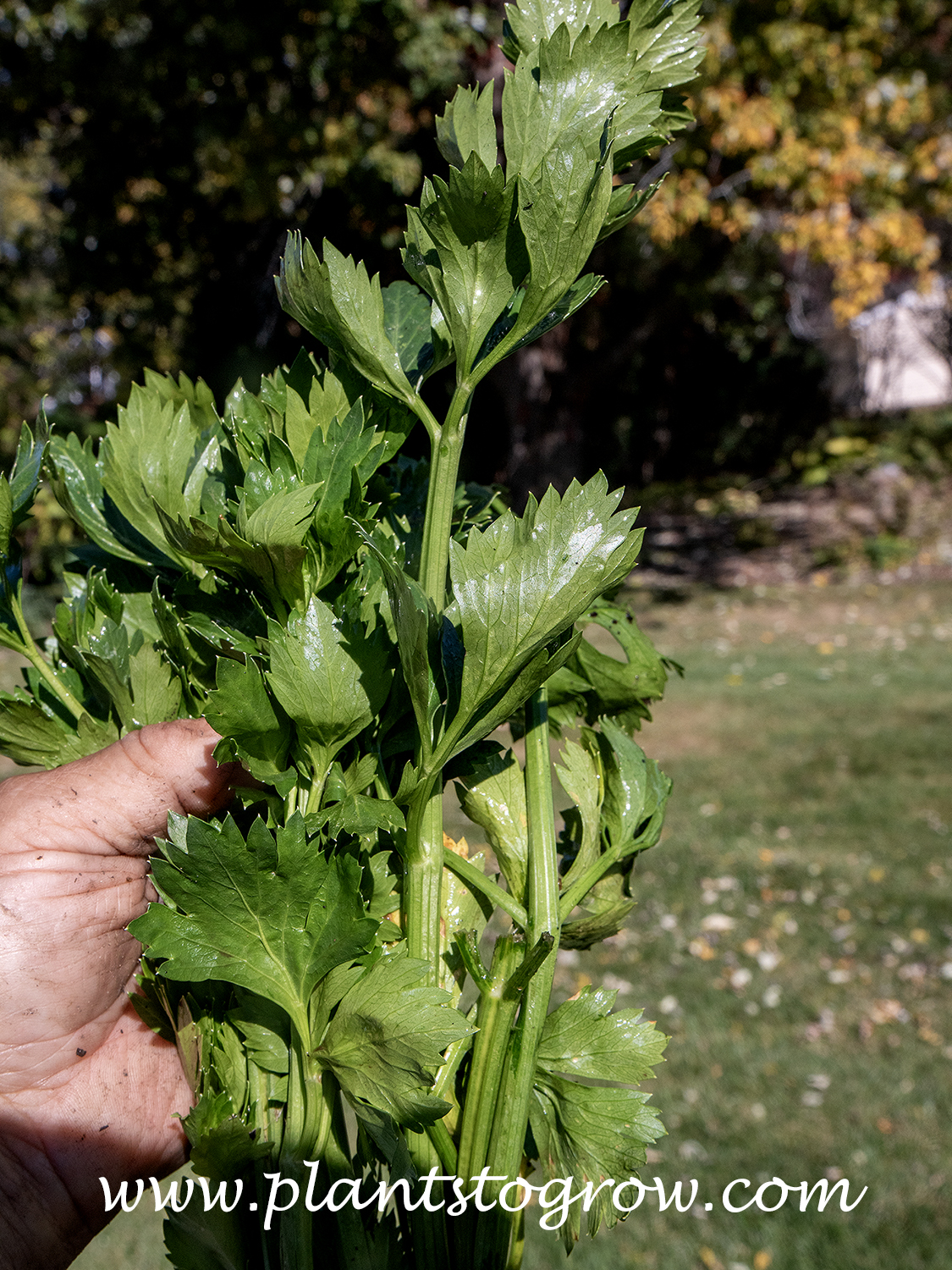
| Leaves | Looks like Celery leaves. |
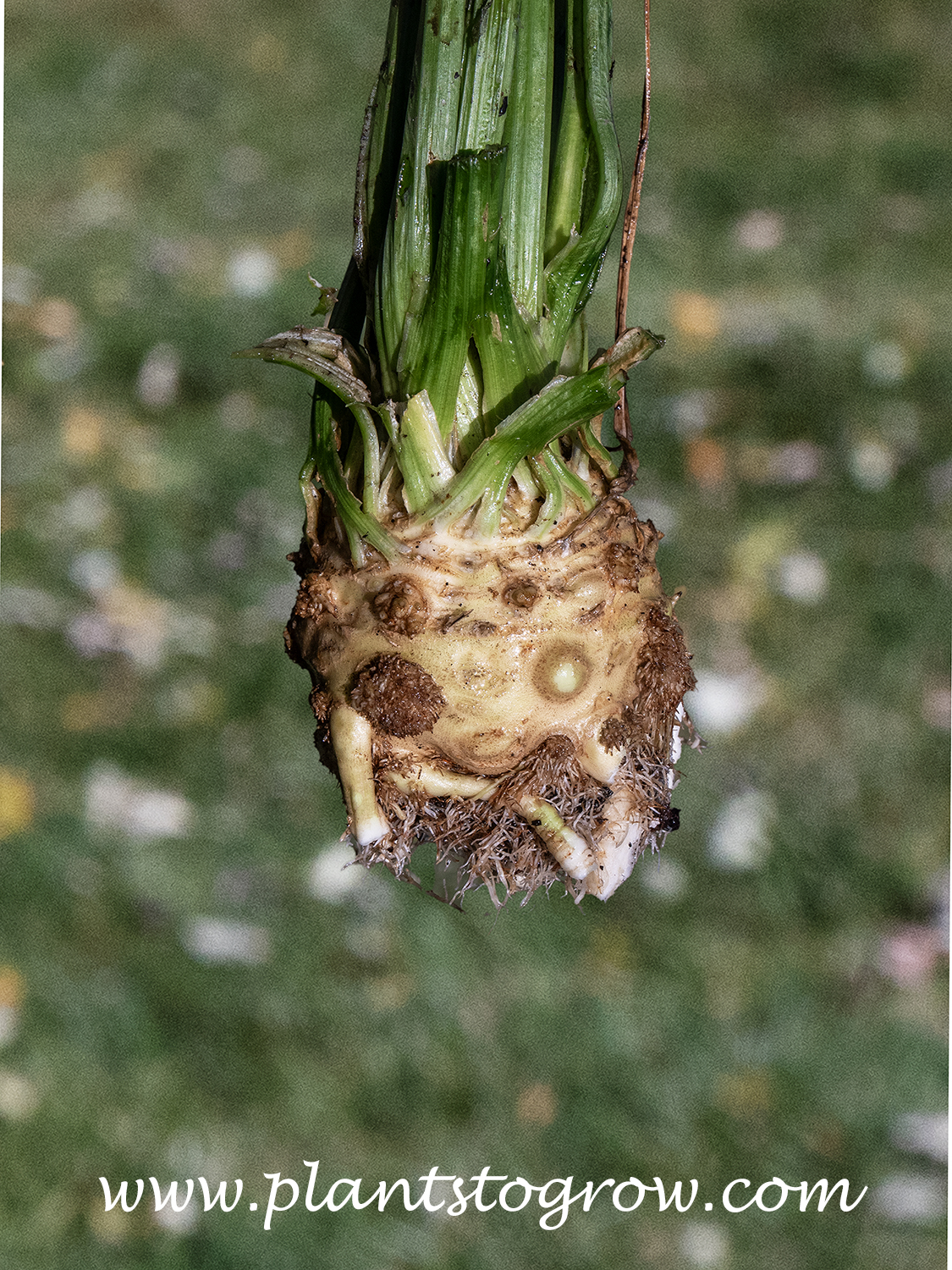
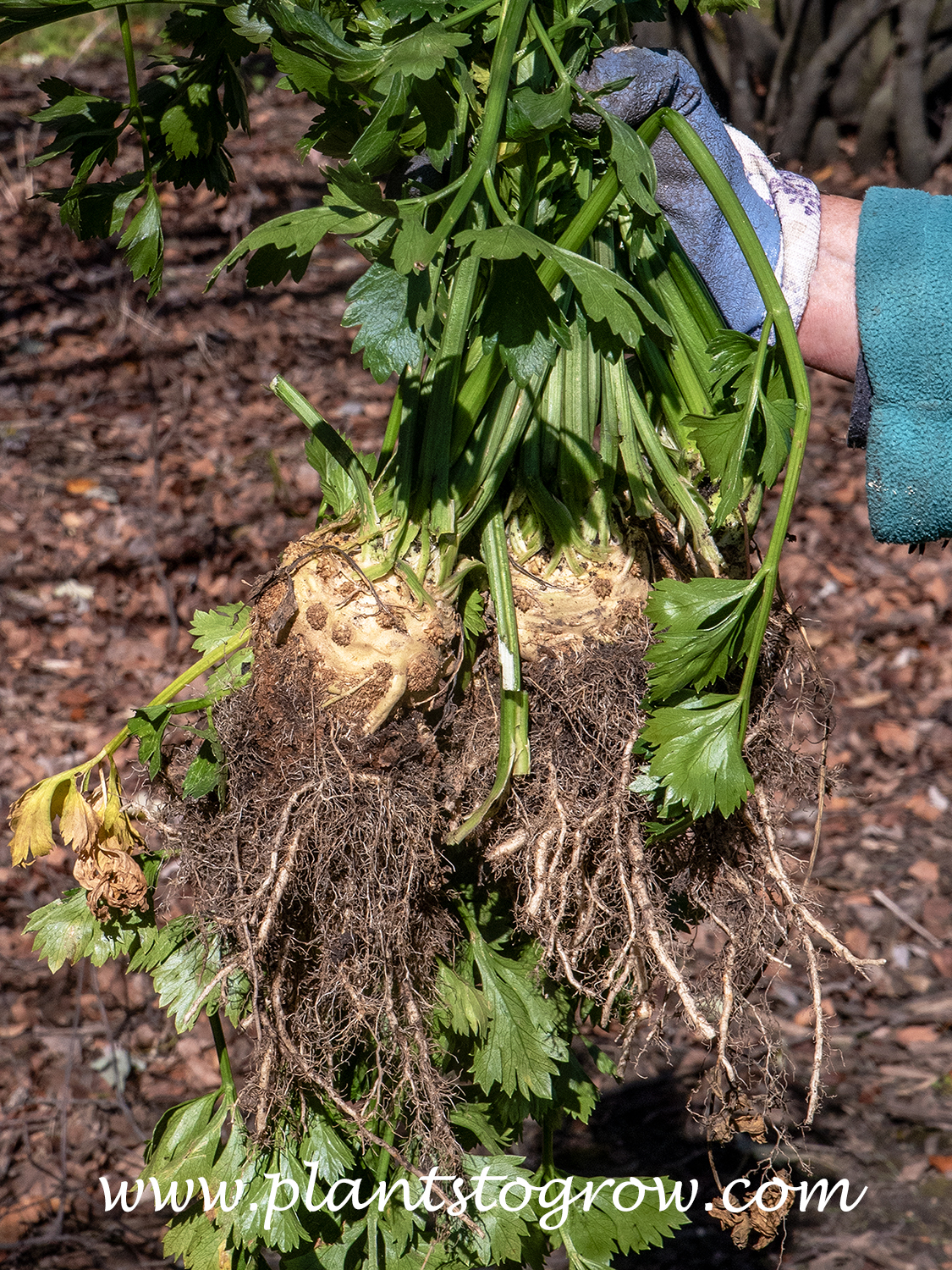
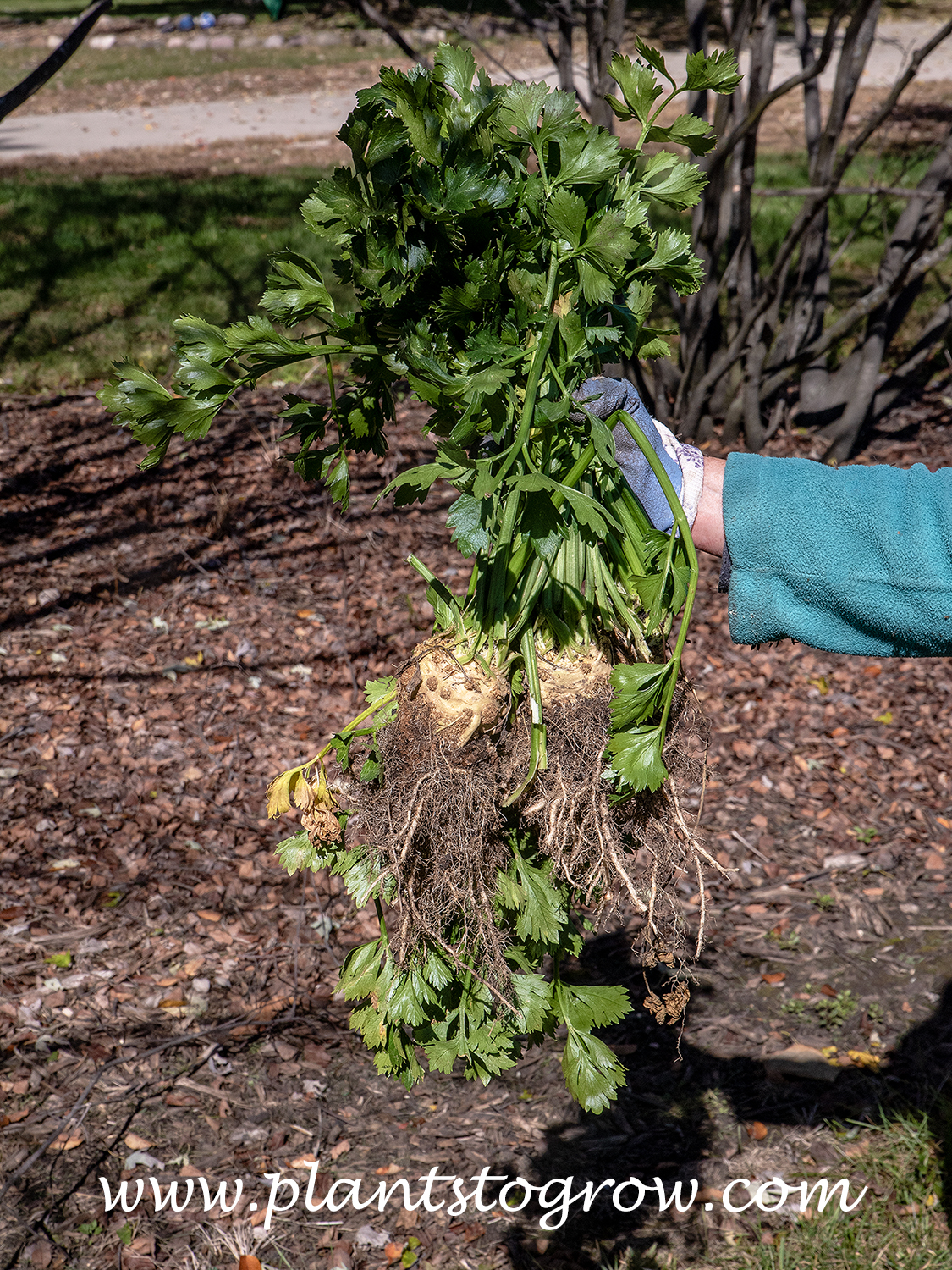
| Stems | I have seen the bulbous base stem listed as a bulb, corm, bulb-like, etc.. |
| Dimensions | Space the plants about 8-10 inches apart. |
| Propagation | Can be direct-seeded in the garden. Pre-starting in a biodegradable pot is the best method. |
| Cultivar Origin | Celeriac originates from wild celery (var. graveolens) throughout the Mediterranean and Northern Europe. In early history, the Egyptians, Greeks, and Romans utilized it primarily for religious purposes and first cultivated it in the Mediterranean. It became significant as a vegetable during the Middle Ages. Through selective breeding, the edible part has been enlarged. It was introduced to Europe in the 1770s. |
| Misc Facts | The genus name comes from Latin and means bee (bees are reportedly attracted to the plant's white flowers). |
| Author's Notes | We enjoy using celery bulbs in boiled dinners or roasted dishes. The bulbous base stem can be difficult to peel because of its many nooks and crannies. I prefer to use a sharp knife to carefully slice away the rough, knobby outer layer, working around the curves until the smooth white flesh is revealed. Once cut, the flesh is white and has a very mild celery smell and taste. All parts of the plant, including the bulbous roots, stalks, and leaves, are edible. |
| Notes & Reference | #144-Missouri Botanical Gardens website (www.missouribotanicalgarden.org), #282-Botanica Organic Gardening (Dr. Judyth McLead), #274-Site Authors' observations and growing experiences |

Cart