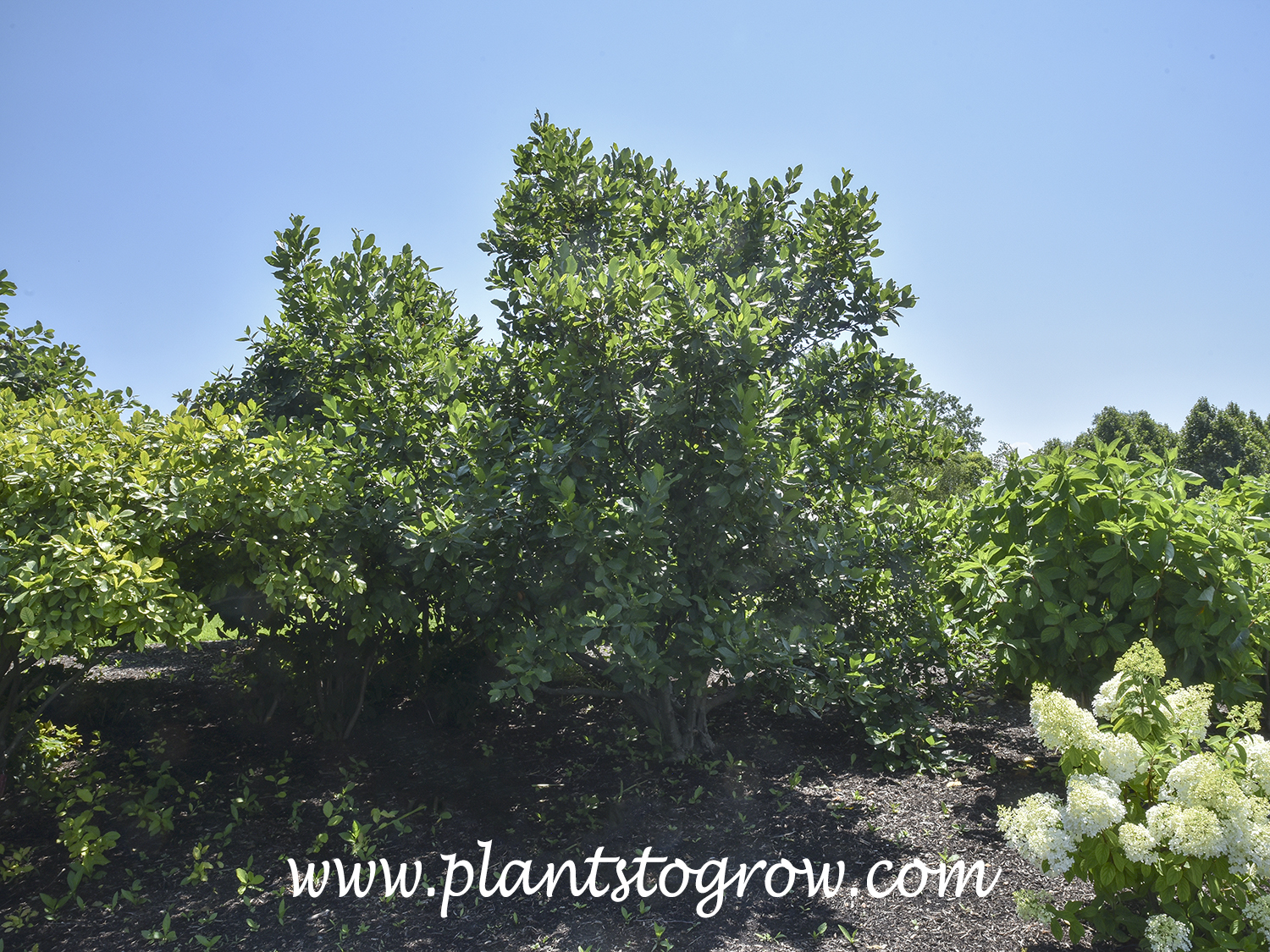
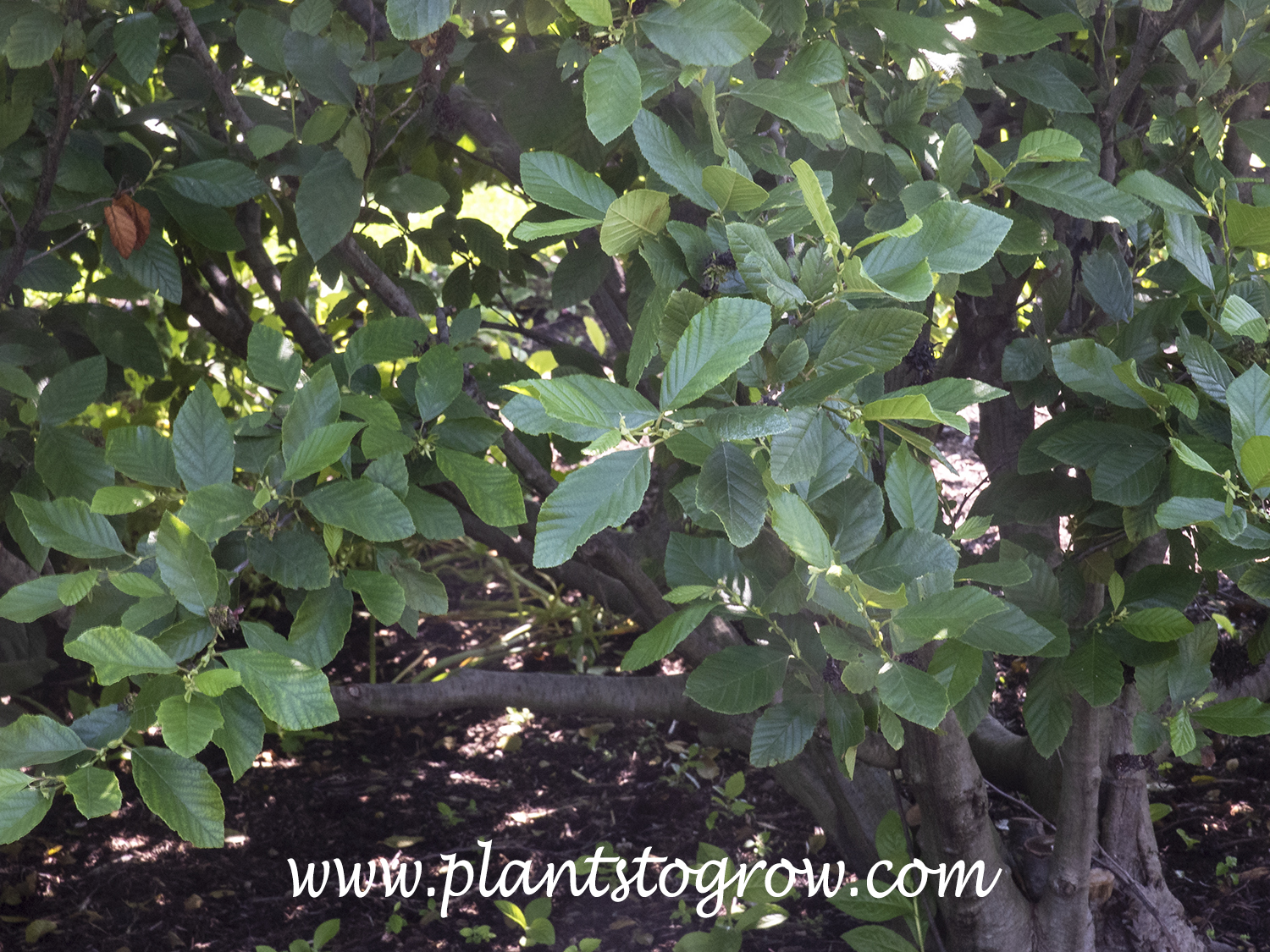
| Description | Alder (Alnus serruluta) is a small deciduous thicket-forming tree found growing near streams and wet areas. |
|---|---|
| Pronunciation | (AL-nus) (ser-yoo-LAY-tuh) |
| Plant Type | Shrubs Deciduous |
| Hardiness Zone | 4-9 |
| Sunlight | full, mostly sunny, with some shade |
| Moisture | average to moist |
| Soil & Site | Average to moist to wet soil. Native to boggy ground along streams, lakes, and rivers, wetland margins, springs, spring-fed meadows, ditches, and swampy fields |
| Flowers | A monoecious tree bears separate male and female flowers |
| Fruit | The female fruiting cones (strobiles) are 3/4” long, containing winged nutlets (seeds). The cones mature to dark brown in fall and persist into winter. Resemble small pine cones, male catkins (brownish-yellow)are slender, cylindrical, and droop in clusters |
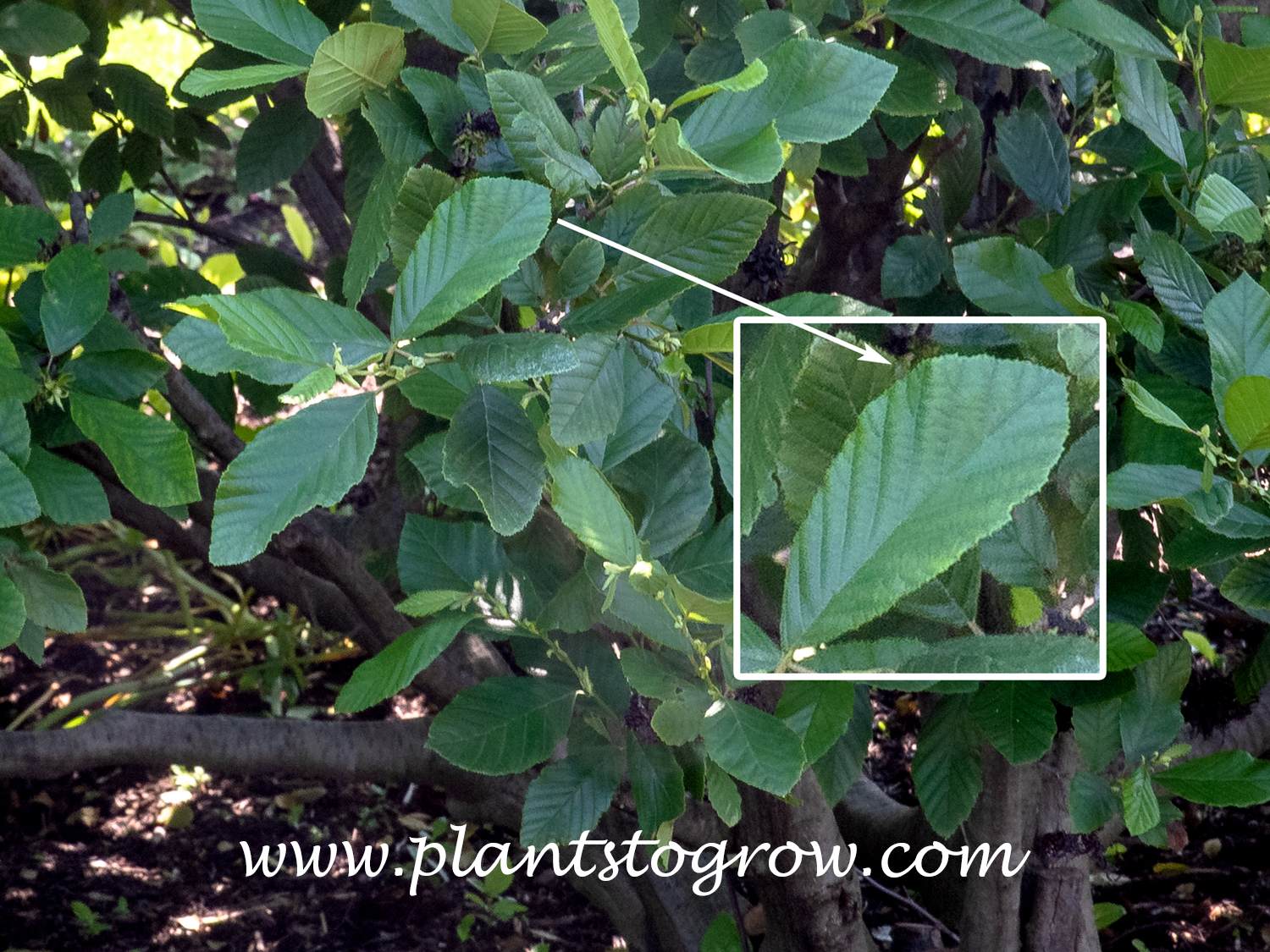
| Leaves | Dull green, 2-4" long, with fine serrulate margins, pointed tips, and wedge-shaped at the base. |
| Stems | Smooth gray bark with inconspicuous lenticels. |
| Dimensions | 10-15 by 10-15 feet |
| Propagation | seeds |
| Native Site | Native to the eastern USA. Found growing in boggy ground along streams/lakes/rivers and wetlands. |
| Notes & Reference | #01-Manual of Woody Landscape Plants (Michael Dirr), #93-North American Landscape Trees (Arthur Lee Jacobson), #270-North Carolina Extention Gardener Tool Box (www.plants.ces.ncsu.edu/) |

Cart