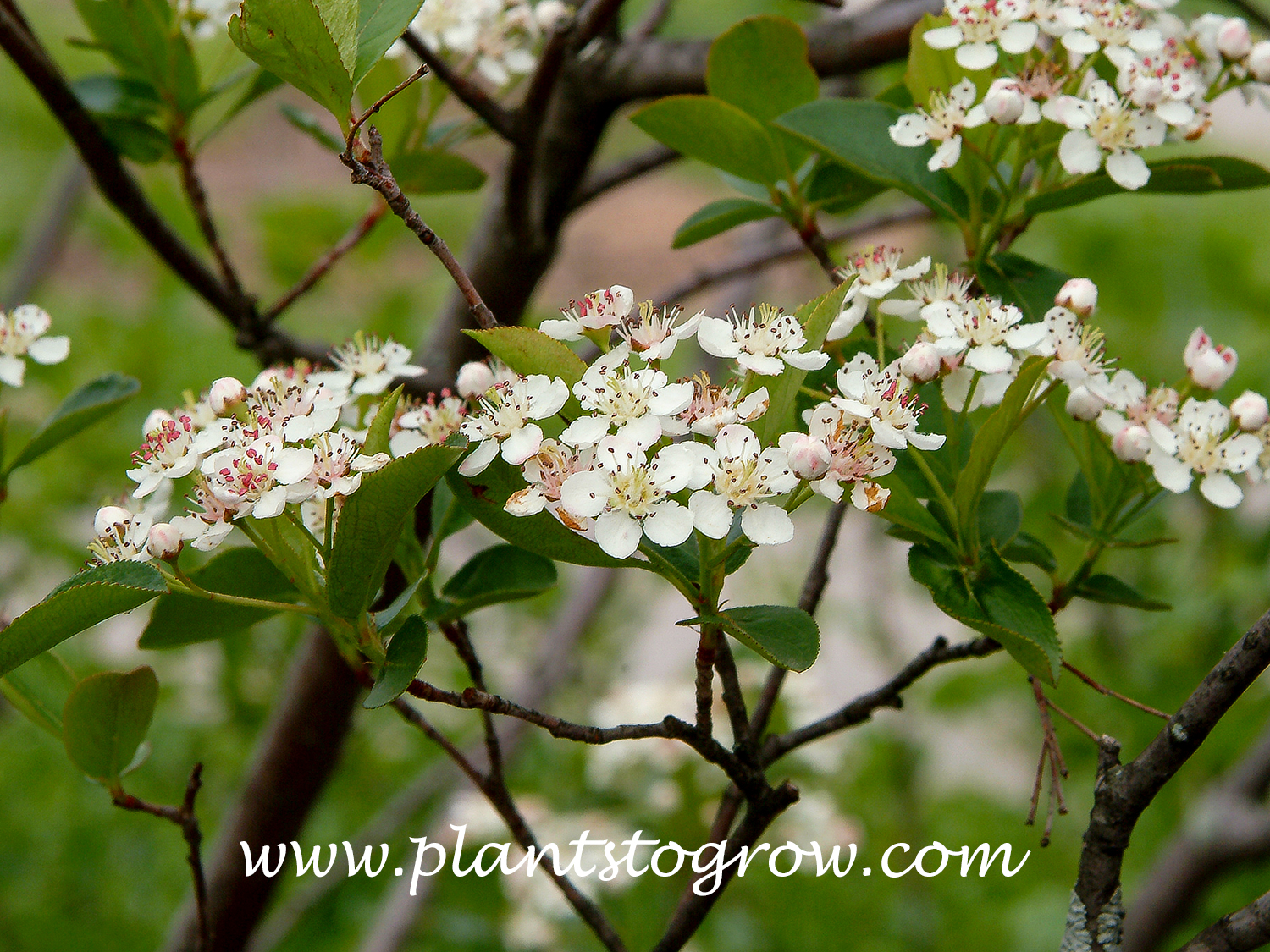
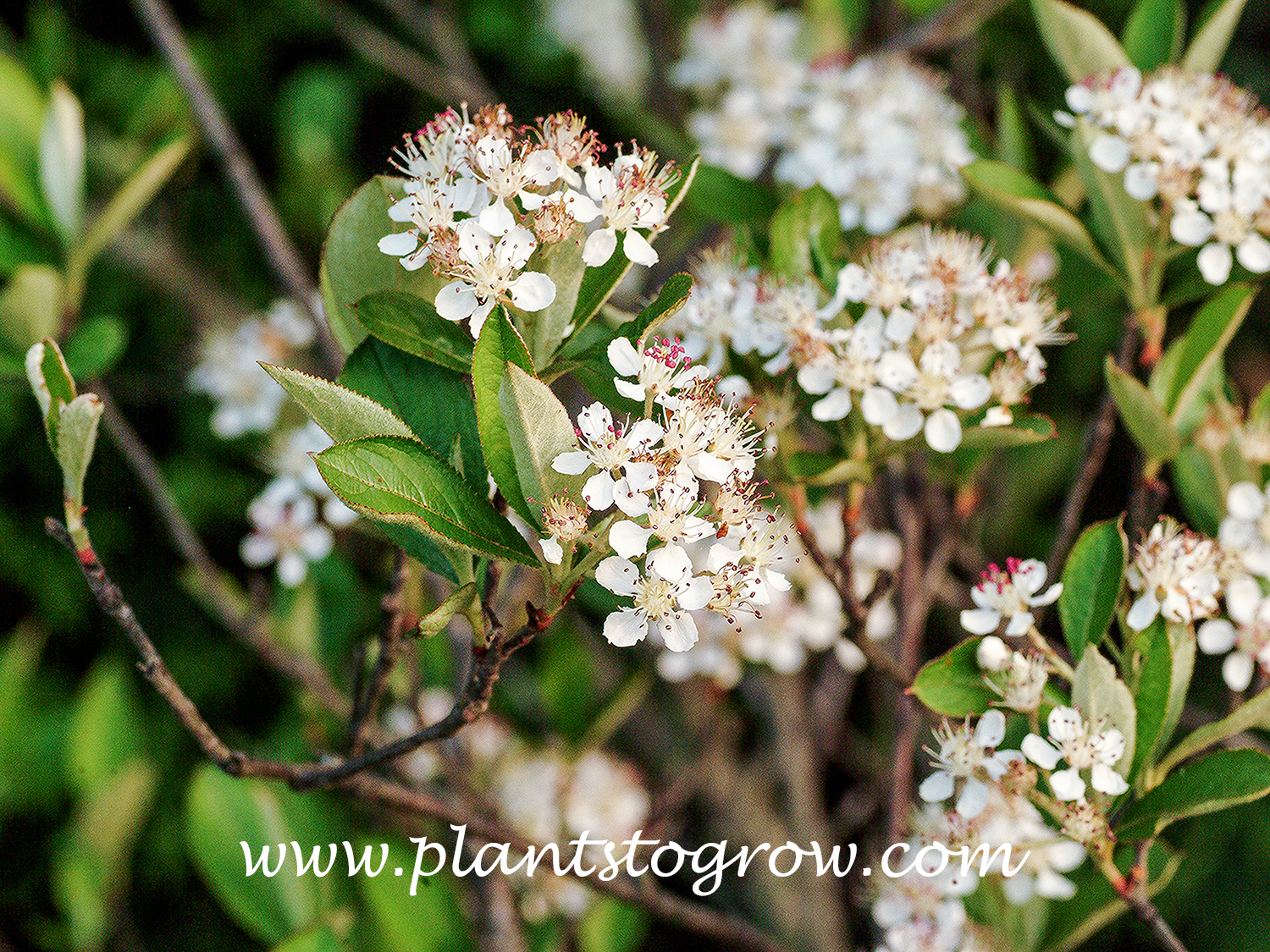
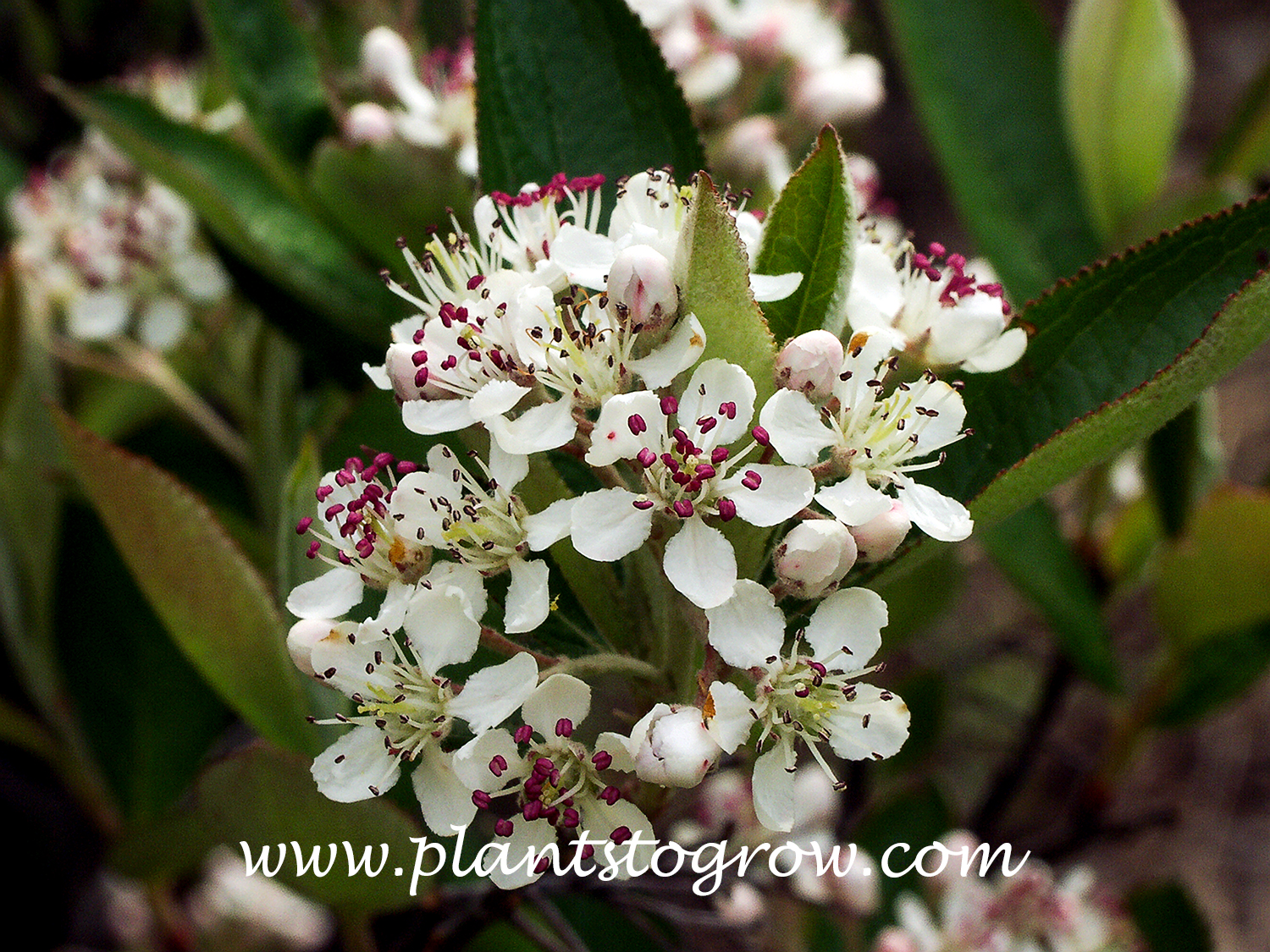
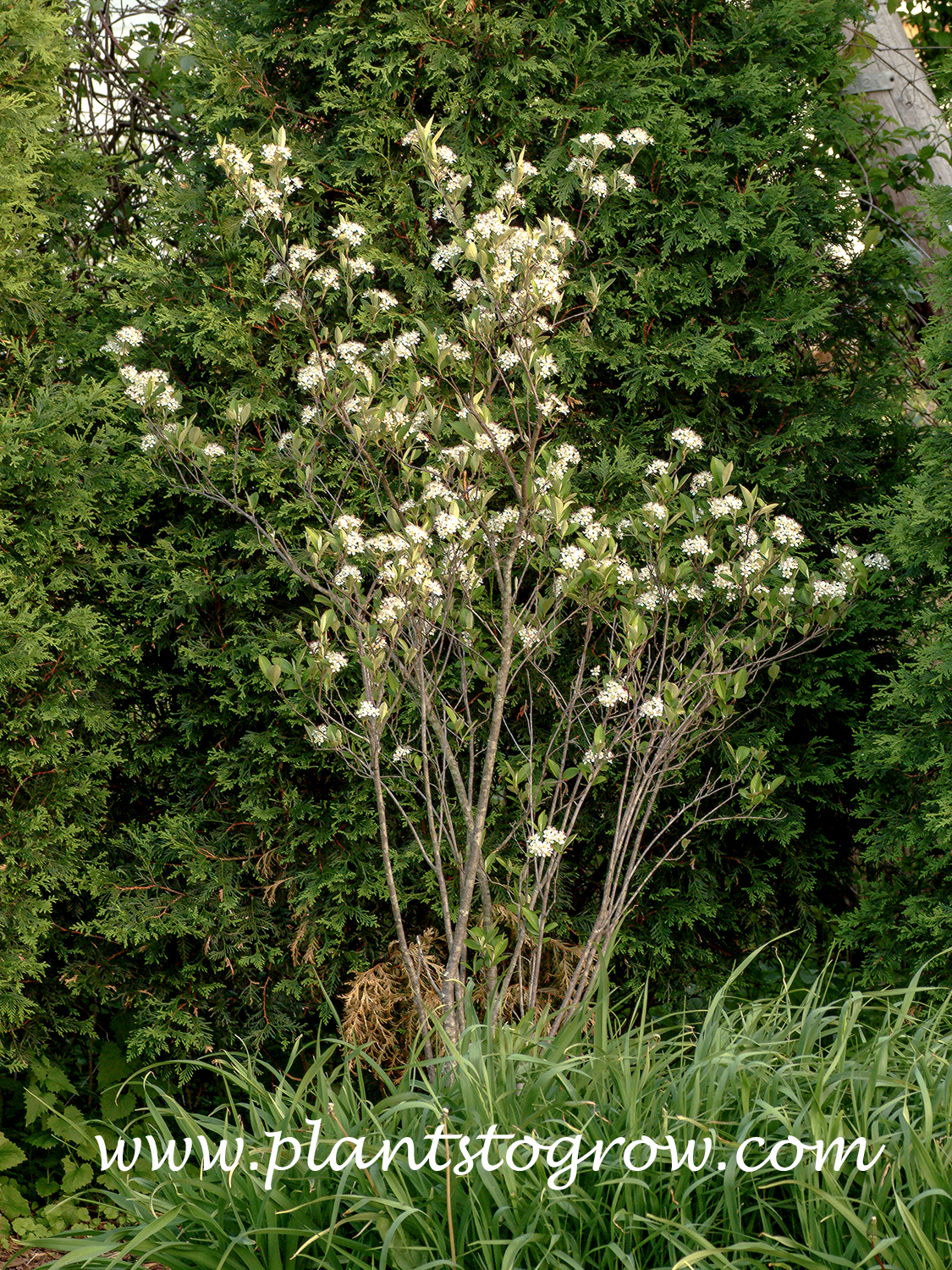
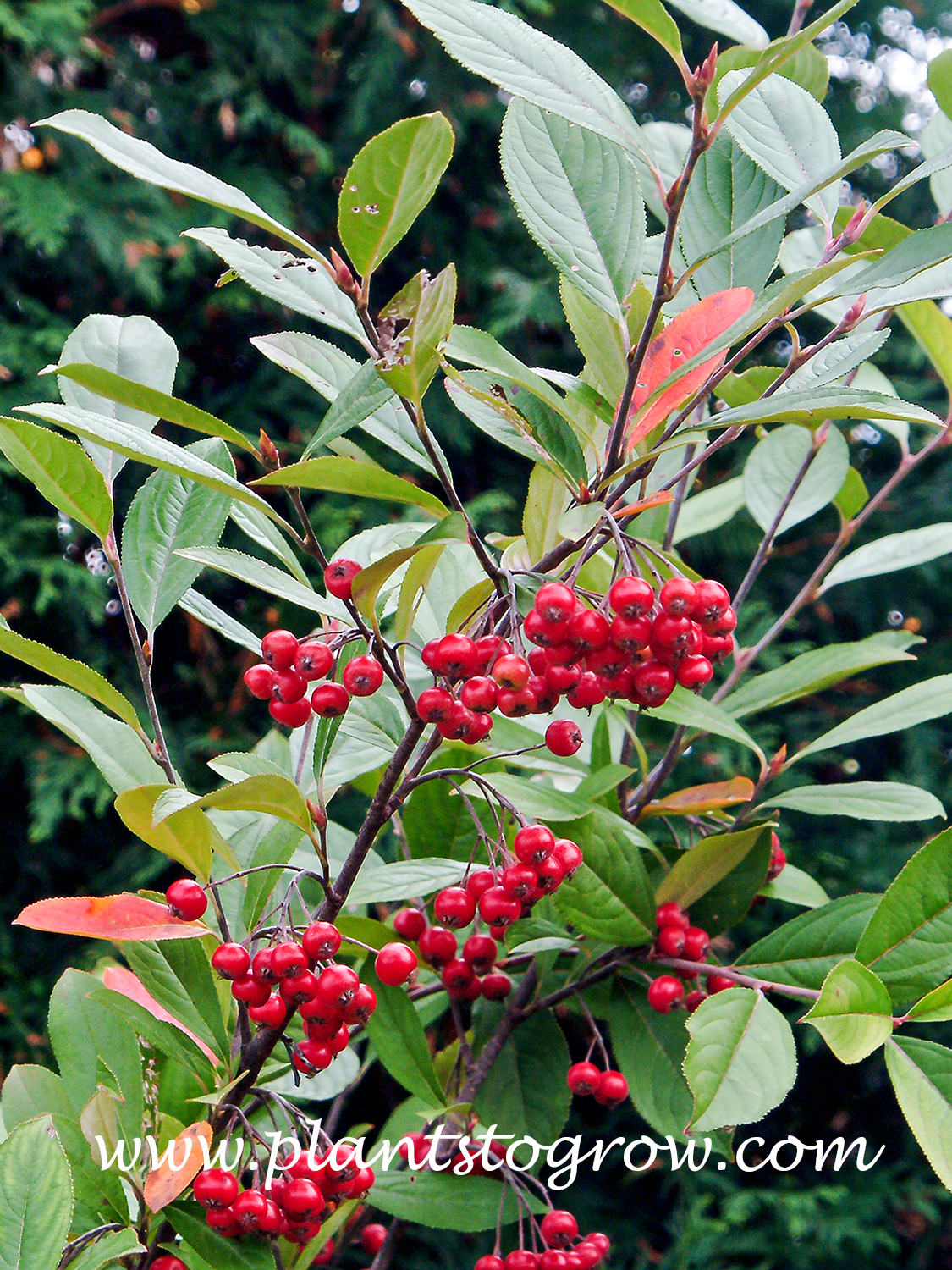
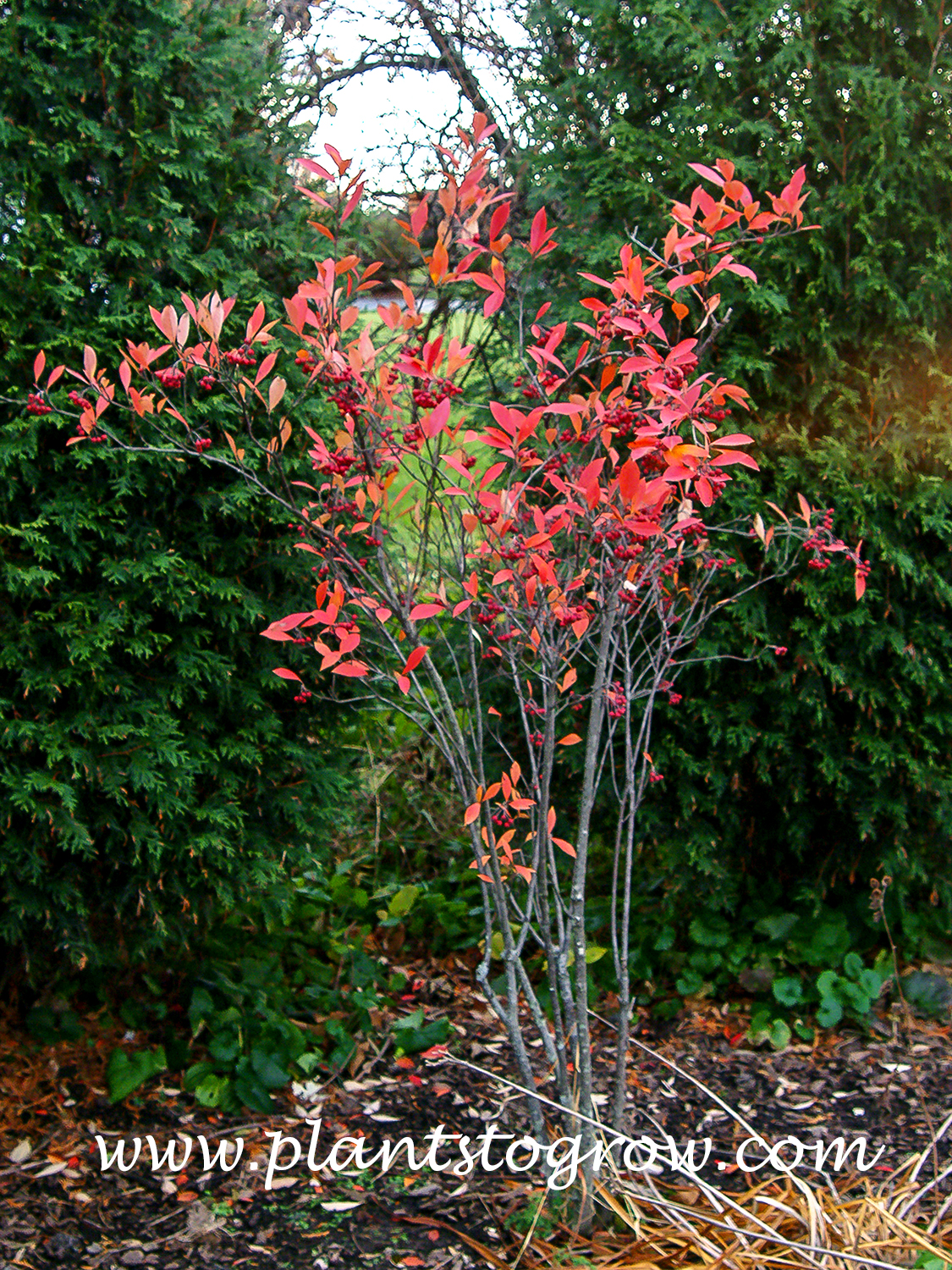
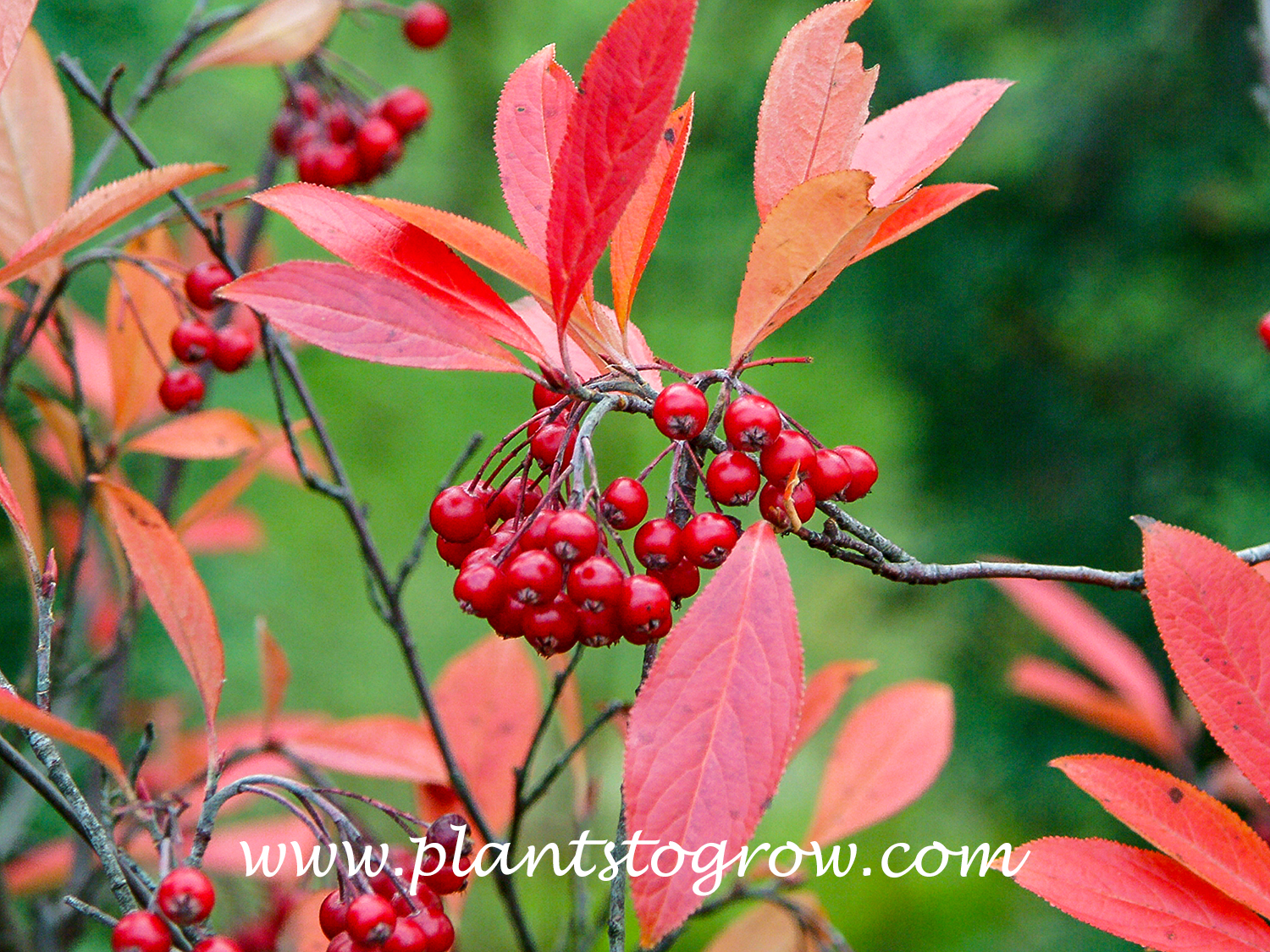
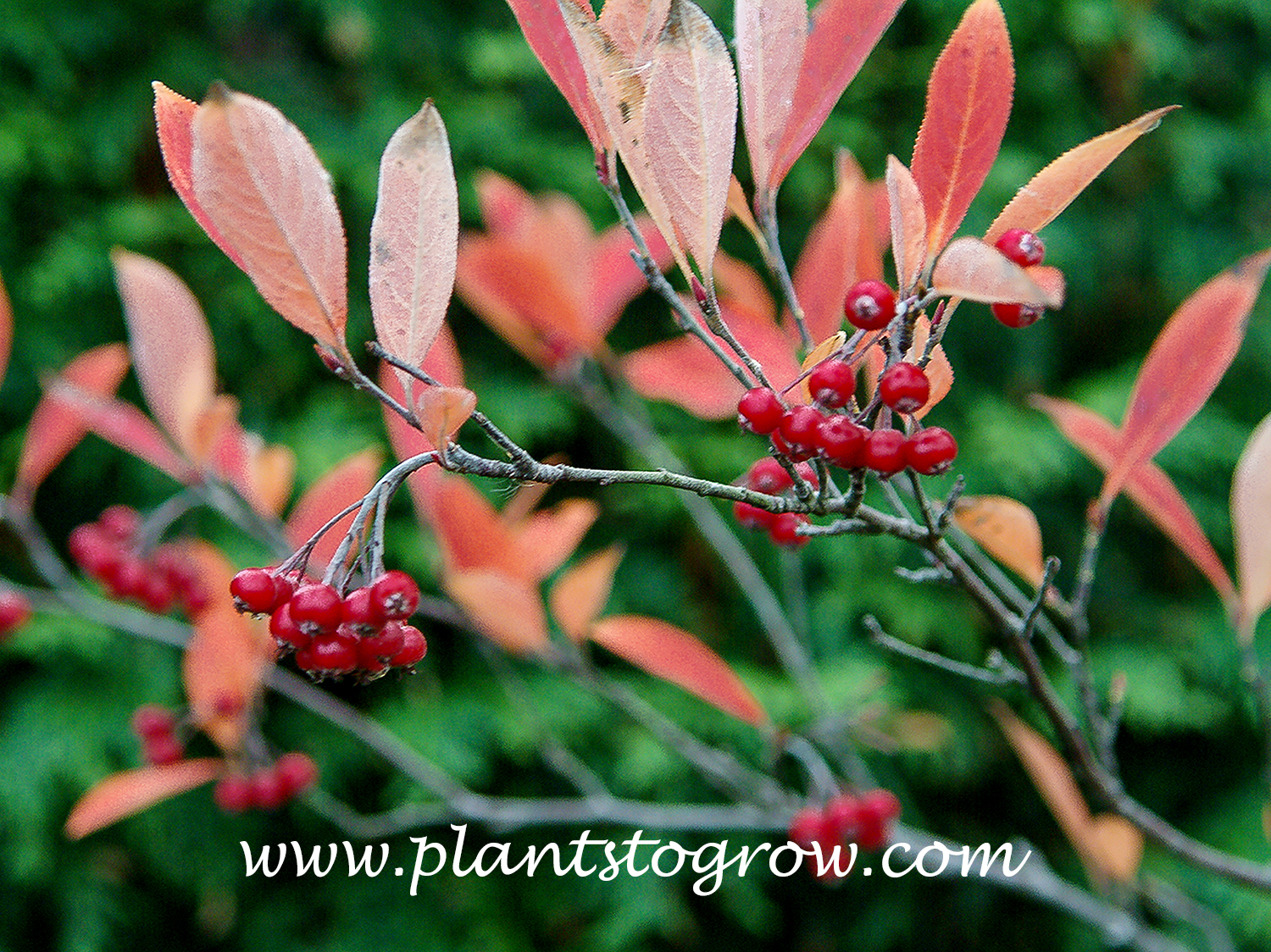
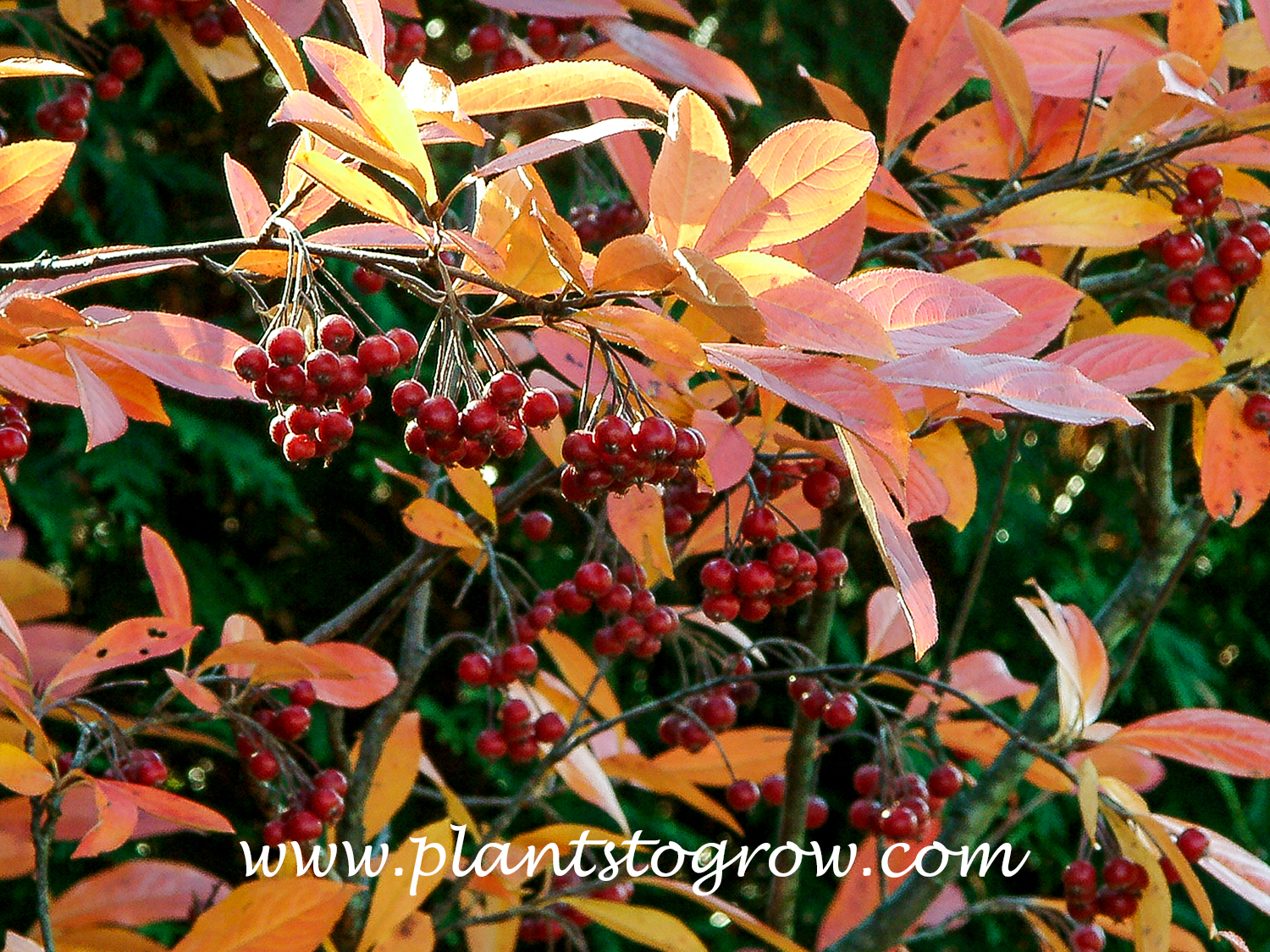
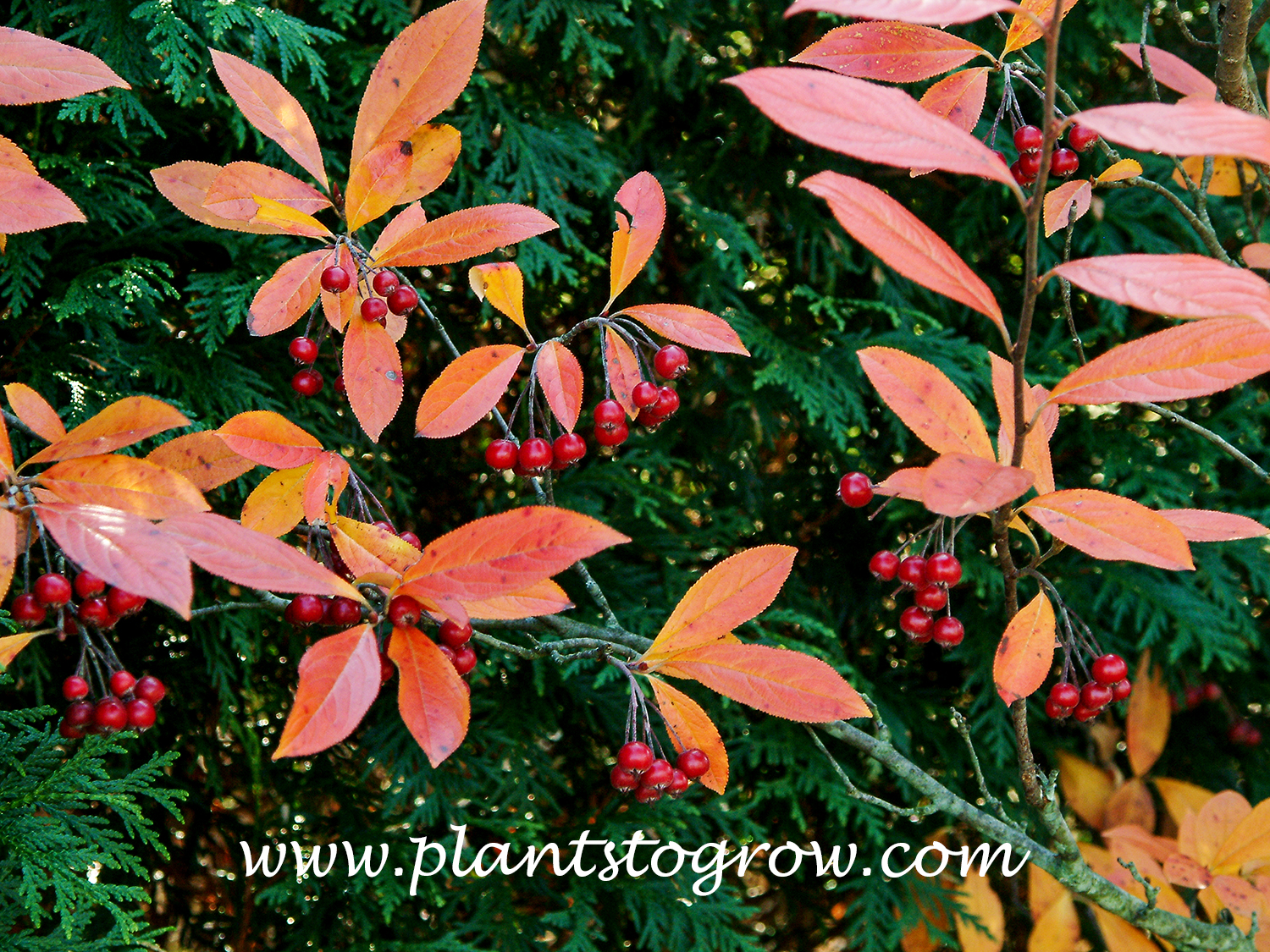
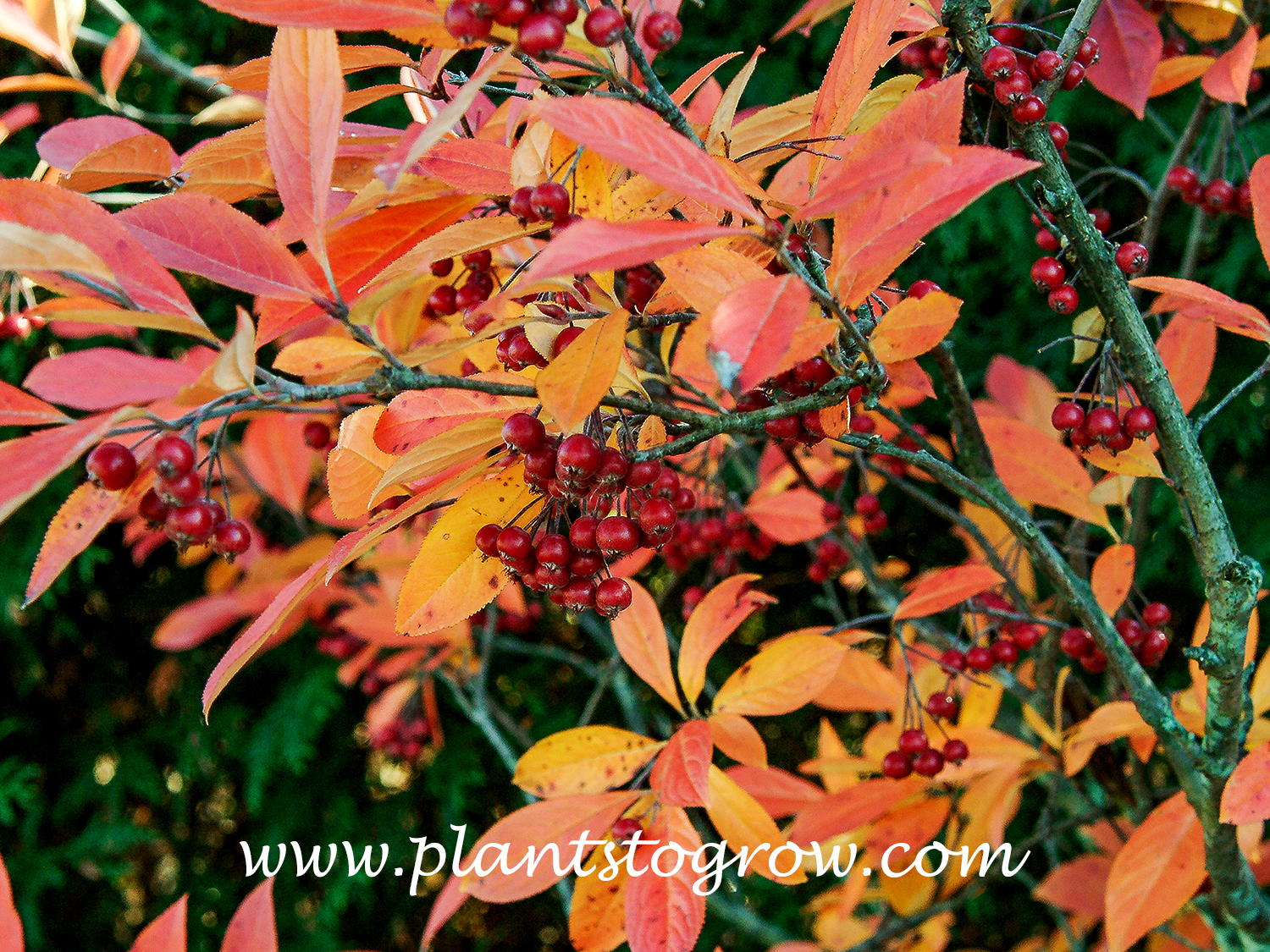
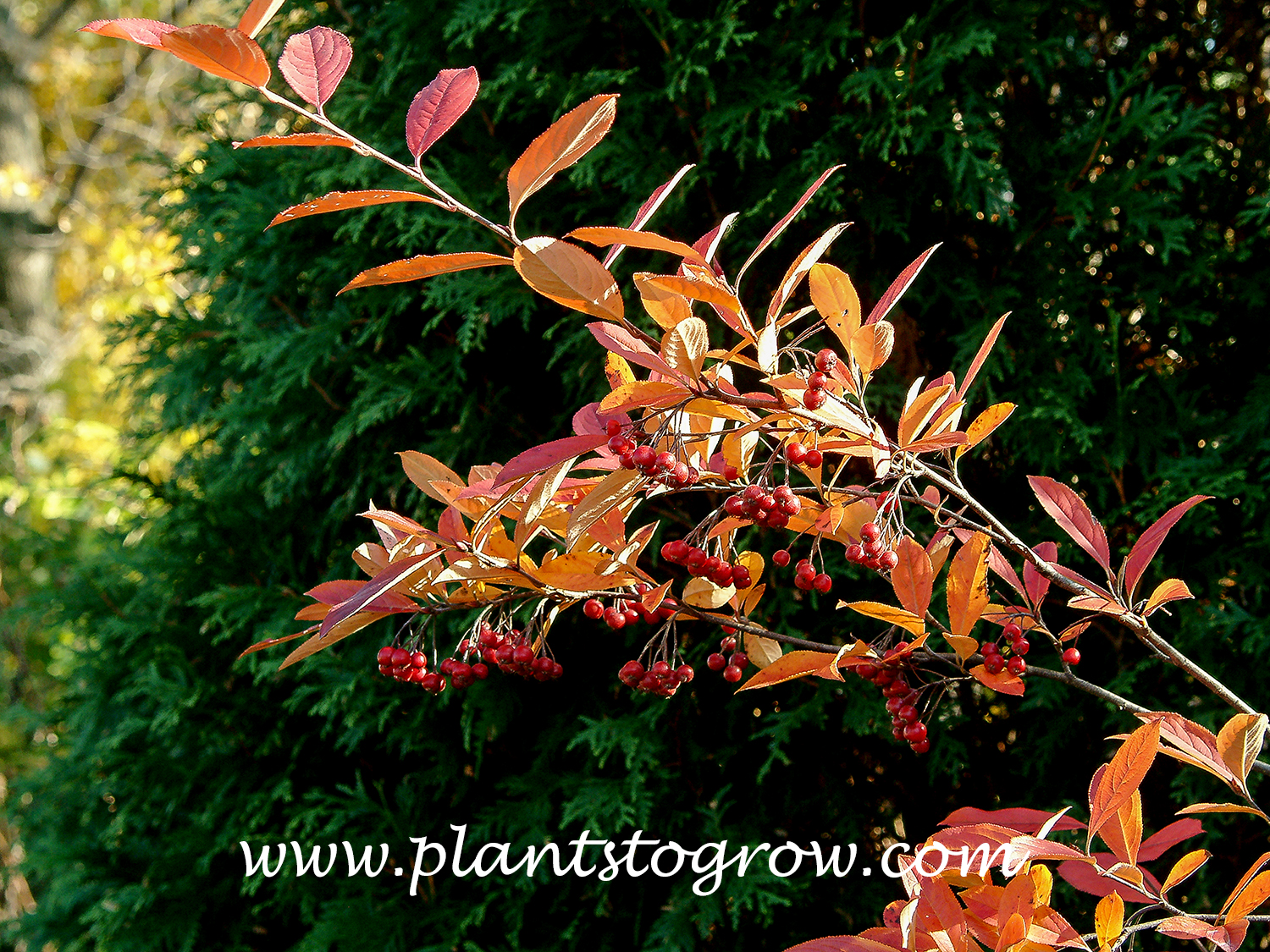
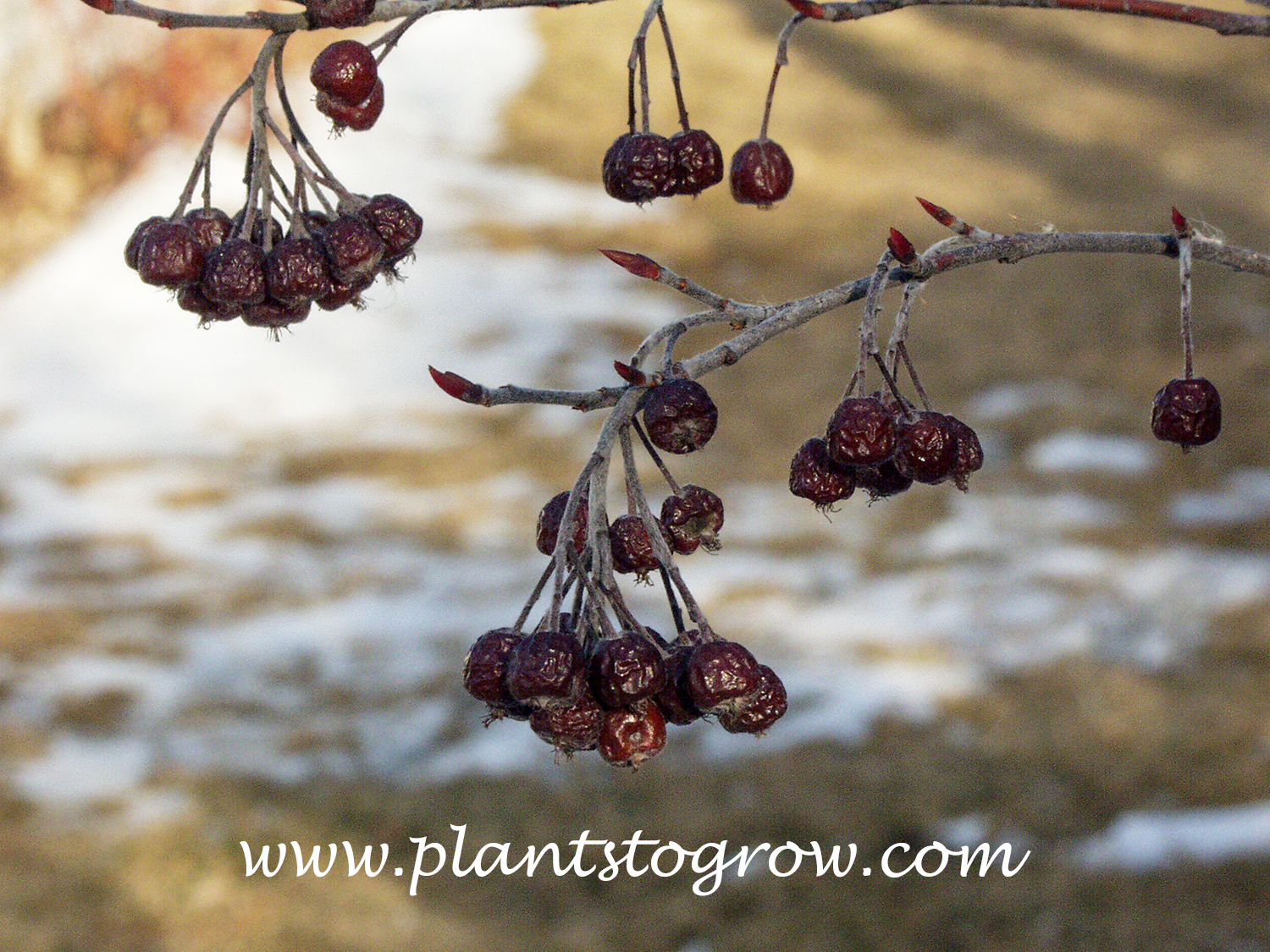
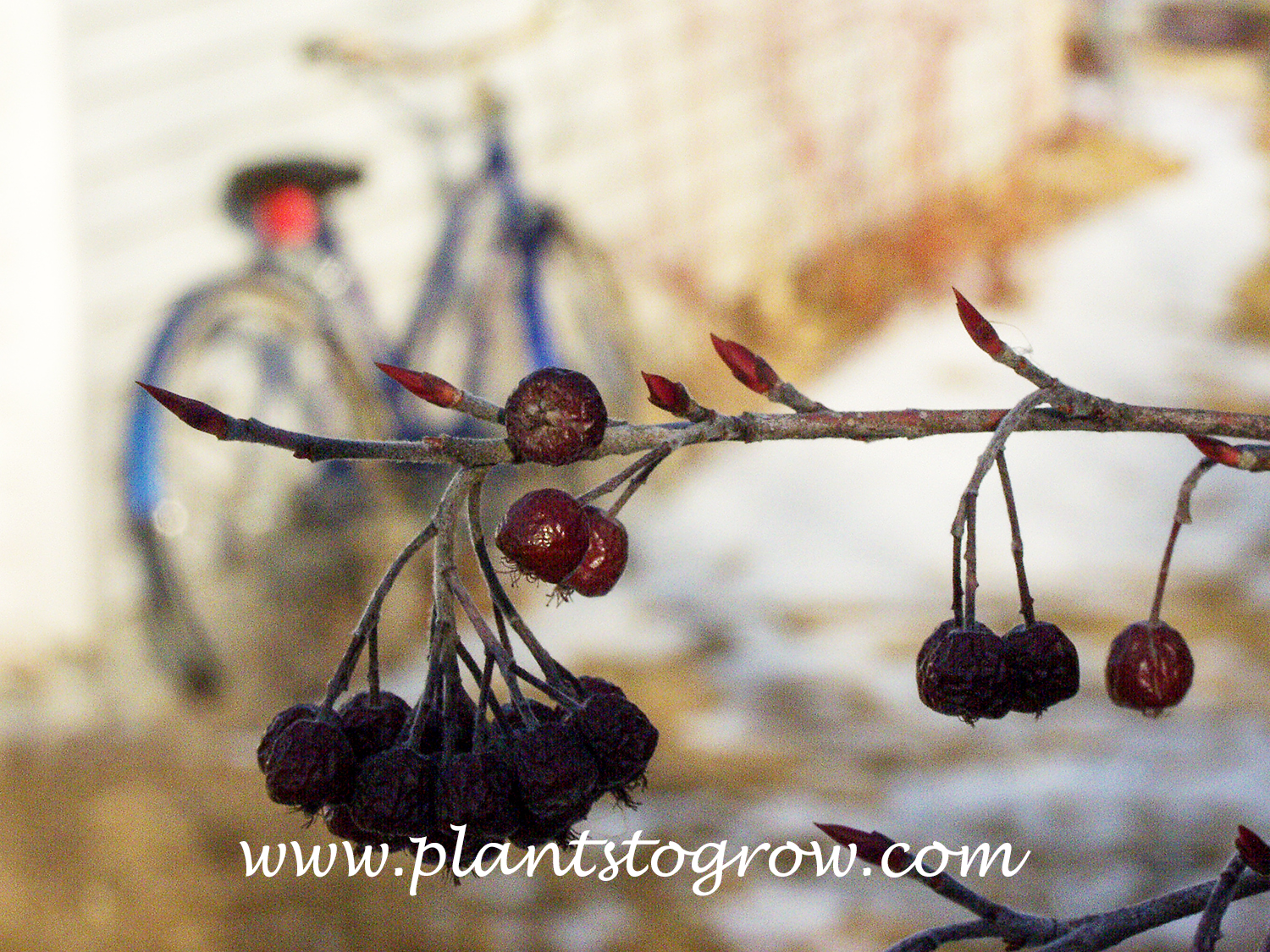
| Description | Red Chokeberry Brilliantissima (Aronis arbutifolia) is a tall, medium spreading shrub that is loaded with white flowers in the spring, persistent red berries, and brilliant red fall foliage. Grows in full to semi-shade conditions. |
|---|---|
| Pronunciation | (ar-OH-nee-ah)(ar-bew-tih-FOH-lee-ah) |
| Plant Type | Shrubs Deciduous |
| Hardiness Zone | 4-9 |
| Sunlight | sun, mostly sunny, part sun, part shade |
| Moisture | average to moist |
| Soil & Site | Naturally found growing in wet, boggy places but easily adapts to average soil. |
| Flowers | Bloom in early spring after leaves have emerged. White flowers have 5 petals borne in a corymb. |
| Fruit | A dark purple pome, almost black, is an edible fruit. The fruits may be eaten raw or cooked and made into tasty jams and jellies. Ripe red chokeberries are tart and intensely astringent, which causes a puckering sensation. The Red Chokeberry is sweeter than the Black Chokeberry. |
| Leaves | Simple, lustrous, dark green, fall color, orange, burgundy to wine red. |
| Dimensions | Reaches 6-10 feet tall by 4-5 feet spread, vase-shaped. Reported to have a tendency to sucker. The plant in my garden hasn't suckered after more than 10 years of growth. |
| Propagation | seeds, soft-wood cuttings, and removing suckers |
| Native Site | Species is native to eastern North America. |
| Cultivar Origin | The species plant has been in cultivation since the early 1700's |
| Misc Facts | The common name Chokeberry comes from the astringent taste of the berries. Brilliantissima is a selection of the native Red Chokeberry. It grows slowly to 6-8' tall and is perhaps best known for its attractive glossy red berries and red fall foliage. It is more compact, producing more lustrous foliage, superior red fall color, and larger, glossier, and more abundant fruit. |
| Author's Notes | I have drank tea made from from Black Chokeberry fruit. It has a strong, sour puckering taste. High in anthocyanins and flavonoids, five to ten times higher than cranberry juice. Tea is a red color. |
| Notes & Reference | #01-Manual of Woody Landscape Plants (Michael Dirr), #03-The Hillier Manual of Trees and Shrubs (Hillier Nursery), #63-How to recognize Shrubs (William Carey Grimm), #270-North Carolina Extension Gardener Tool Box (https://plants.ces.ncsu.edu/plants), #274-Site Authors' observations and growing experiences |

Cart