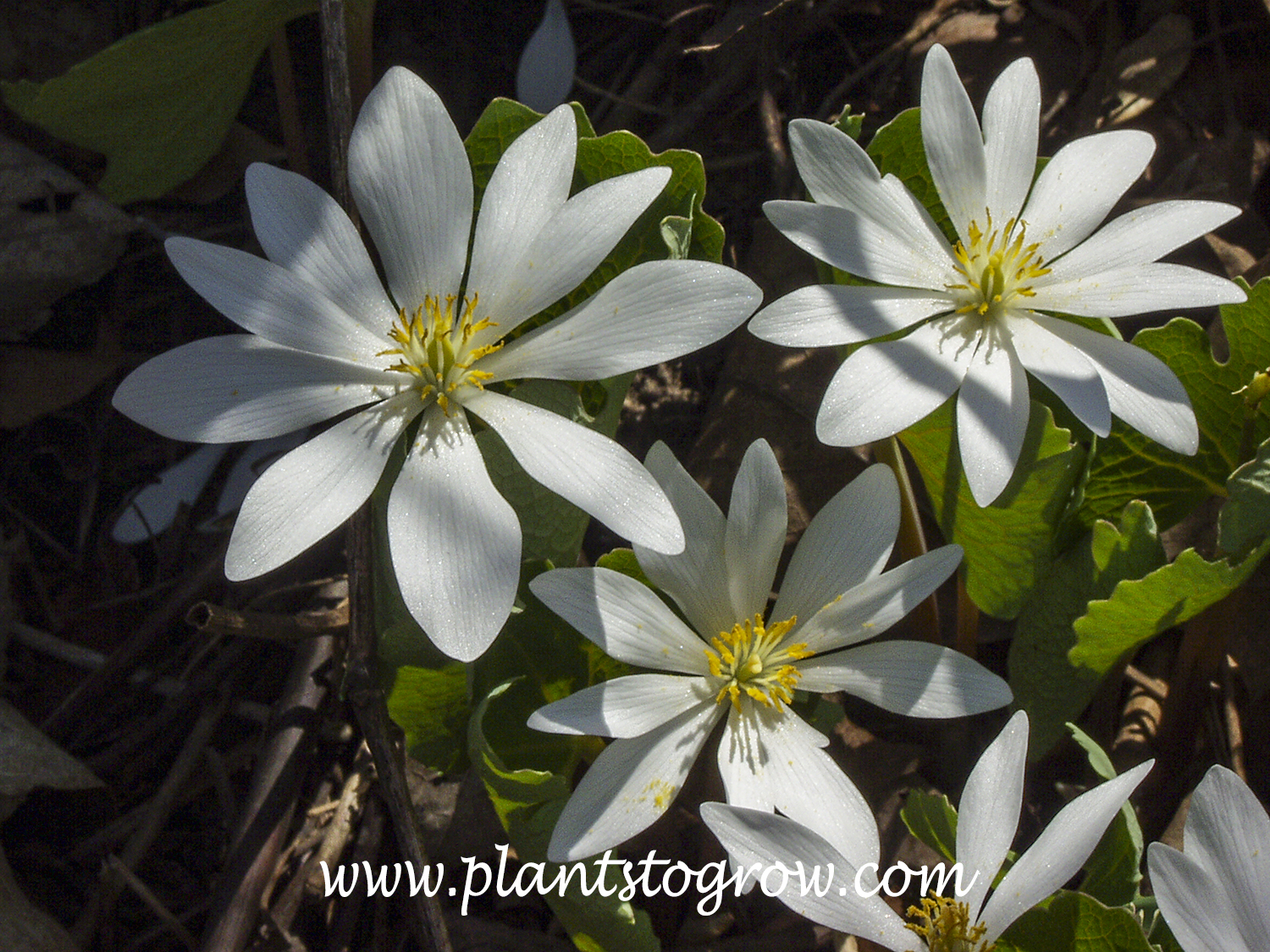
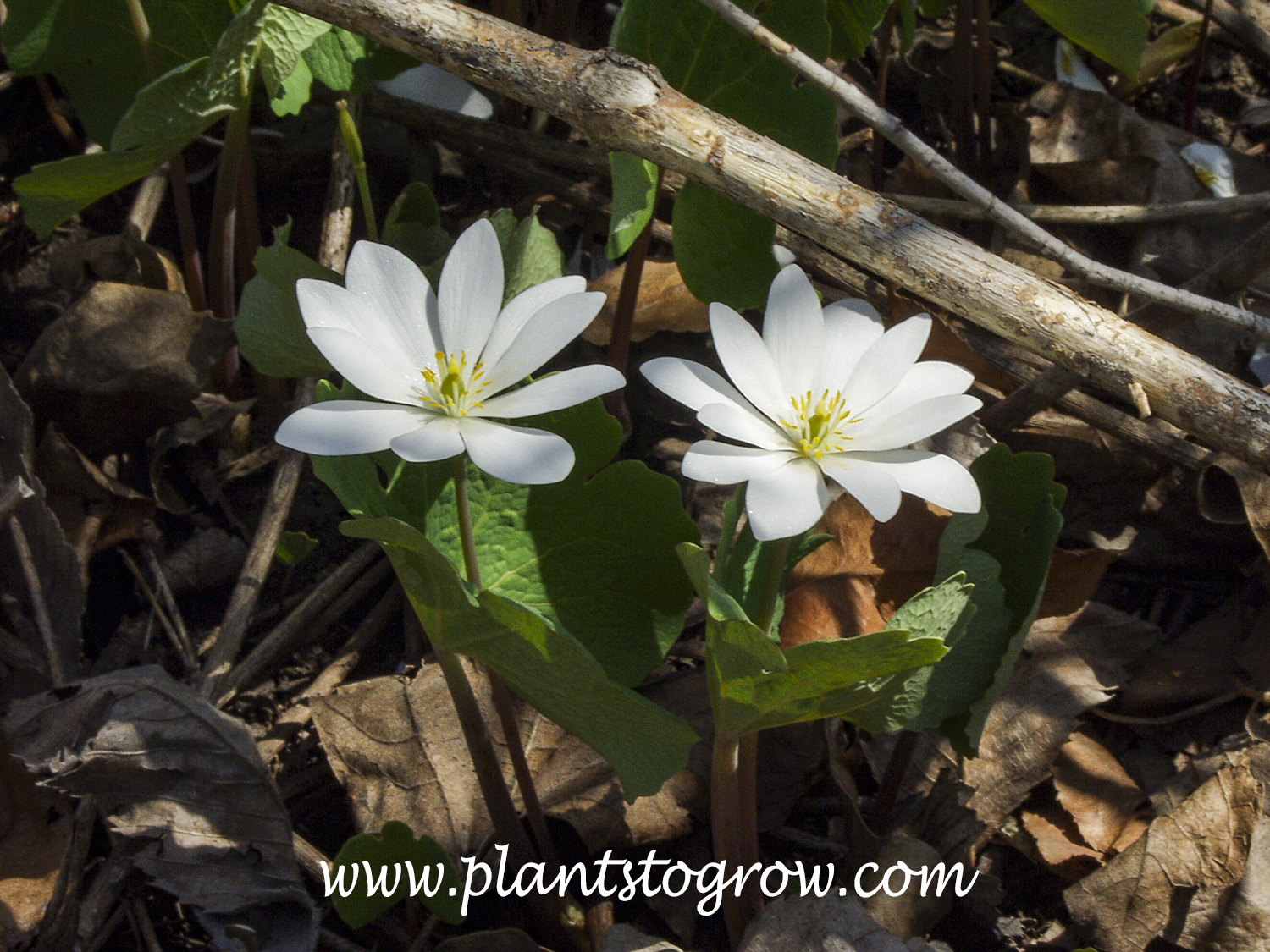
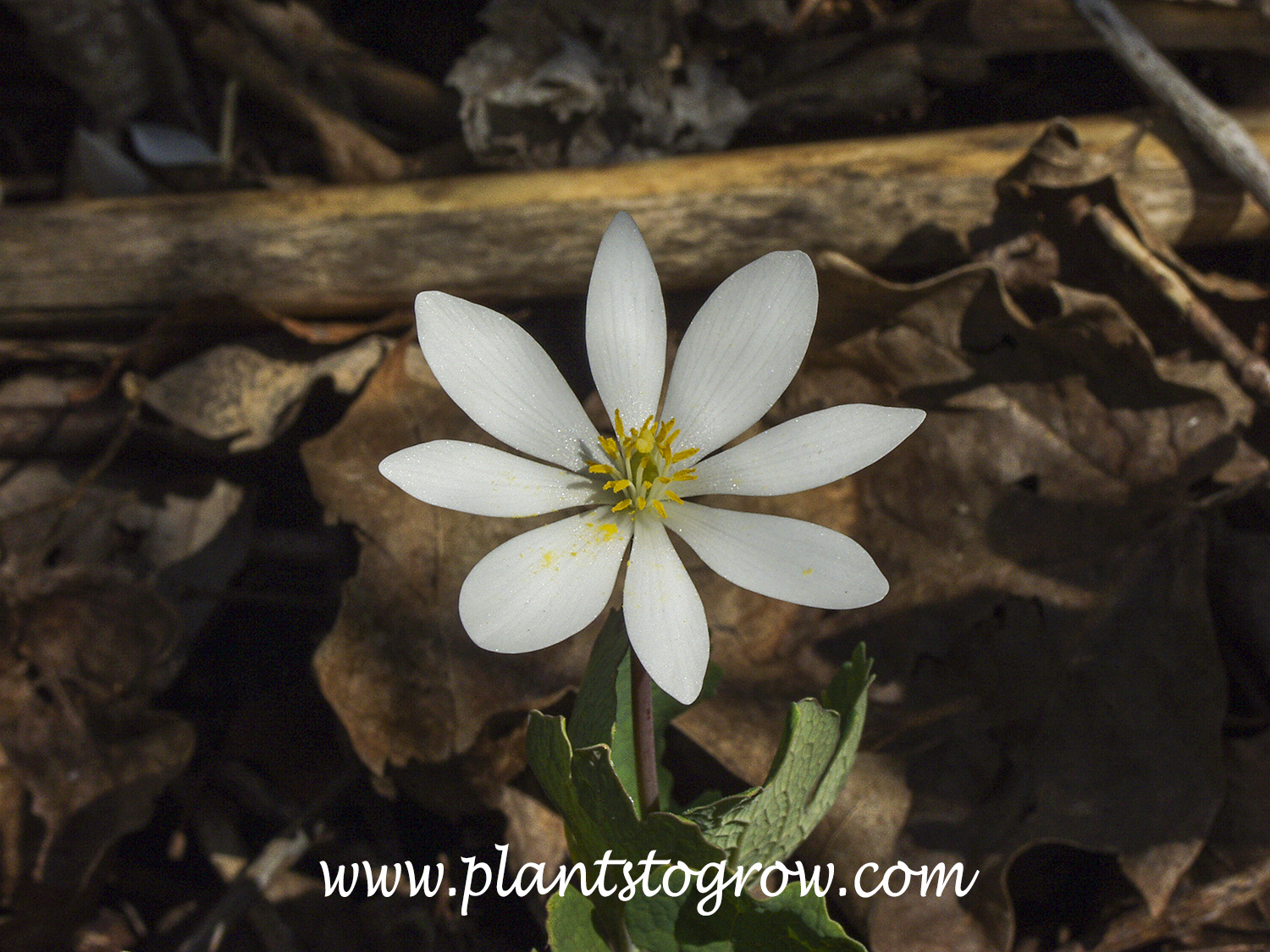
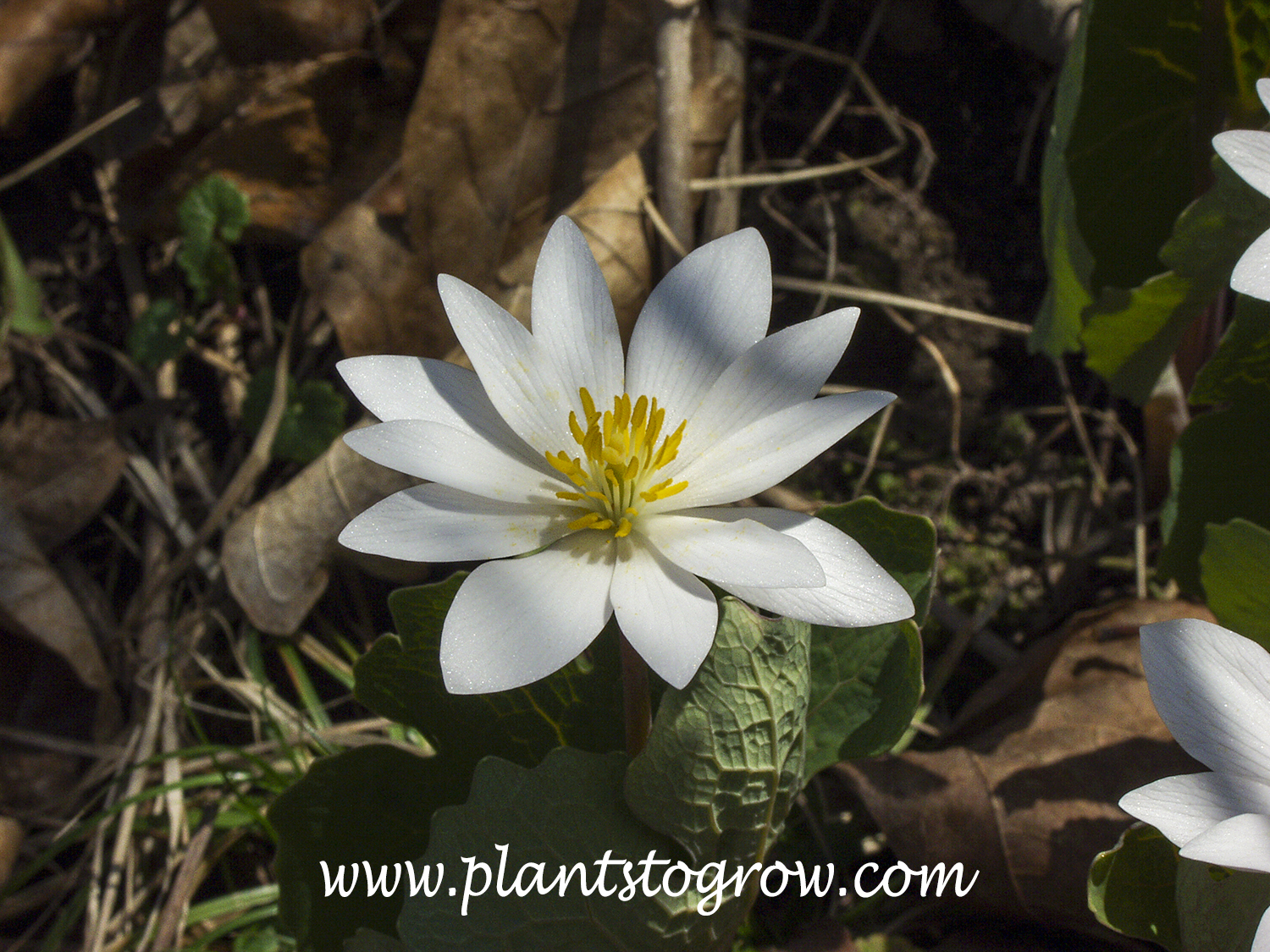
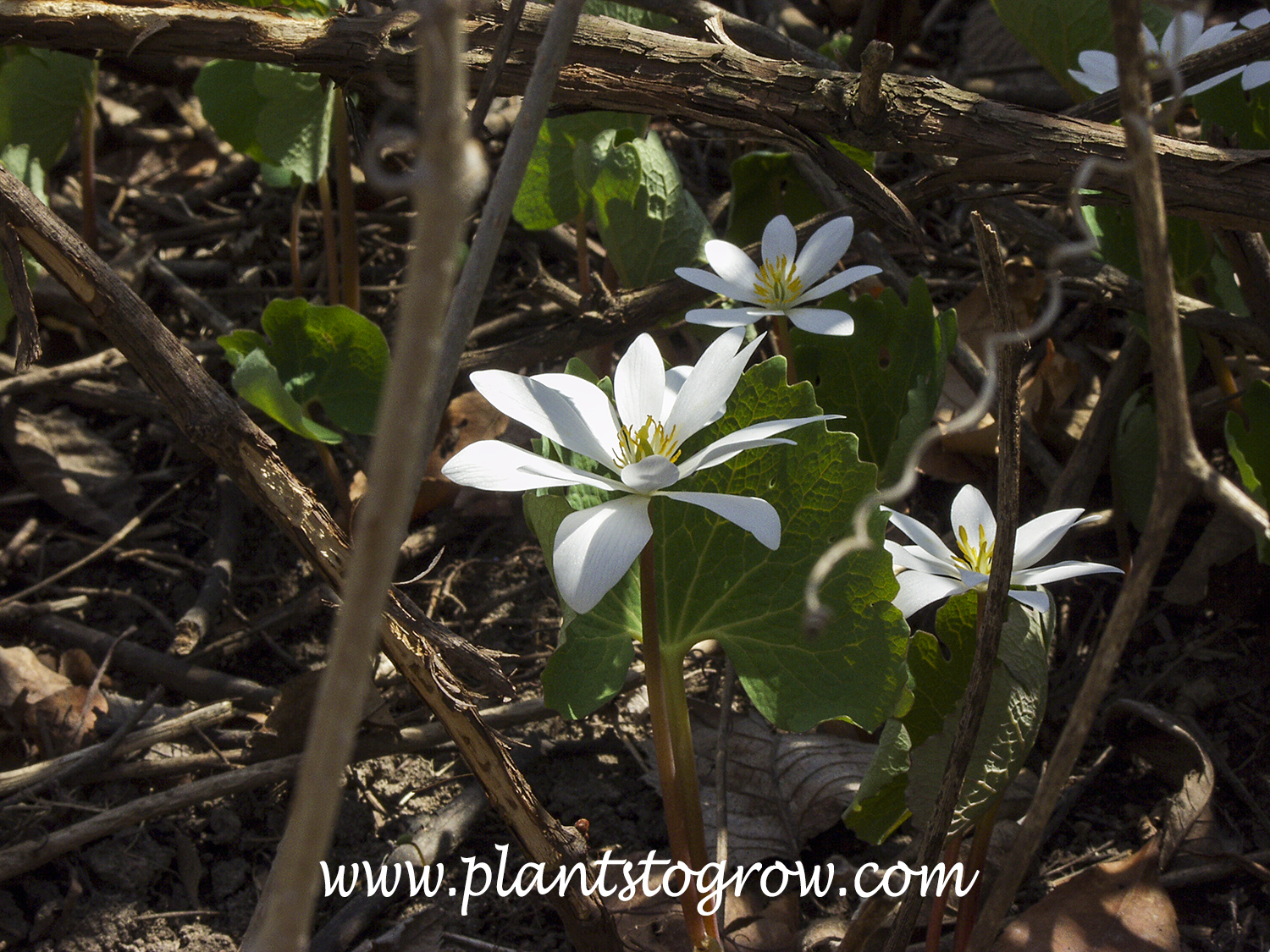
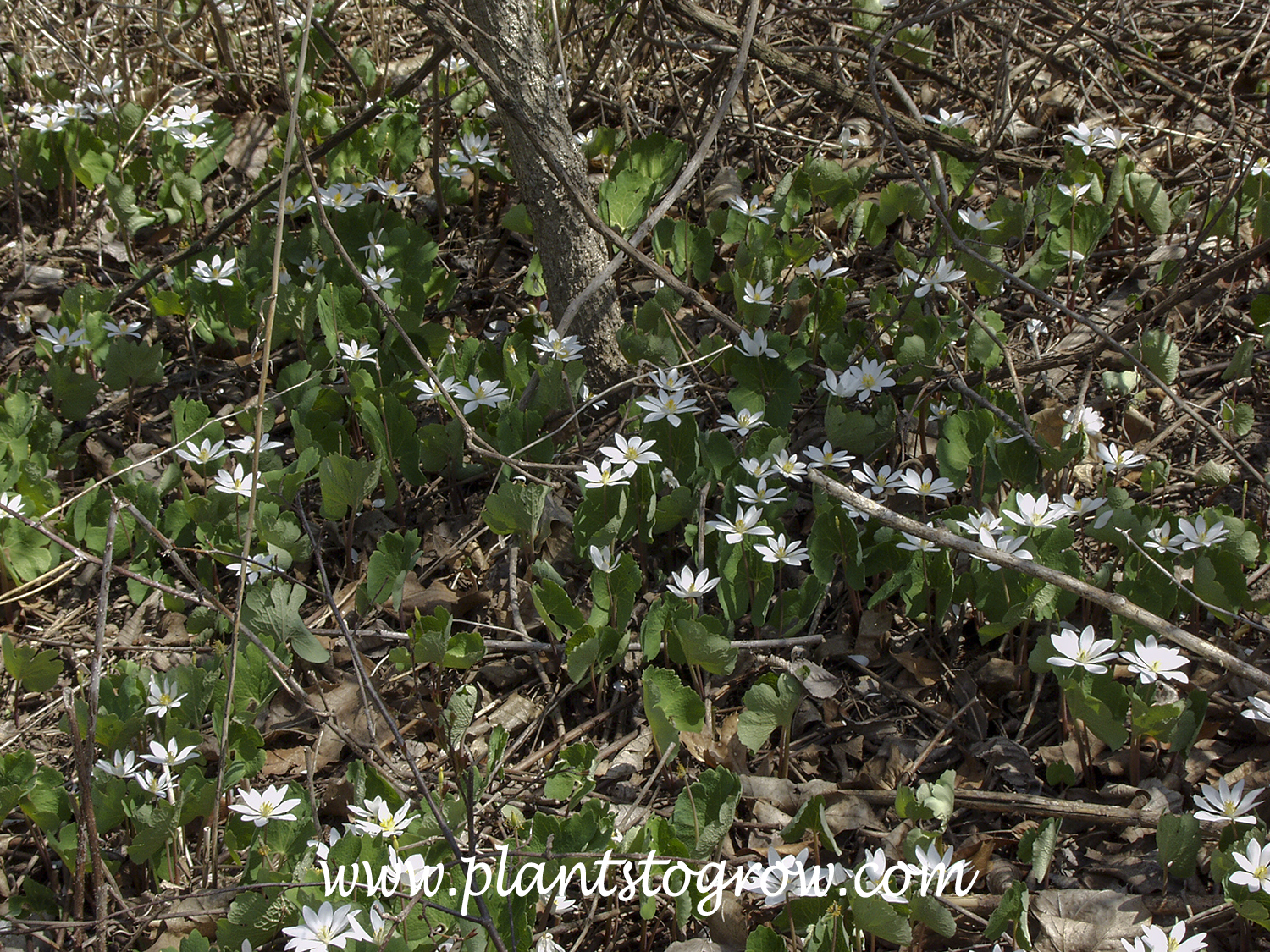
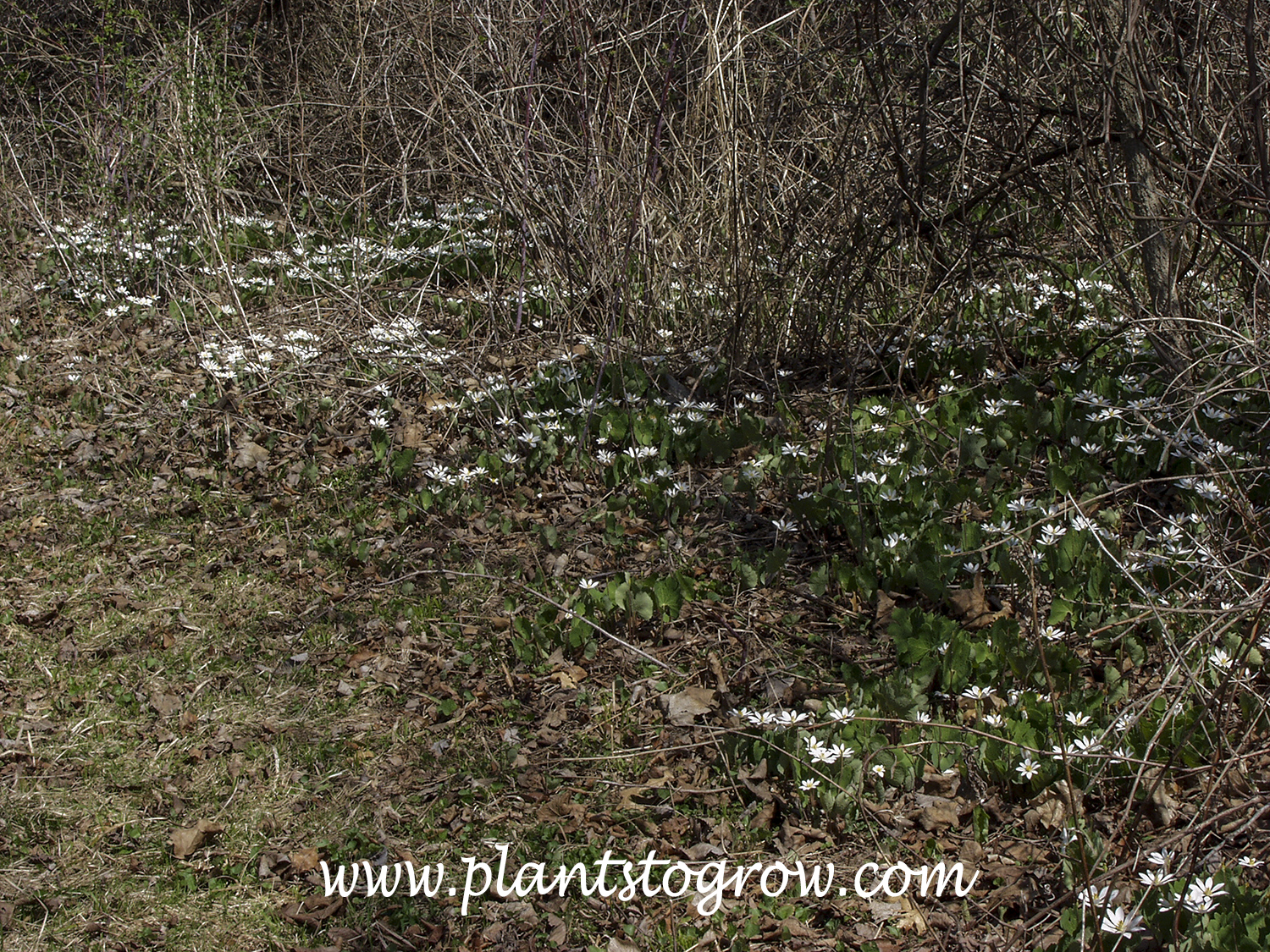
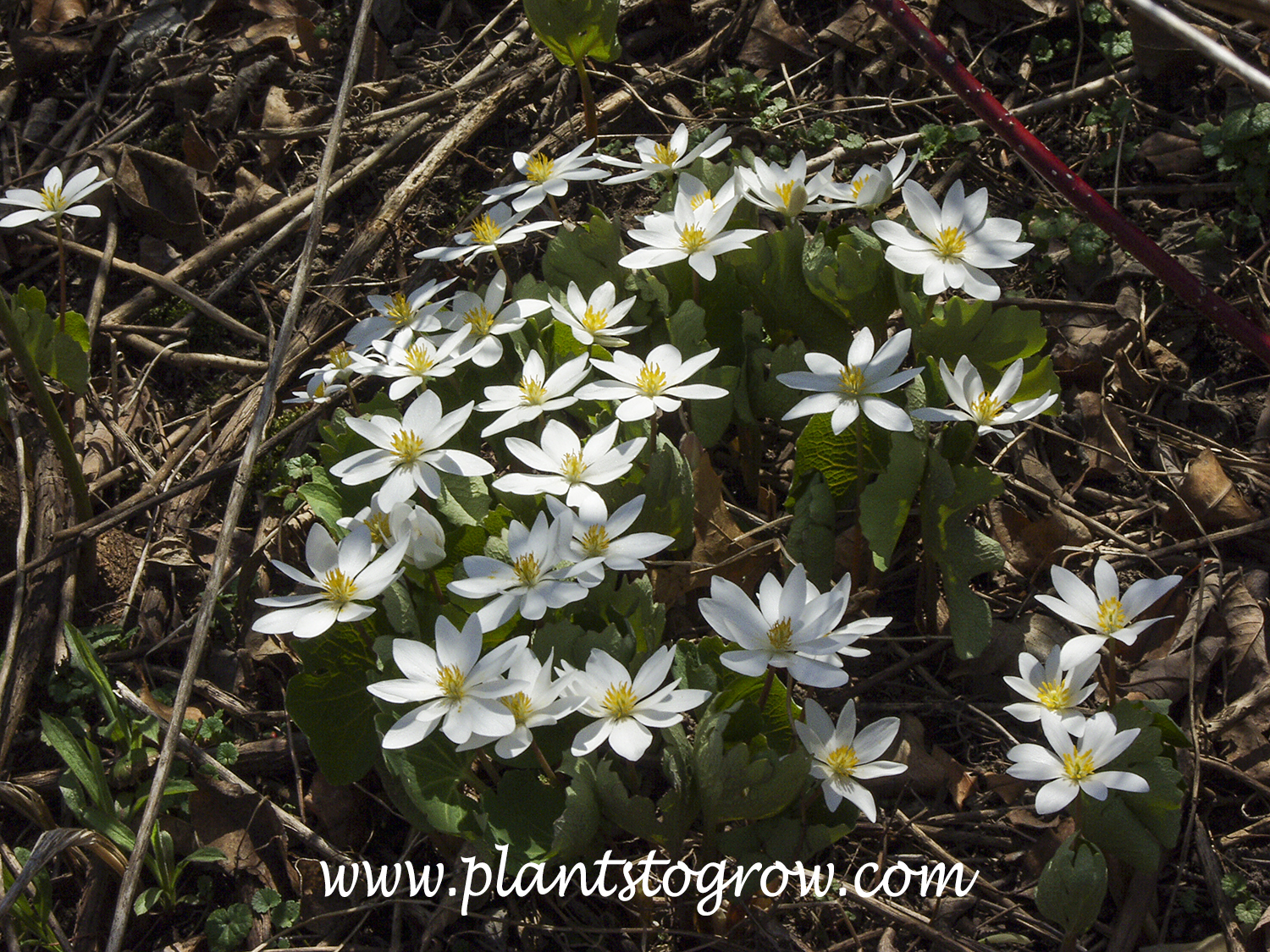
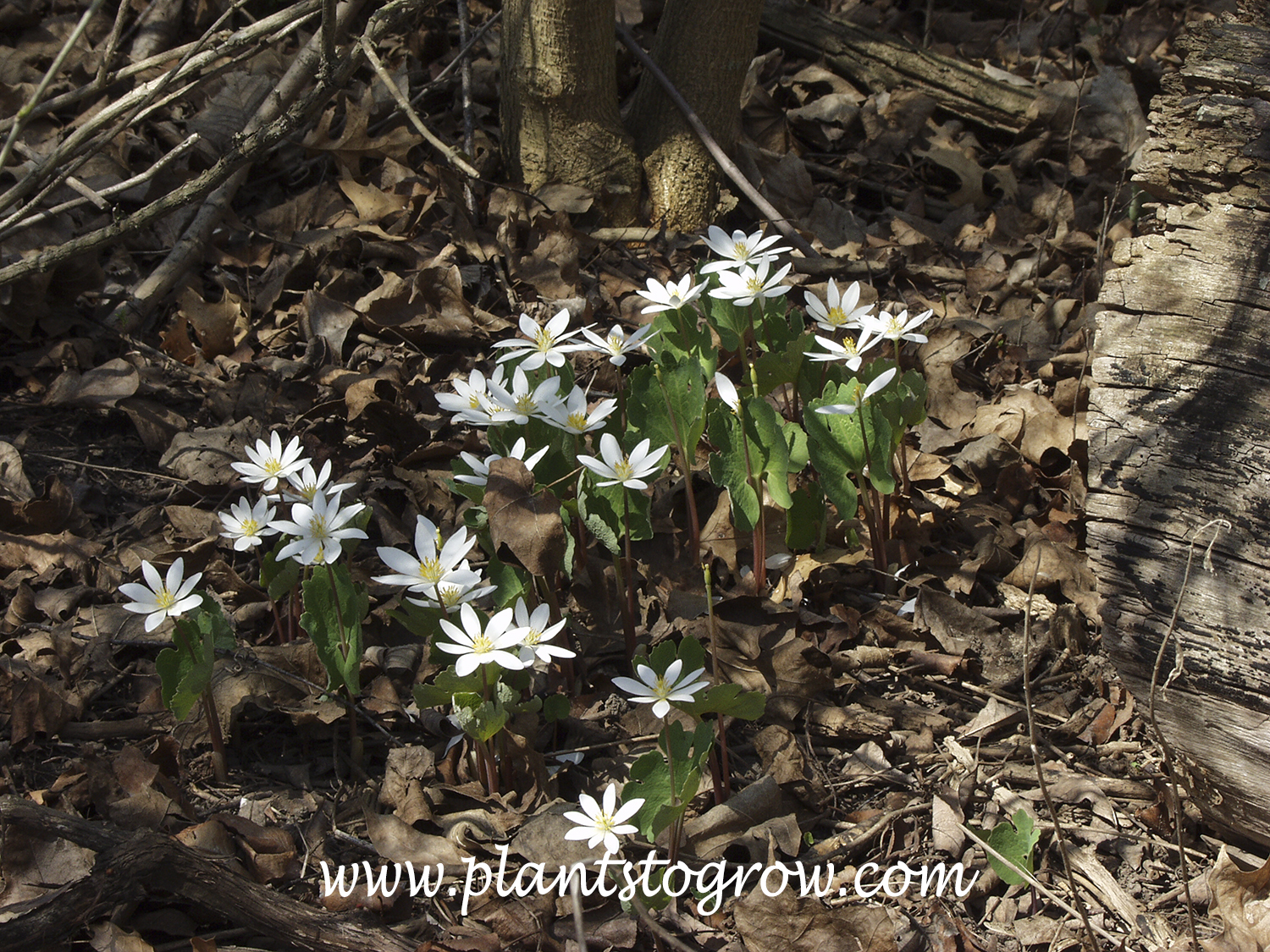
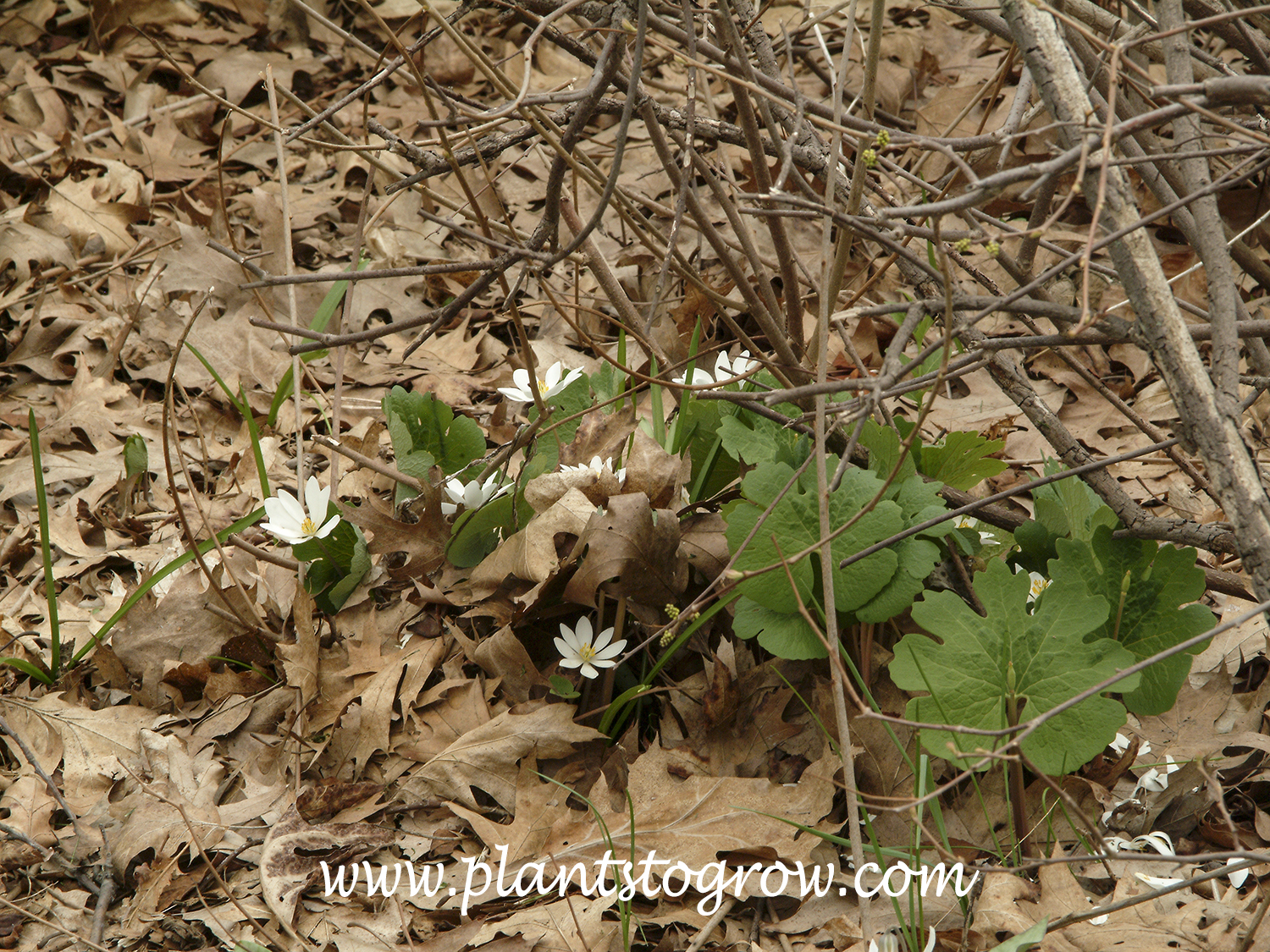
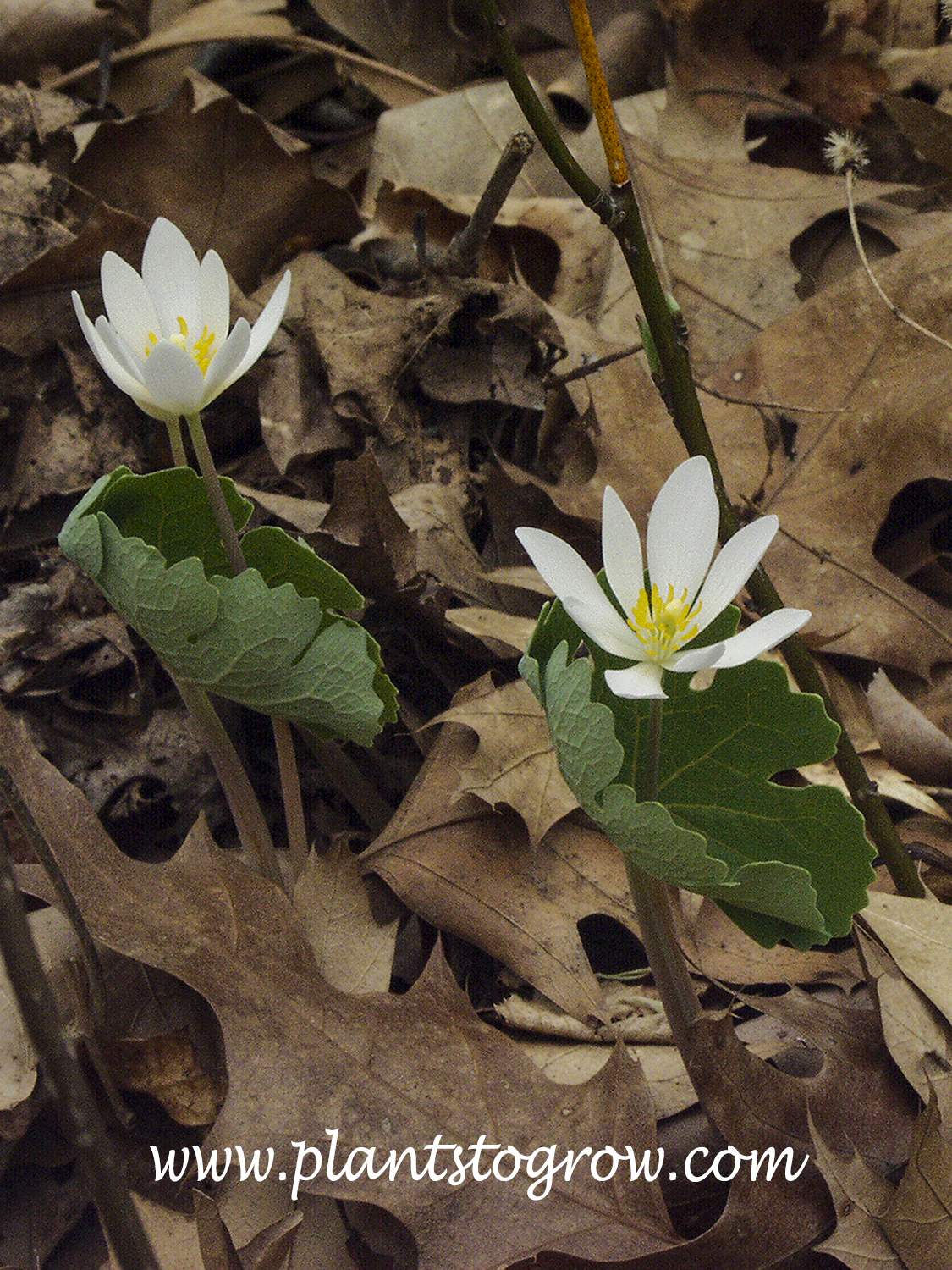
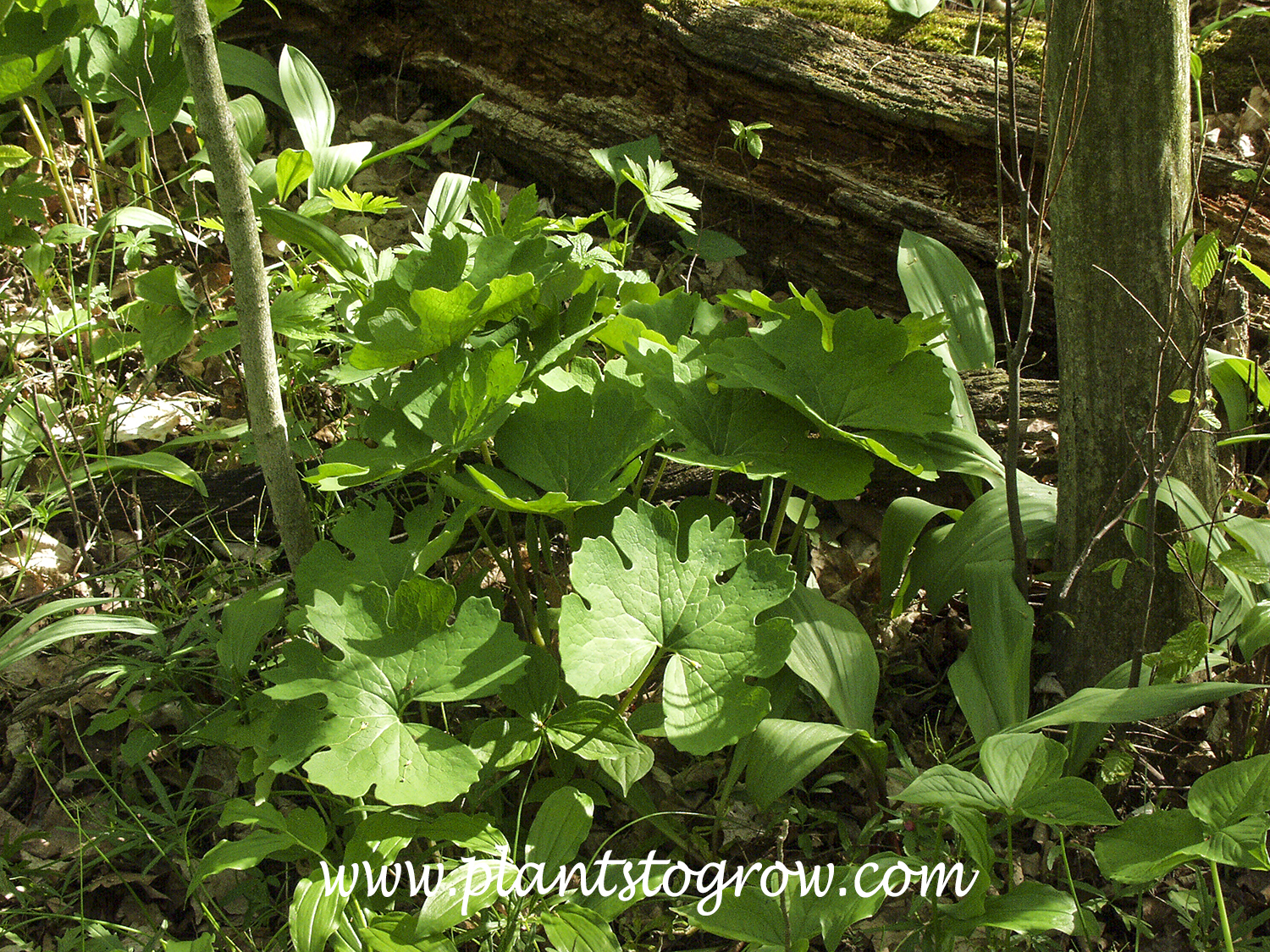
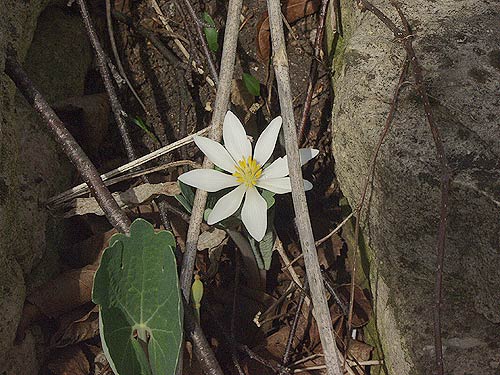
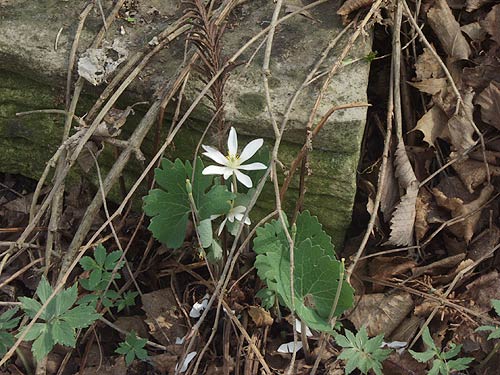
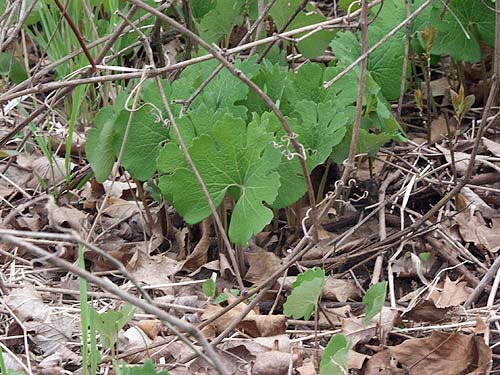
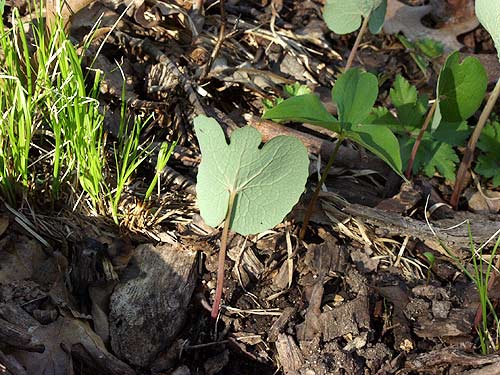
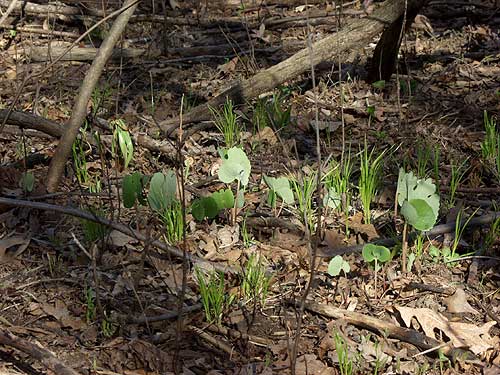
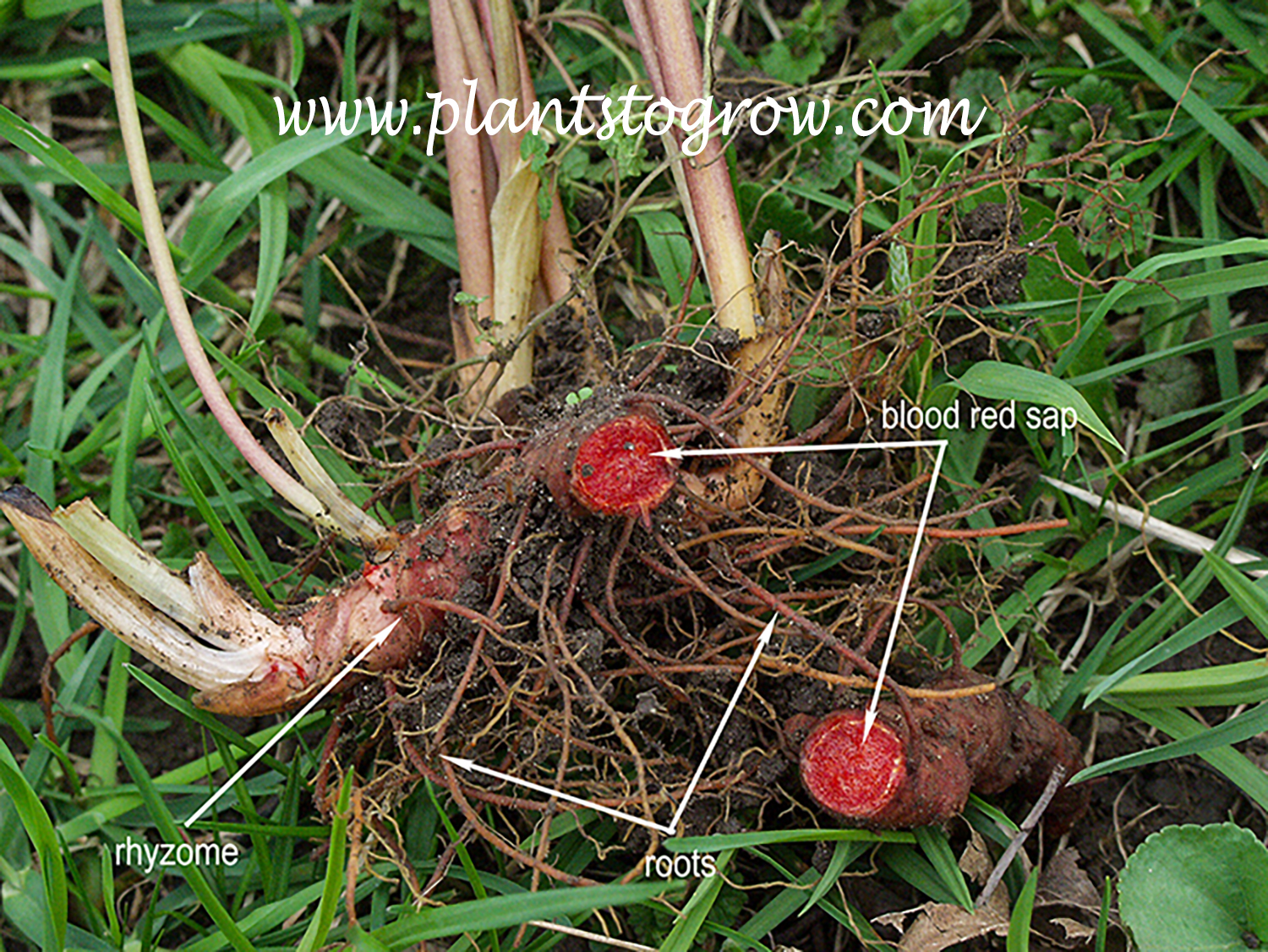
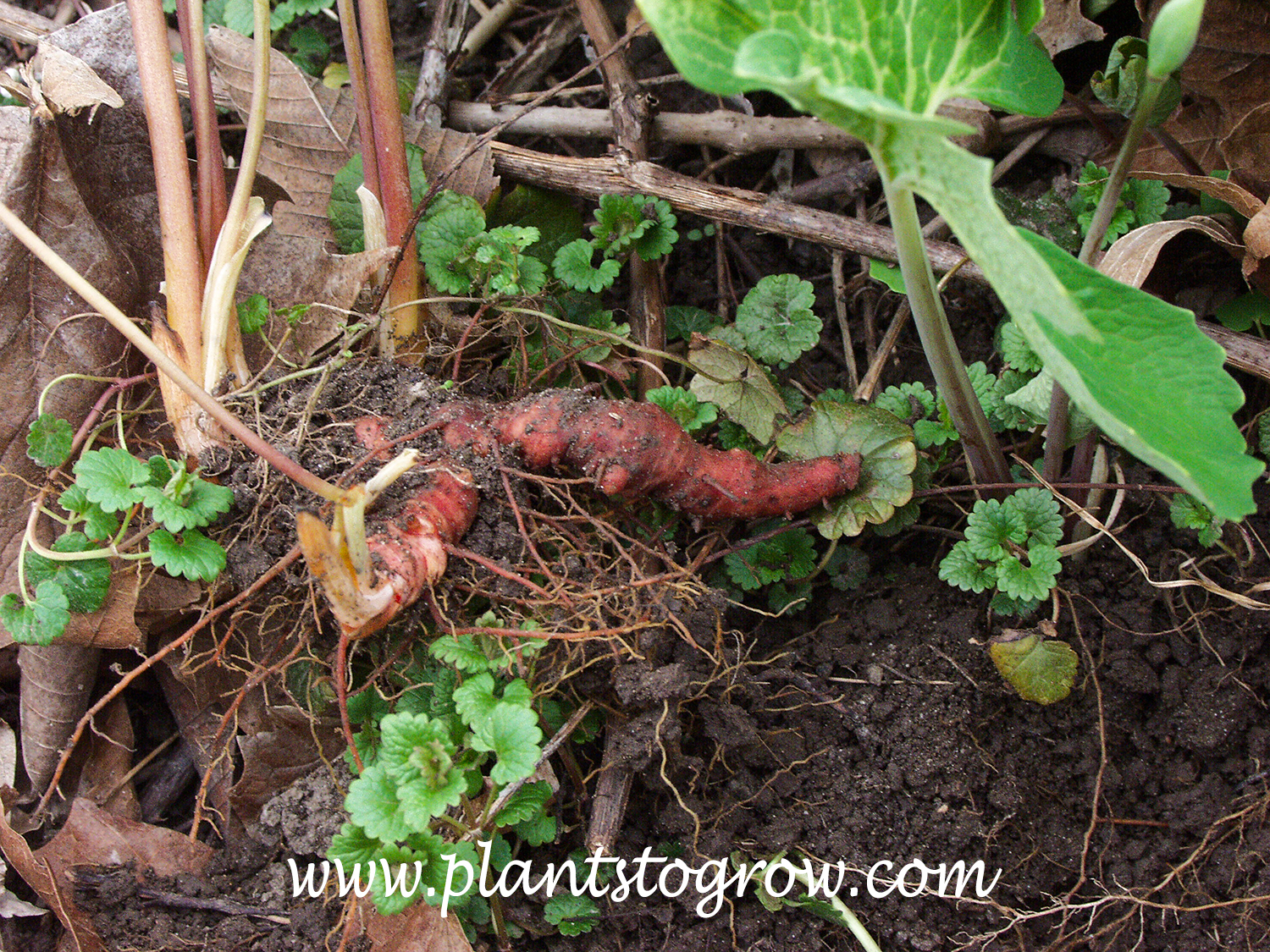
| Description | Bloodroot (Sanguinaria canadensis) is a native wildflower found growing in open woods and along roadsides in partial shade. Name referees to the fact that many parts, especially the rhizome, bleed a red-orange sap when cut. |
|---|---|
| Plant Type | Wild Flowers, Site author's observations |
| Hardiness Zone | 3-8 |
| Sunlight | partial shade |
| Moisture | average, moist |
| Soil & Site | rich, humusy, ph 6-7 |
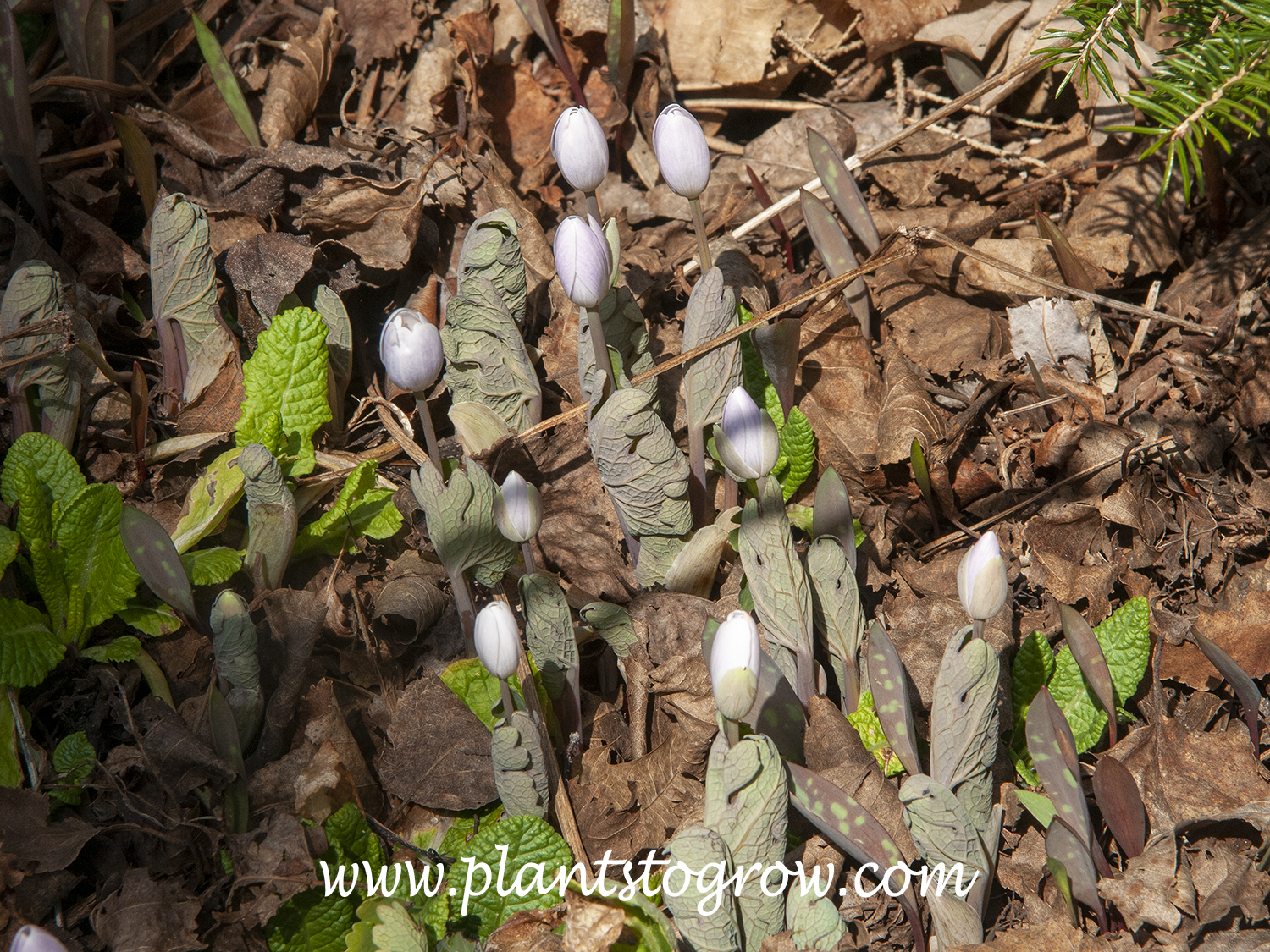
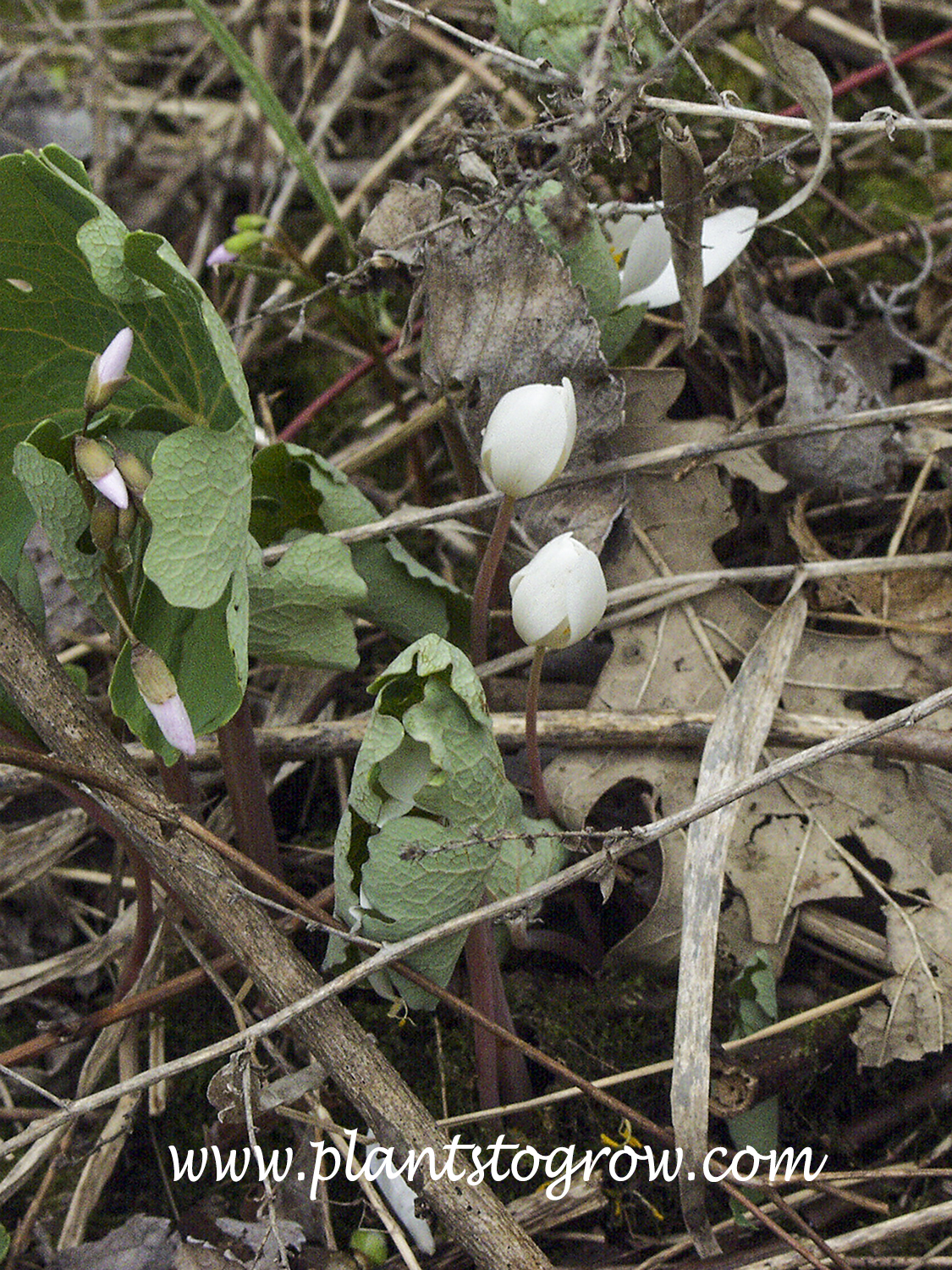
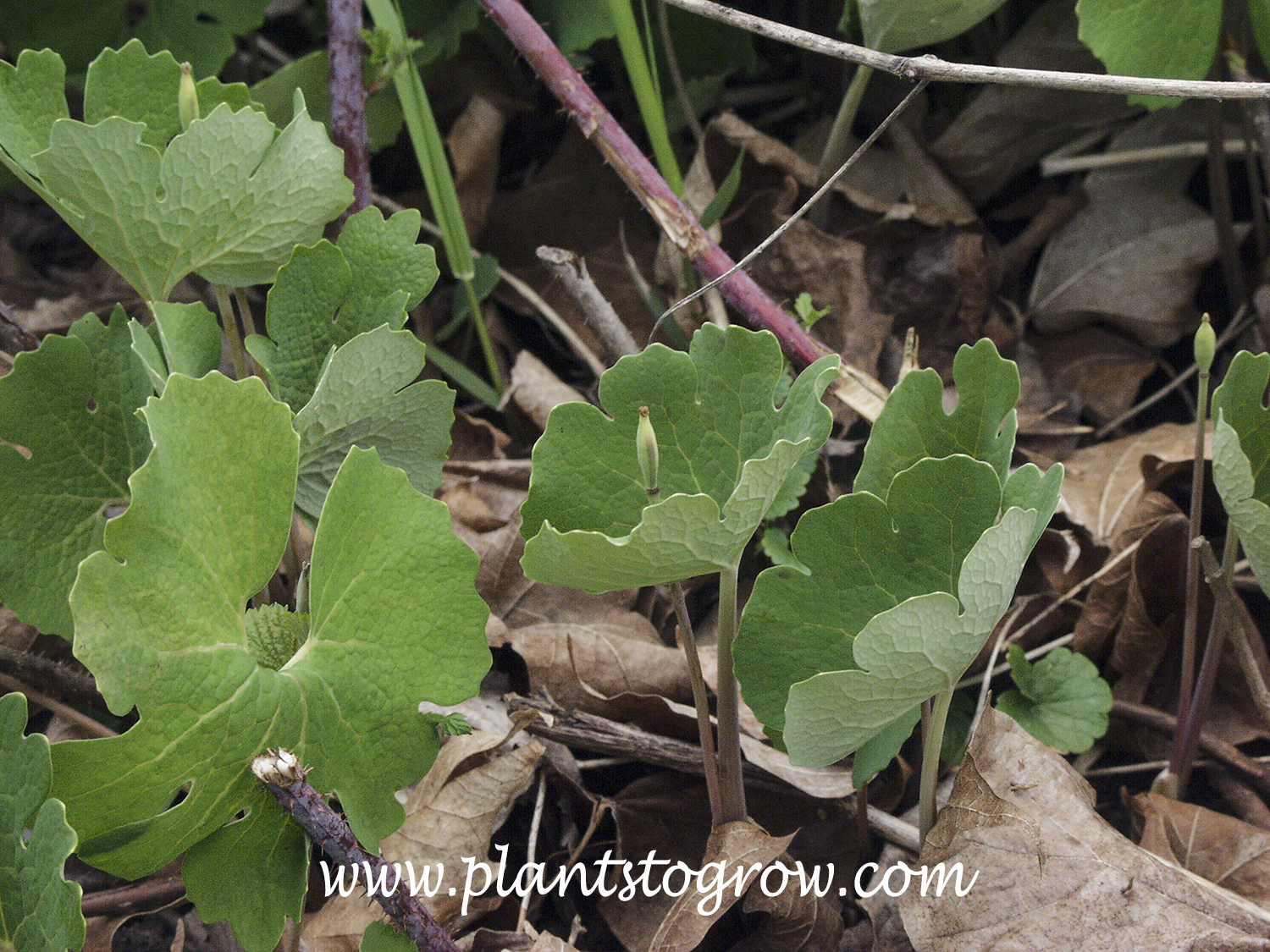
| Flowers | Flowers are white, star-like, 8-12 petals surrounded by two sepals, golden yellow center, 1.5-2" across. Arise from a stalk from the base of the plant about 6-10 inches. The first leaves are folded around the flower. Blooms April into May. Flowers lack nectar and quickly drop the petals after pollination |
| Fruit | pod-like capsule, many brown seeds |
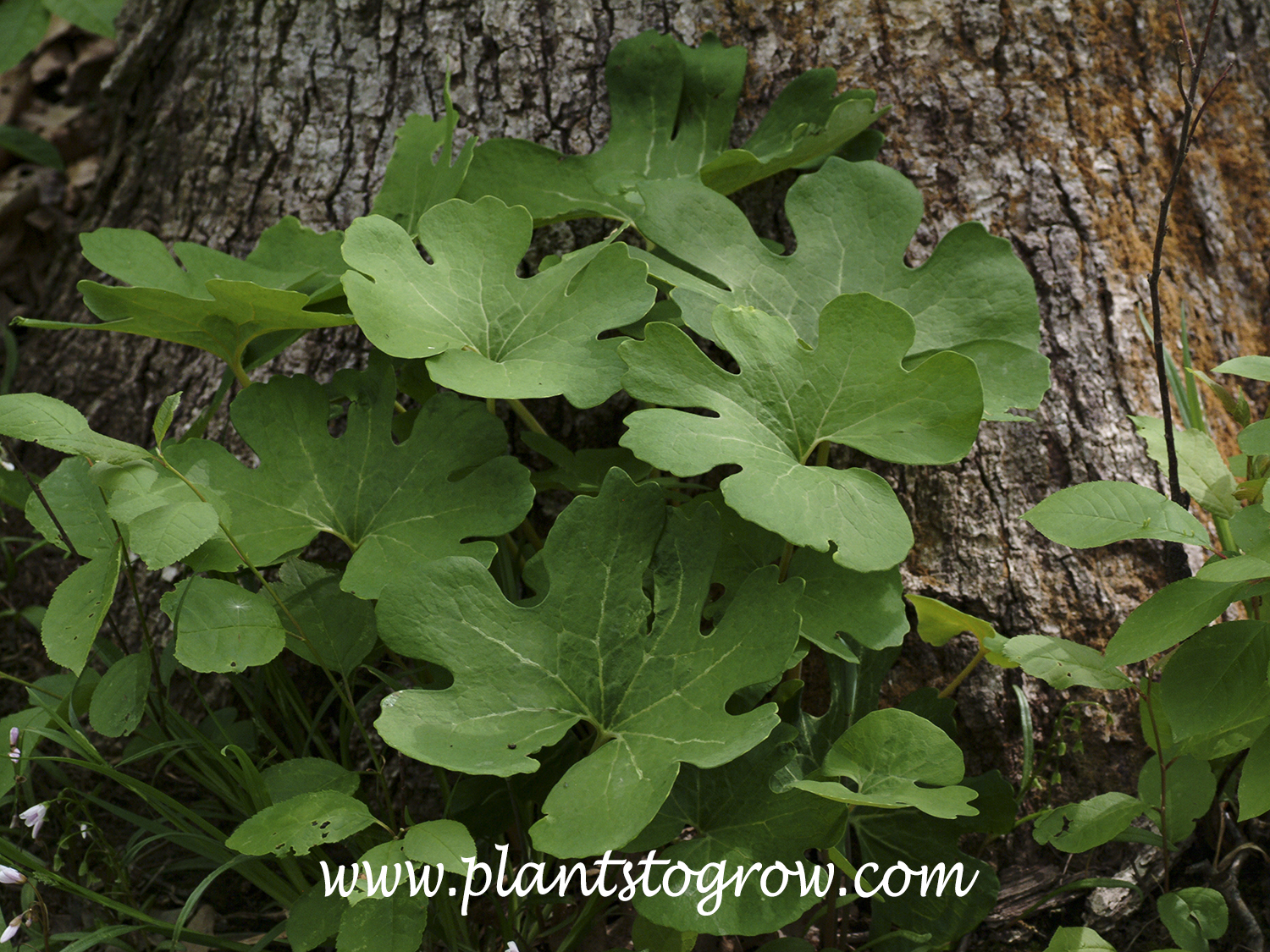
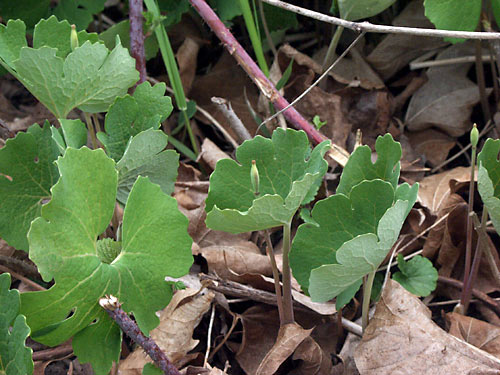
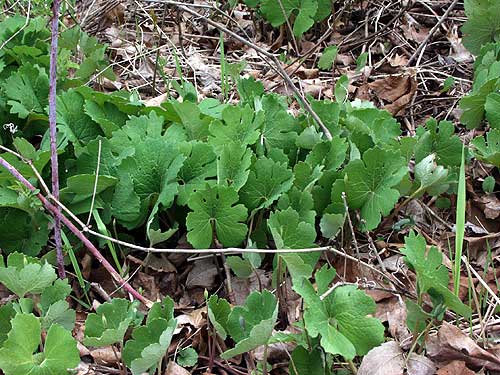
| Leaves | grayish green on the top and almost silver gray on the bottom, one deeply indented leaf per stalk, 12"-14" usually smaller, leaves wrap around the flower and unfold as the flower opens. |
| Stems | If cracked in half, the thick creeping rootstalk will bleed a red-orange sap. |
| Dimensions | creeping rhizome, 8"-14" tall |
| Maintenance | very little |
| Propagation | seeds, divison of root stalk |
| Native Site | A native wild flower. |
| Misc Facts | The genus name Sanquinaria comes from the Latin word to bleed. |
| Author's Notes | In the spring I would take my Horticulture classes on walks to observe the ephemeral plants blooming in the woods. Always was fun to see the students reactions when I dug out a small piece of the plants rhizomes and broke it in half. Looked exactly like a finger cut in half and bleeding. |
| Notes & Reference | #13-Growing Woodland Plants (Birdseye), #41-Wildflowers of Wisconsin (Stan Tekiela), #61-How to recognize Flowering Wild Plants (William Carey Grimm) |

Cart