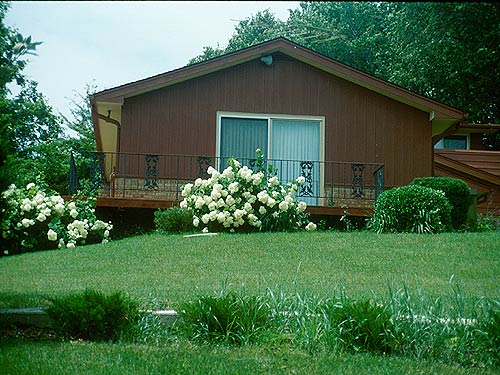
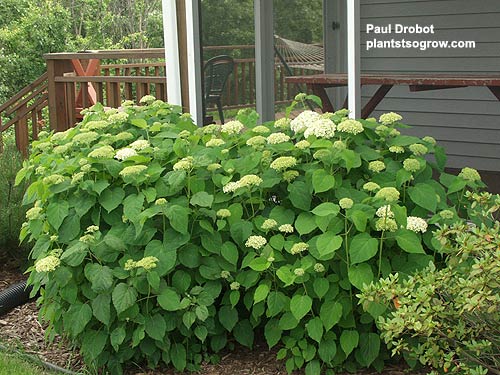
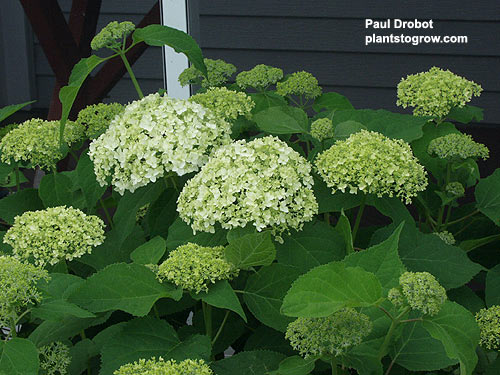
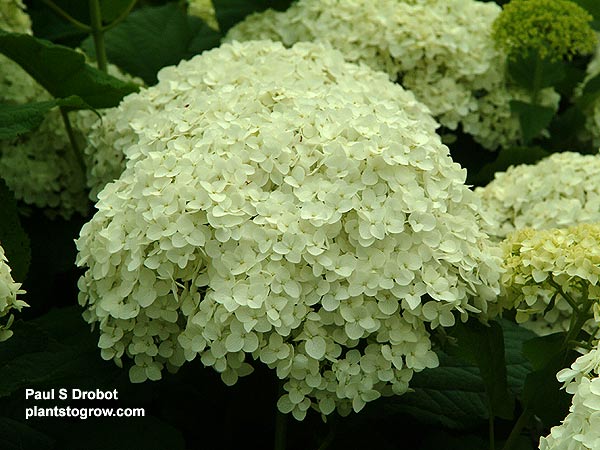
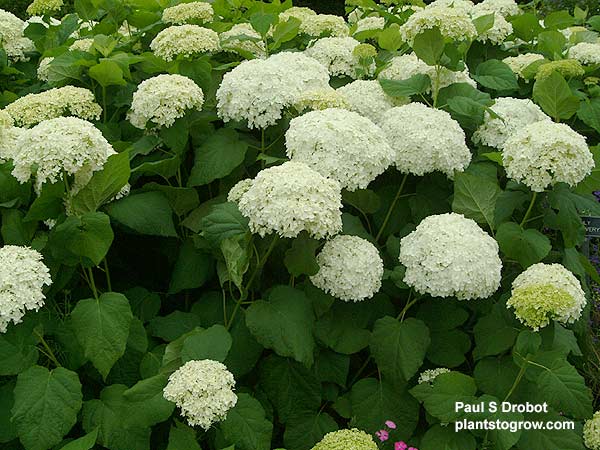
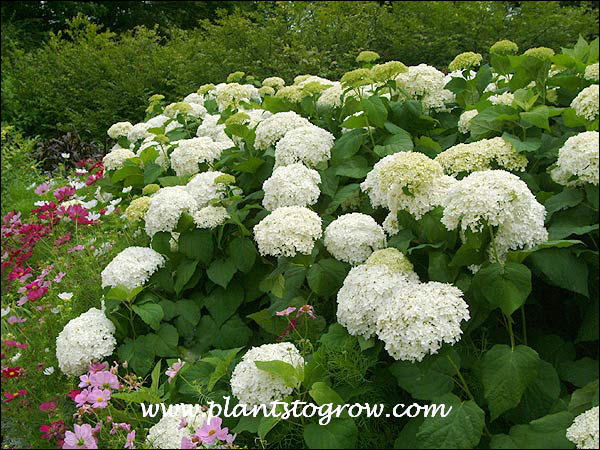
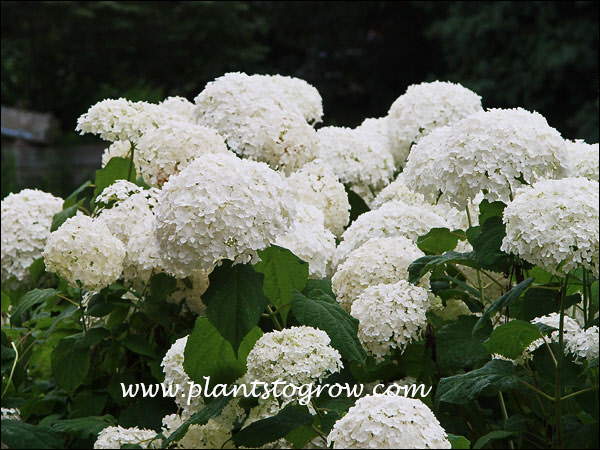
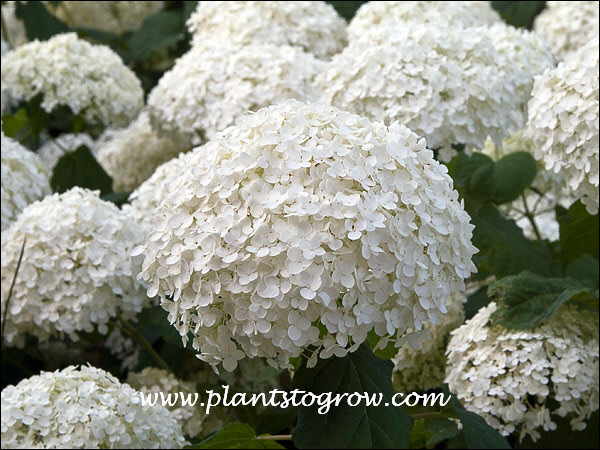
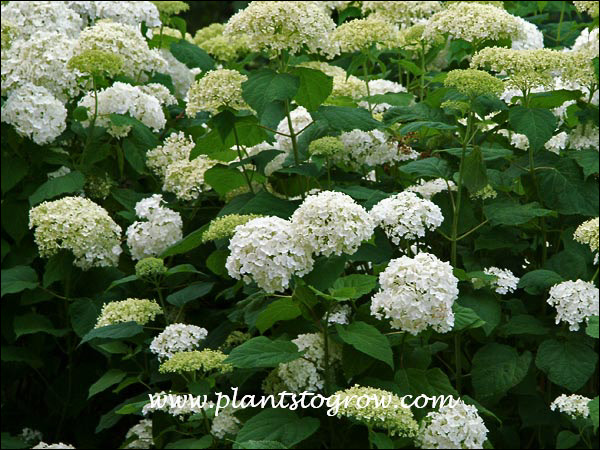
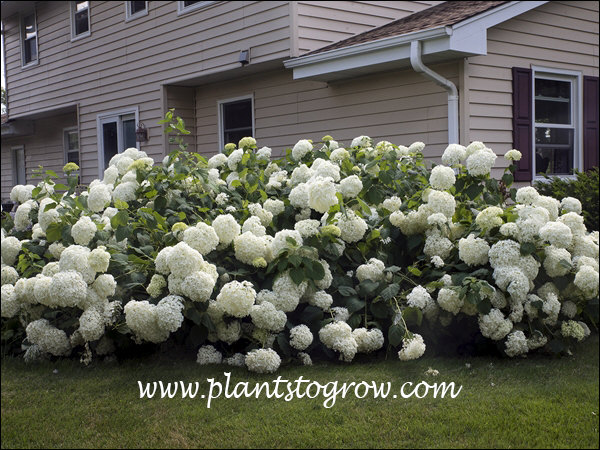
| Description | Annabelle Hydrangea (Hydrangea arborescens) is a popular medium-sized shrub with large white flowers in the summer. Annabelle is a heirloom shrub. |
|---|---|
| Pronunciation | (hy-DRAIN-jah)(ar-bo-RES-enz) |
| Plant Type | Shrubs Deciduous |
| Hardiness Zone | 3-9 |
| Sunlight | Prefers sunny conditions to partial sun, but grows well in full sun. Will survive in varying amounts of shade, but the more shade, the less the flower production. |
| Moisture | average, moist |
| Soil & Site | average, moist |
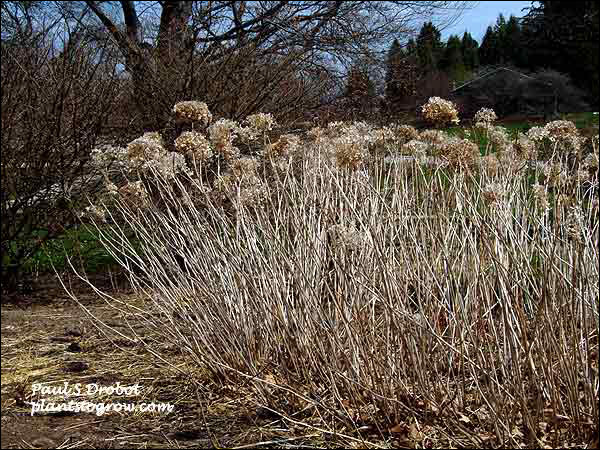
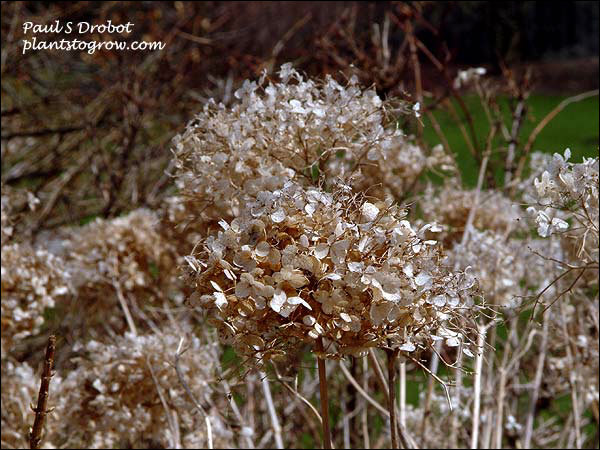
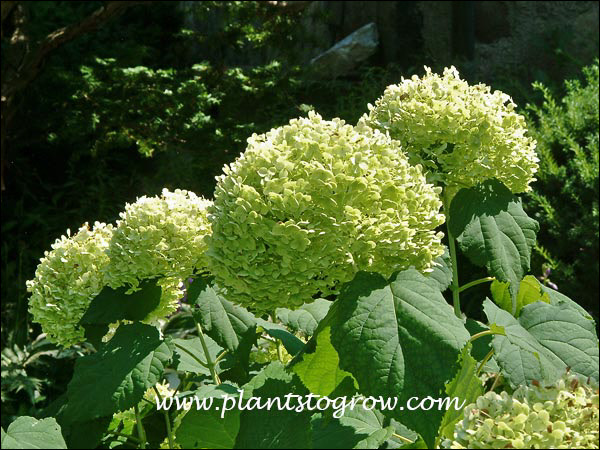
| Flowers | Has large flowers composed of clusters of sterile, white flowers that appear in huge, symmetrical, rounded heads (corymbs) that typically grow 8-12" across. In the fall, they turn brown and can be ornamental through the fall and winter. It blooms on new wood. |
| Leaves | Dark green, simple, serrate leaves. |
| Stems | The stems are twiggy and suckering from the roots |
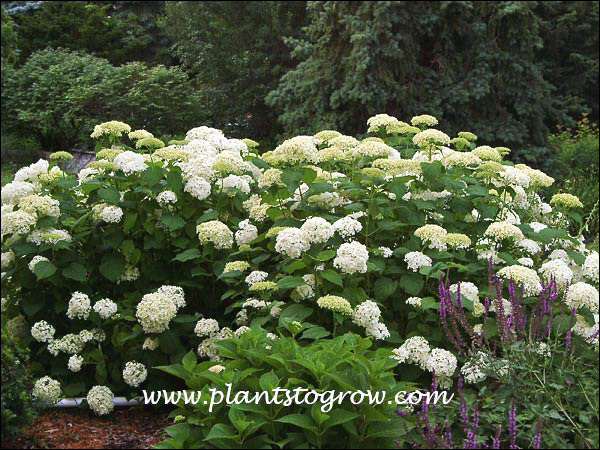
| Dimensions | 4-6 feet by 4-6 feet, can form a large colony, suckering from the roots, spaced 4-5 feet on center |
| Maintenance | This plant should be cut to the ground in late fall or early spring. It blooms on new wood. The shrub spreads by underground suckers. They can become invasive over time. It took my patch about 20 years to reach this point. |
| Propagation | divison, cuttings |
| Native Site | Species native to the Eastern United States and has been used since 1736. |
| Cultivar Origin | The Annabelle Hydrangea (Hydrangea arborescens 'Annabelle') originated from a wild specimen discovered in 1910 near Anna, Illinois, by Harriet Kirkpatrick, who transplanted it to her home. For over 50 years, it was a 'pass-along' plant. It was named by Dr. Joseph C. McDaniel of the University of Illinois around 1960–1962, who popularized it through the nursery trade. It was named after the town of Anna and the local "belles" (the Kirkpatrick sisters) who found it. |
| Misc Facts | When working at a garden center, many people would come in asking for the Hydrangea growing in their grandmother's yard. |
| Author's Notes | I like this shrub mainly because it blooms late in the summer, when few other shrubs are in bloom. I have had 5-6 plants by my patio for over 23 years. They are very hardy and floriferous. Even though these are older cultivars, they are still very popular. |
| Notes & Reference | #01-Manual of Woody Landscape Plants (Michael Dirr), #03-The Hillier Manual of Trees and Shrubs (Hillier Nursery), #135-Hydranges "A Gardner's Guide"(Tonis Lawson Hall, Brian Rothera), #274-Site Authors' observations and growing experiences |

Cart