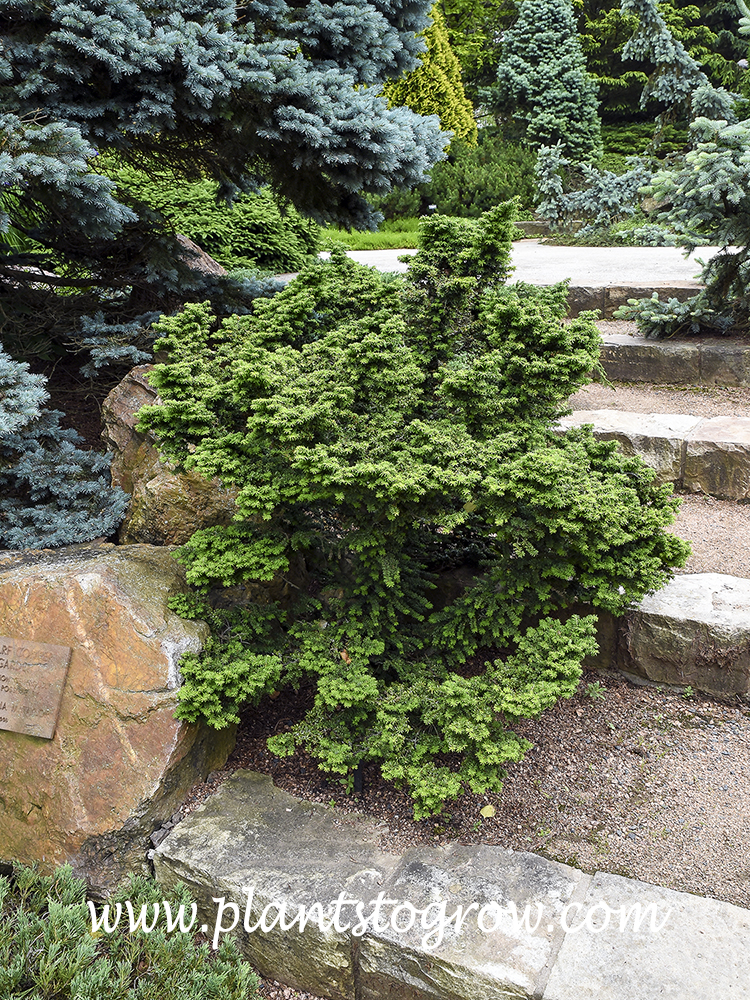
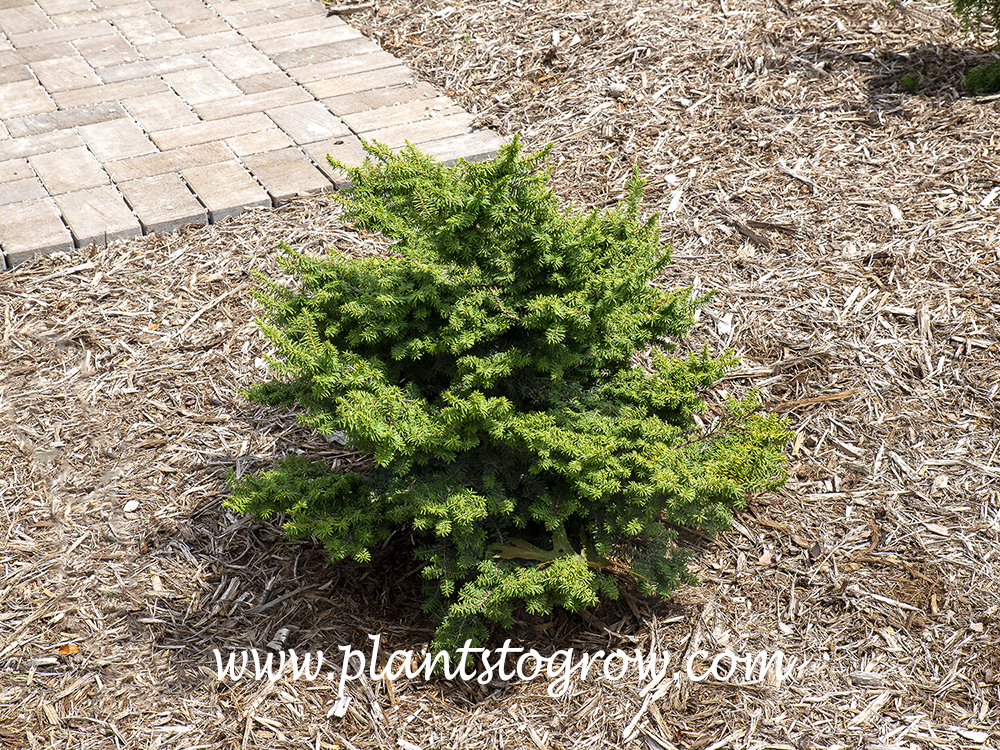
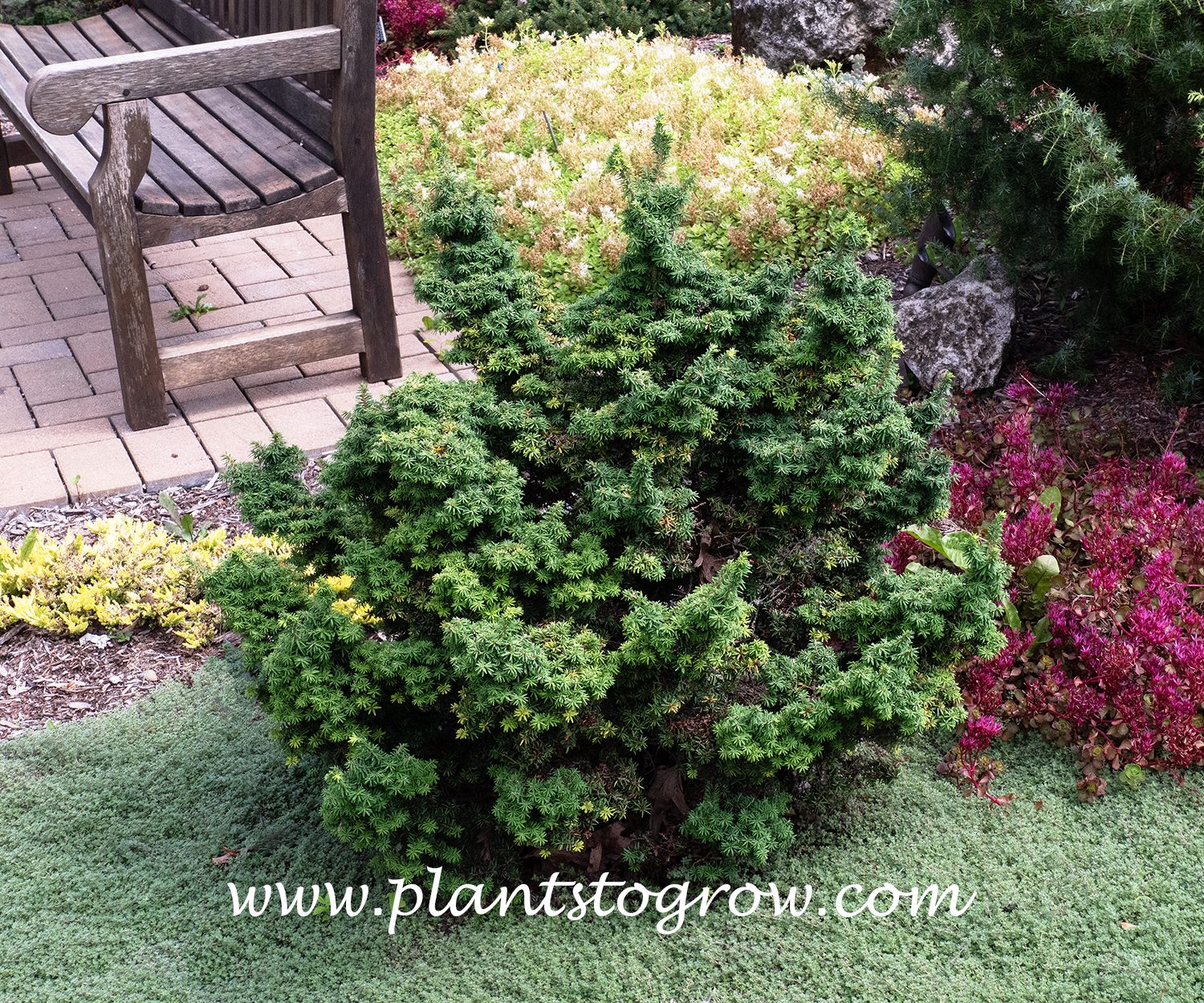
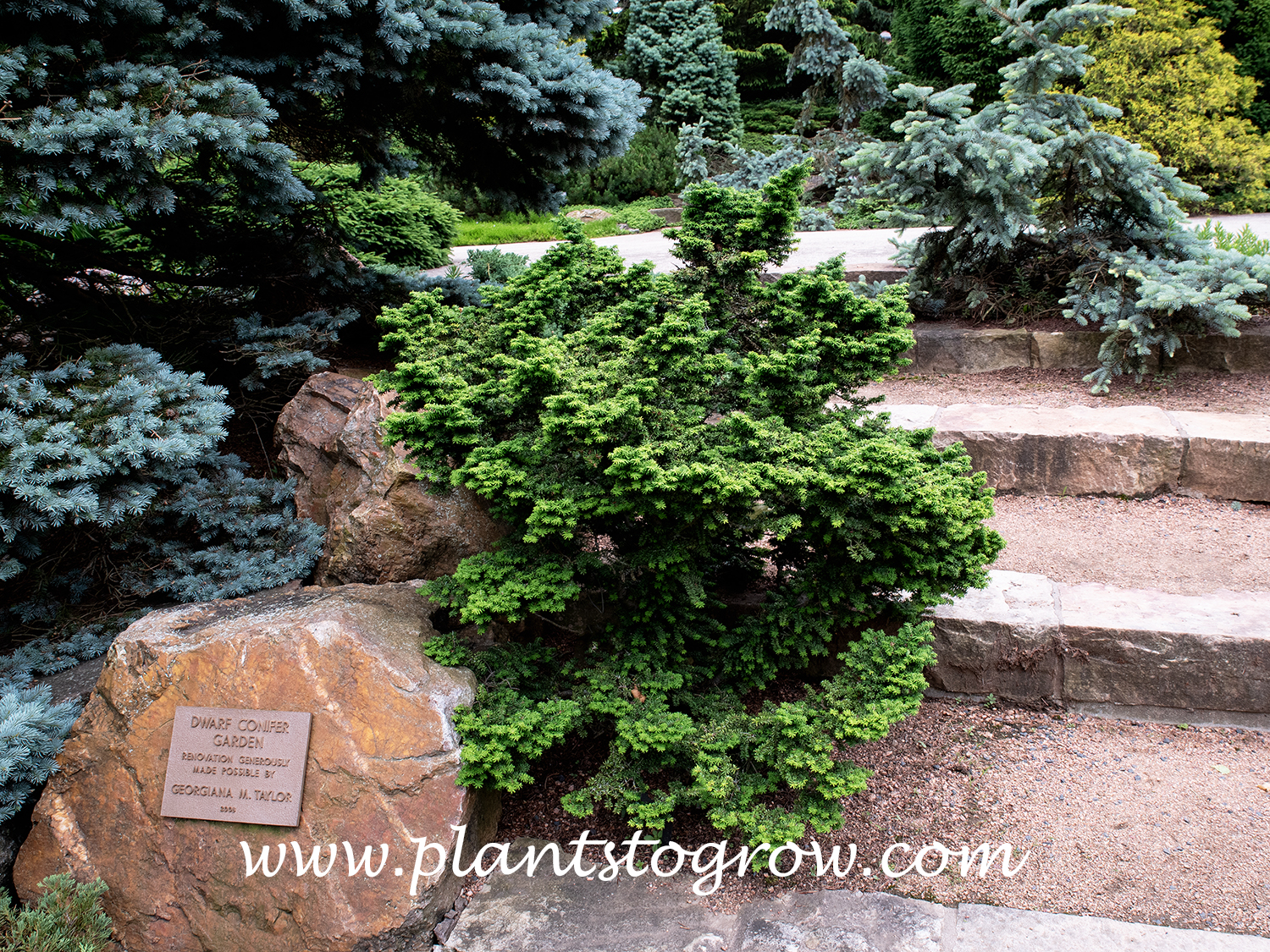
| Description | Hussi Canadian Hemlock (Tsuga canadensis) A slow growing irregular dwarf Hemlock evenly becoming a small tree. Discovered in 1900. |
|---|---|
| Pronunciation | (tsuu-ga)(can-a-DEN-sis) |
| Plant Type | Shrubs Coniferous, Dwarf Conifers |
| Hardiness Zone | 3 |
| Sunlight | full, mostly sunny, some shade, probably best with some shade |
| Moisture | average to moist, doesn't tolerate drought |
| Soil & Site | average, to rich and moist, doesn't tolerate poorly drained |
| Fruit | small woody cones |
| Leaves | flat, green needles, new needles bright green |
| Stems | short, dense, twiggy branches |
| Dimensions | One of the original plants grew from 3 feet to 17 feet from 1945 to 1970, becoming open with age. |
| Propagation | cuttings |
| Cultivar Origin | Discovered by John Huss shortly before 1900. It originated in the United States, specifically in Connecticut, where Huss served as the Superintendent of Parks in Hartford, |
| Notes & Reference | #202-American Conifer Society (www.conifersociety.org), #257-The cultivated Hemlocks (John C Swartely) |

Cart