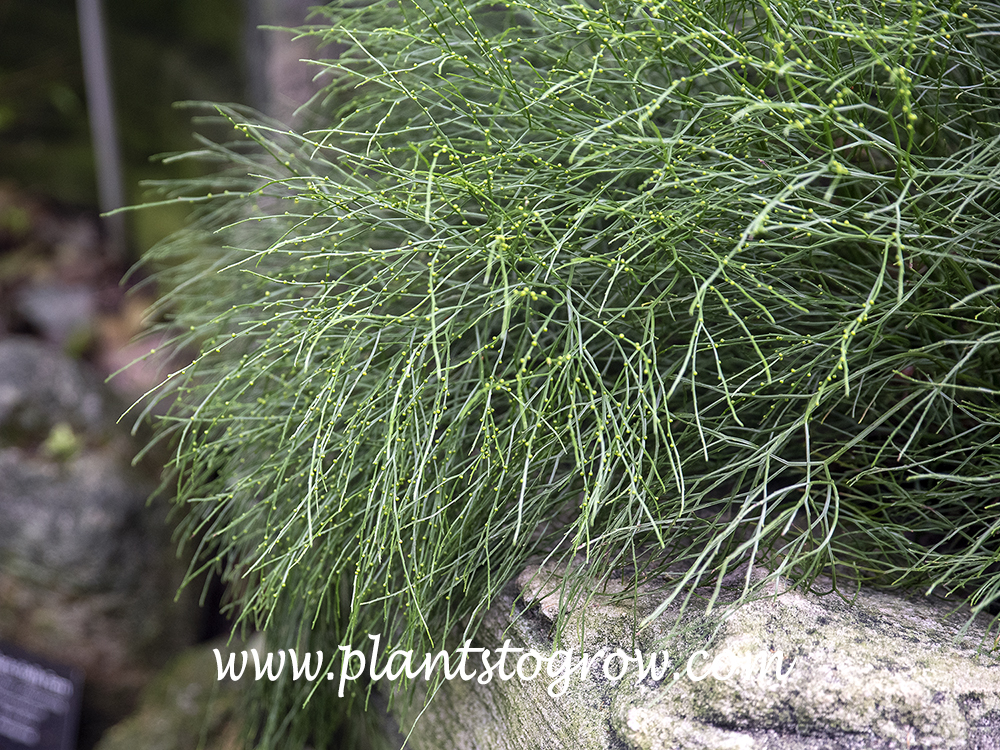
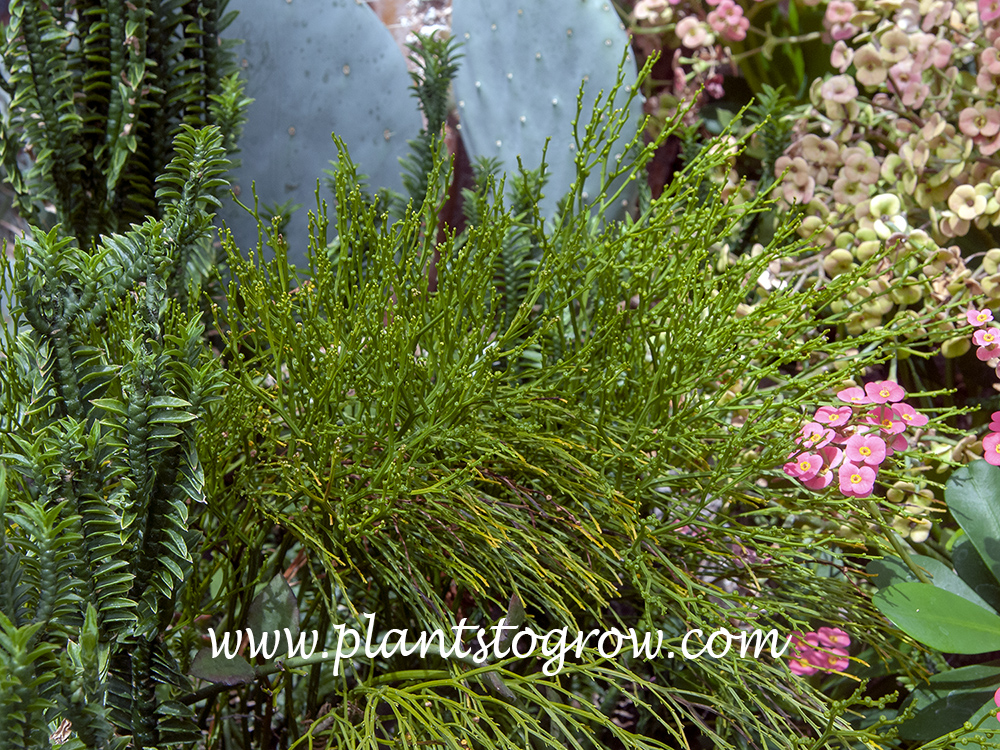
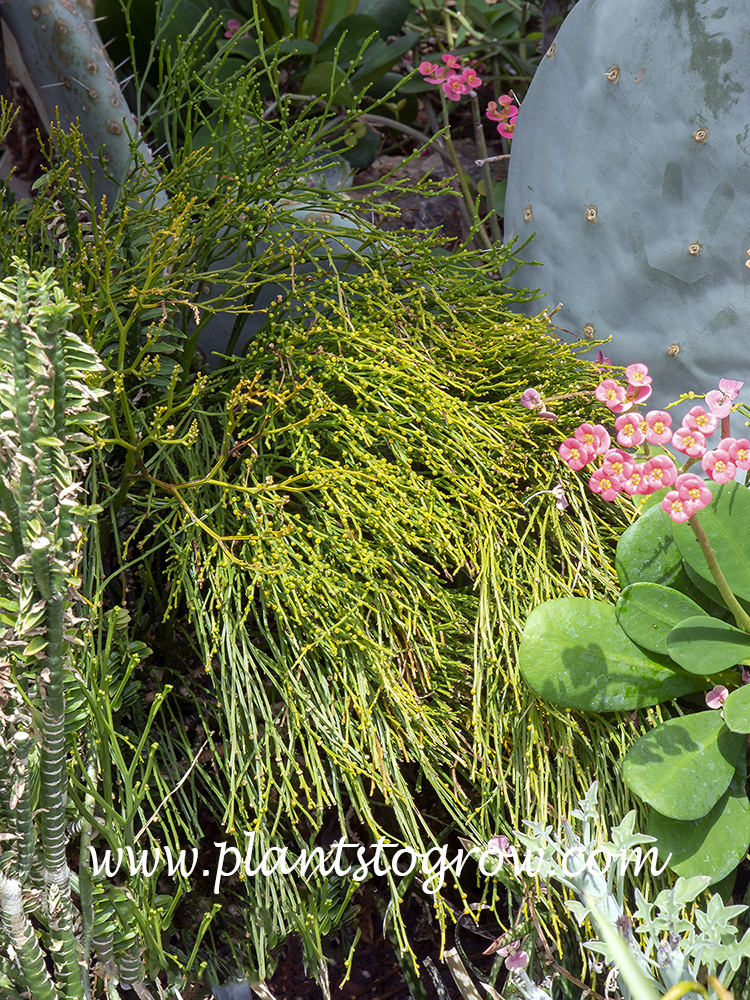
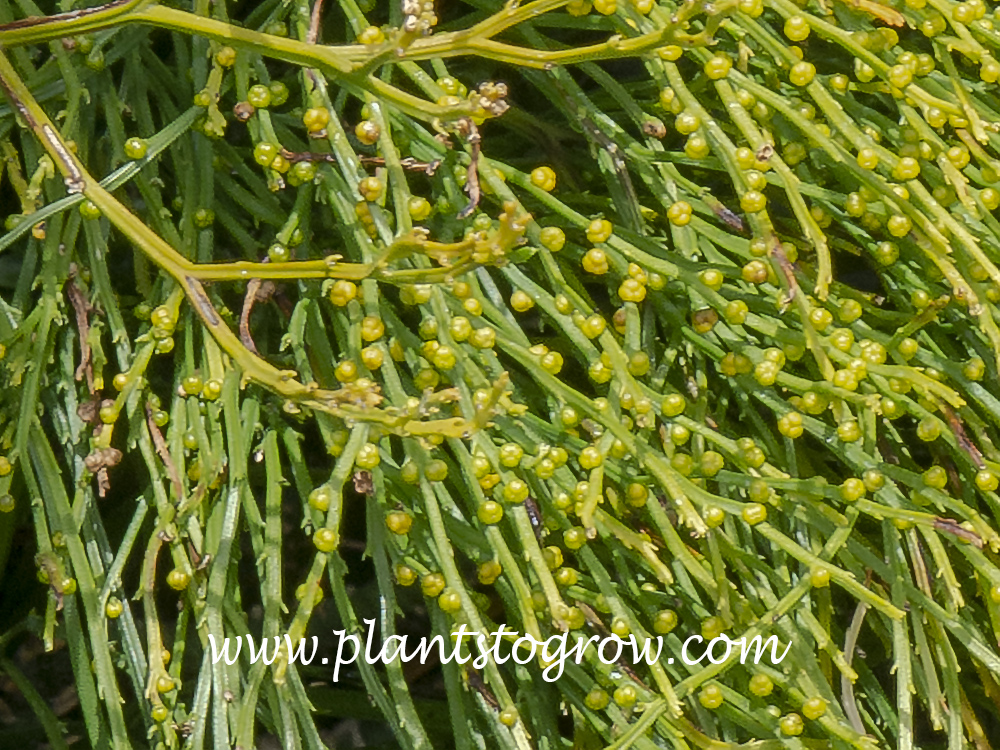
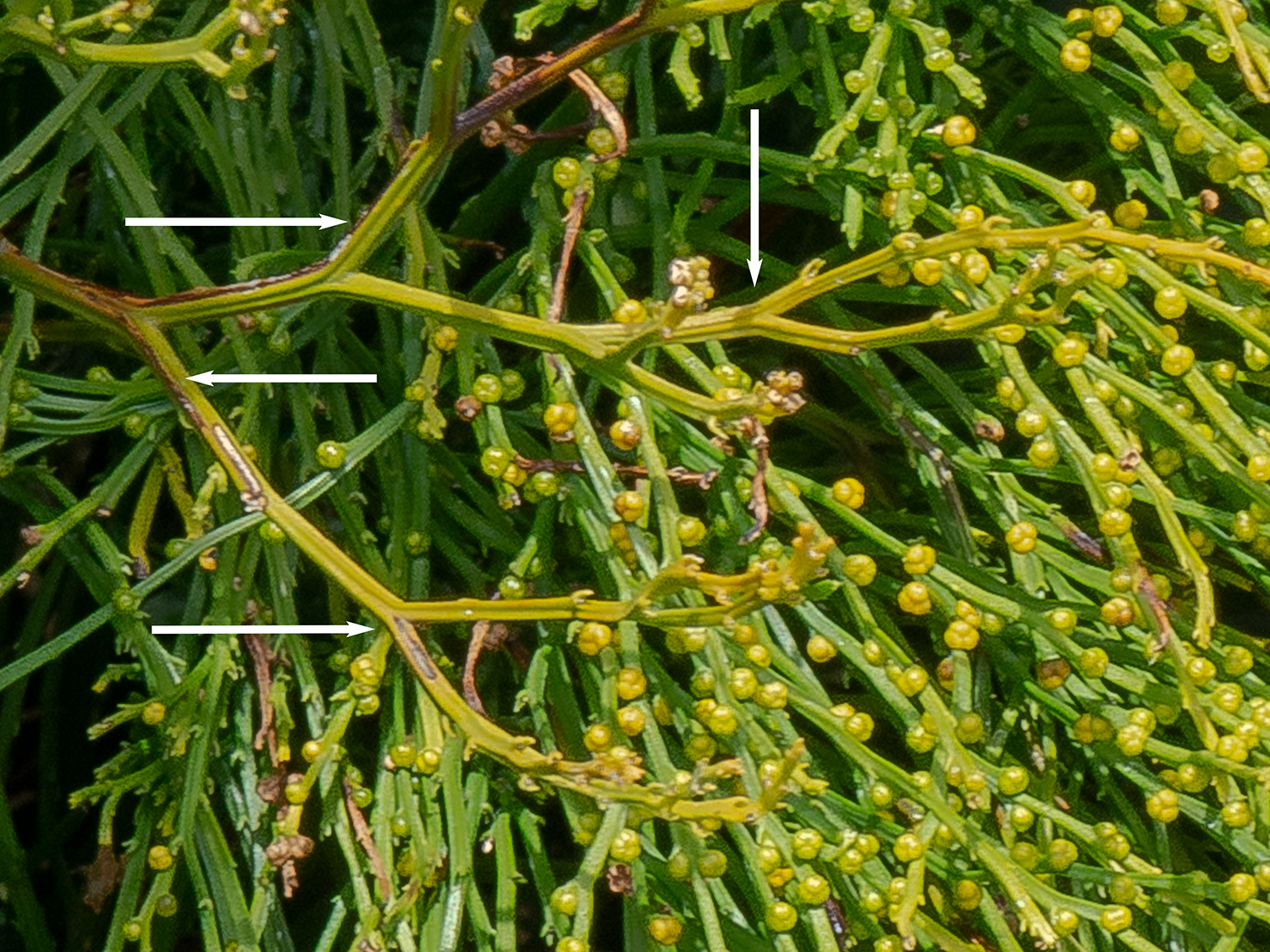
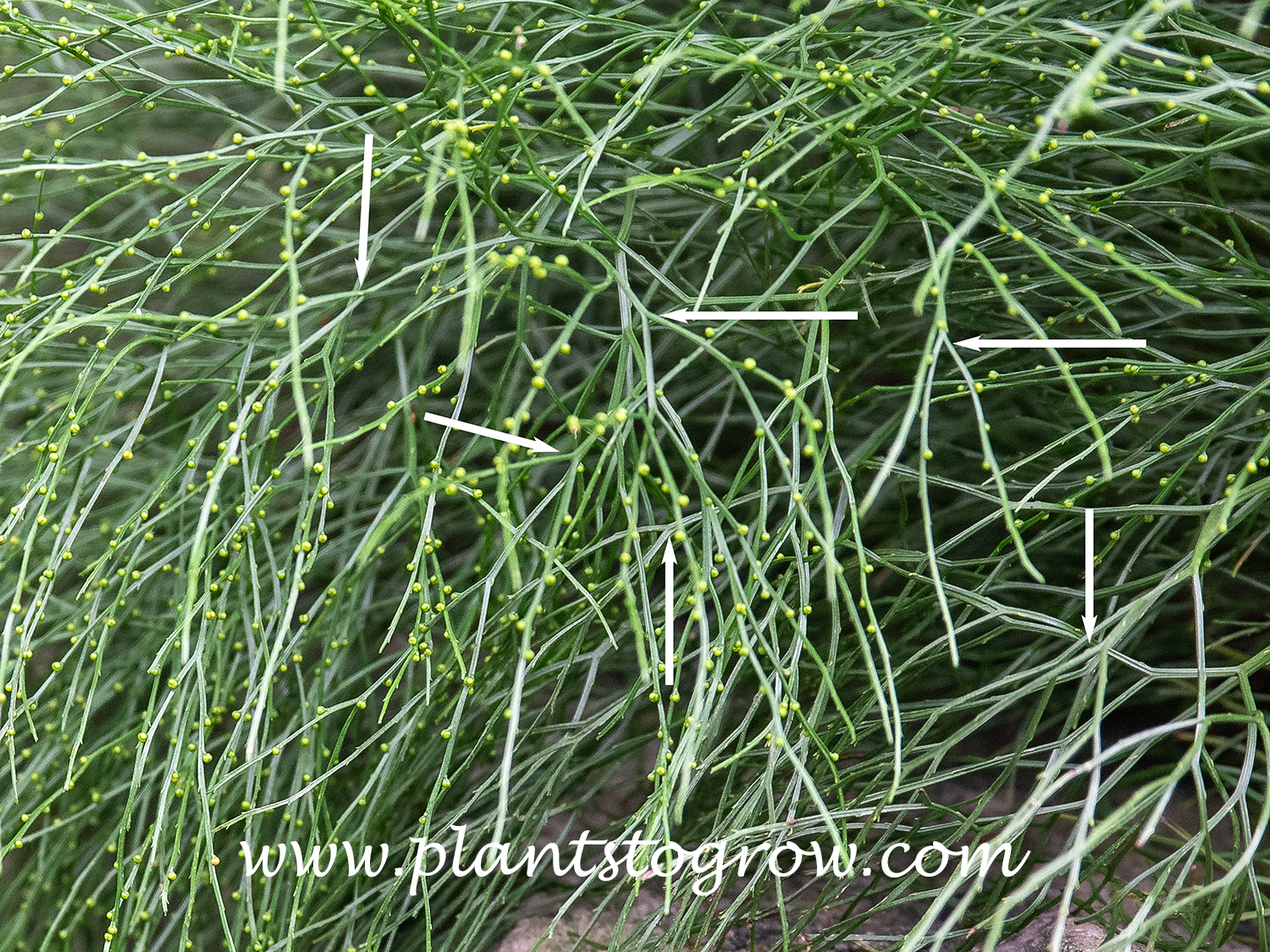
| Description | Whisk Fern (Psilotum nudum) is a primitive vascular plant. Lacking true roots or leaves. Is anchored to the soil by rhizomes. Grows as an epiphyte on trees or in soil/crevices |
|---|---|
| Plant Type | Perennial Tender |
| Hardiness Zone | 8-10 |
| Sunlight | full sun to shade (very adaptable) |
| Moisture | Moist but are adaptable |
| Soil & Site | Grow best in humusy, moist, and well-drained soil. |
| Flowers | non flowering |
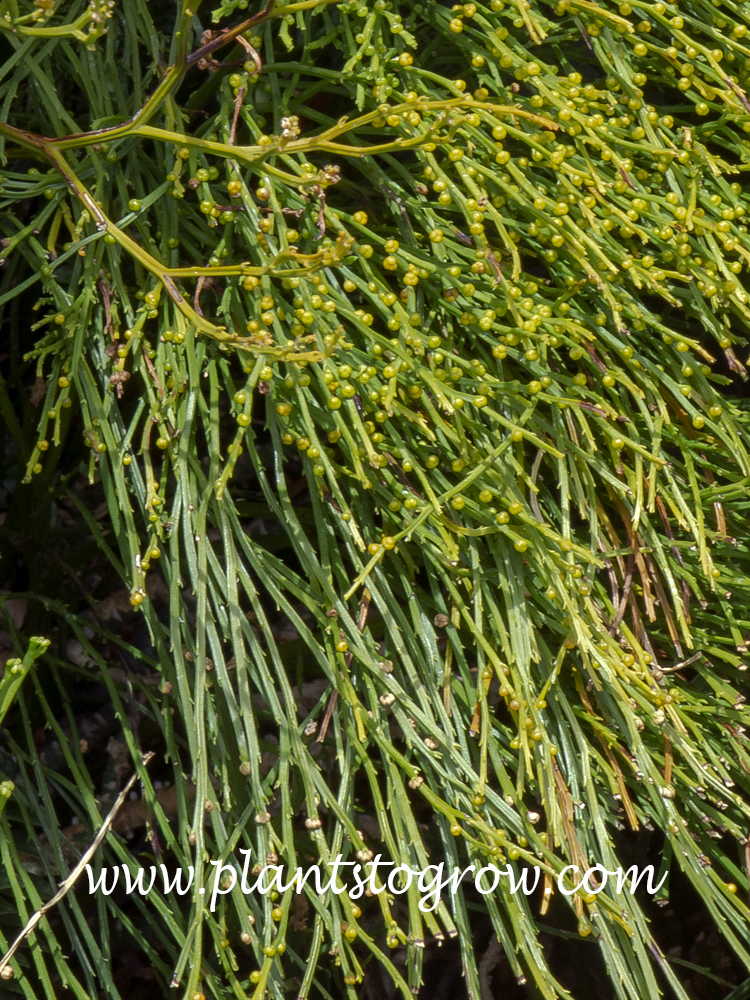
| Fruit | Does not produce fruits; it produces spores in a yellow, spherical sac. |
| Leaves | Have structures that look like leaves but lack vascular tissue, which true leaves have. The leaves are subulate and are reduced, non-vascular, leaf-like appendages. |
| Stems | The organs containing conducting tissue. They are branching and triangular. The plant is anchored with creeping rhizomes. |
| Roots | Lacks true roots. The plant is anchored with creeping rhizomes. |
| Propagation | spores |
| Native Site | Native to tropical and subtropical regions of the world |
| Cultivar Origin | First described by Olof Peter Swartz, a Swedish botanist and taxonomist in circa 1861 |
| Misc Facts | The common name, whisk fern, refers to its use in the past as a small broom, made by tying a handful of its branches together. Genus is from the ancient Greek word psilos meaning "bare, smooth or bald. Referring to the lack of the usual plant organs, such as leaves or roots. Nudum is Latin referring to bare or naked stems. |
| Notes & Reference | #270-North Carolina Extension Gardener Tool Box (https://plants.ces.ncsu.edu/plants) |

Cart