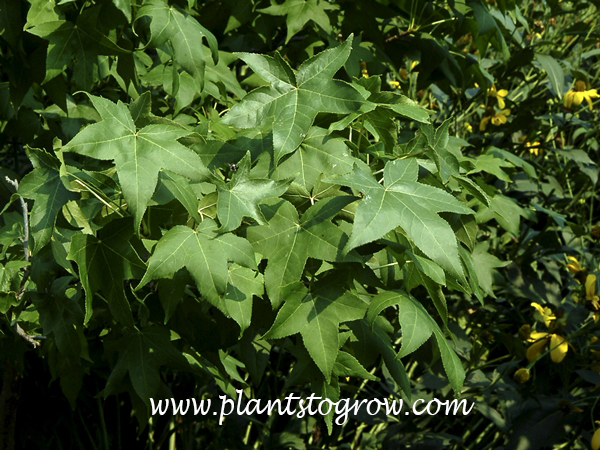
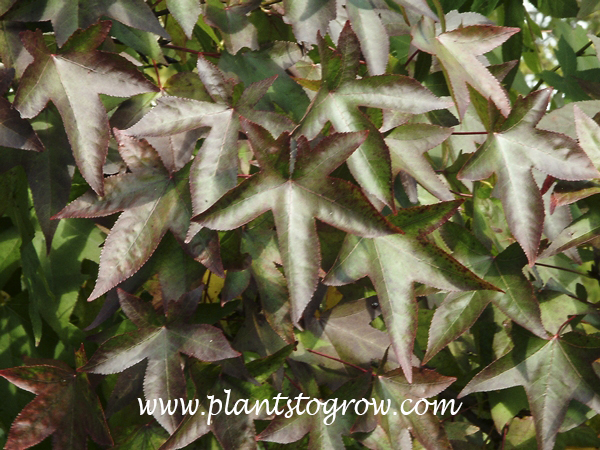
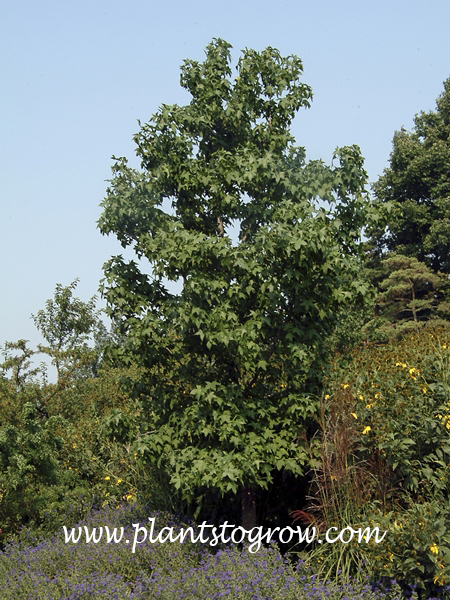
| Description | Sweet Gum (Liquidambar styracifua) is a large deciduous shade tree. Reported not to be hardy to the northern part of zone #5. |
|---|---|
| Pronunciation | (lih-kwid-AM-bar)(steye-ra-see-FLO-a) |
| Plant Type | Trees Deciduous |
| Hardiness Zone | 5-9 |
| Sunlight | full |
| Moisture | average |
| Soil & Site | average |
| Temperature | has withstood -28 degrees F in Illinois (USA) |
| Fruit | spikey, woody seed balls (syncarp of dehiscent capsules) |
| Leaves | green, 5 lobed, palmately lobed, lobes cut about 1/2 way, red to burgundy fall color |
| Stems | corky bark |
| Dimensions | 60-70 by 2/3 spread (HS) |
| Propagation | seeds |
| Native Site | Species plant native to southern and eastern USA |
| Cultivar Origin | Introduced 1661 |
| Misc Facts | "Genus name comes from the Latin words liquidus meaning liquid and ambar meaning amber as two species produce a fragrant resin. Specific epithet means flowing storax. The common name of sweet gum refers to an aromatic balsam or gum that exudes from wounds to the tree". (#144) AKA: American storax, hazel pine, bilsted, redgum, satin-walnut, star-leaved gum, alligator wood |
| Notes & Reference | #01-Manual of Woody Landscape Plants (Michael Dirr), #93-North American Landscape Trees (Arthur Lee Jacobson), #144-Missouri Botanical Gardens web site (www.missouribotanicalgarden.org) |

Cart