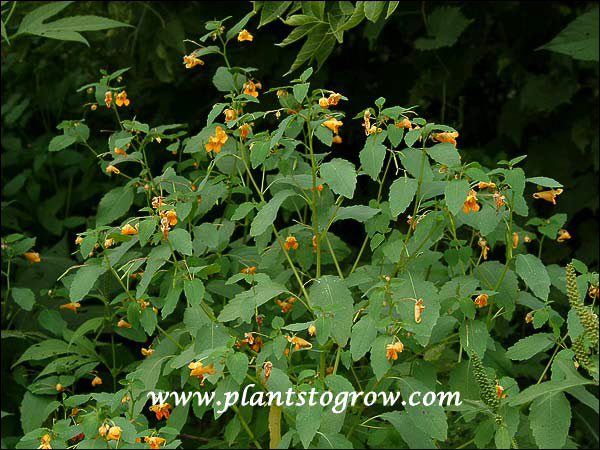
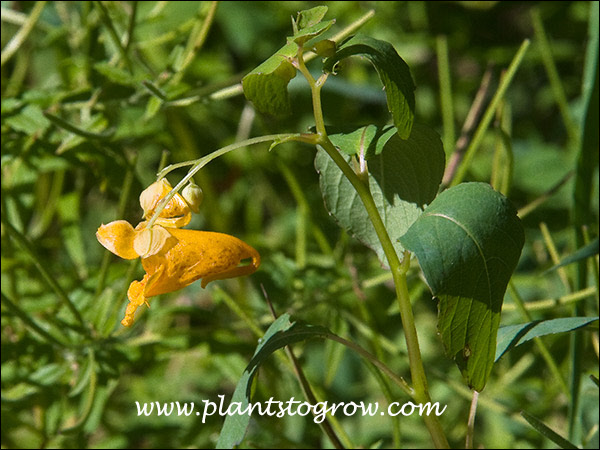
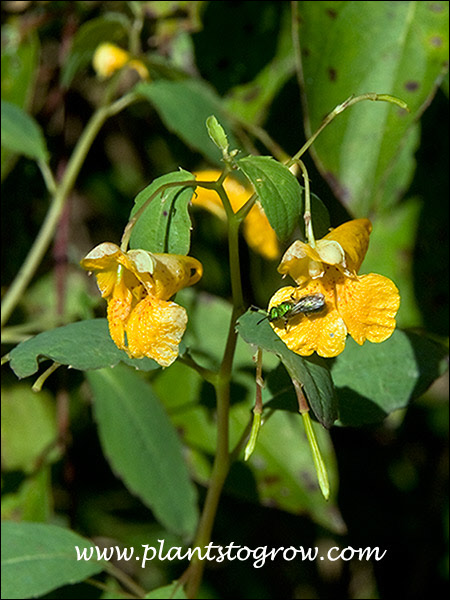
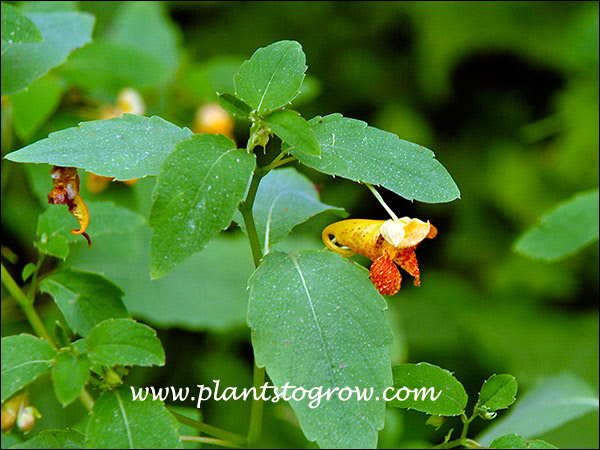
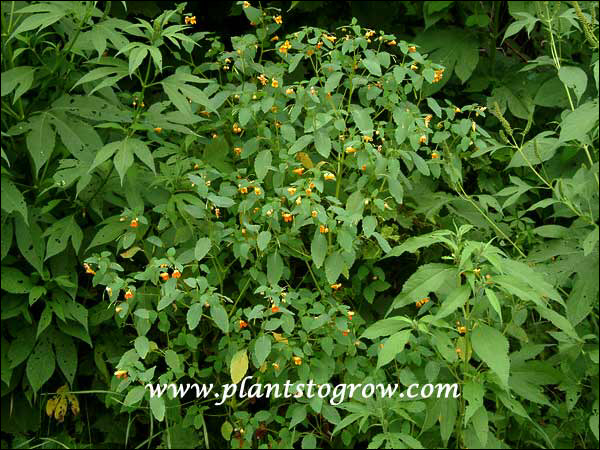
| Description | Jewel Weed (Impatiens capensis) A large growing native wildflower found in moist shaded areas. Has exploding seed capsule the at help propel the seeds away from the mother plant. |
|---|---|
| Pronunciation | (im-PAY-shuns)(ka-PEN-sis) |
| Plant Type | Wild Flowers |
| Hardiness Zone | Cold hardy to at least #4 |
| Sunlight | Prefers partial to full shaded areas. |
| Moisture | moist to wet |
| Soil & Site | Moist to wet sites. I have seen it growing on a sandy lake shore. |
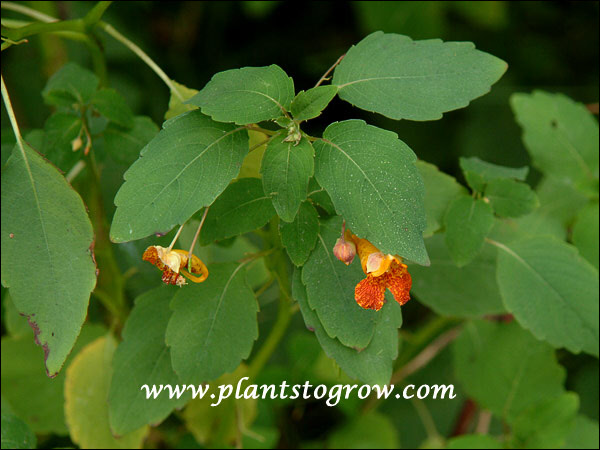
| Flowers | The flowers are orange to orange-yellow with reddish-brown spotting. They are pendant on a small stalk. Each flower has five unequal-sized petals. There are five stamens, and the pistil consists of five united carpels. The flower has an upper lip formed from one petal and two lateral petals, and two fused petals form the lower lip. It also has three sepals, with the lower one extended backward as a spur. Flowers provide nectar to pollinators from June until the first frost. |
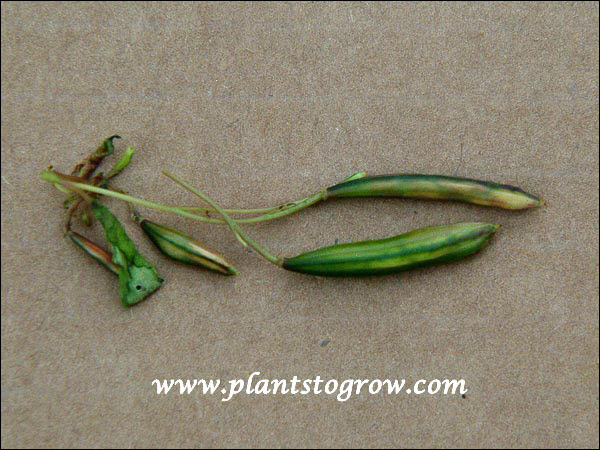
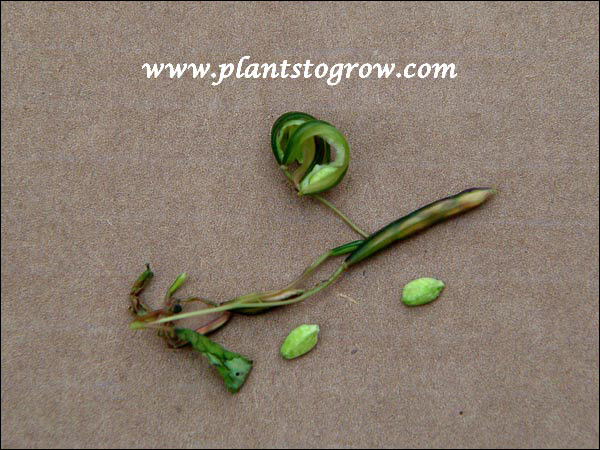
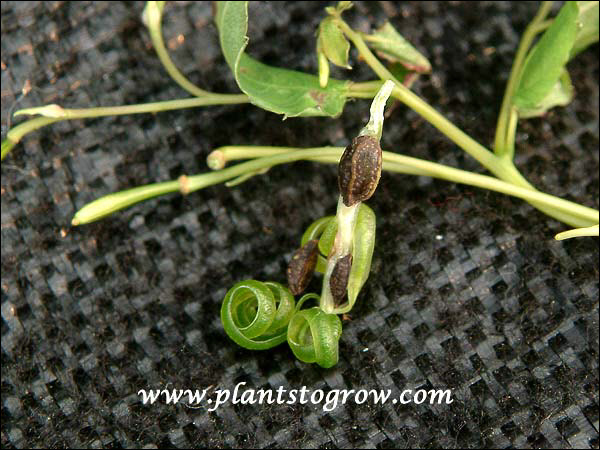
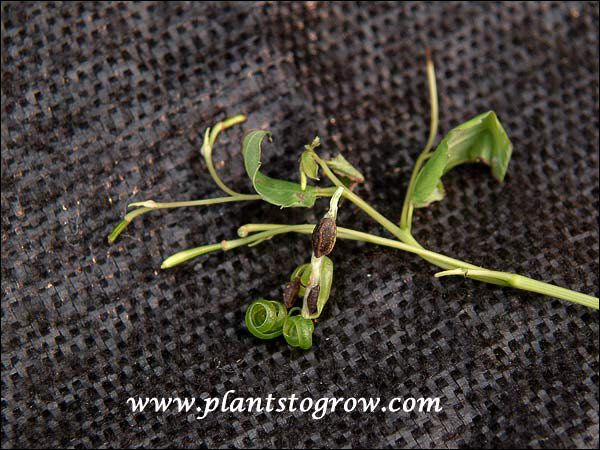
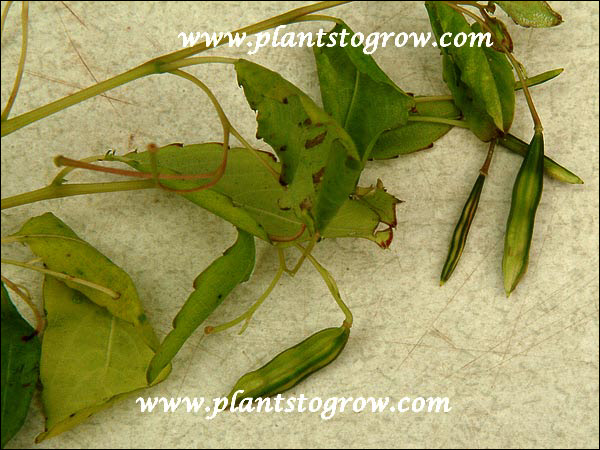
| Fruit | The thin banana-shaped seed pods explode when ripe, propelling seeds in all directions. This is called ballistic seed dispersal. |
| Leaves | The simple leaves are bluish-green to grayish-green, alternate, elliptical to ovate, and serrate-margined. Have a thin, hairless texture and a dull surface. |
| Stems | The stems are erect, round, succulent, smooth, branched, and shiny. They are pale green to pale reddish-green and a bit fragile. Sap from the stem has been used to treat ich. |
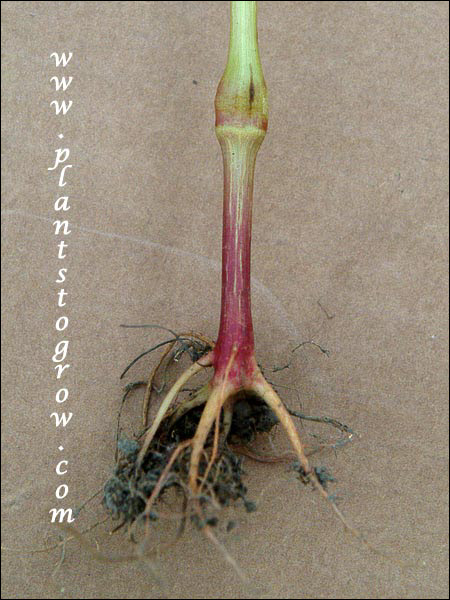
| Roots | Has a small, shallow root system, often with reddish, knob-like nodes near the base of the stem. An annual typically develops a single taproot. The roots are well-adapted to moist, organic-rich soil, and the plant can occasionally form adventitious roots at lower nodes. |
| Dimensions | 3-5 feet in spread, over 3 feet in height |
| Propagation | seeds |
| Native Site | Native east of the Rocky Mountains in the United States and Canada |
| Misc Facts | The juice has soothing and medicinal properties. It seems to work like Aloe vera. Young stems can be eaten. It is considered a noxious weed in different areas. |
| Author's Notes | When out in the field with my High School Horticulture classes, I would tell them to touch one of the ripe seed pods. They would jump back when the pod expelled its seeds. An interesting way many plants disperse their seeds away from the parent plant. |
| Notes & Reference | #41-Wildflowers of Wisconsin (Stan Teikiela), #49-The History and Folklore of North American Wildflowers (Timothy Coffey), #274-Site Authors' observations and growing experiences |

Cart