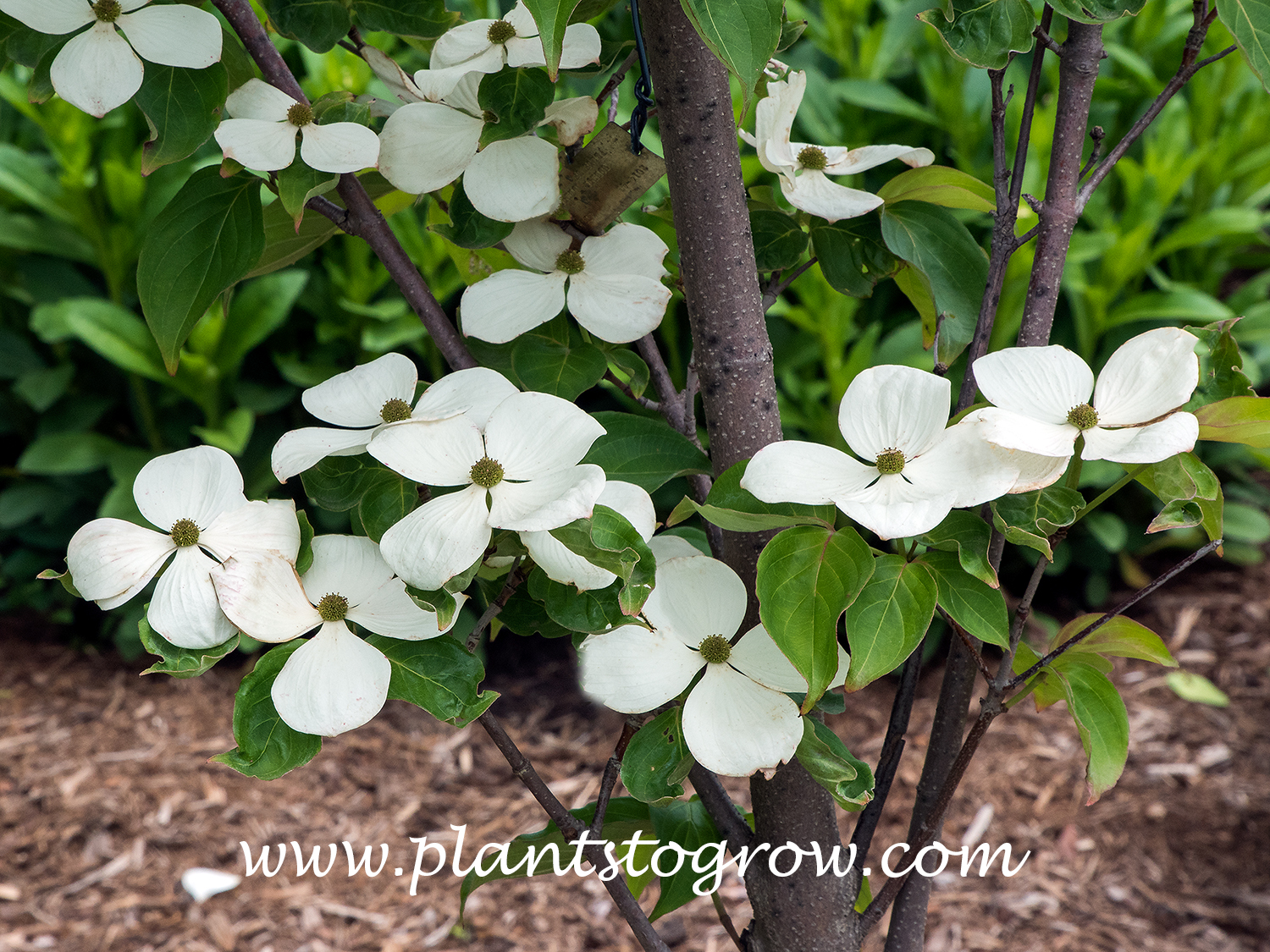
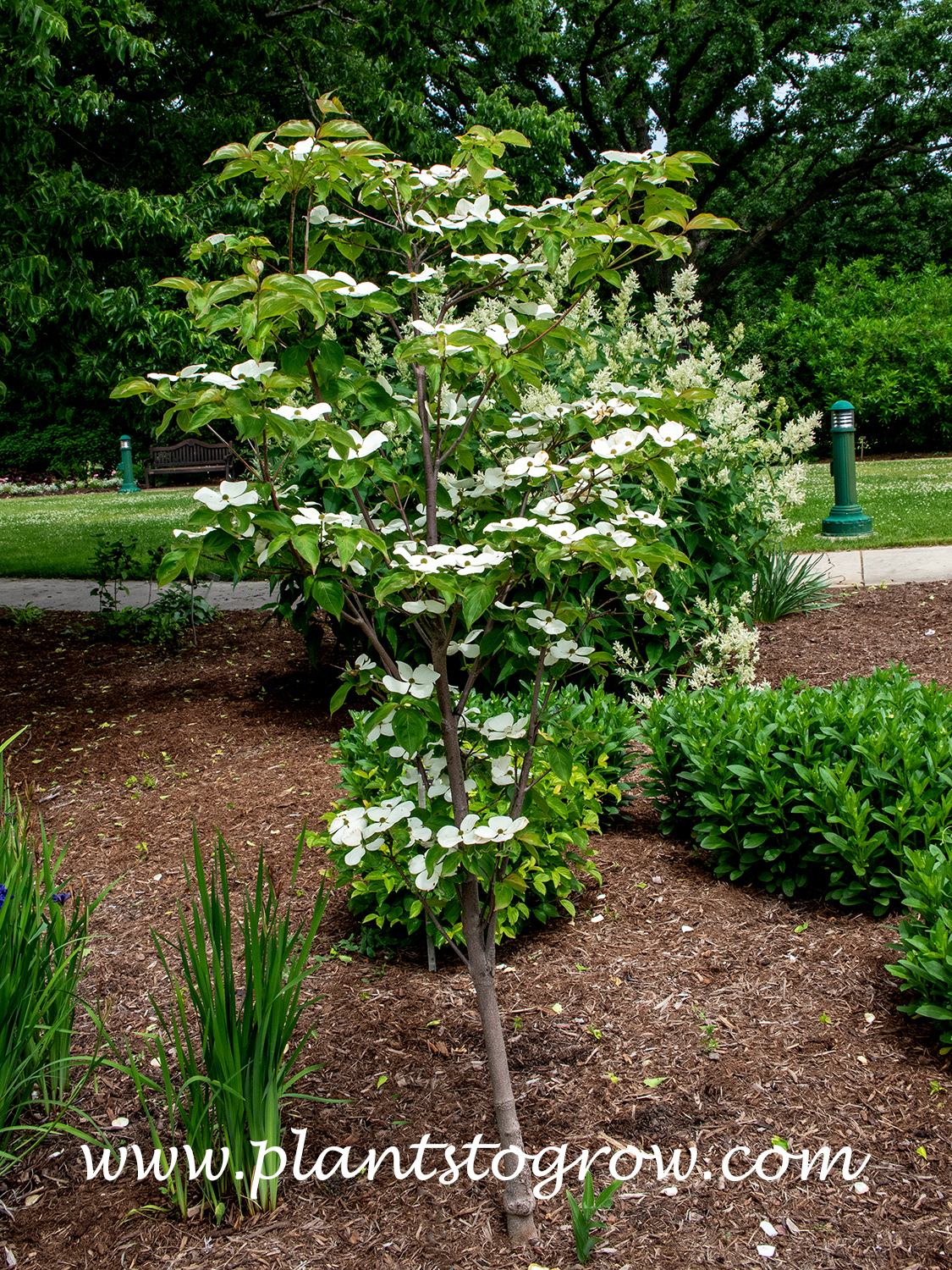
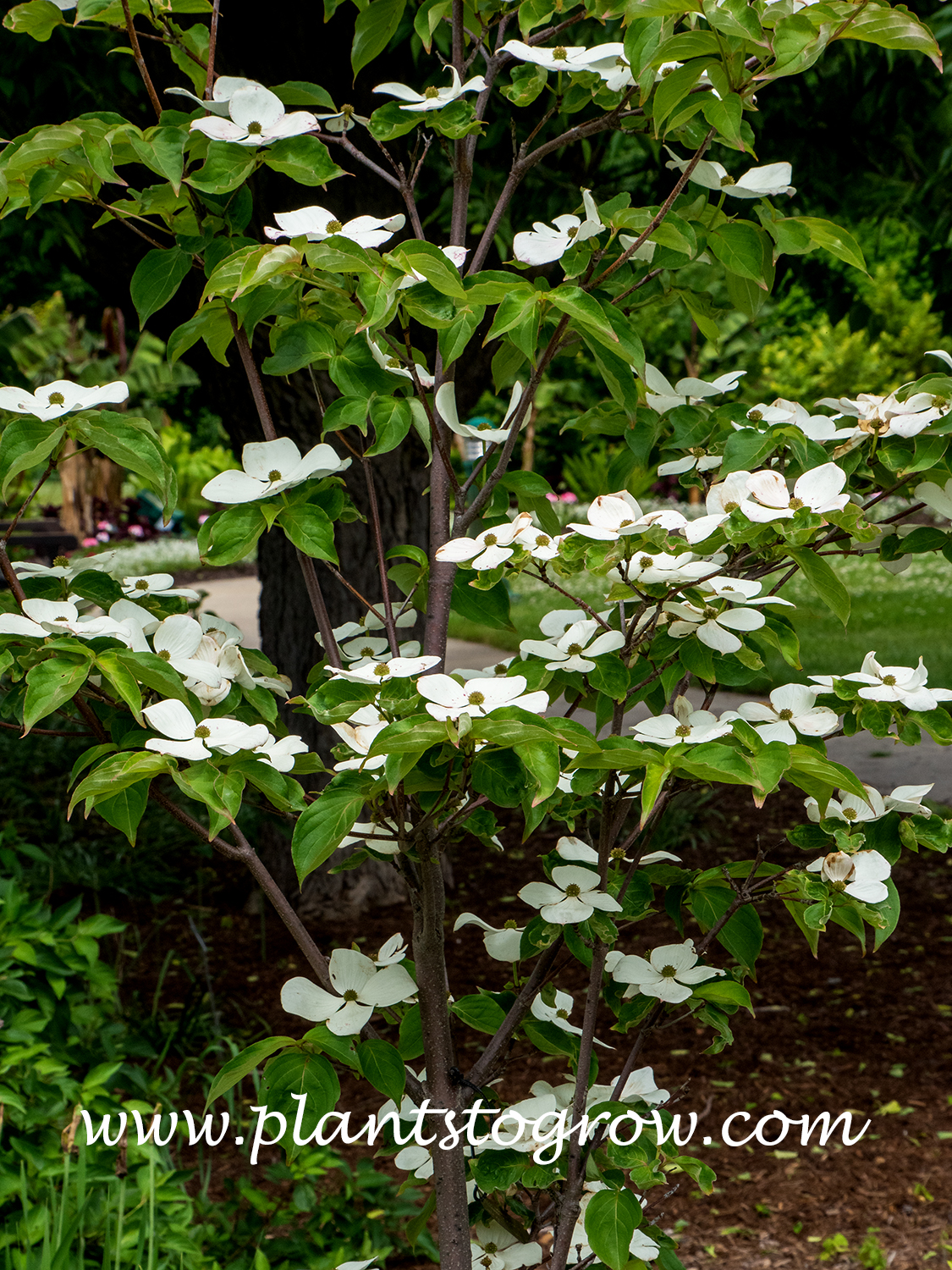
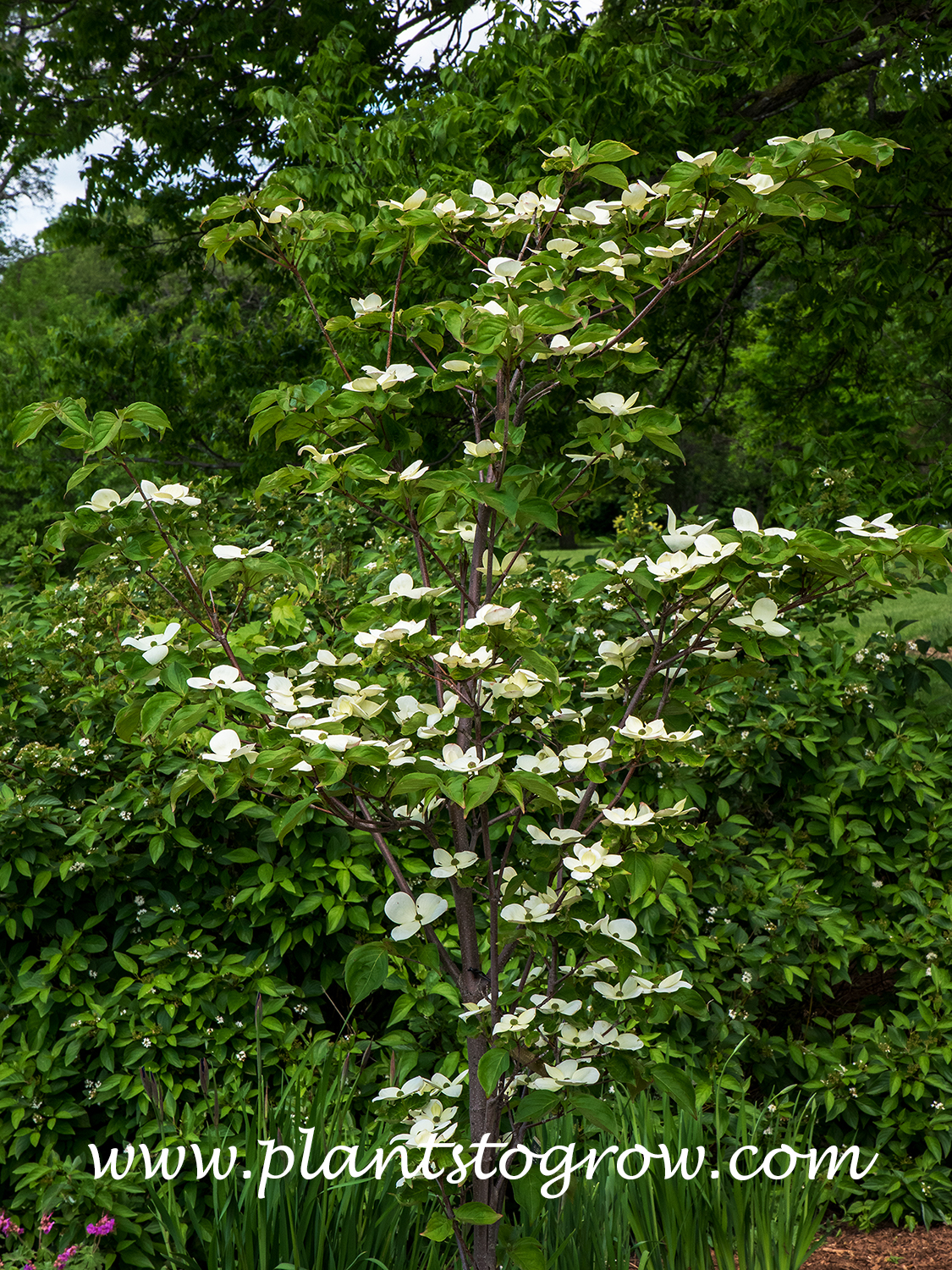
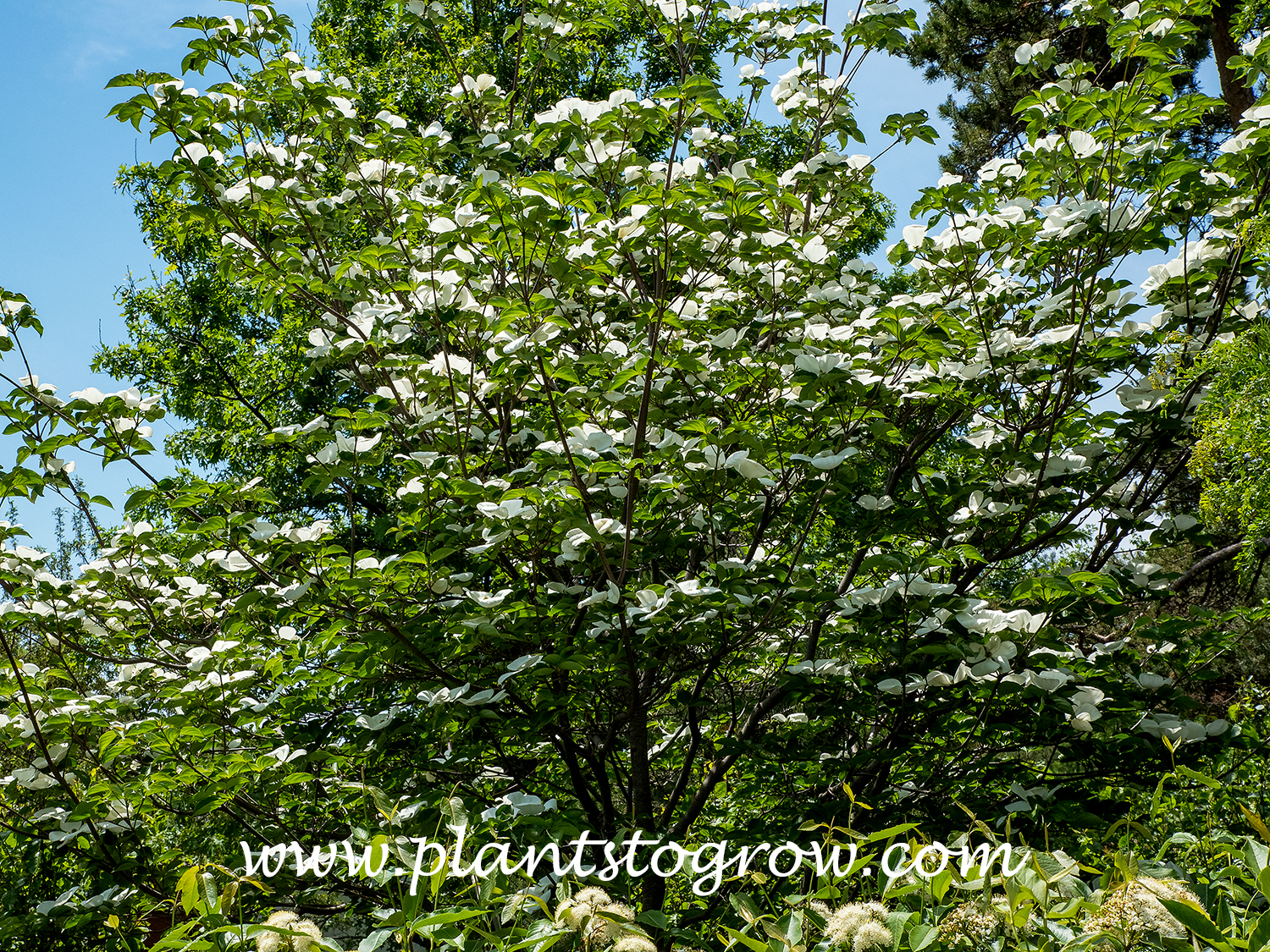
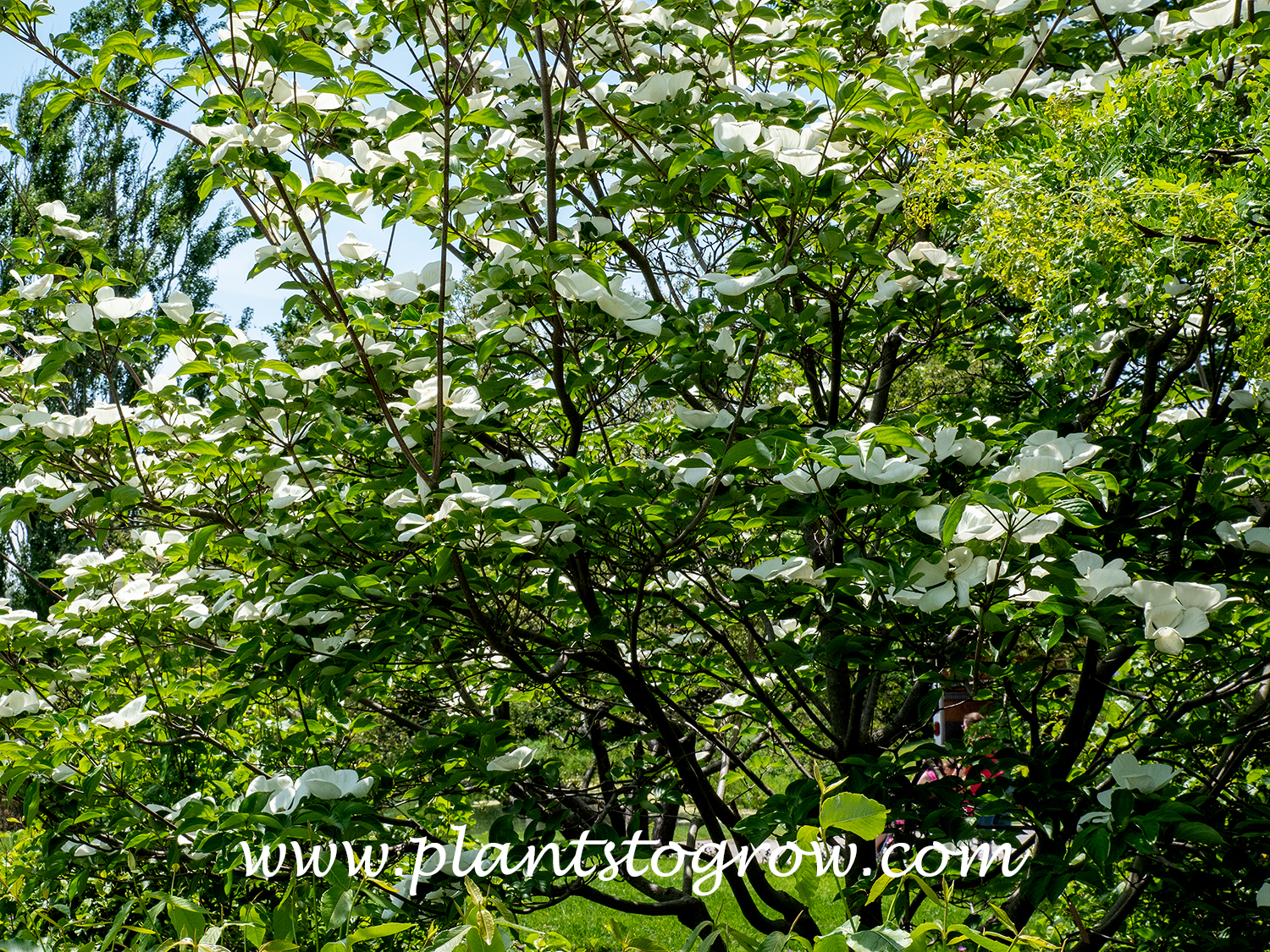
| Description | Venus Flowering Dogwood is a small, vigorous deciduous tree with large white flowers in the spring. |
|---|---|
| Pronunciation | (KOR-nus) |
| Plant Type | Trees Deciduous |
| Hardiness Zone | (5) 6 |
| Sunlight | full, mostly sunny, some shade |
| Moisture | average, moist, avoid dry |
| Soil & Site | average, moist, organic rich, avoid dry |
| Growing Media | Minimal pruning is needed; shape in winter if desired |
| Flowers | Botanically, the white structures are modified leaves called bracts. Most often, people call them petals, which is botanically incorrect. Flowers can reach over 6 inches. |
| Fruit | A globose syncarp of drupes resembles raspberries and is very ornamental. Birds cherish the fruit in the fall. |
| Leaves | The green leaves change to shades of red, orange, yellow, and purple in fall, |
| Dimensions | 20-25 by 25-30 feet (HS), rounded and wider than tall |
| Maintenance | This dogwood resists, but is not immune to, borers and common dogwood fungal diseases. Minimal pruning is needed; shape in winter if needed. |
| Propagation | patented, grafting, or semi-hardwood cuttings |
| Cultivar Origin | Cornus kousa 'Chinensis' x Cornus nuttalii Goldspot' x Cornus kousa 'Rosea') that was developed by Elwin R. Orton, Jr. as part of the Jersey Star series of dogwoods released by Rutgers University. (#144) |
| Misc Facts | The genus name "Cornus" comes from the Latin word cornu, meaning "horn," and refers to the hardwood. |
| Notes & Reference | #01-Manual of Woody Landscape Plants (Michael Dirr), #144-Missouri Botanical Gardens web site (www.missouribotanicalgarden.org) |

Cart