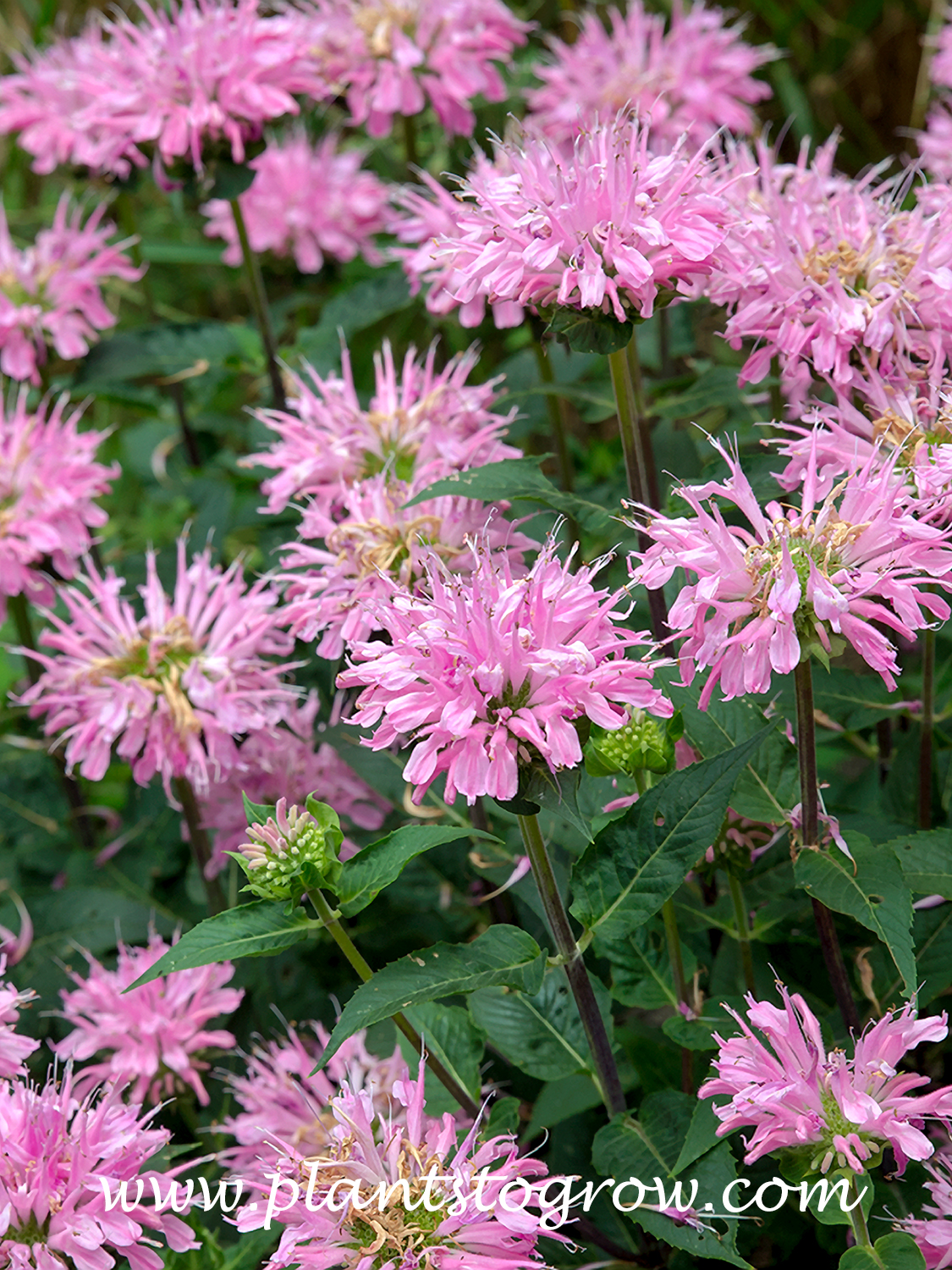
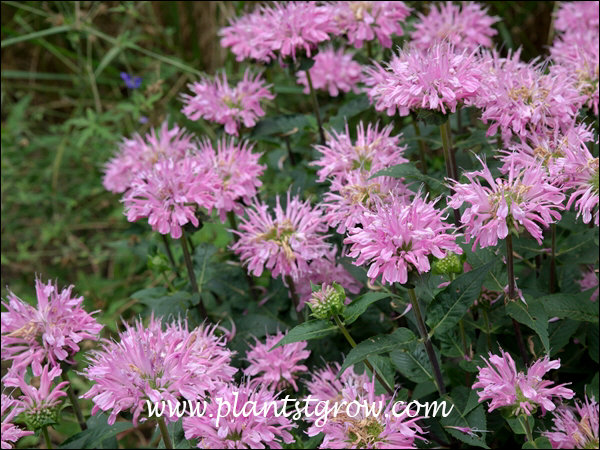
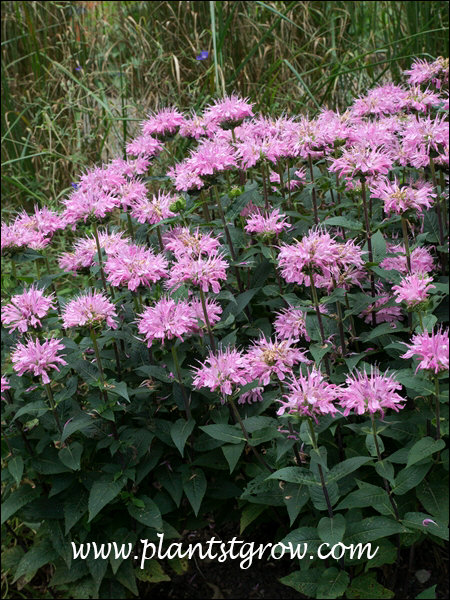
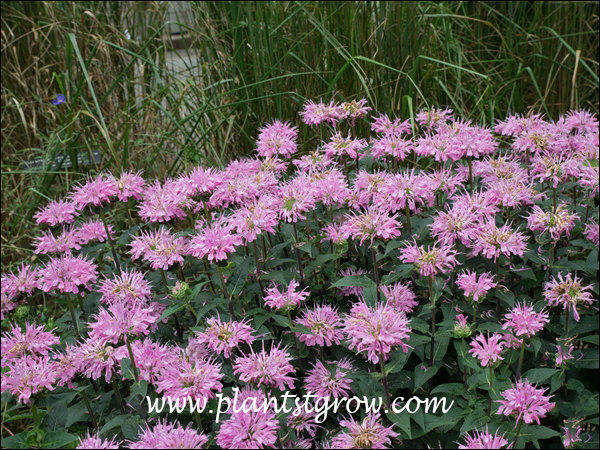
| Description | Grand Mum Monarda (Monarda didyma) is a compact pink cultivar with some resistance to powdery mildew. |
|---|---|
| Pronunciation | (mo-NAR-da) |
| Plant Type | All Plants, Perennials Hardy |
| Hardiness Zone | 4-9 |
| Sunlight | full |
| Moisture | average, in moist sites they will expand rapidly becoming aggressive and invasive |
| Soil & Site | average |
| Flowers | The blue-purple florets are borne in a terminal, head-like, or capitate inflorescence, consisting of dense, congested clusters of tubular, two-lipped flowers (florets). These clusters are often arranged in a spike-like fashion and are frequently subtended by bracts at the top of a square stem. The flowers appear in mid-July and last through August. Flowers attract bees, Hummingbirds, and other pollinators |
| Leaves | Simple, opposite, pointed, and scented. Often attacked by powdery mildew. |
| Stems | Four-angled, typical of the mint family. Can spread aggressively by rhizomes. |
| Roots | fibrous |
| Dimensions | 15-18 inches by 20 plus inches (HS) |
| Maintenance | After blooming, cut back to the ground. Cutting back eliminates the bare knee stems and the mildew-laden leaves. Monarda typically dies out in the center and needs to be divided every 2-3 years. Dig healthy clumps and replant, or dig out the center and fill it with compost. The plants will rapidly regrow. Place the plant behind a plant that will cover the space left when Monarda is cut back. All Monarda are prone to mildew, but newer cultivars are said to be mildew-resistant. I doubt any are totally resistant |
| Propagation | Monards can be grown from seed, but cultivars will not come true from seed. Many cultivars need to be propagated by division or cuttings. Division is by far the simplest method. |
| Misc Facts | This plant is called Oswego Tea because the species of plant was discovered by John Betram near Oswego, New York. He used the leaves to make tea. The genus was named after Nicolas Monardes, a 16th-century botanist. |
| Notes & Reference | #04-Herbaceous Perennial Plants (Allan Armitage), #40-Herbaceous Ornamental Plant(Steven Stills), Boerner Botanical Gardens Database, #274-Site Authors' observations and growing experiences with different Monarda |

Cart