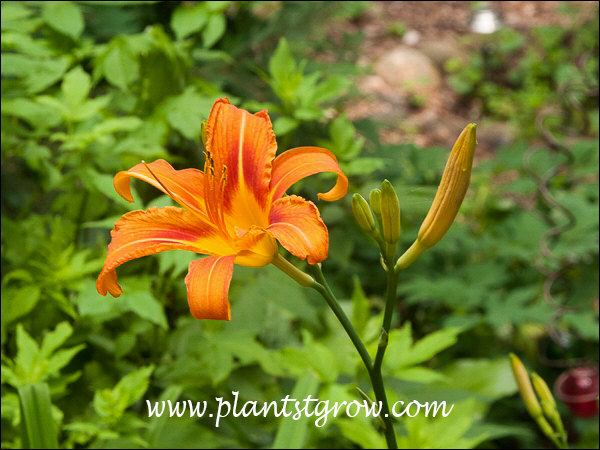
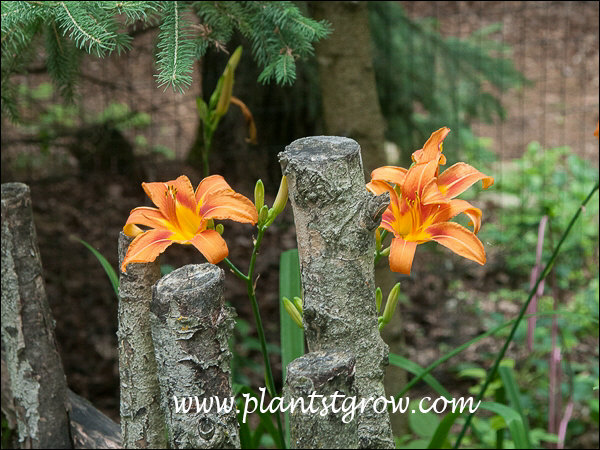
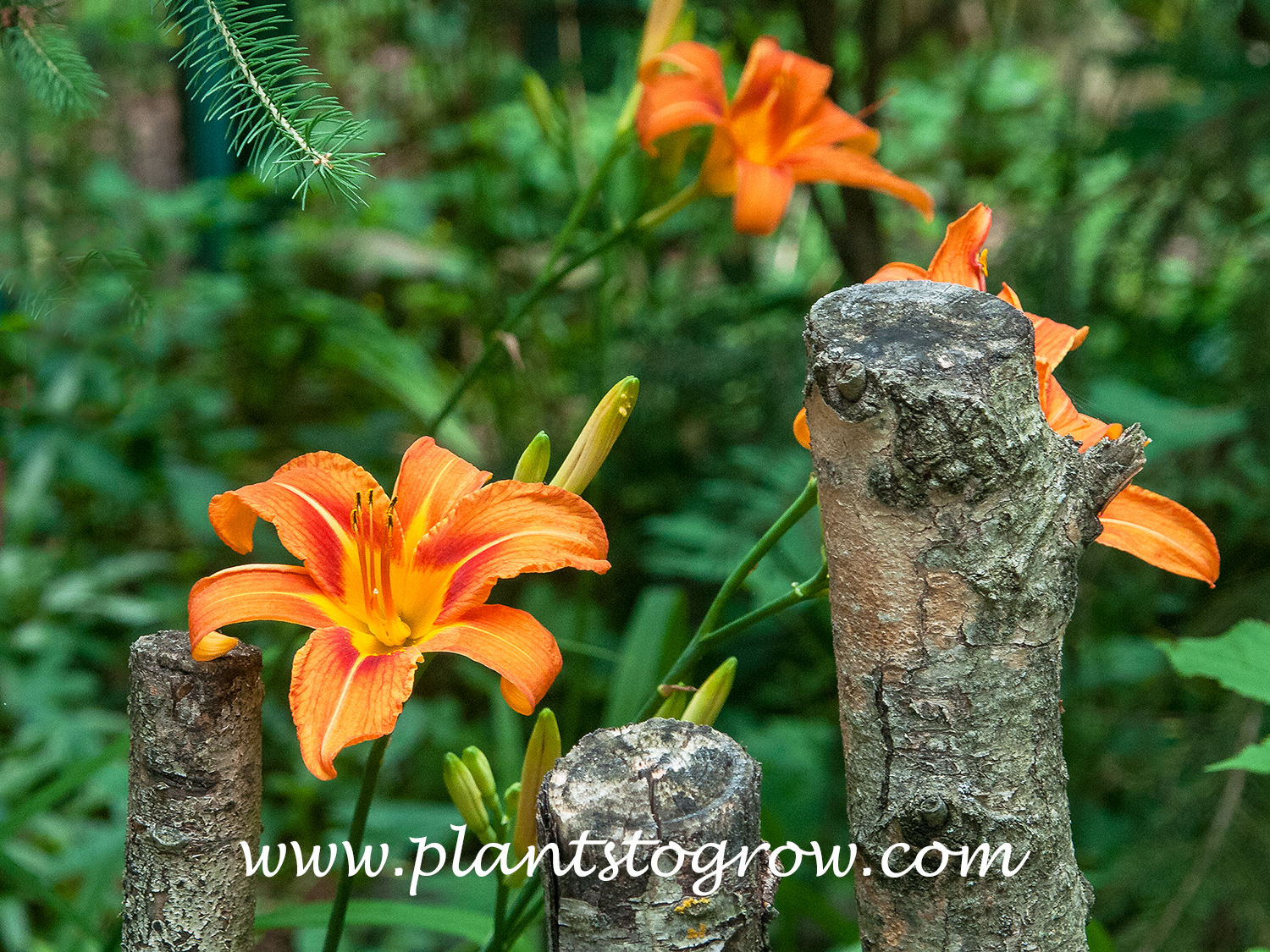
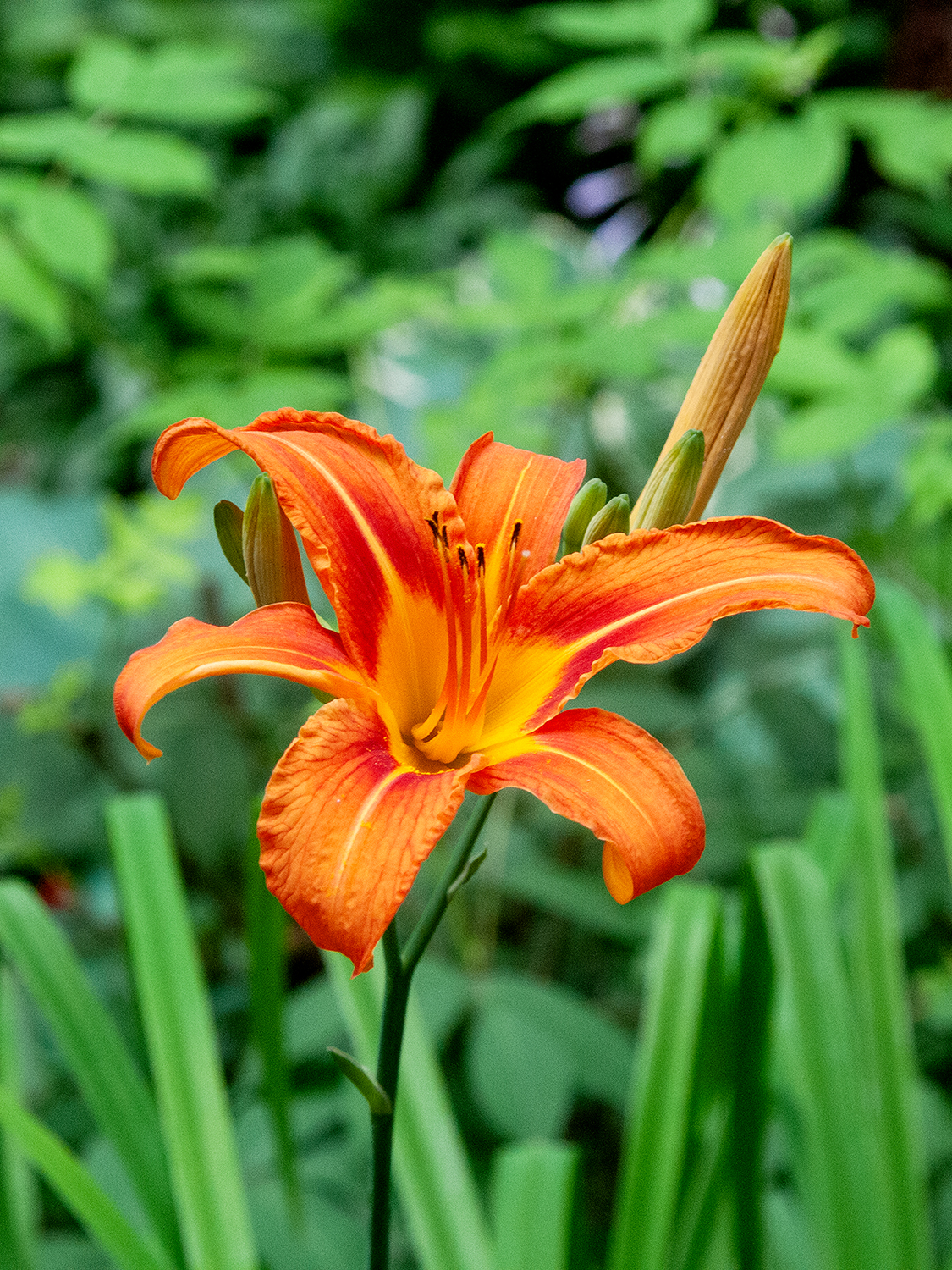
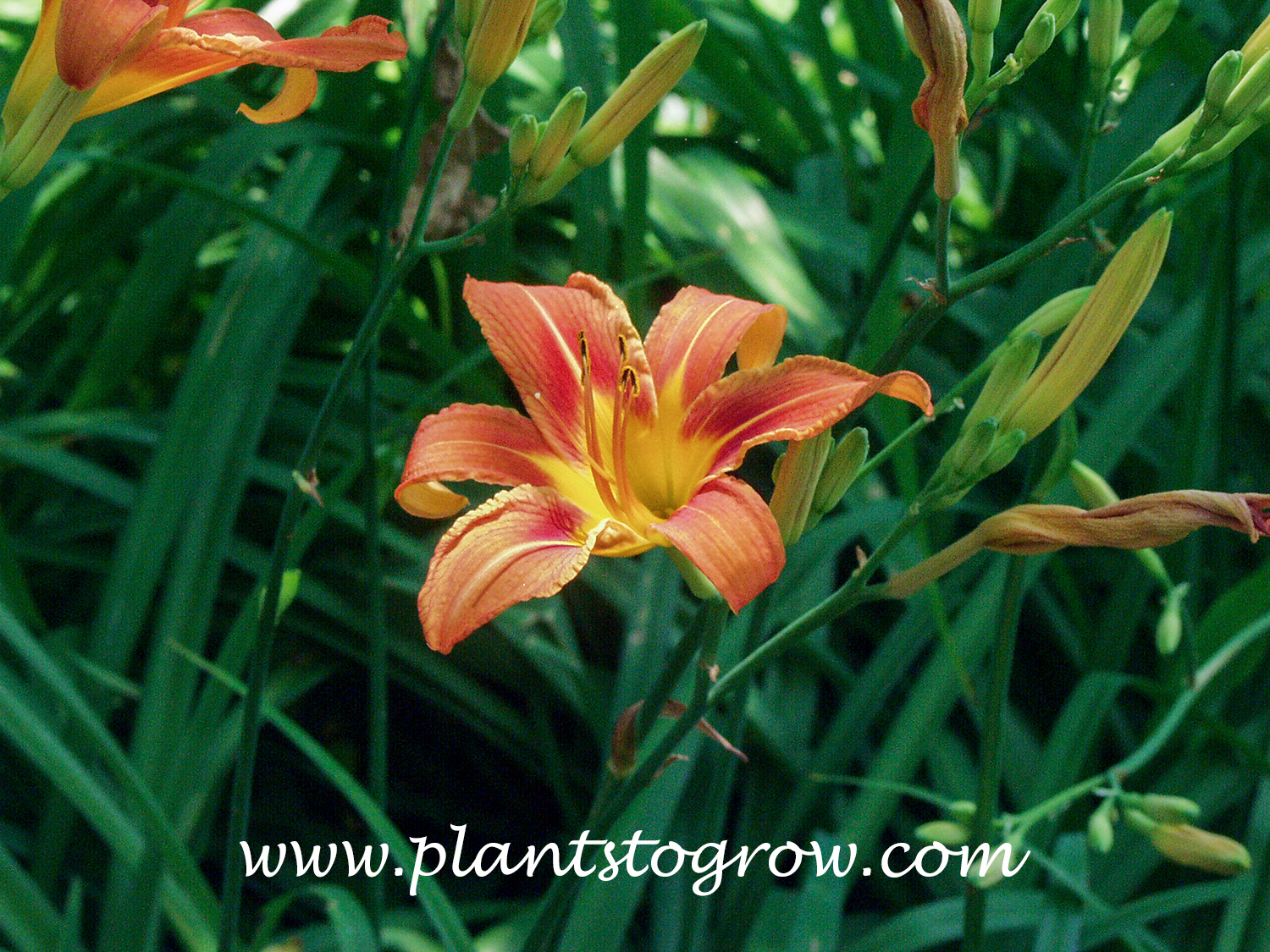
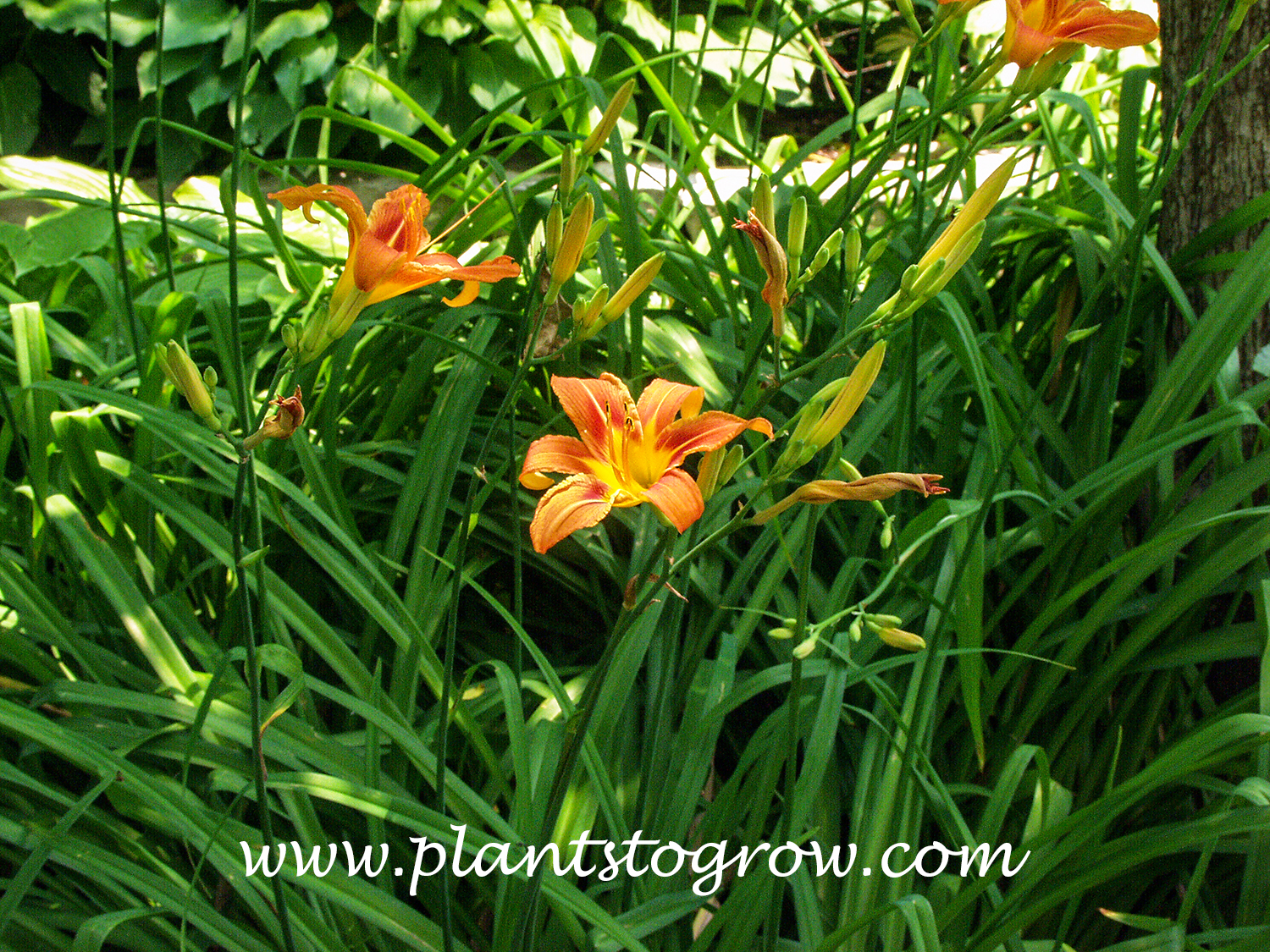
| Description | Orange Daylily (Hemerocallis fulva) is a Daylily that has naturalized growing in fields and along roadsides. Has a stoloniferous spreading habit and can be a very aggressive spreader. Many times, it is called "Ditch Lily" since it is commonly seen growing in ditches. |
|---|---|
| Pronunciation | (hem-er-o-kal-lis) |
| Plant Type | Perennials Hardy |
| Hardiness Zone | 4-9 |
| Sunlight | full, some shade |
| Moisture | average, very tolerable |
| Soil & Site | average, very tolerable |
| Flowers | Flowers are tawny to rusty red-orange, on a long scape. |
| Fruit | Produces a seed pod with black seeds. |
| Leaves | Strap-like leaves, spray from a crown just underneath the soil, |
| Stems | Forms crowns and spreads by rhizomes. |
| Dimensions | 3 plus feet, reported to reach 6 ft in optimum conditions |
| Maintenance | Maintaining this plant can be rather easy. After they are done blooming and the plants start to decline, they can be cut back. Cut the plant back to a fan shape, leaving 6-8 inches of leaves. New growth typically appears in late summer and fall, with fresh foliage filling in during this period. This is a good time to fertilize since the plants are growing. |
| Propagation | The best time is division in late summer or early fall, which will give the plants a chance to establish themselves before winter. They are also divided in the spring, but it is easy to break off the new plant buds at this time. Always cut the foliage on the divisions back to a fan shape |
| Native Site | Asia |
| Misc Facts | It spreads mainly through vigorous underground rhizomes and thick, tuberous roots, forming dense, clonal colonies that can take over an area. It can be highly invasive in North America, often spreading from original plantings via dumped garden waste or by creeping into roadsides and ditches. Hemerocallis fulva was given its present scientific name by the Swedish Botanist and creator of the binomial taxonomy system for classifying plants, Carl Linnaeus. aka: Tawny Daylily, Ditch Lily, Europa, Fulvous Daylily |
| Author's Notes | We sell a few of these Daylilies at the garden center for nostalgic reasons. People will say, "It was growing in my mother's or grandmother's yard," or "I saw it growing in the ditch when I was growing up." Otherwise, not many are sold. |
| Notes & Reference | #118-Daylilies (AB Stout), #274-Site Authors' observations and growing experiences of Orange Daylily |

Cart