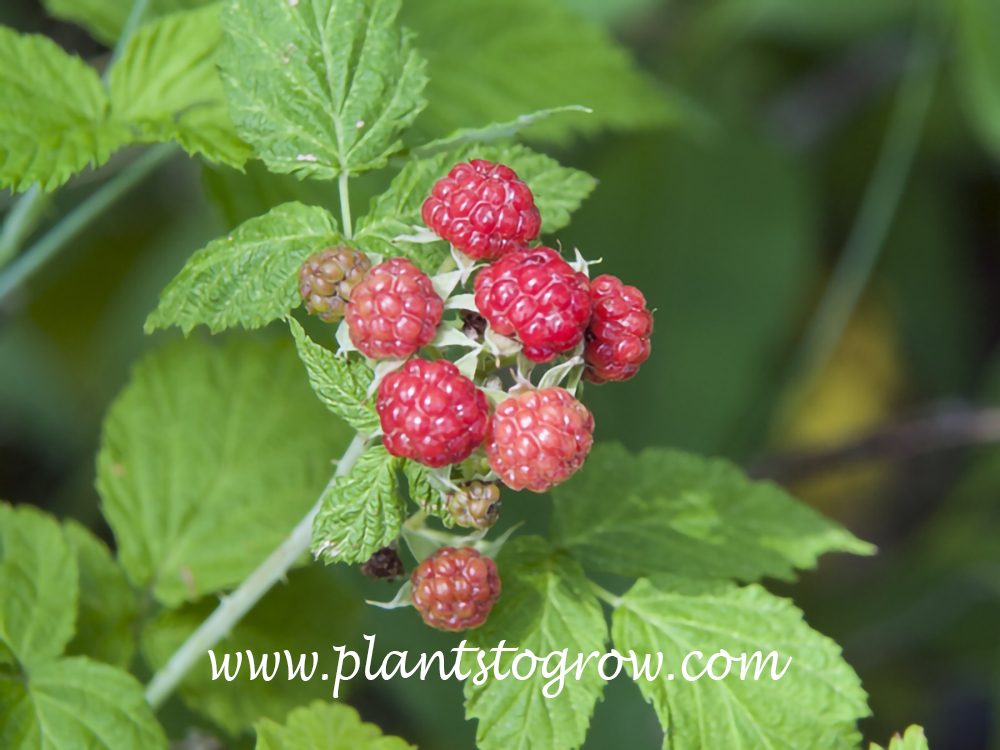
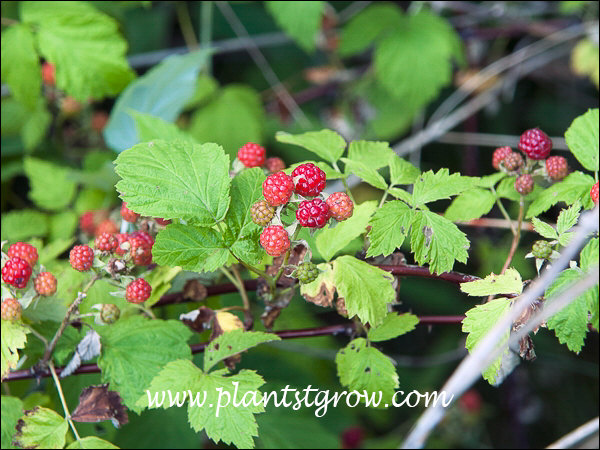
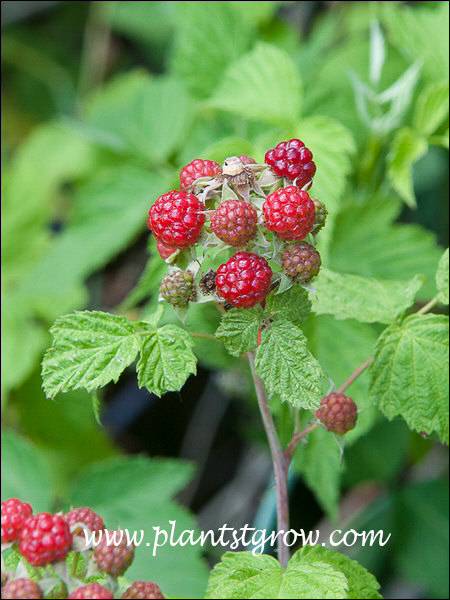
| Description | Red Raspberry (Rubus idaeus) is an edible common, native Red Raspberry. |
|---|---|
| Plant Type | Wild Flowers, Edible Fruit, Site author's observations |
| Hardiness Zone | 4 |
| Sunlight | full, some shade |
| Moisture | average |
| Soil & Site | average, dry to moist, woods, fields, roadsides |
| Flowers | white to greenish white, borne in cymes (umbel-like cluster) |
| Fruit | An aggregate fruit, formed by the fusion of several separate pistils of one flower, is not a true berry. |
| Leaves | simple, green, whitish underneath, 3-5 parted |
| Stems | The canes, last two years, fruit produced in the second year, have spines or thorns. First-year canes are called primocanes, which don't flower. Next year, the primocanes become floricanes, and they flower, produce food, and then die. |
| Dimensions | Gets 5 feet or taller, arching, spreads by producing primocanes each year, and will colonize an area spreading by suckers, stolons, rhizomes, or tip layering. |
| Maintenance | Since the canes (floricanes) die, they need to be removed. If they start spreading, use a shovel to dig up the canes that have spread beyond the assigned area. |
| Propagation | division, cuttings |
| Misc Facts | Wild raspberries are much smaller than the commercially produced hybrids. Genus name is the Latin name for brambles (blackberry and raspberry). Genus means of Mt. Ida in reference to the belief that raspberries were first discovered on Mt. Ida in Greece. AKA: American Red Raspberry, Red Raspberry, Wild Red Raspberry |
| Author's Notes | As a kid, I grew up eating wild Raspberries each summer. We would pick them and eat them raw, in cereal, and on ice cream. |
| Notes & Reference | #152-Robert W. Freckmann Herbarium, University of Wisconsin - Stevens Point (wisplants.uwsp.edu/VascularPlants.html), #144-Missouri Botanical Gardens web site (www.missouribotanicalgarden.org), #274-Site Authors' observations and growing experiences |

Cart