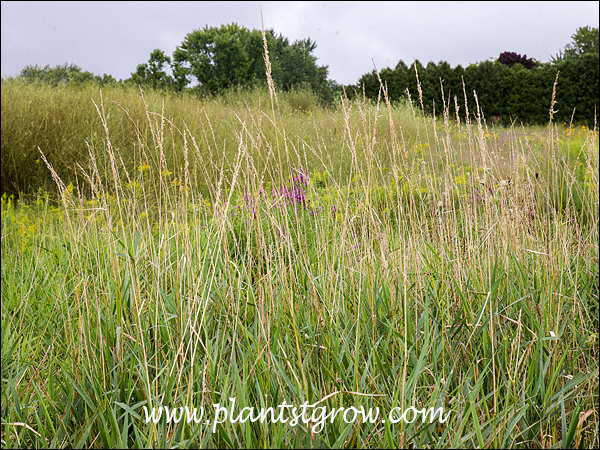
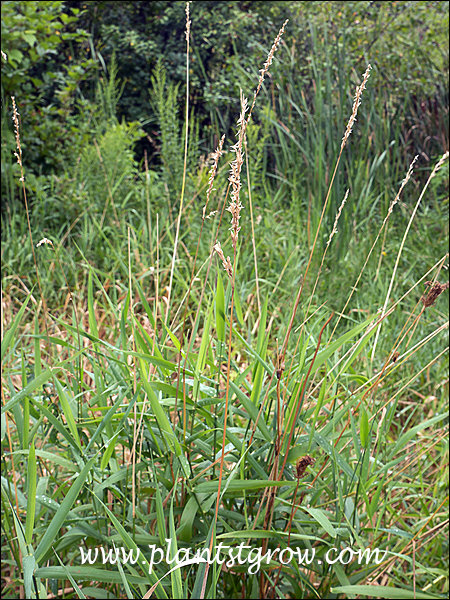
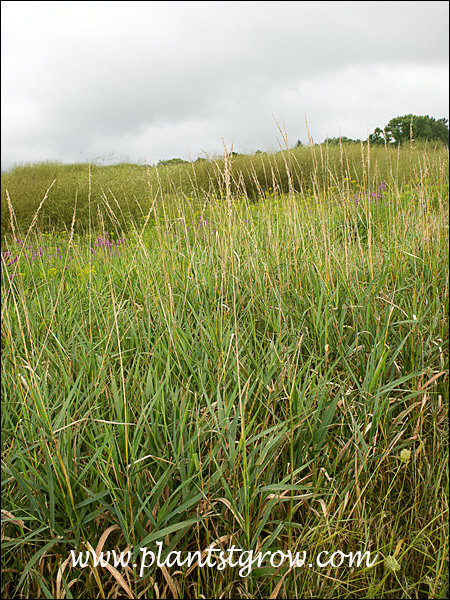
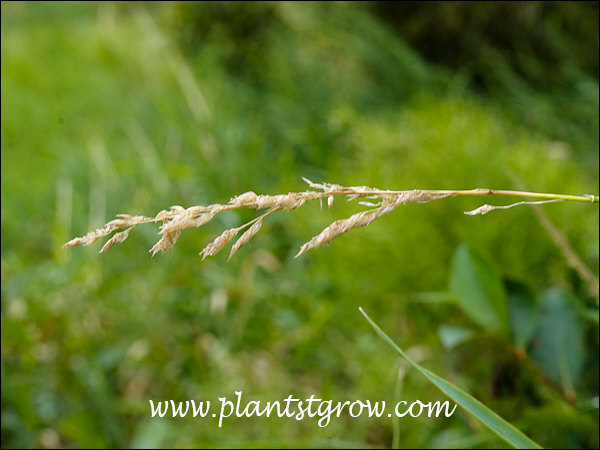
| Description | Reed Canary Grass (Phalaris arundinacea) is an extremely adaptable invasive grass. Forms monotypic colonies pushing out the native wetland species. |
|---|---|
| Plant Type | Weeds, Site author's observations |
| Hardiness Zone | 5 |
| Sunlight | full |
| Moisture | wet to moist but can grown in avenge to dry |
| Soil & Site | wet to moist, invasive in wet lands |
| Fruit | shiny brown seeds, ripen in June |
| Leaves | flat, rough texture on both surfaces |
| Stems | hairless, smooth, round |
| Dimensions | 2-5 feet tall, forms a sod |
| Maintenance | Very difficult to control and eradicate. Creates long lasting seed banks. |
| Propagation | naturally propagates from seeds or creeping rhizoms |
| Native Site | Eurasia |
| Cultivar Origin | Probably brought from Eurasia to be used as forage and erosion control. |
| Author's Notes | On my land there is a wet area and the Reed Canary Grass has taken it over. Pushing out the Cattails that were once found in this area. |
| Notes & Reference | #101-Invasive Plants of the Upper Midwest (Betty Czarapata) |

Cart