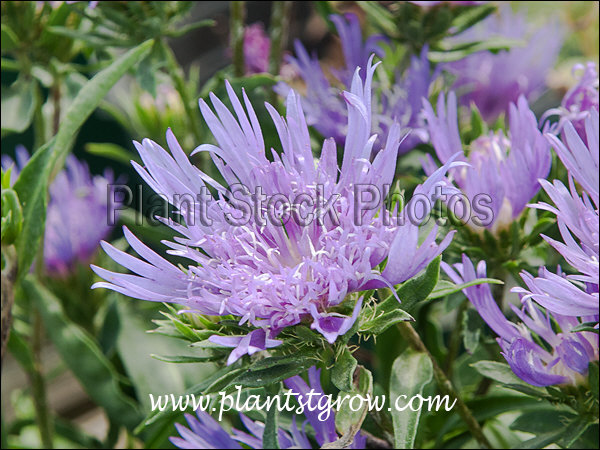
| Description | Stokes Aster (Stokesia laevis) produces large daisy-like flowers. Needs well drained soils to survive the winter. |
|---|---|
| Pronunciation | (stoh-KEE-zhi-ah)(LEE-vis) |
| Plant Type | All Plants, Perennials Hardy |
| Hardiness Zone | 5-9 |
| Sunlight | full |
| Moisture | average |
| Soil & Site | average to moist, must be well-drained, naturally occurs in moist sites |
| Flowers | lavender blue, up to four inches, solitary |
| Leaves | green, semi-evergreen, forms a basal rosette |
| Stems | tomentose (matted woolly hairs) |
| Dimensions | up to 18 inches |
| Maintenance | deadhead spent flowers and flowering stems, encourages additional blooms |
| Propagation | species from seeds, root cuttings, division |
| Native Site | southern United States |
| Misc Facts | It is named for Dr. Jonathon Stokes, an English botanical author. Stokes Aster is a monotypic genus in the Asteraceae family. |
| Notes & Reference | #04-Herbaceous Perennial Plants (Allan Armitage), #40-Herbaceous Ornamental Plants (Steven Stills) |

Cart