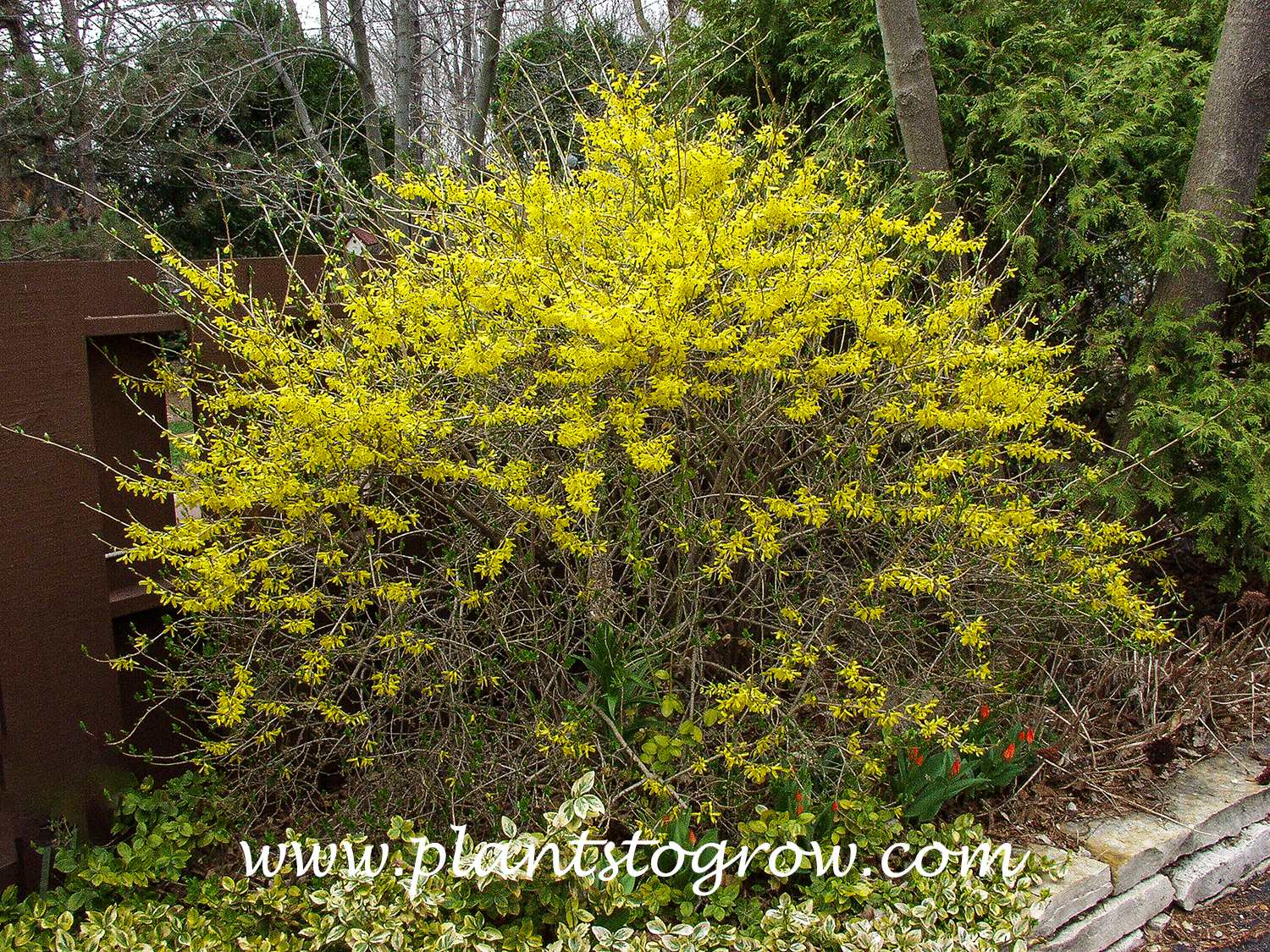
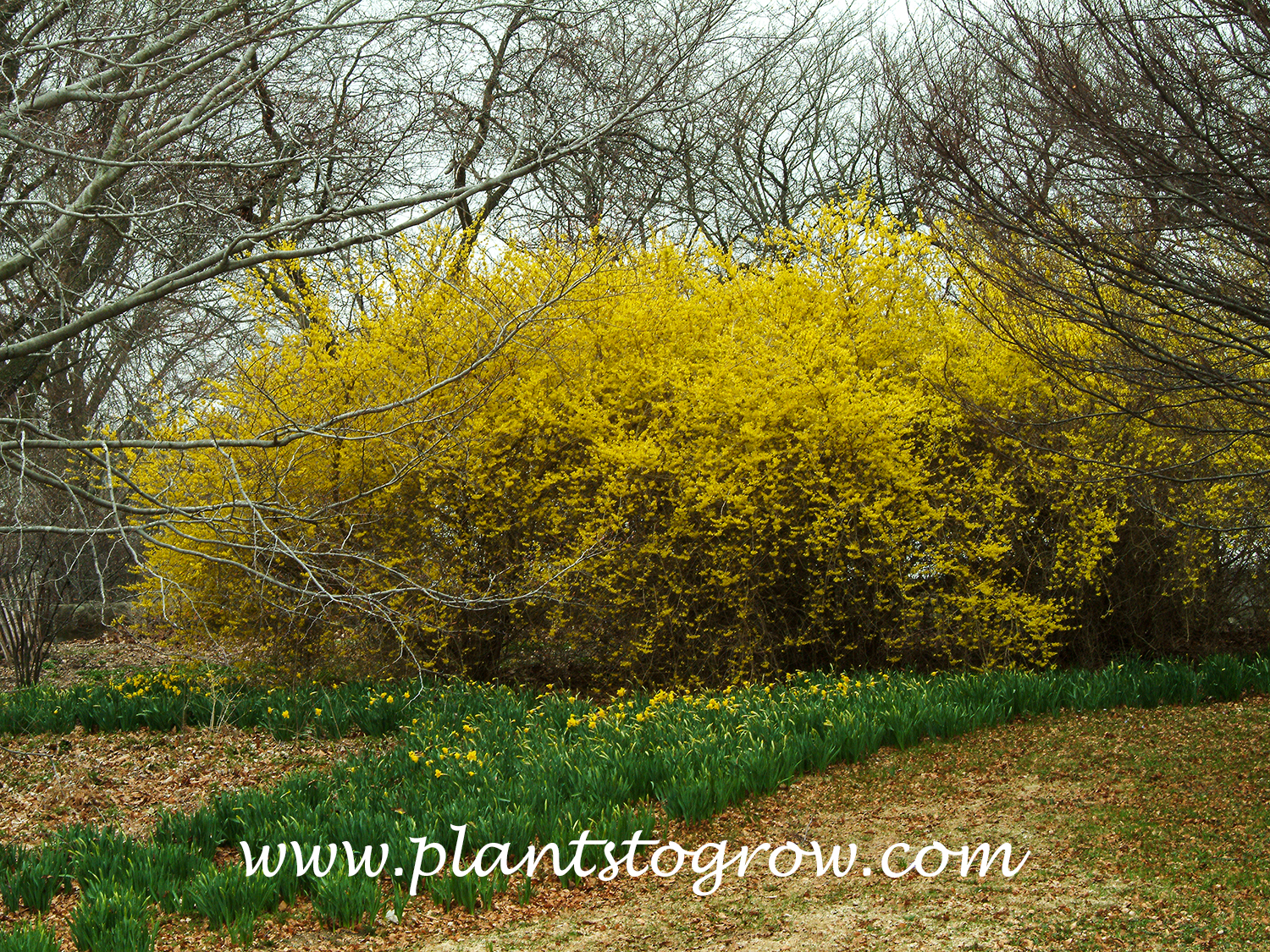
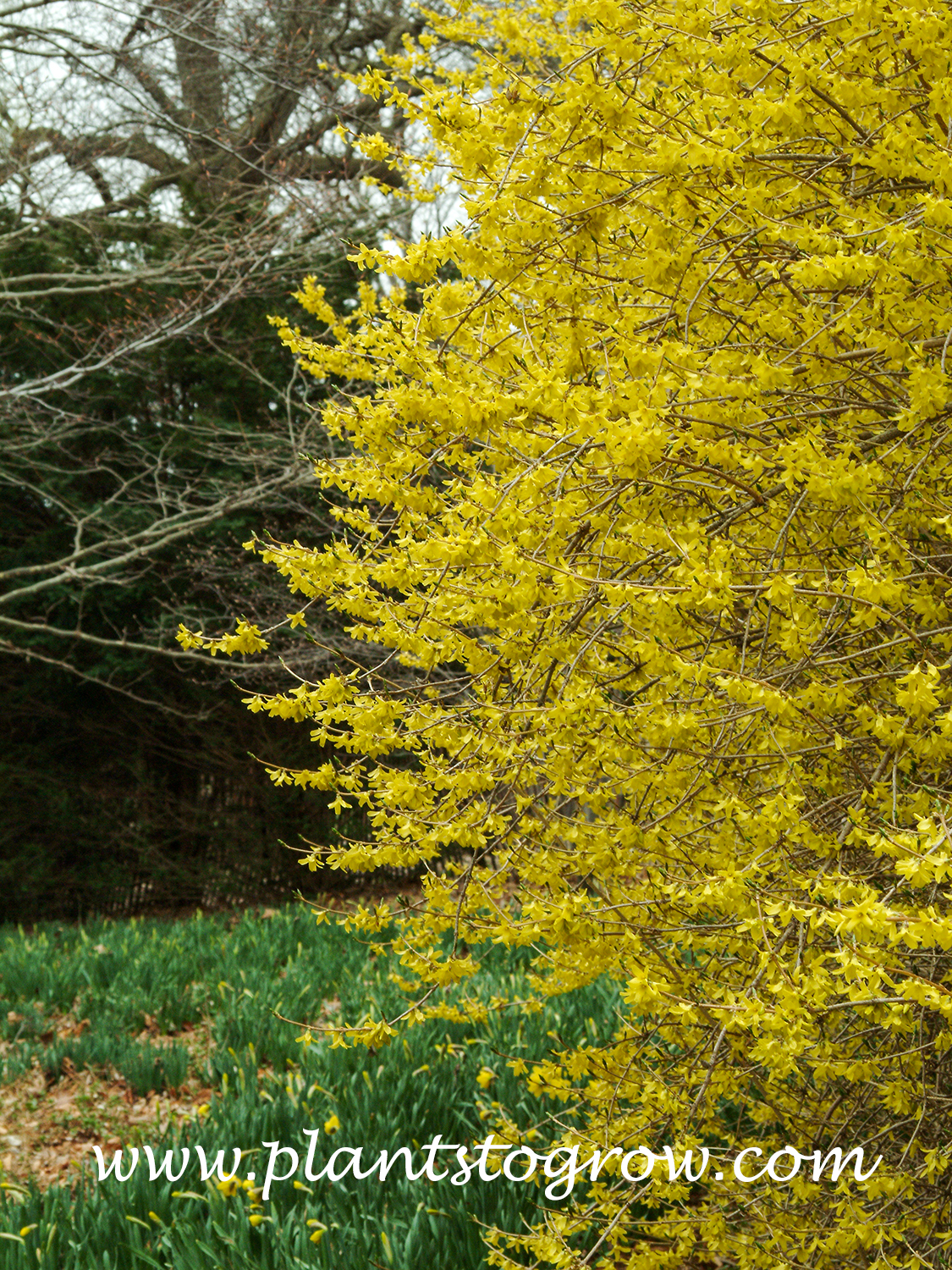
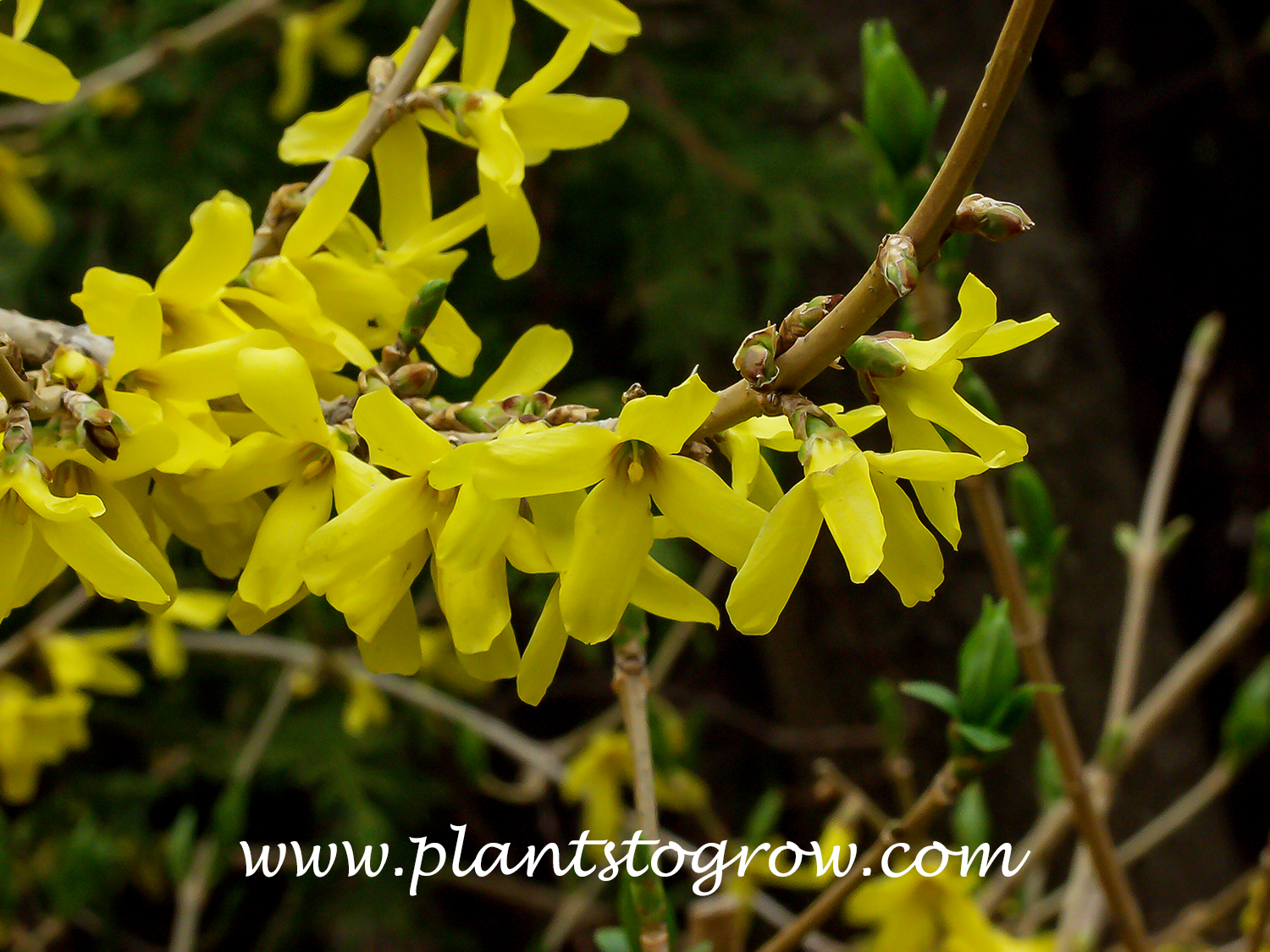
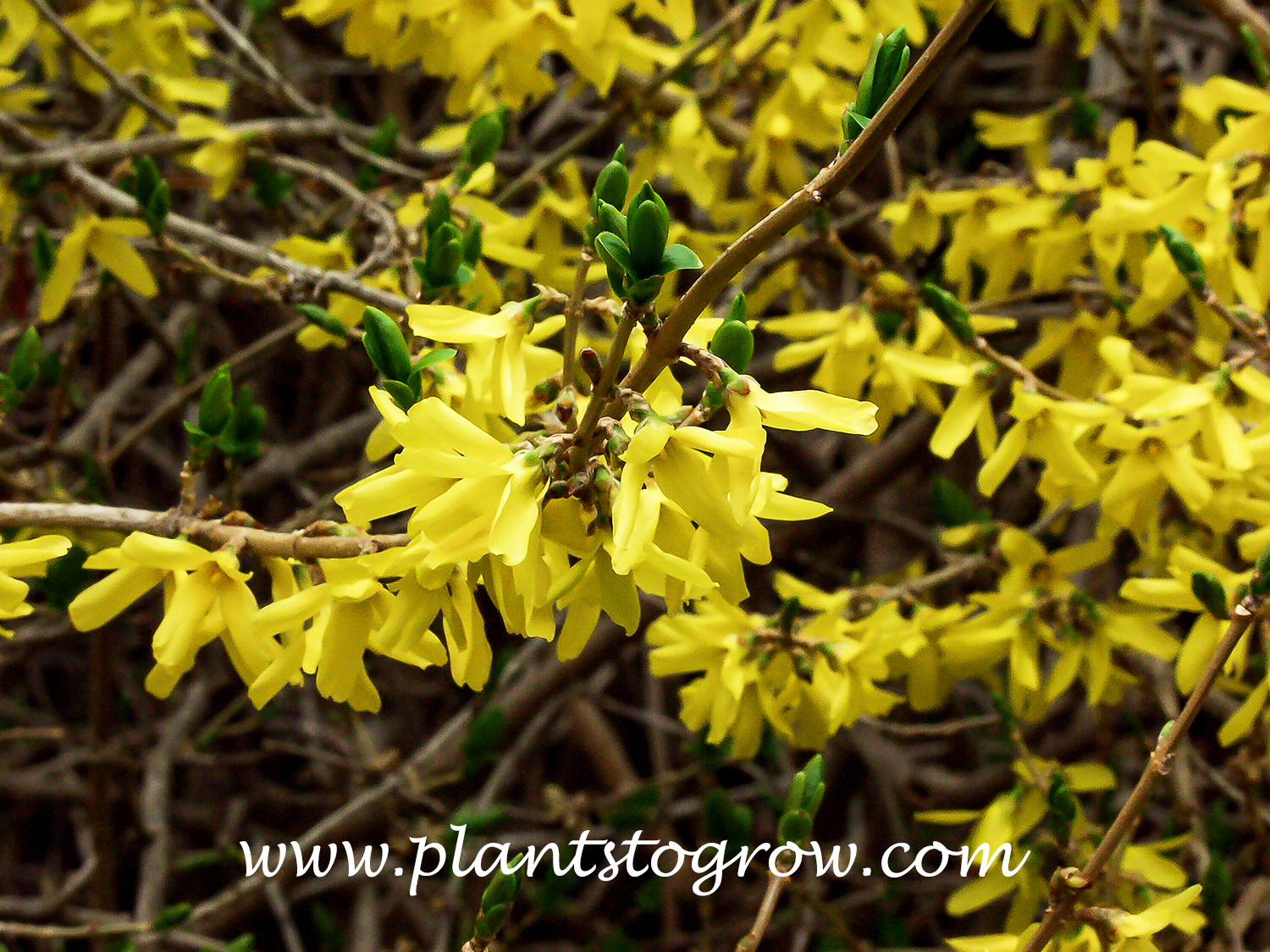
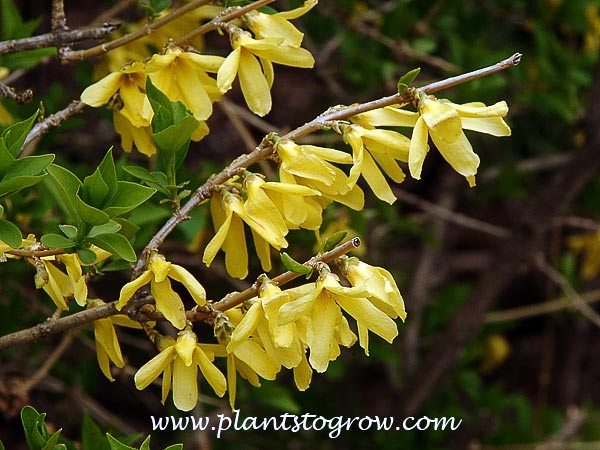
| Description | Meadow Lark Forsythia (Forsythia) is prized for its profuse production of yellow flowers in the early spring. It is widespread and medium tall. Only the newer winter-hardy cultivars should be used in hardiness zone #5. |
|---|---|
| Pronunciation | (for-SITH-i-a) |
| Plant Type | Shrubs Deciduous |
| Hardiness Zone | 4-8 |
| Sunlight | full, mostly sunny, some shade |
| Moisture | average |
| Soil & Site | average |
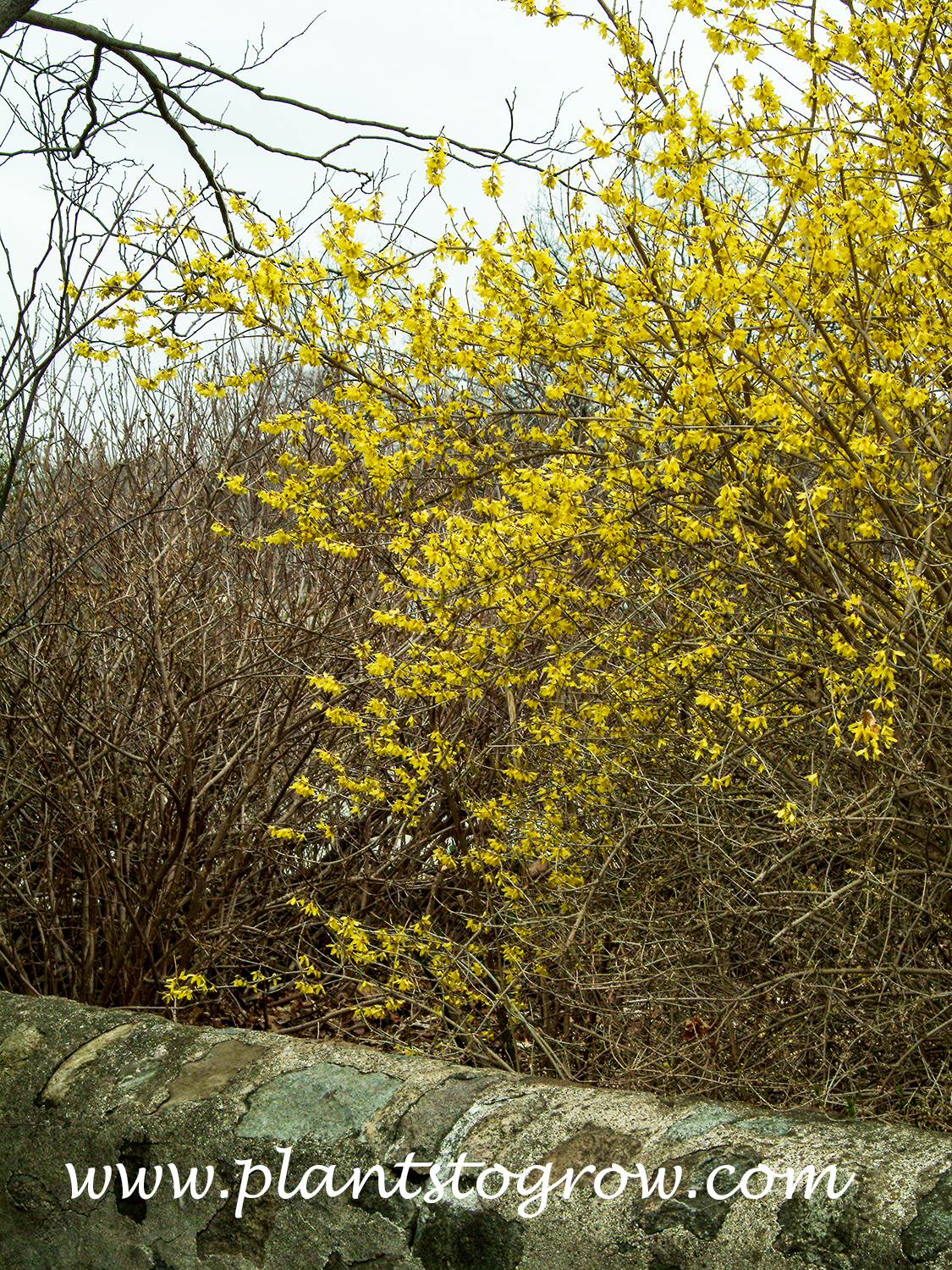
| Flowers | Has yellow-to-golden-yellow flowers and blooms before the leaves appear. The appearance of the leaves means the bloom period is coming to an end. |
| Leaves | Simple and dark green leaves with a nice purple fall foliage. I would consider this fall color as part of my fall color scheme. |
| Stems | Lots of prominent lenticels. |
| Dimensions | It can be kept to around half its potential size by yearly pruning. Reaches 8-10 feet by 8-10 feet. Prune after the shrub is done blooming in the spring. Next year's flowers are formed on this wood produced after pruning. |
| Maintenance | Pruning should be done in the spring after flowering. This promotes the production of new wood. On this new wood, next year's flowers will be formed. Forsythia can be pruned back fairly hard. |
| Propagation | cuttings |
| Cultivar Origin | 'A hybrid of early forsythia (F. ovata), native to Korea, and Albanian forsythia (F. europaea), native to Europe. This is the hardiest of all forsythias evaluated at NDSU. 'Meadowlark' forsythia, a cultivar introduced by North Dakota State University, South Dakota State University, and the Arnold Arboretum in 1986, performs well in plantings throughout the Northern Plains. Showy yellow flowers. The largest shrub in North Dakota is 13 feet tall with a canopy spread of 15 feet.' (North Dakota State University fact sheet) Named after William Forsyth, one of the founders of the Royal Horticultural Society in the eighteenth century. |
| Author's Notes | I have this Forsythia in a landscape for over 25 years. Blooms profusely every year, except for the year a got behind on my pruning and cut the shrub back late. Few if any flowers the next year. |
| Notes & Reference | #01-Manual of Woody Landscape Plants (Michael Dirr), #226-Shrubs and Vines for American Gardens (Donald Wyman), North Dakota State University fact sheet |

Cart