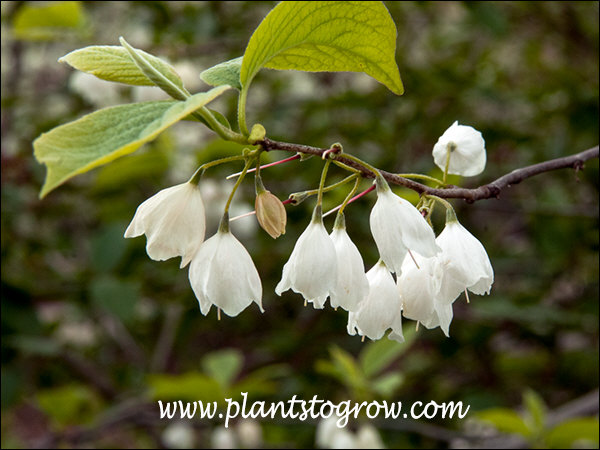
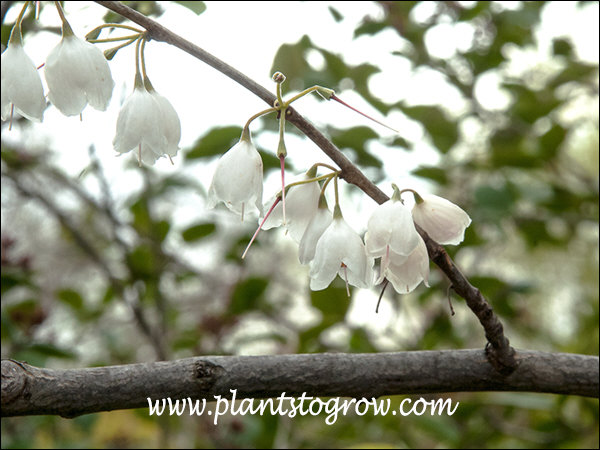
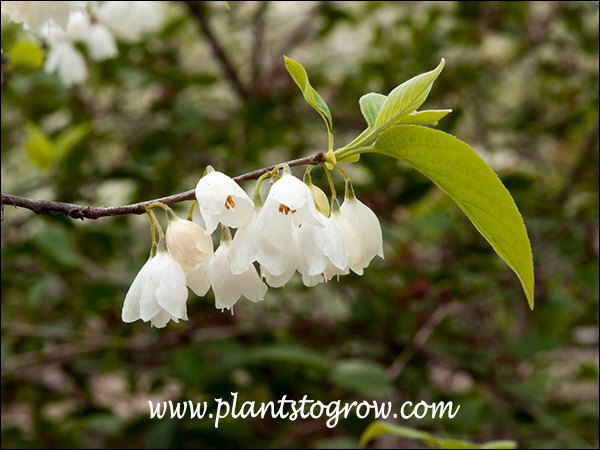
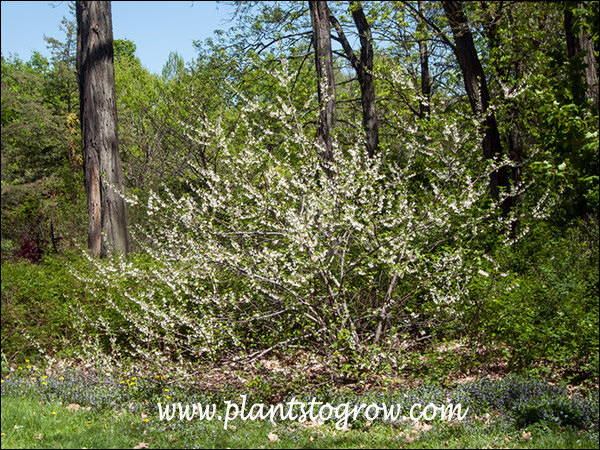
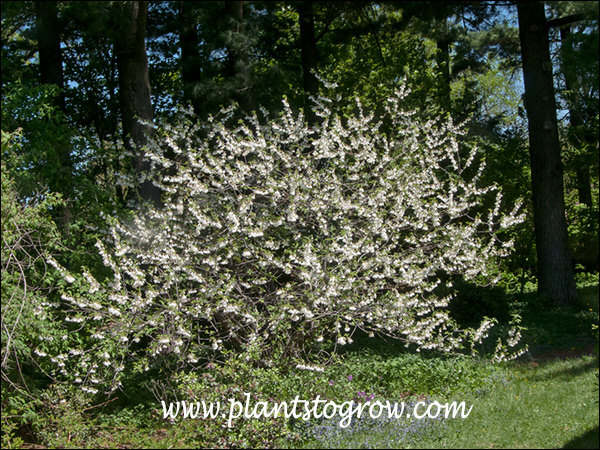
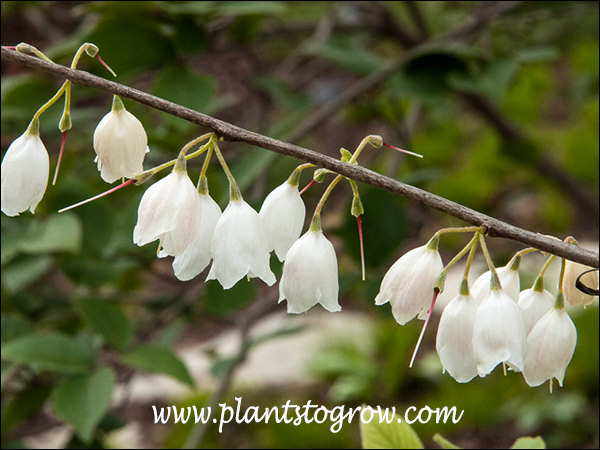
| Description | Carolina Silver Bells (Halesia carolina) A small to medium tree loaded with white bell flowers in the spring. Needs a special spot to be successfully grown. |
|---|---|
| Pronunciation | (hal-EE-zhee-uh)(car-oh-LINE-na) |
| Plant Type | Trees Deciduous |
| Hardiness Zone | 4-8 |
| Sunlight | some full sun, most of day in shade |
| Moisture | average, moist, avoid dry, sensitive to drought |
| Soil & Site | prefers rich, organic, well drained, ph 5-6, tolerant of other soils |
| Flowers | white, pendulous, spring, long stalks, borne in axillary (cymoe) clusters |
| Fruit | 4-winged, oblong drupe |
| Leaves | simple, alternate serrated to almost entire, green changing to yellow in the fall |
| Roots | fibrous |
| Dimensions | 30-40 feet tall by 20 feet wide, low branching |
| Propagation | stratified seed (cold/warm) |
| Native Site | Southeast U.S. |
| Cultivar Origin | Introduced in 1756 |
| Misc Facts | The genus "Halesia" is named after Stephen Hales, an 18th century English scientist. Very closely relate or maybe the same plant to H. monticola. (syn Halesia tetraptera) AKA: Silverbell Tree, Snowdrop Tree, Opossum Wood, Calico Wood, Tiss Wood, Bell Wood, Wild Olive, |
| Author's Notes | The Mountain Silver Bells and the Pink Mountain Silver Bells that I have observed (Olbrich Botanical Gardens Madison Wi, Boerner Botanical Gardens, Hales Corners Wi, University of Wisconsin Arboretum, Madison, Wisconsin), over the last 3-4 years are all growing in sites where they get some direct sunlight and are in dabbled to full shade for most of the day. Not a good plant for difficult sites. |
| Notes & Reference | #01-Manual of Woody Landscape Plants (Michael Dirr), #03-The Hillier Manual of Trees and Shrubs (Hillier Nursery), #93-North American Landscape Trees (Arthur Lee Jacobson), #181-Native Trees for North America (Guy Sternberg) |

Cart