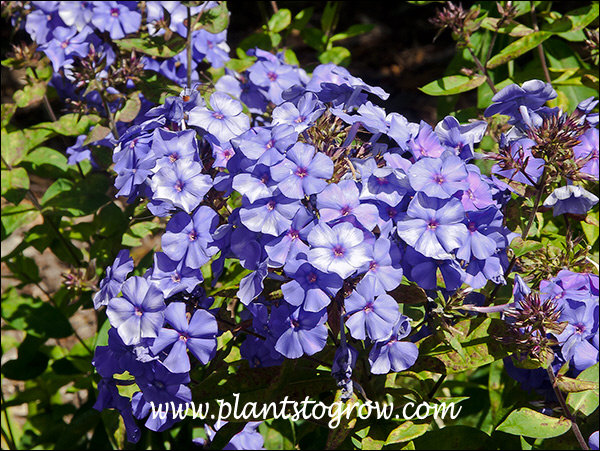
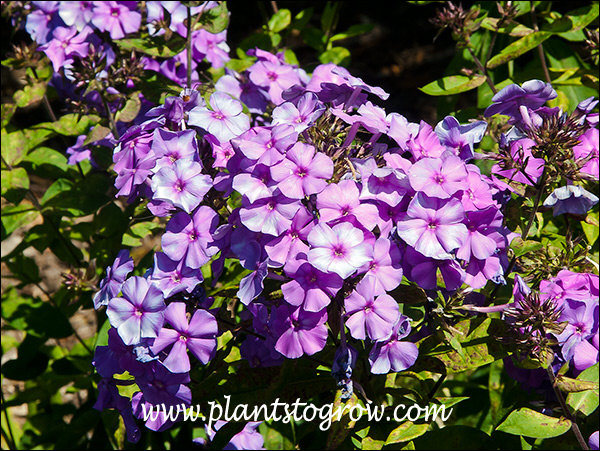
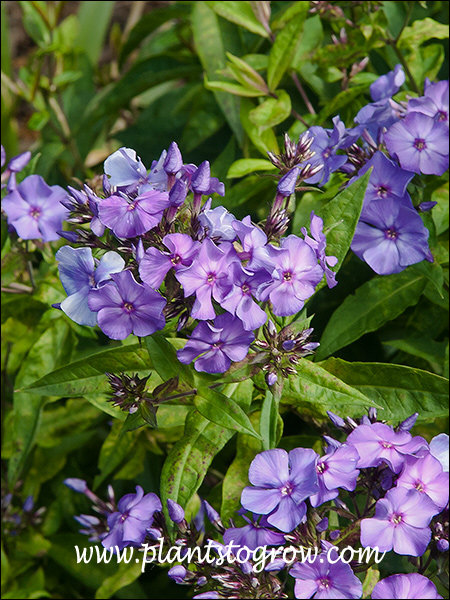
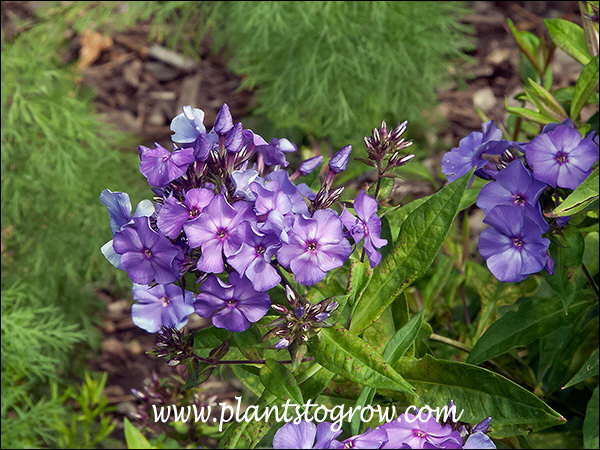
| Description | One of the bluest Phlox available. Color will change with intensity of light and temperature. I have seen planting where the front flowers are tinged purple pink and the back flowers in a little shade are a deep lilac blue. |
|---|---|
| Pronunciation | (floks)(pa-nic-ew-LAH-ta) |
| Plant Type | All Plants, Perennials Hardy |
| Hardiness Zone | 4-8 |
| Sunlight | full to some shade, especially in the hot afternoon sun, some shade will help the deep colors last longer |
| Moisture | average, doesn't like dry, water early in the day to help prevent mildew |
| Soil & Site | average, moist |
| Flowers | large trusses of lilac-blue flowers, darker eyes |
| Dimensions | 38-40 inches tall |
| Maintenance | grow plants where there is good air circulation to help avoid an onset of mildew, water early to allow the foliage to dry, water at the base when possible, dead head to promote more flowers and to prevent volunteer seedlings, the seedling will not be true to the cultivar type and usually are a magenta color, if needed spray with a fungicide, dead heading helps eliminate volunteer seedlings |
| Propagation | stem cuttings, root cuttings, easy by division in the spring, will not come true from seed |
| Cultivar Origin | Introduced by Dutch nurseryman, Piet Oudolf, in 1990. |
| Notes & Reference | #04-Herbaceous Perennial Plants (Allan Armitage) , #144-Missouri Botanical Gardens web site (www.missouribotanicalgarden.org), #205-Phlox A Natural History and Gardener's Guide (James H. Locklear) |

Cart