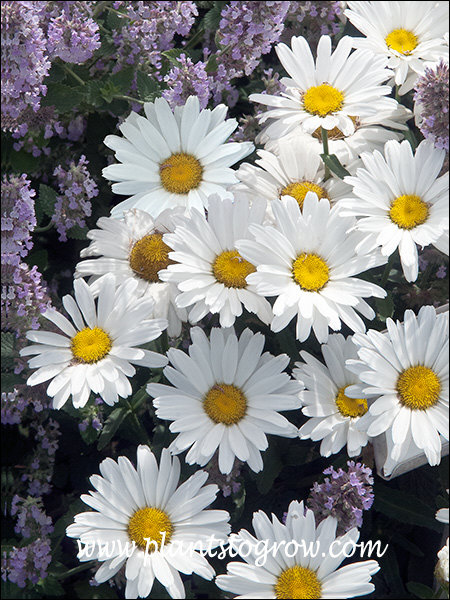
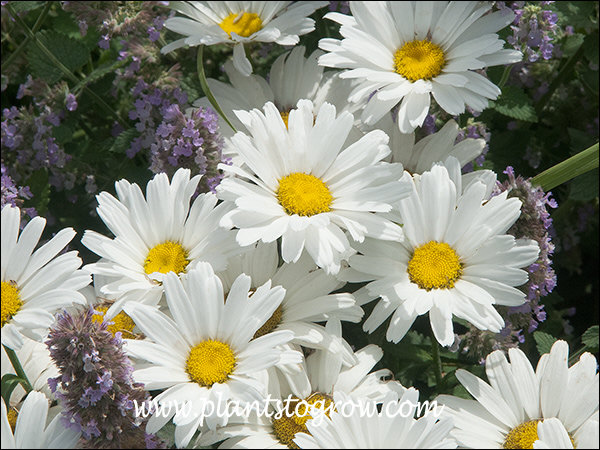
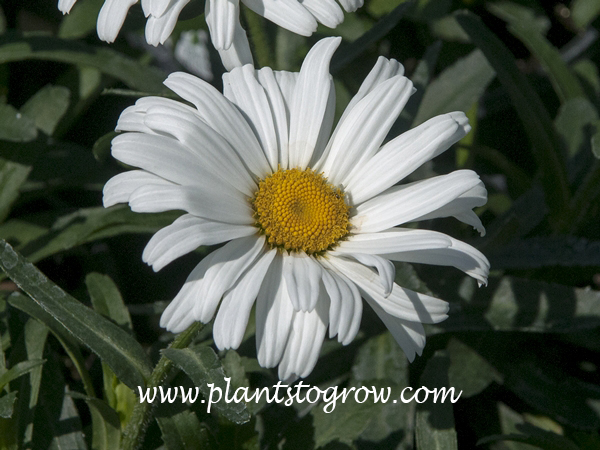
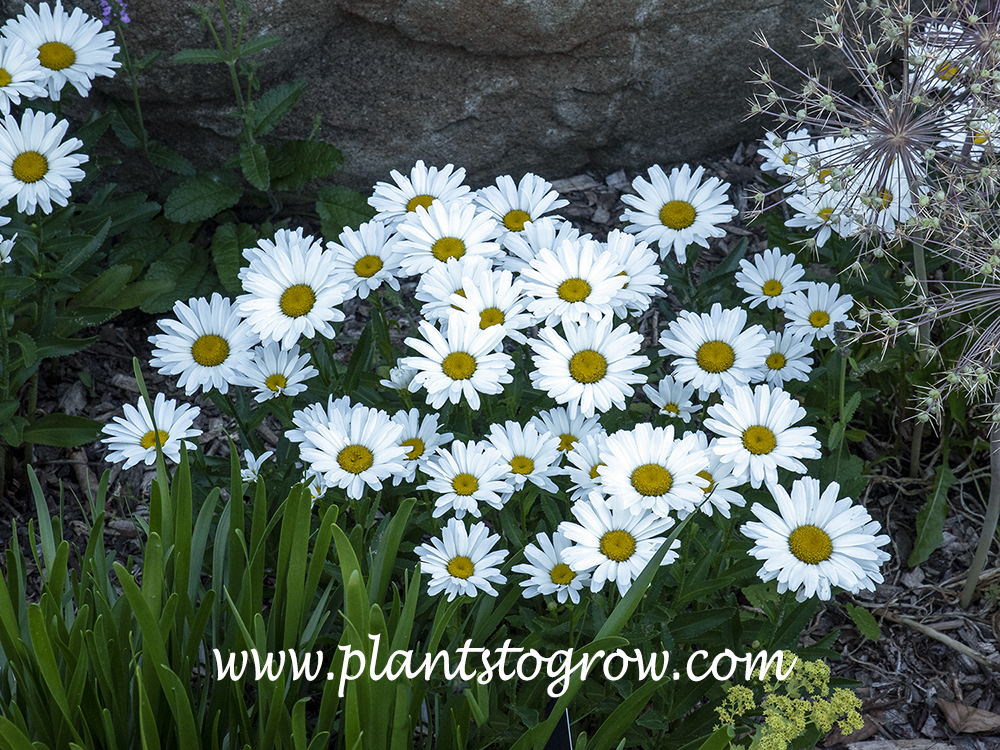
| Description | Daisy May Shasta Daisy (Leucanthemum) A new florific compact Shasta Daisy. Also goes by it's trade name Daisy Duke. |
|---|---|
| Pronunciation | (lew-KANTH-ih-mum)(soo-PER-bum) |
| Plant Type | Perennials Hardy |
| Hardiness Zone | 5-9 |
| Sunlight | full, mostly sunny, some shade |
| Moisture | average |
| Soil & Site | best in well drained soils, will not survive wet winter soils |
| Flowers | white petals (petals accualy are ray flowers) with yellow center |
| Fruit | achene |
| Leaves | simple, green, coarsely-toothed, narrow-elliptic |
| Dimensions | 1-2 feet tall, compact growth habit |
| Maintenance | deadheading increases the flowering season, cutting back to 2-3 inches after bloom, if plants start to decline divide every 2-3 years, replanting healthy divisions |
| Propagation | easy by division in the spring or after the plants are cutback, cuttings, Plant Patent PP21,914 |
| Cultivar Origin | Daisy Duke was raised as an open-pollinated seedling from seed sown as L. superbum Hebron Hardy at a nursery located in Hebron, Ill in 2005. |
| Misc Facts | Luther Burbank introduced the first Shasta Daisy hybrid in about 1901. Leucanthemum translates as "white flower" and superbum to its hybrid vigor. AKA as Chrysanthemum maximum and Chrysanthemum x superbum. |
| Notes & Reference | #04-Herbaceous Perennial Plants (Allan Armitage), #40-Herbaceous Ornamental Plants (Steven Stills) |

Cart