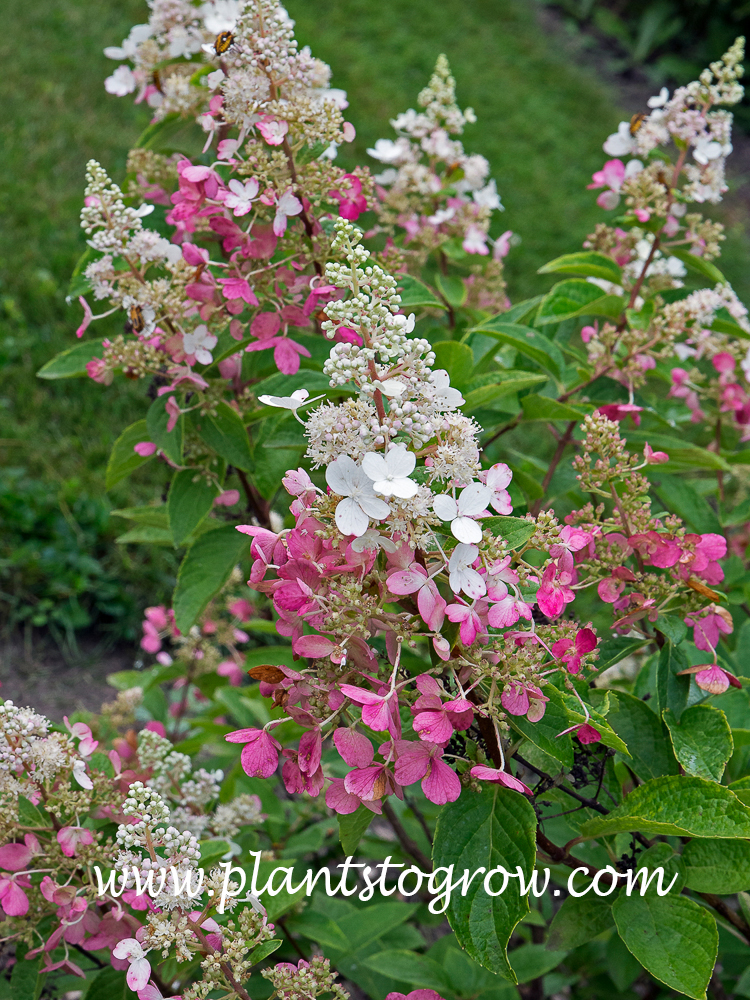
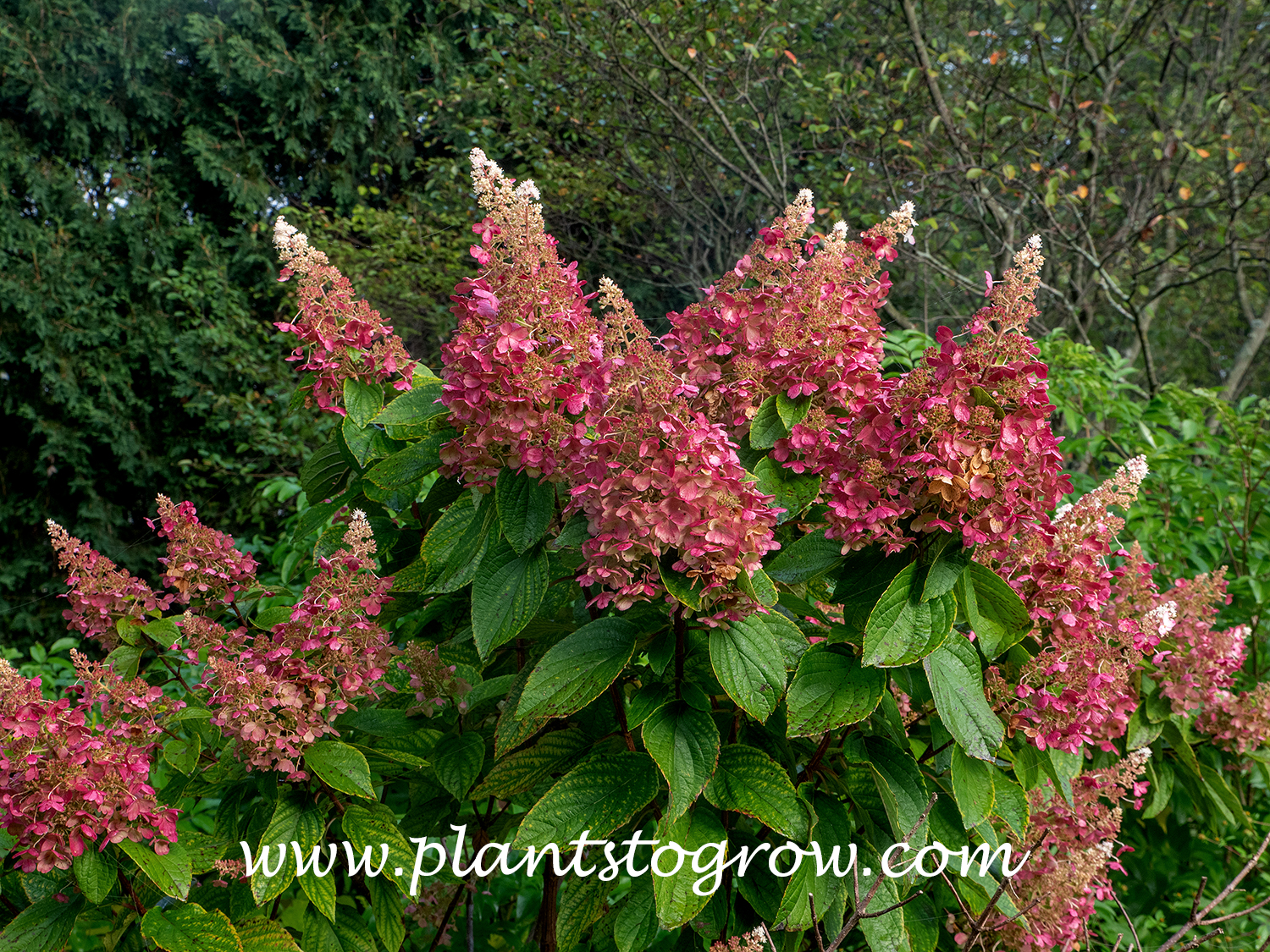
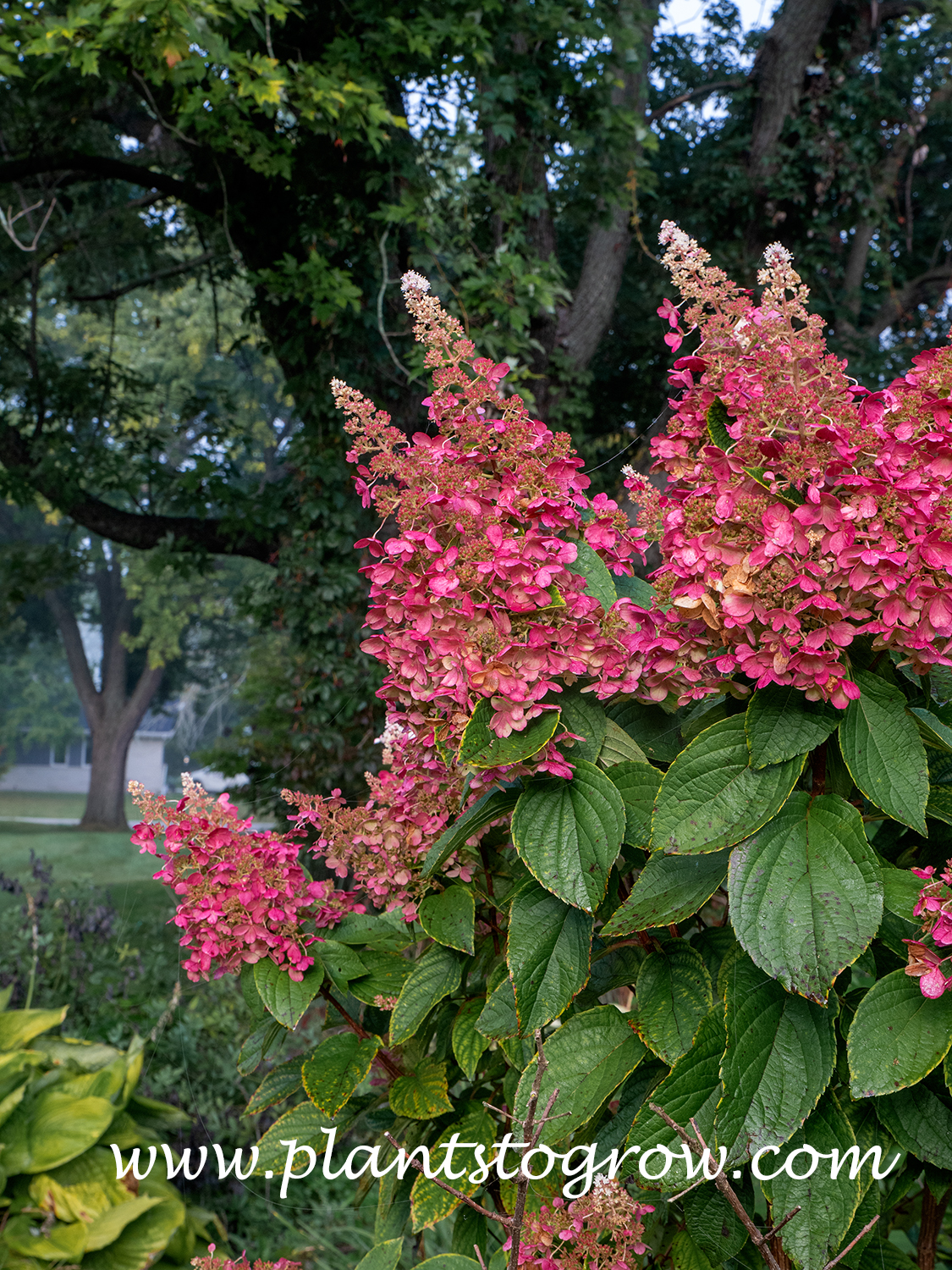
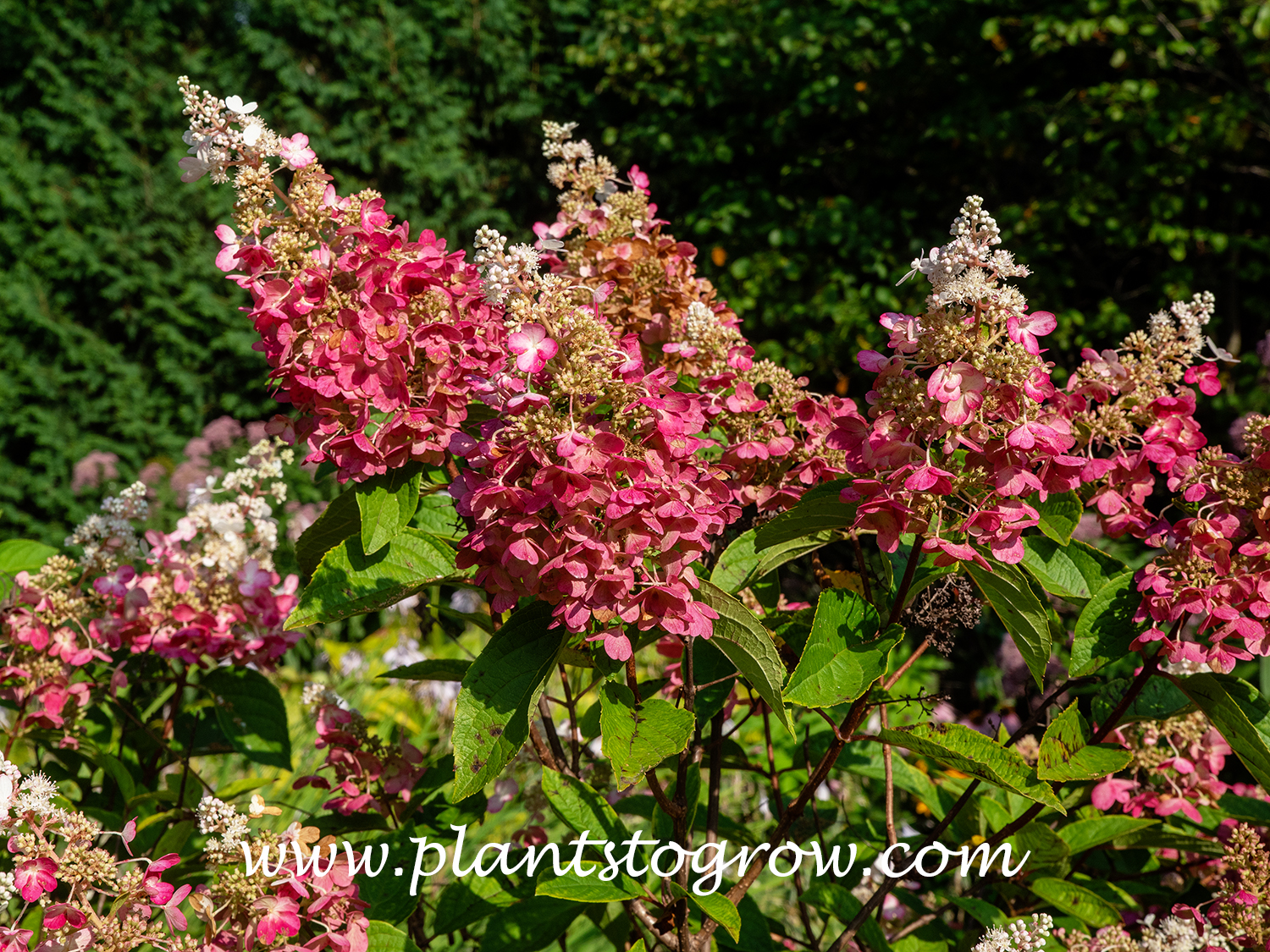
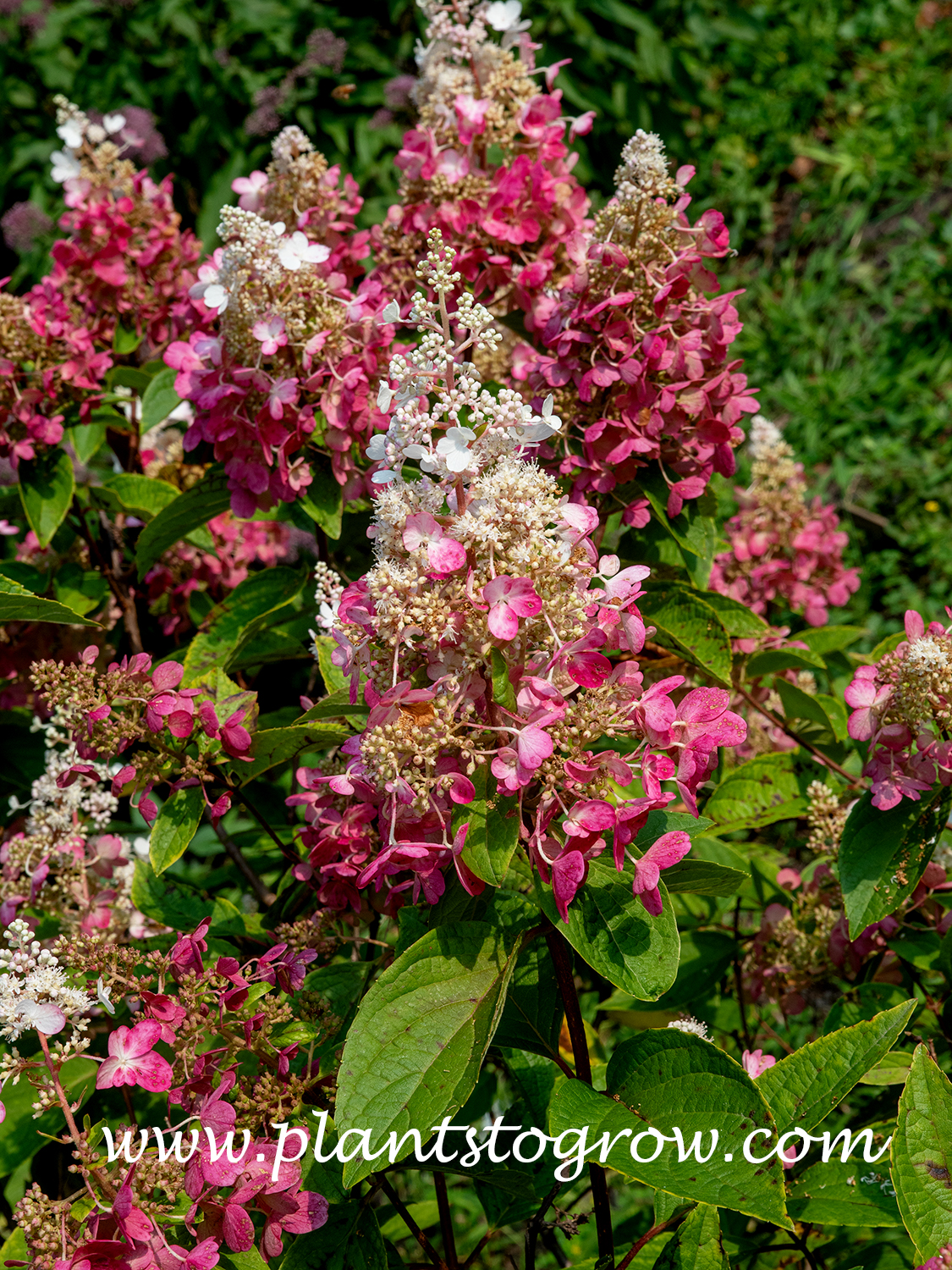
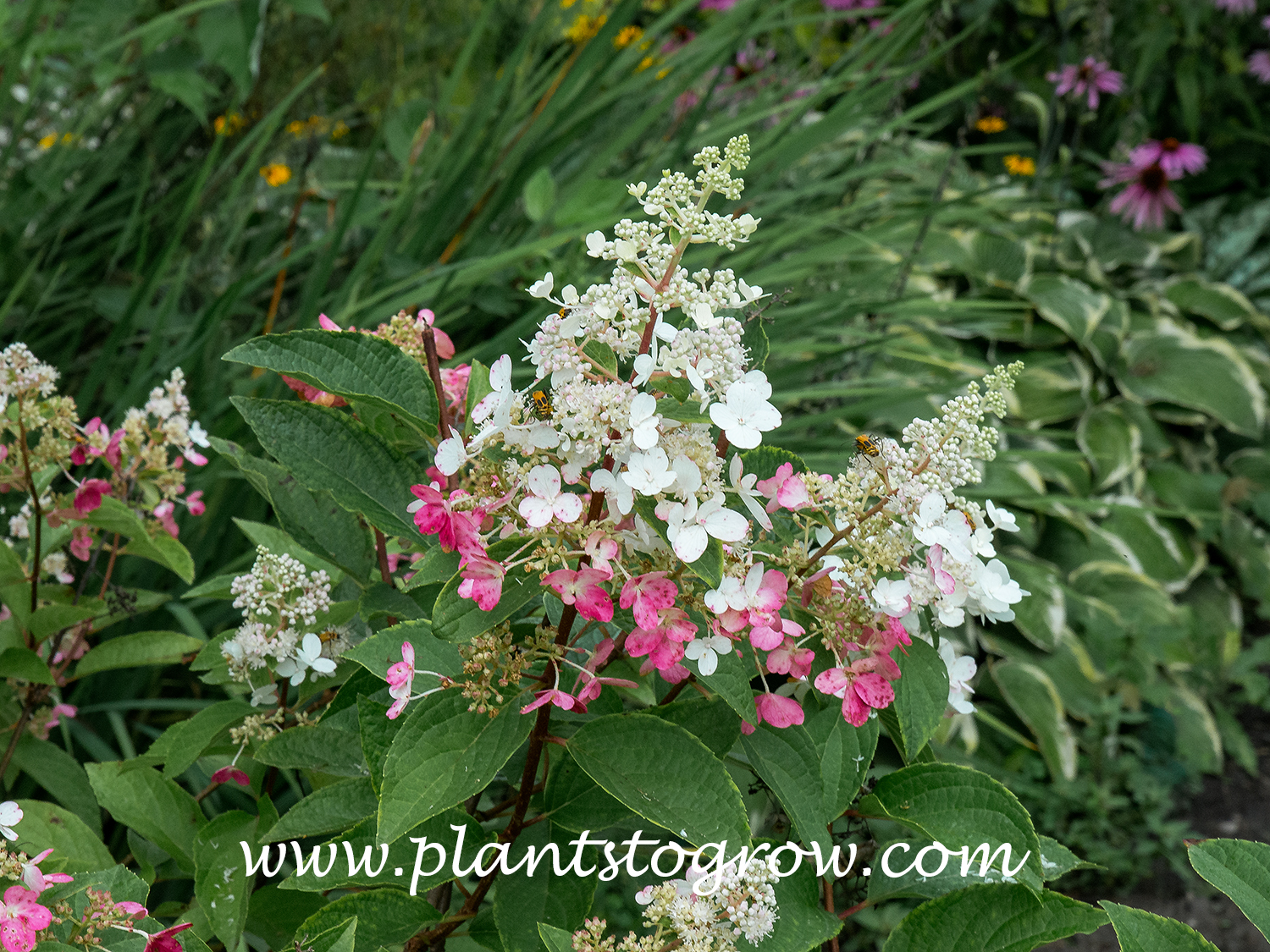
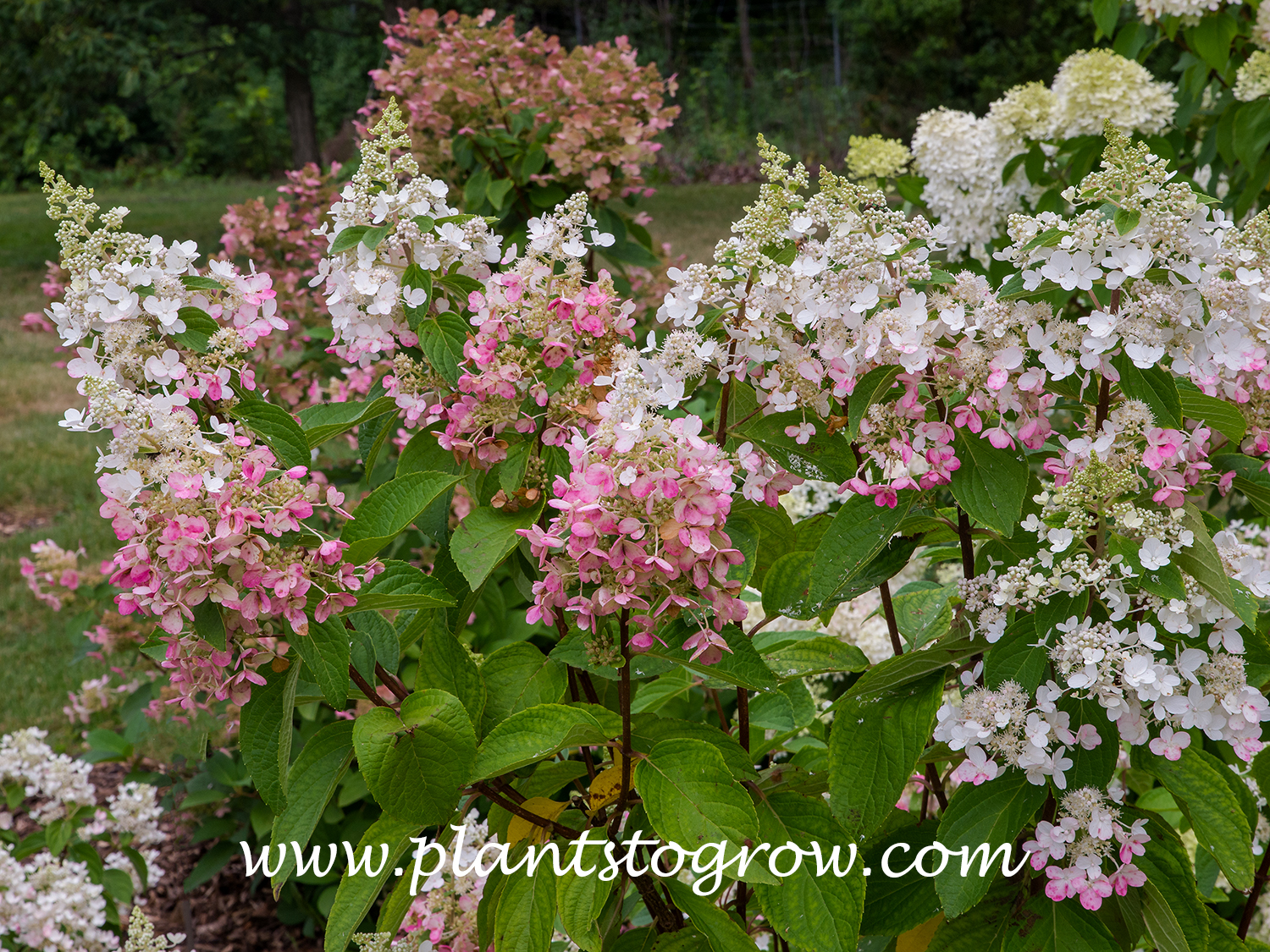
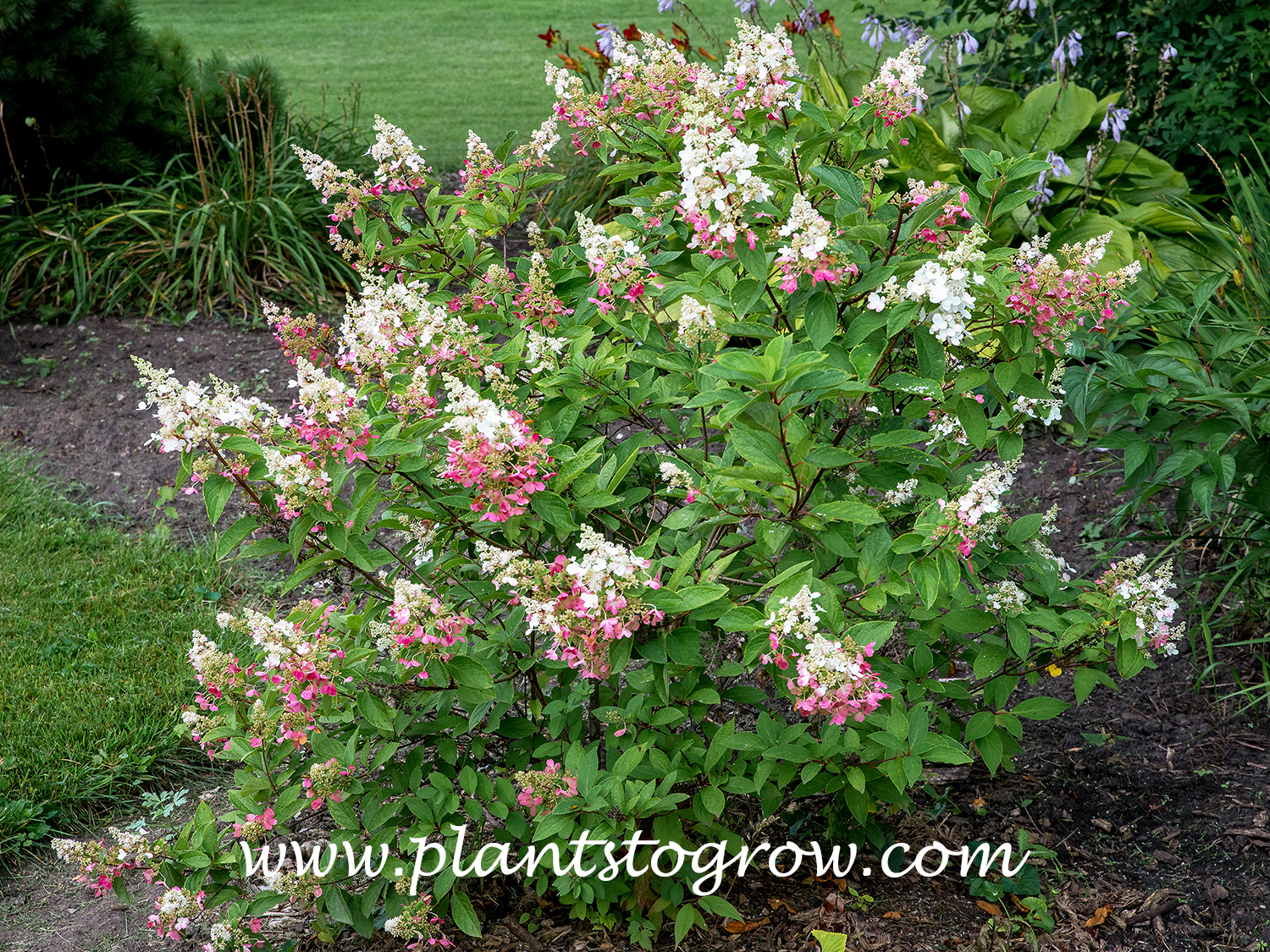
| Description | Hydrangea Pinky Winky (Hydrangea paniculata) produces a two-tone flower in the fall. The base florets turn pink to red, while the top may remain white. |
|---|---|
| Pronunciation | (hy-DRAIN-jah)(pah-nik-yew-LAY-tah) |
| Plant Type | All Plants, Shrubs Deciduous |
| Hardiness Zone | 4-9 |
| Sunlight | full, mostly sunny, some shade |
| Moisture | average, moderate moisture |
| Soil & Site | average |
| Flowers | The flowers are sharply pointed, white to dark pink inflorescences, up to 12-16 inches tall in fall; the base florets turn dark pink to almost red. The upper florets remain white, while the base florets turn red to dark pink, creating a two-toned flower. |
| Leaves | simple, opposite, dark green |
| Dimensions | 6-8 feet tall by 3/4 spread |
| Maintenance | The blooms form on the new wood. Pruning in the fall or early spring will produce lots of new wood. At this time, you can control the height, spread, and shape of the plant by the amount pruned. I prefer pruning shears to hedge shears. With pruning shears, I can better control the shape, and the cuts are more precise. Thinning can help lighten the load on the branches. The flowers can become very heavy, especially after a rain. It can be pruned hard. |
| Propagation | cuttings |
| Cultivar Origin | The popular Hydrangea paniculata 'Pinky Winky' originated as a seedling discovered in Melle, Belgium, in 1999. Developed by Dr. Johan Van Huylenbroeek through open pollination of 'Pink Diamond' hydrangeas, it was named playfully after the Teletubby character for its pink blooms. It's known for its large, two-toned flowers that turn from white to deep pink, held on sturdy stems. It received a U.S. Plant Patent in 2005. |
| Author's Notes | This cultivar has been around for a few years, but is still a great plant. |
| Notes & Reference | #85-Hydrangeas for American Gardens (Michael Dirr), The RHS Hydrangea paniculata trial, September 2009 |

Cart