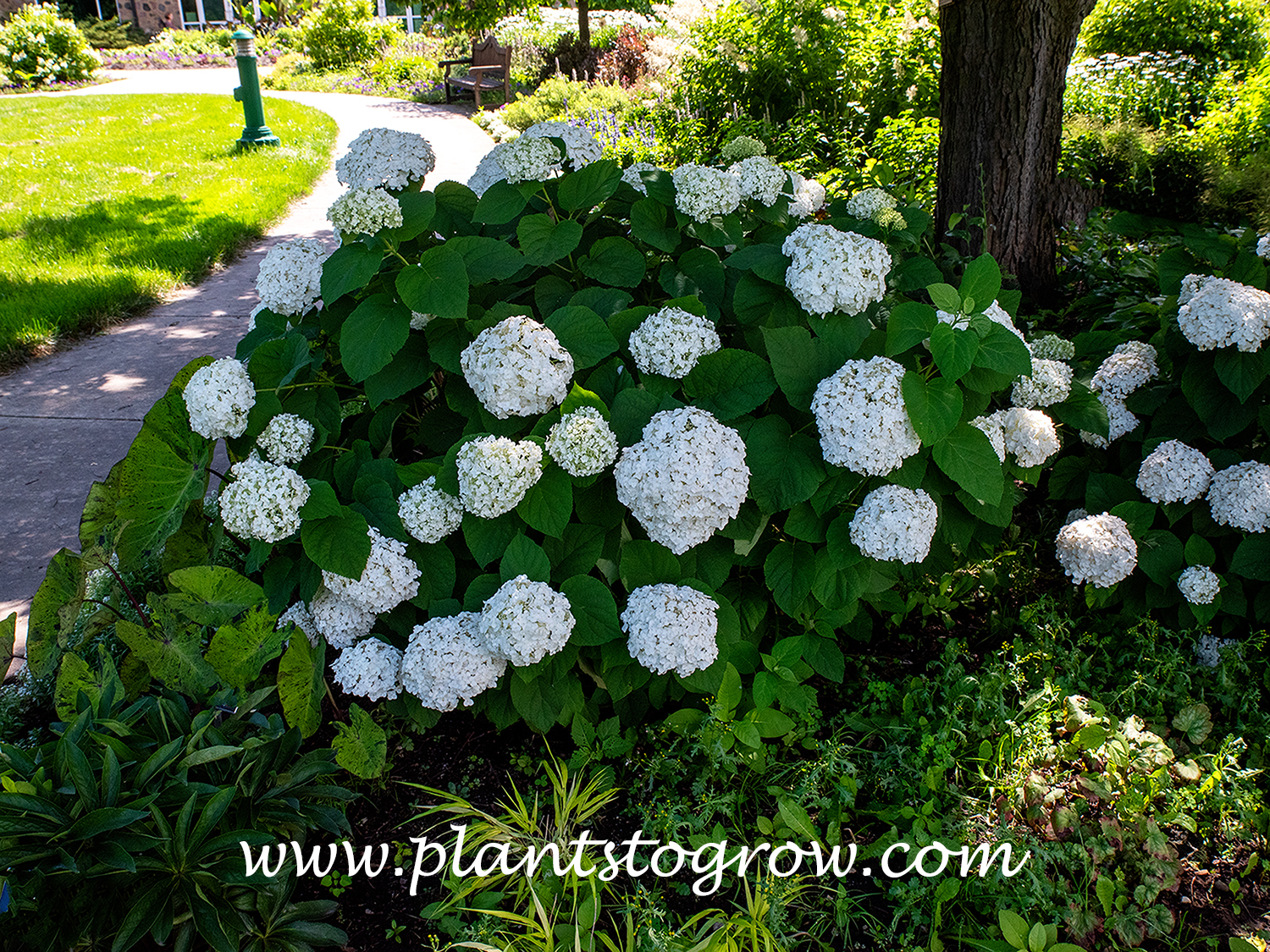
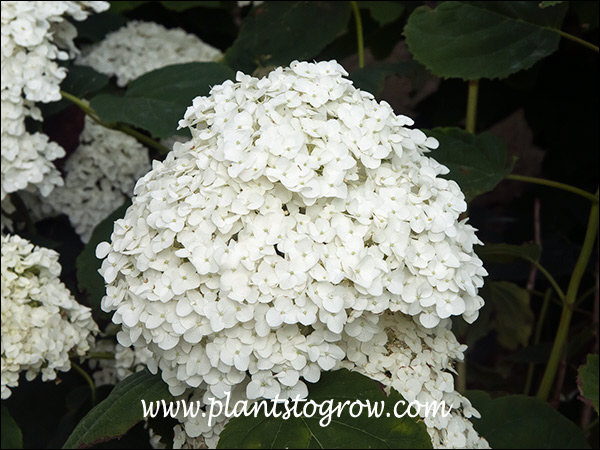
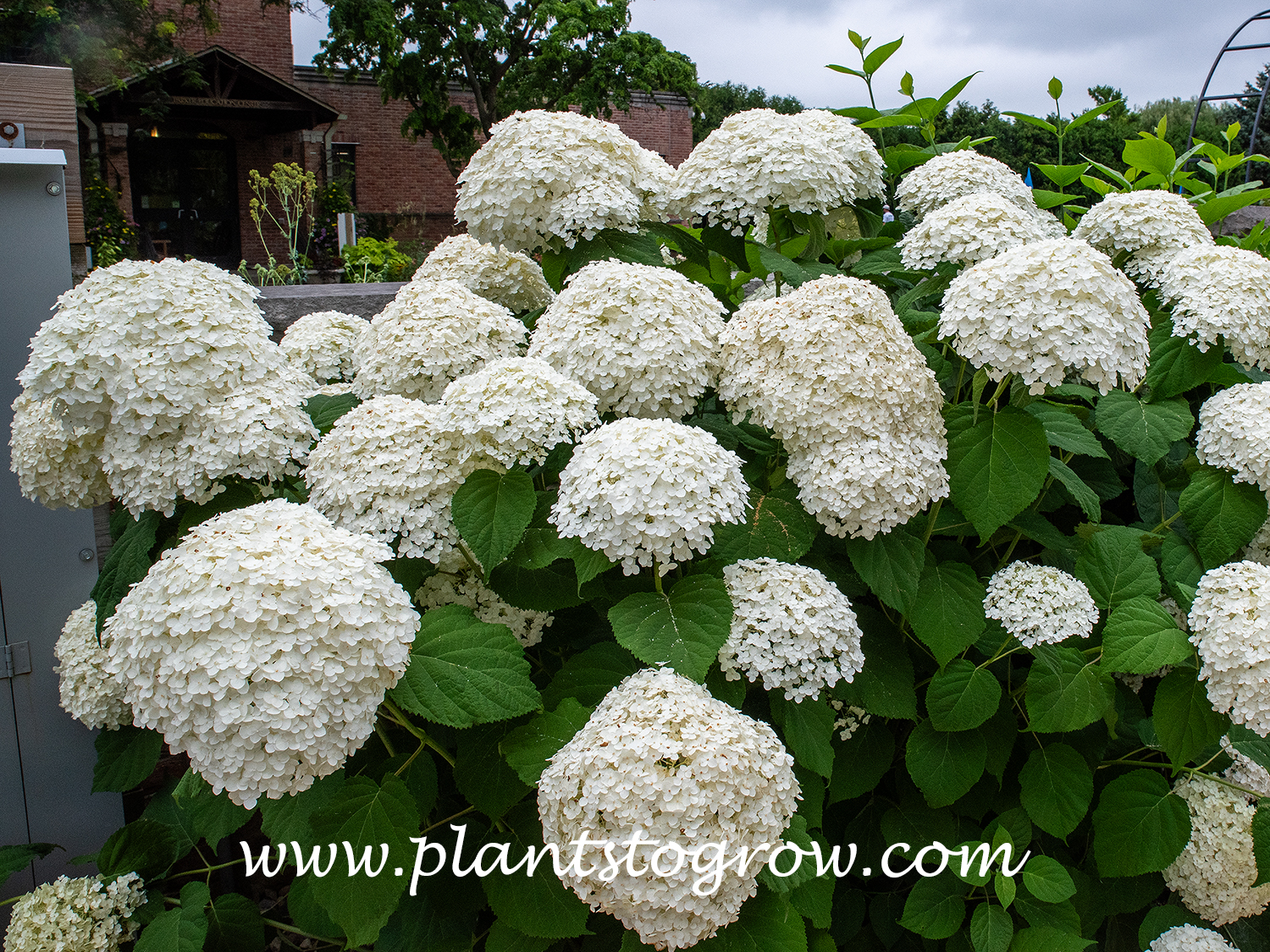
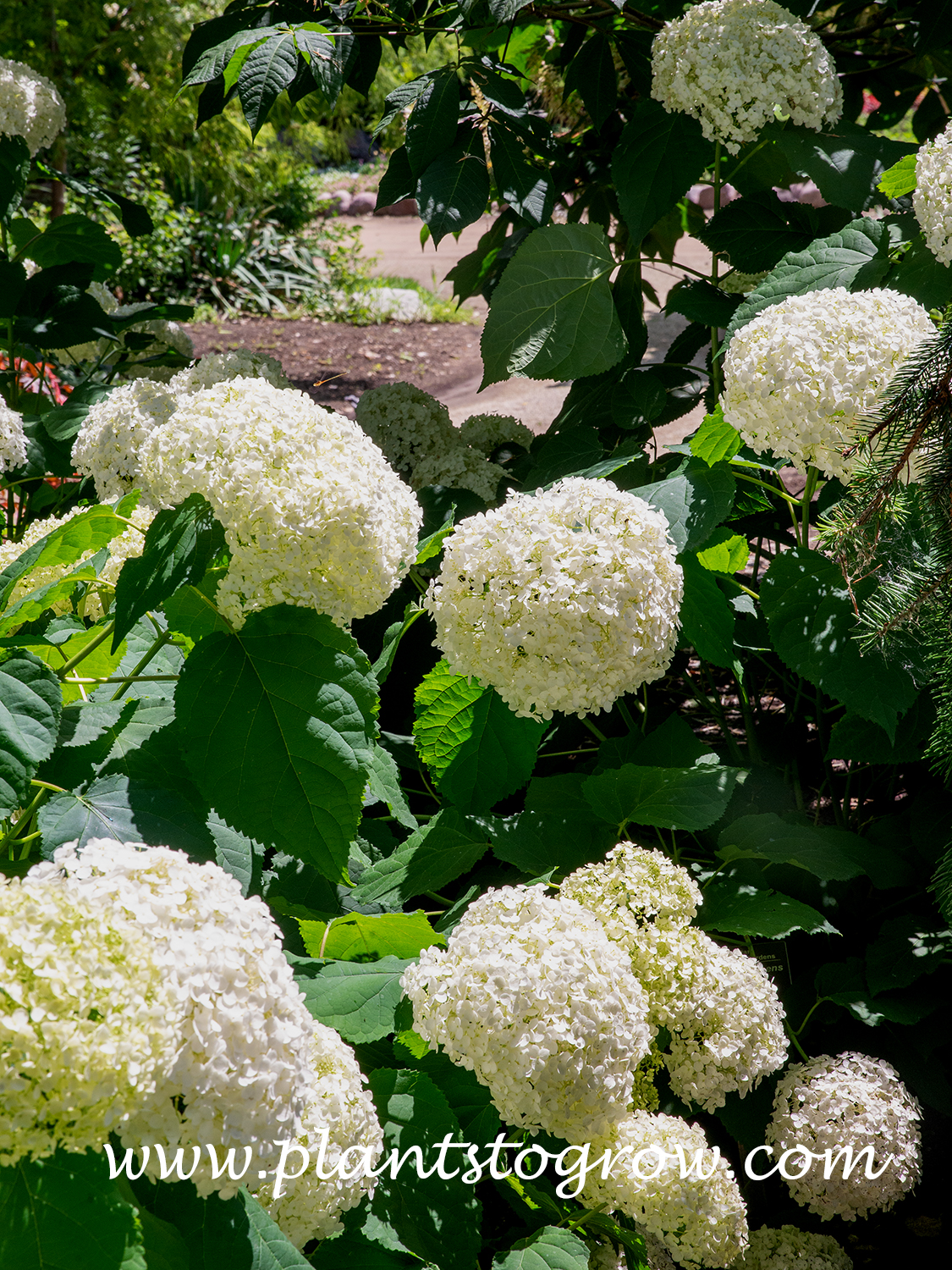
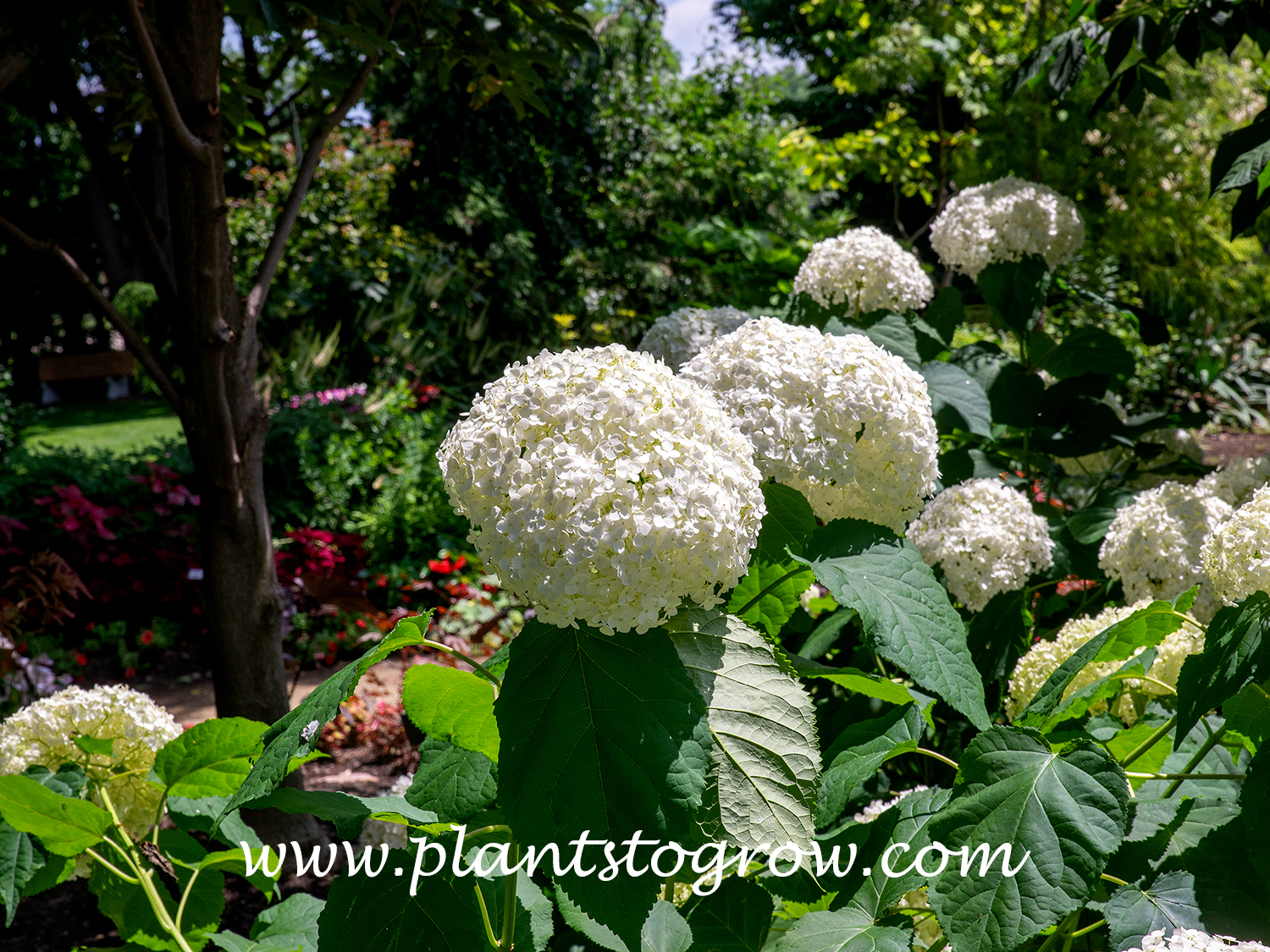
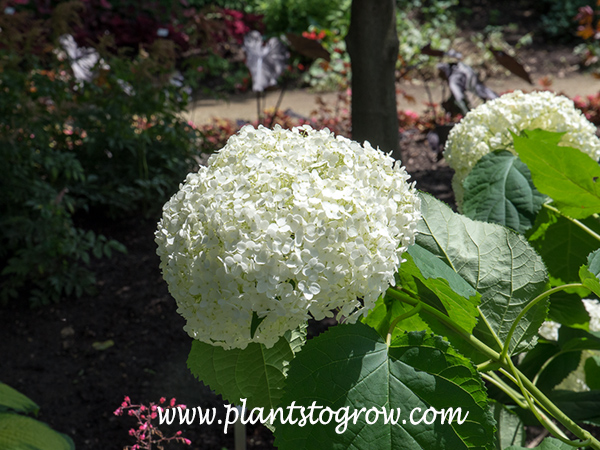
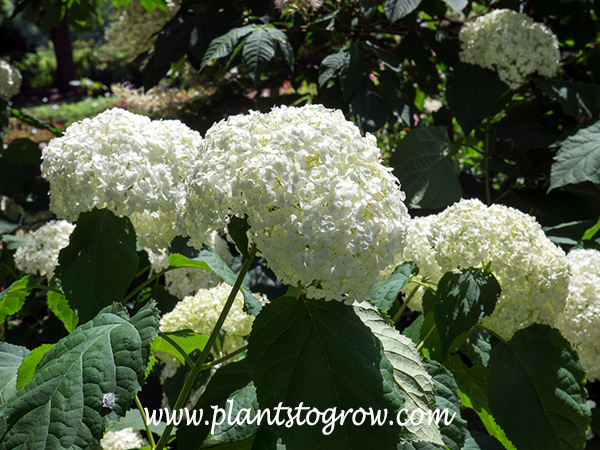
| Description | Hydrangea Incredibelle (Hydrangea arborescens) is an improvement over Annibella, with a larger mophead and stronger stems. |
|---|---|
| Pronunciation | (hy-DRAN-jee-ah)(ar-bor-ESS-sens) |
| Plant Type | All Plants, Shrubs Deciduous |
| Hardiness Zone | 5-9 |
| Sunlight | Prefers partial shade; grows well in full sun. Will survive in varying amounts of shade, but the more shade, the less the flower production. |
| Moisture | Grows in average to moist conditions, but additional moisture during dry spells may help. |
| Soil & Site | average |
| Flowers | Has large white globular flower heads (mopheads), over 8 inches in diameter. Change from white to winter brown. Make nice dried flowers. Blooms in July. Blooms on new wood. |
| Leaves | Has large, opposite, dark green, coarse leaves. |
| Stems | The stems are twiggy and brown. These stems are sturdier than the stems of Anna Bella Hydrangea. |
| Roots | Will sucker from the roots. |
| Dimensions | 3-6 feet by 3-6 feet (HS), can form a colony, suckering from the roots, spaced 4-5 feet on center |
| Maintenance | It blooms on new wood cut flush with the ground in the late fall or early spring. This will stimulate new wood where the flowers are formed. |
| Propagation | division, cuttings |
| Cultivar Origin | A cultivar of the native Hydrangea arborescens, developed in 2002 by Timothy D. Wood in Grand Haven, Michigan, USA. It originated from an open-pollinated cross between H. arborescens 'Annabelle' and an unknown male parent. Selected in 2004 for its sturdy stems and massive blooms, an improvement over Hydrangea 'Annabelle'. Patented in 2009 (PP20571). |
| Notes & Reference | #01-Manual of Woody Landscape Plants (Michael Dirr), #85-Hydrangeas for American Gardens (Michael Dirr), #135-Hydranges "A Gardner's Guide"(Tonis Lawson Hall, Brian Rothera) |

Cart