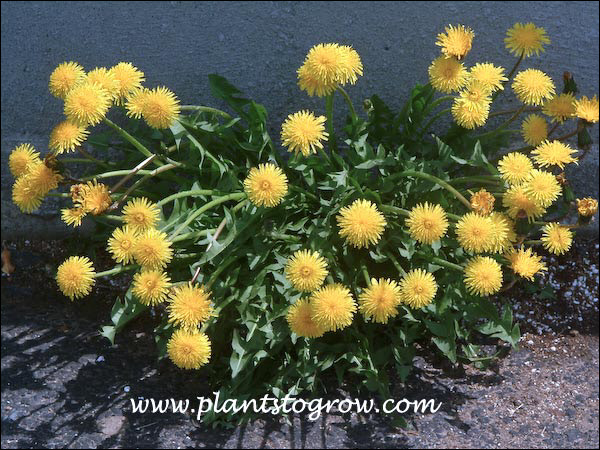
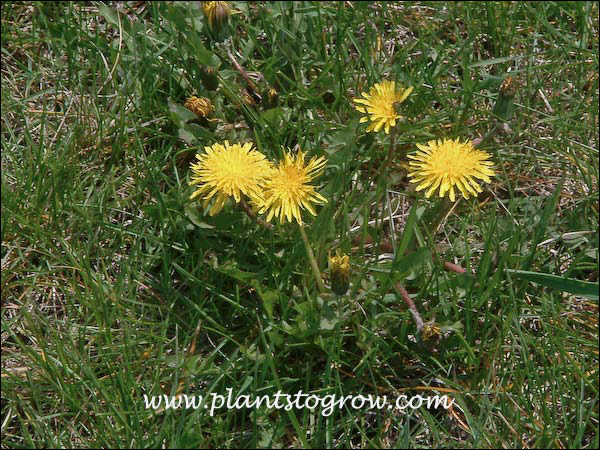
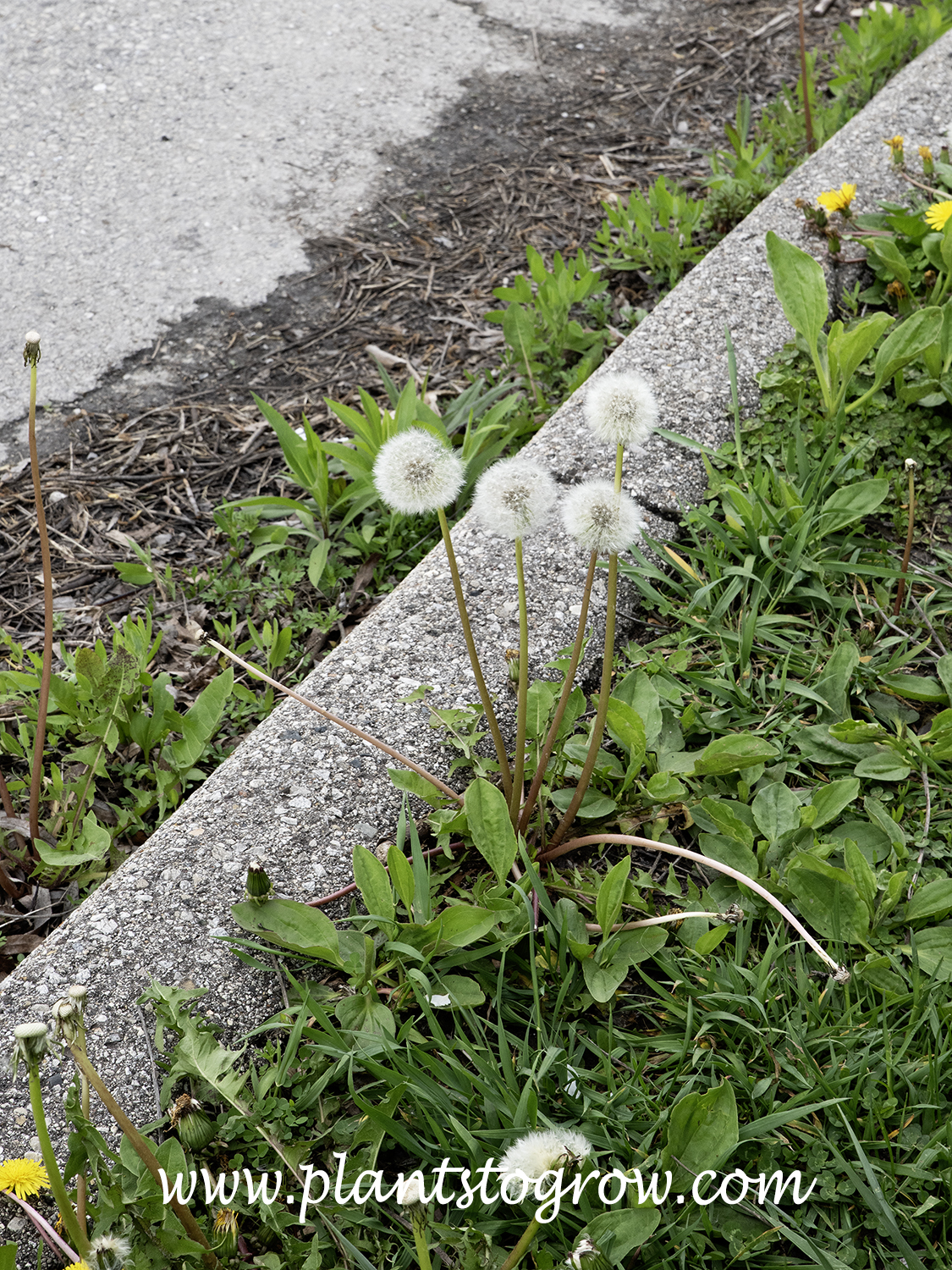
| Description | Dandelion (Taraxacum officinale) is a weed that is the scourge of urban lawns but is also used in salads by a few others. |
|---|---|
| Pronunciation | (ta-RAKS-uh-kum)(oh-fiss-ih-NAH-lee) |
| Plant Type | Perennials Hardy, Weeds |
| Sunlight | full |
| Moisture | average |
| Soil & Site | average |
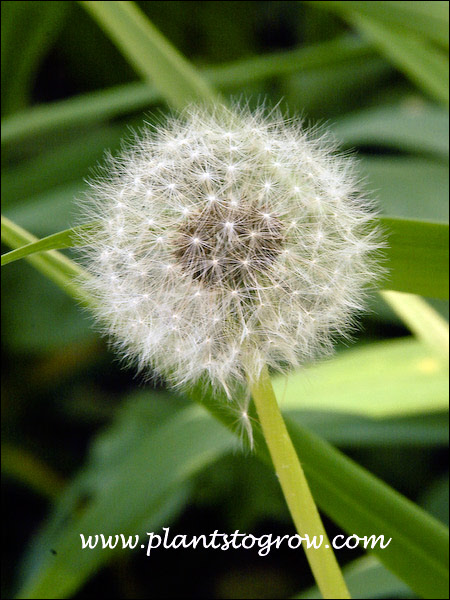
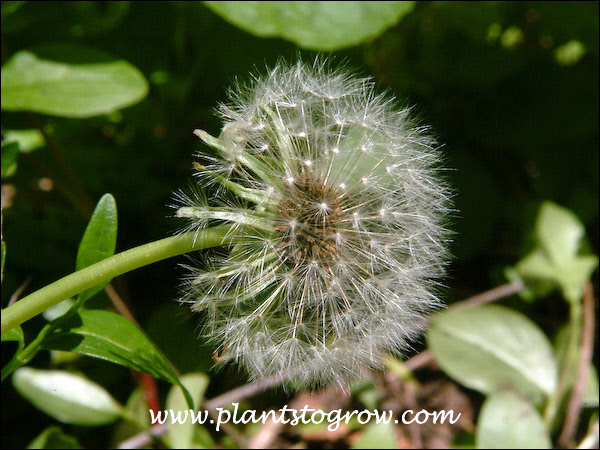
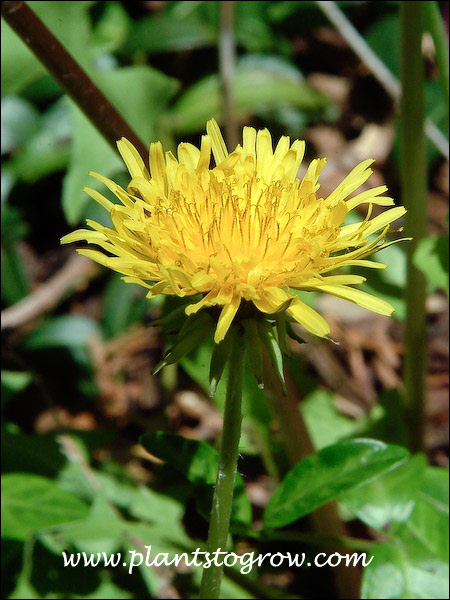
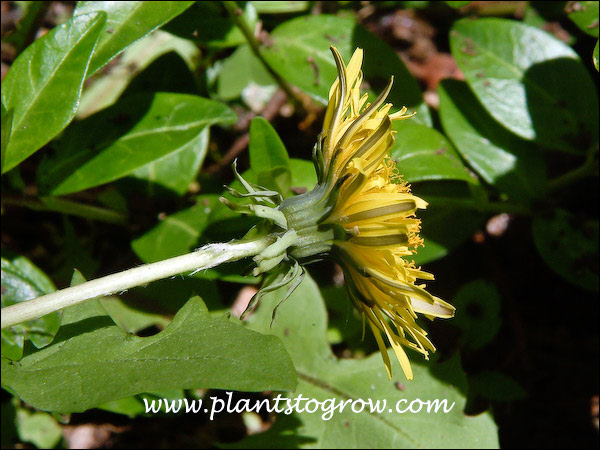
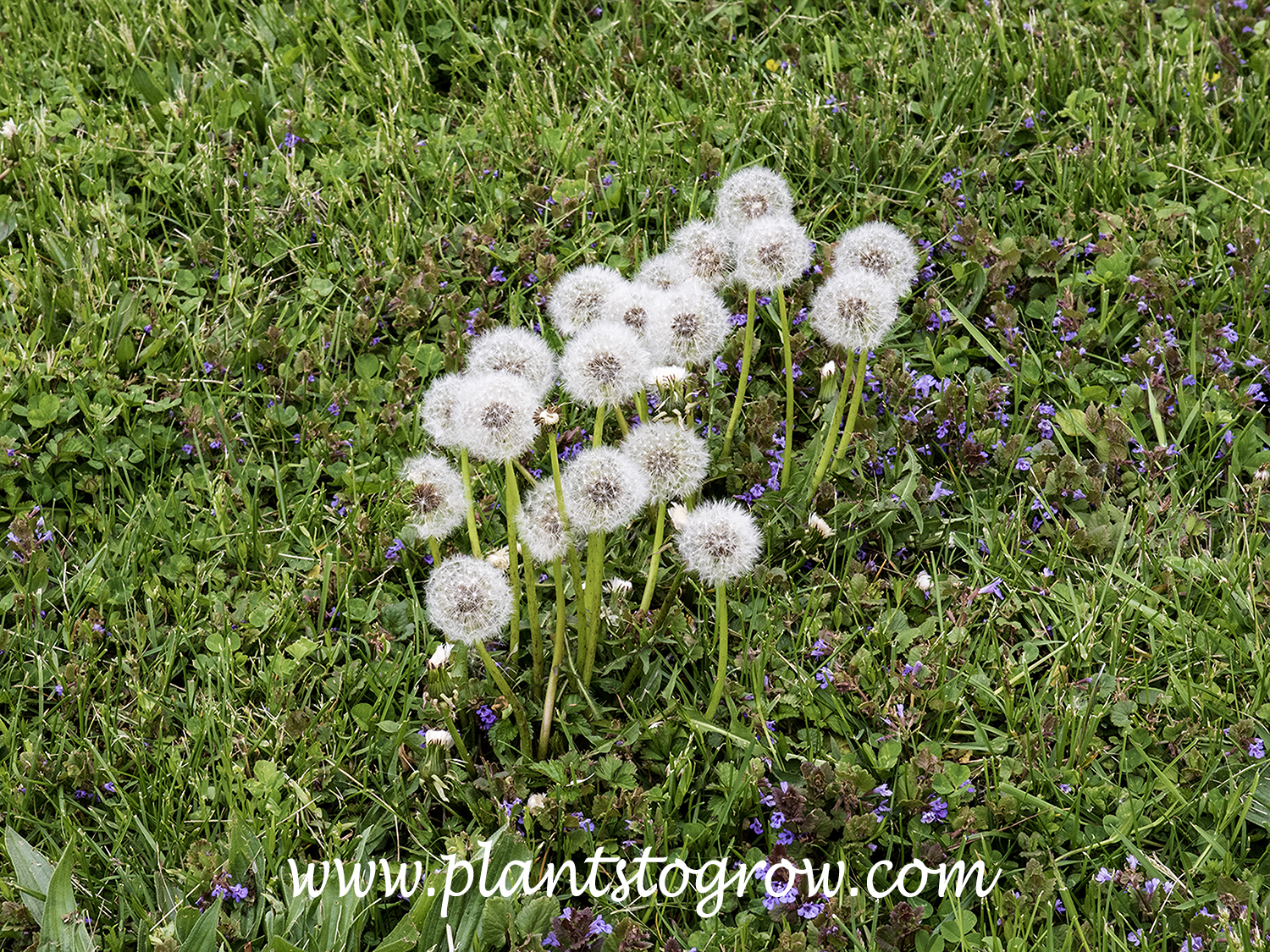
| Flowers | The yellow flower head consists of hundreds of ligulate flowers and no disk flowers. Flowers form a globular seed head containing hundreds of seeds, each with a parachute to float in the wind. The flower head sits on two rows of bracts. |
| Fruit | Fruit is an achene (dry fruit that separates from its holder) with attached fluff (pappus) for the seeds to float away. Seeds have no dormancy, and the flower can self-pollinate. The flower stems are hollow. |
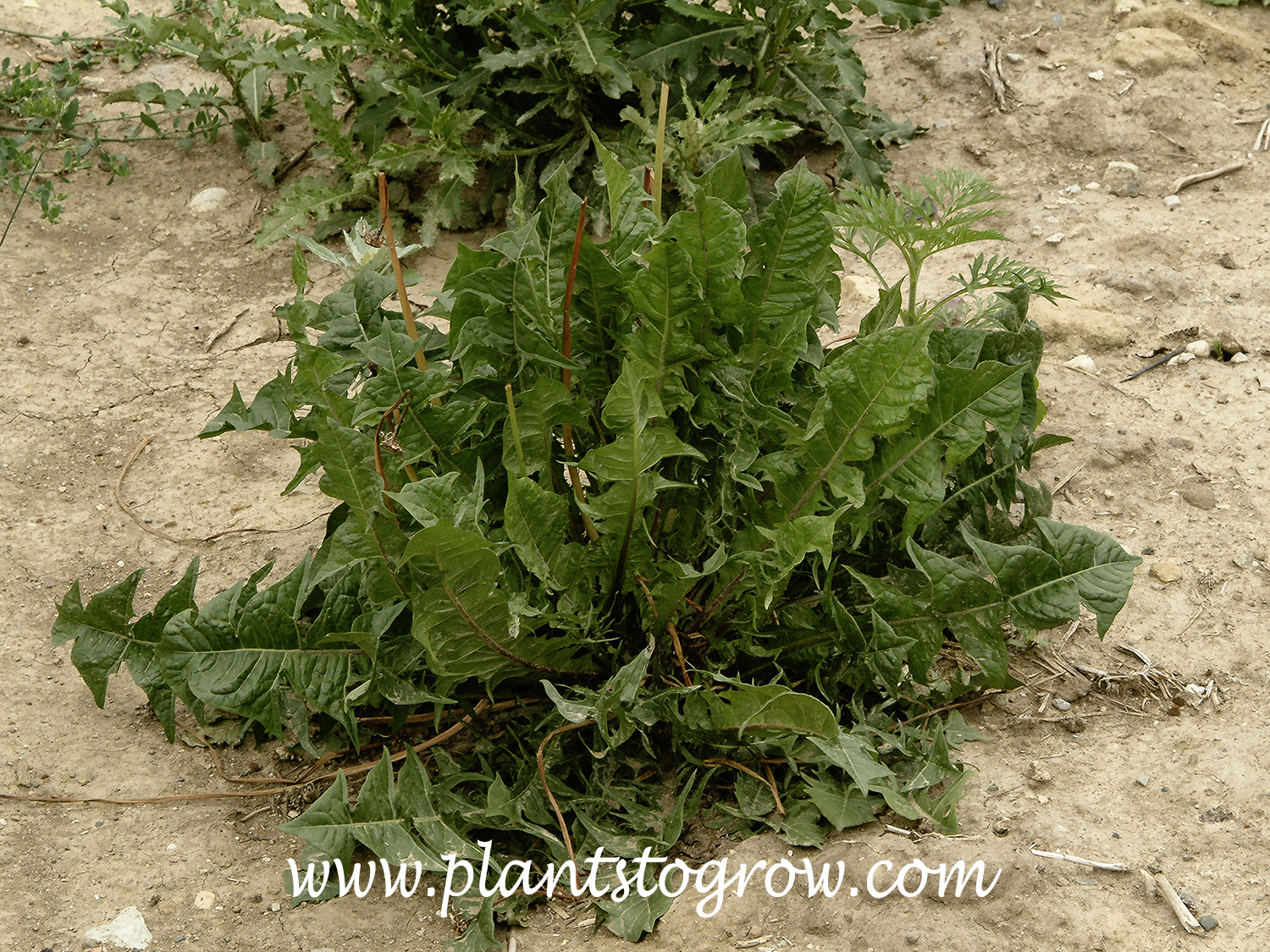
| Leaves | Forms a rosette of deeply toothed, green, lanceolate, runcinate leaves. |
| Stems | A short base stem is called a crown. |
| Roots | Forms a taproot, making it difficult to remove by digging. |
| Dimensions | 1 plus feet |
| Maintenance | If you pull out this plant and break off some of the tap root, it will regrow. I have found it easy to control the lawn using broad-leaved herbicides. |
| Propagation | It naturally reproduces by seeds and overwinters via taproot. |
| Native Site | Native to temperate regions of Eurasia, they have since naturalized across most of the world, including North America. They were introduced by early European settlers in the 1600s for medicinal and culinary uses. |
| Misc Facts | The leaves, tap roots, and flowers are all edible. The deeply dentated leaves got their name from the French dent-de-lion, which means "lion's tooth." AKA: Irish daisy, lion's tooth, piss-in-bed, pissinlit, priest's crown, puffball, swine's snout, telltime, yellow gowan. |
| Author's Notes | As kids, we did a lot of things with this plant. We would cut off the flowers and make rings out of the flower stems, linking them together to form chains. We would take a flower stem and cut small slices at the end; when placed in water, the slices would curl up. We would have fights with them, putting our thumbs on the base of the flowers and popping them off onto our friends. Boys will be boys! |
| Notes & Reference | #19-Common Weeds (USDA Agricultural Research Service), #136-Weeds of the Northern US and Canada (France Royer, Richard Dickinson), #157-The Sunflower Family in the Upper Midwest (Thomas Antonio, Susanne Masi), #171- Authors' observations and experiences with this plant |

Cart