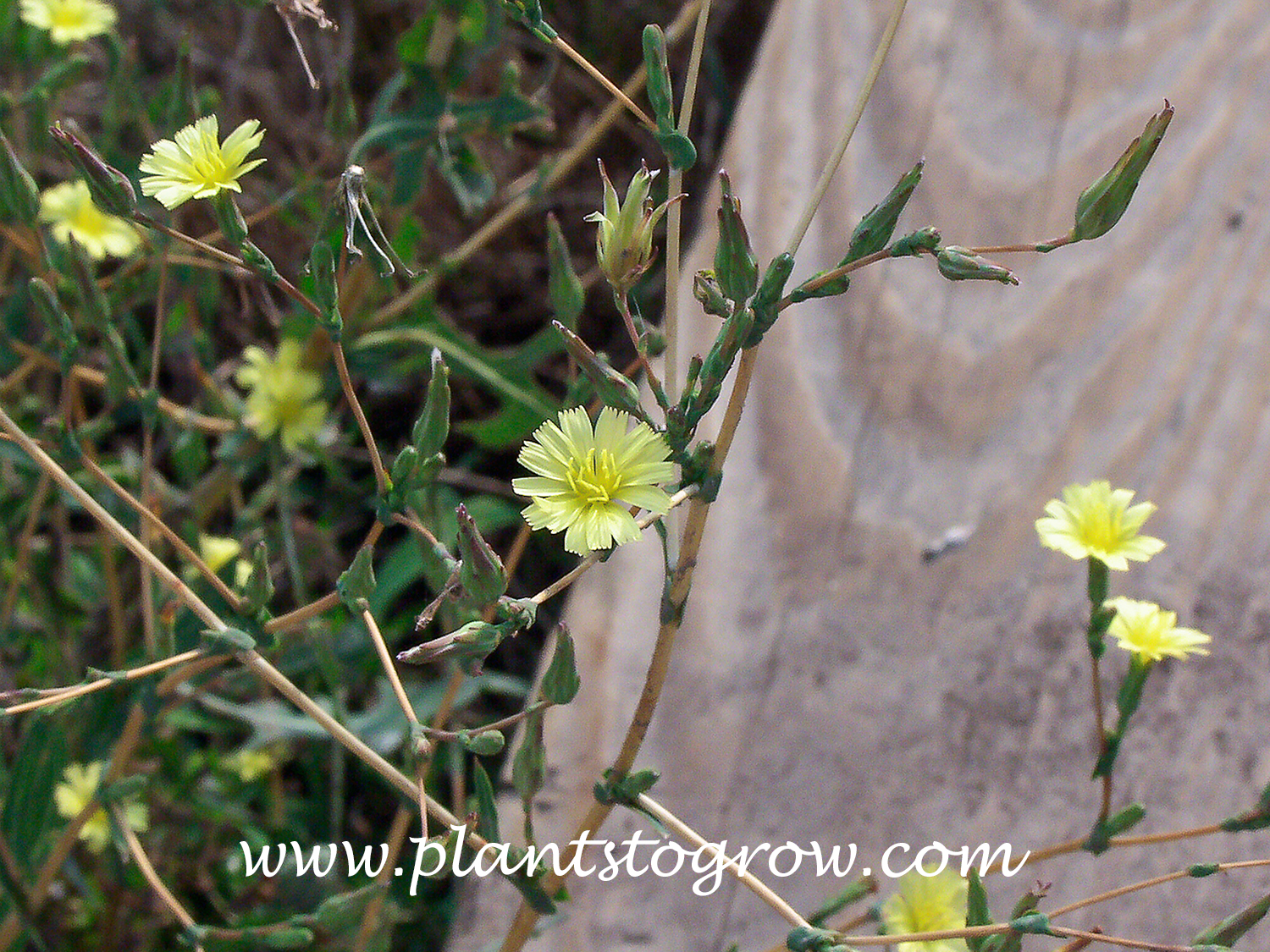
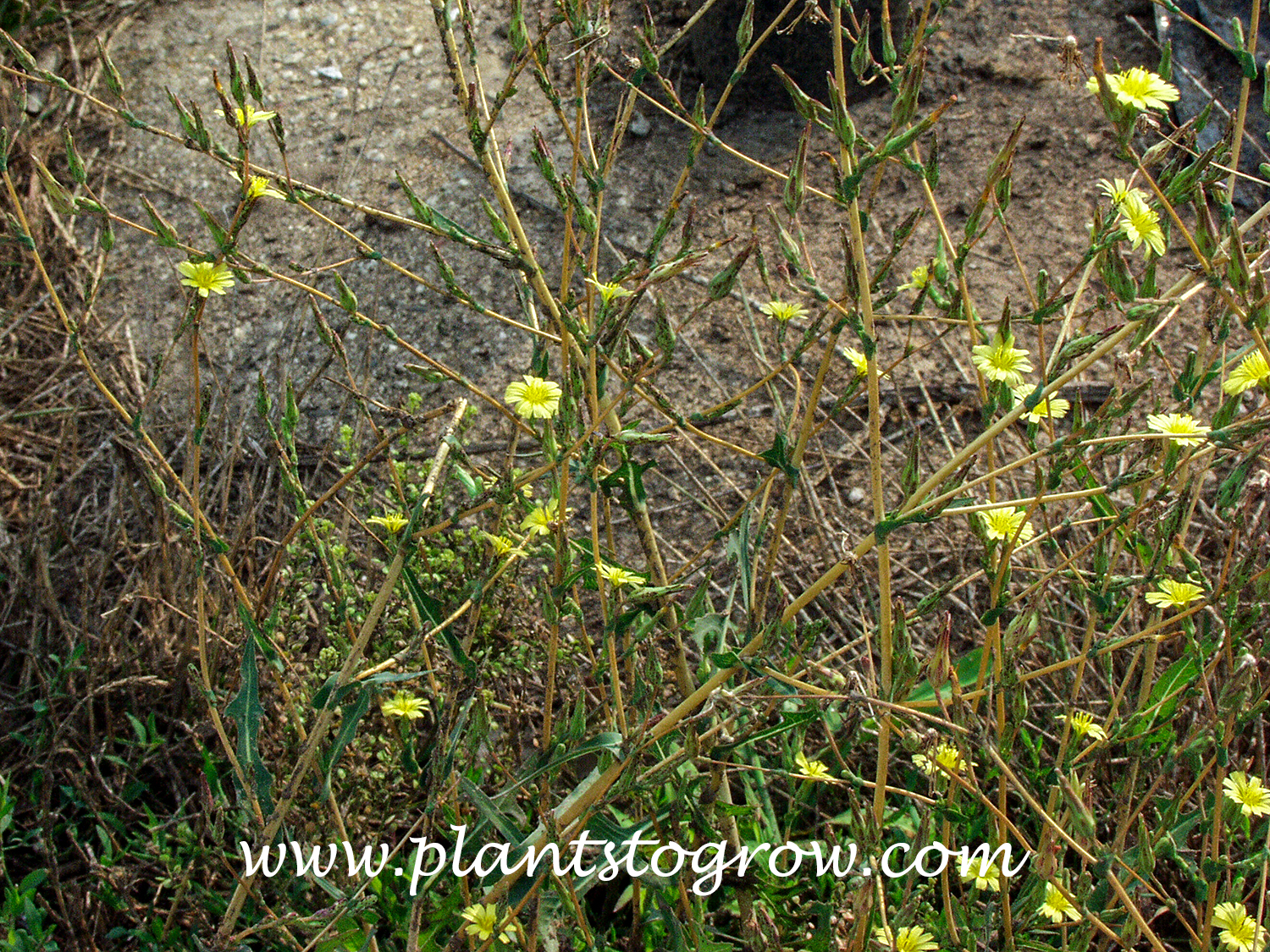
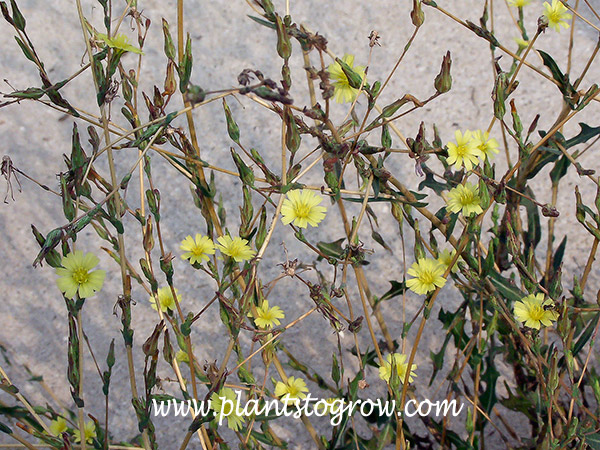
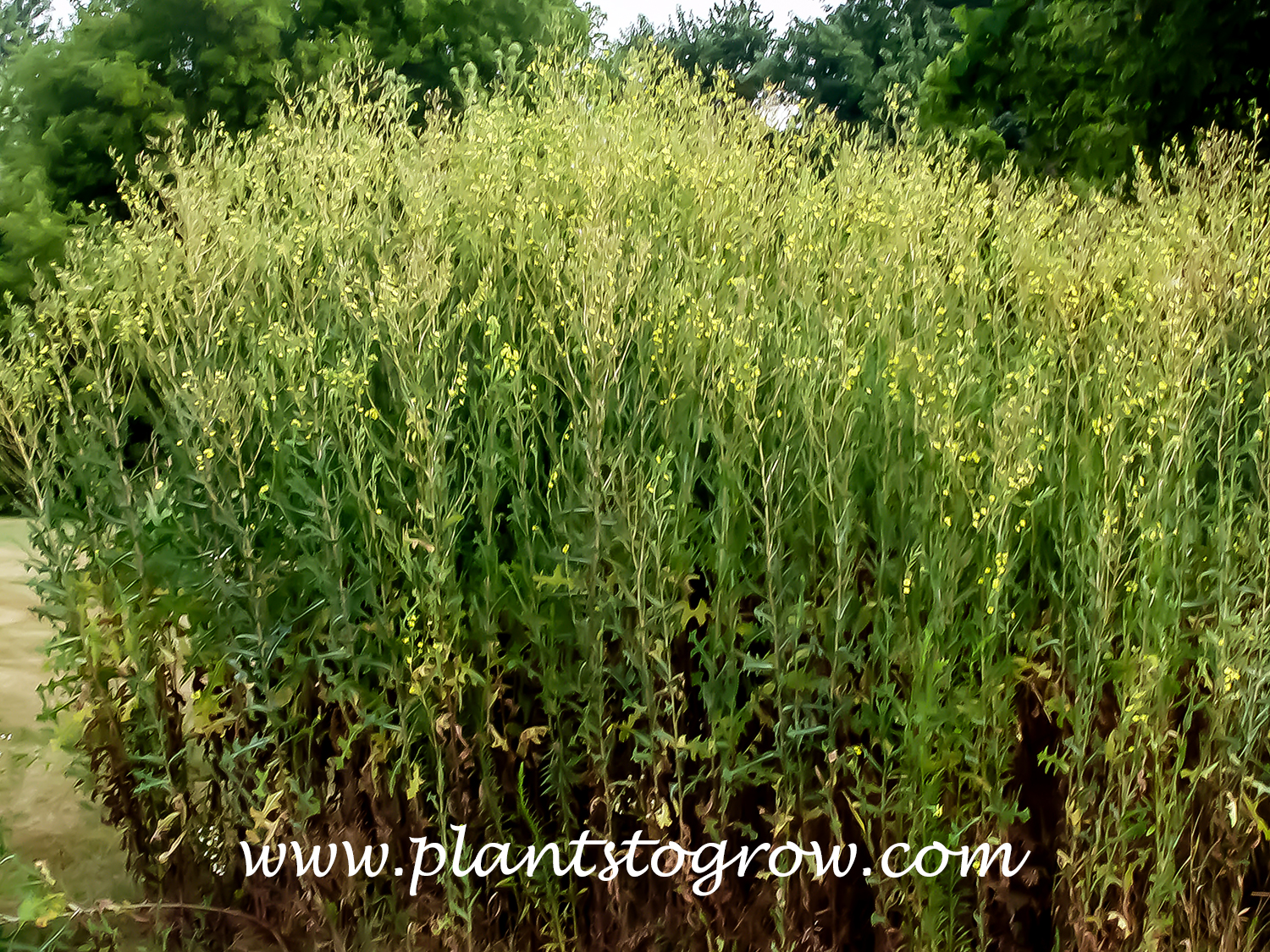
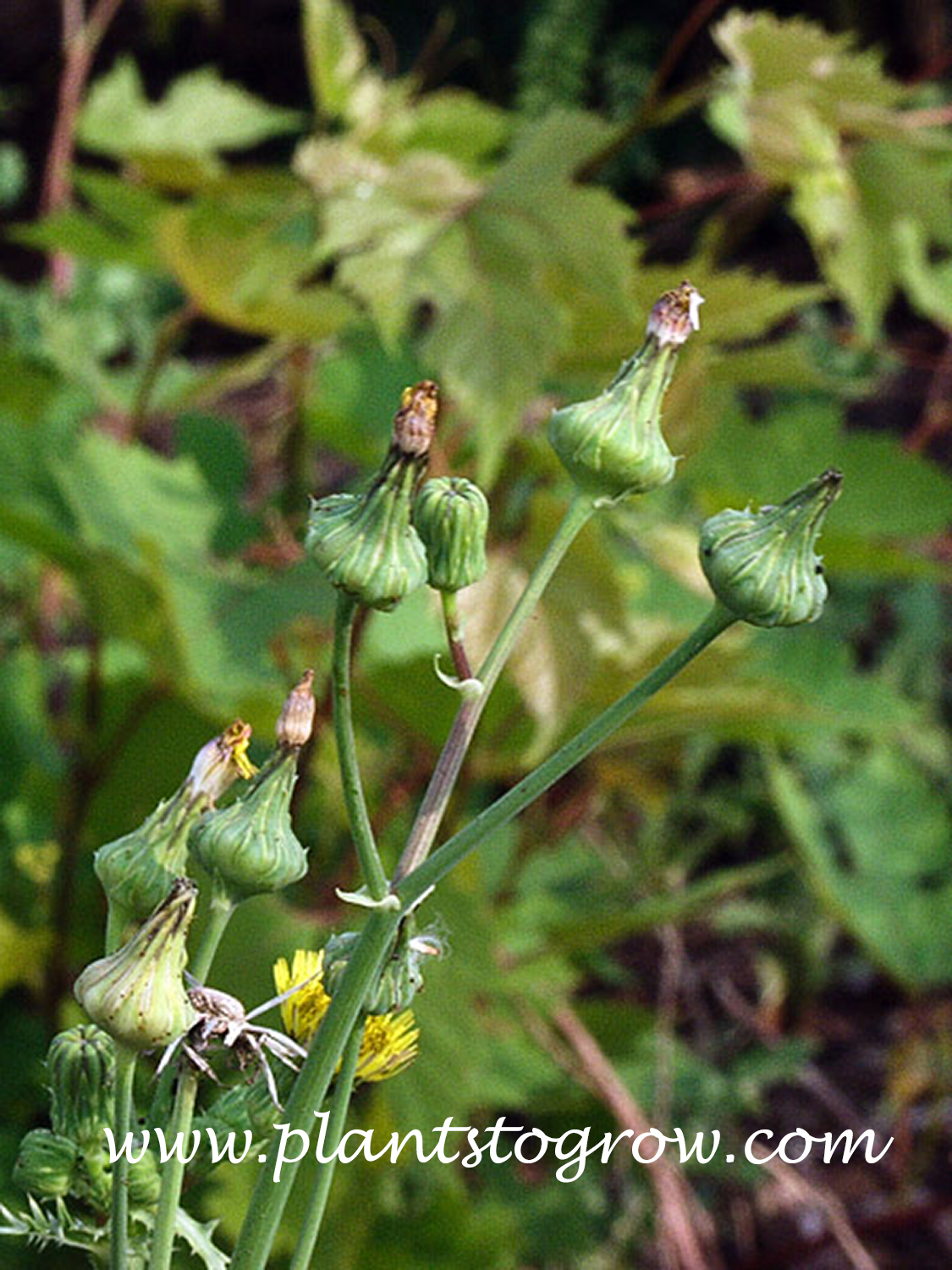
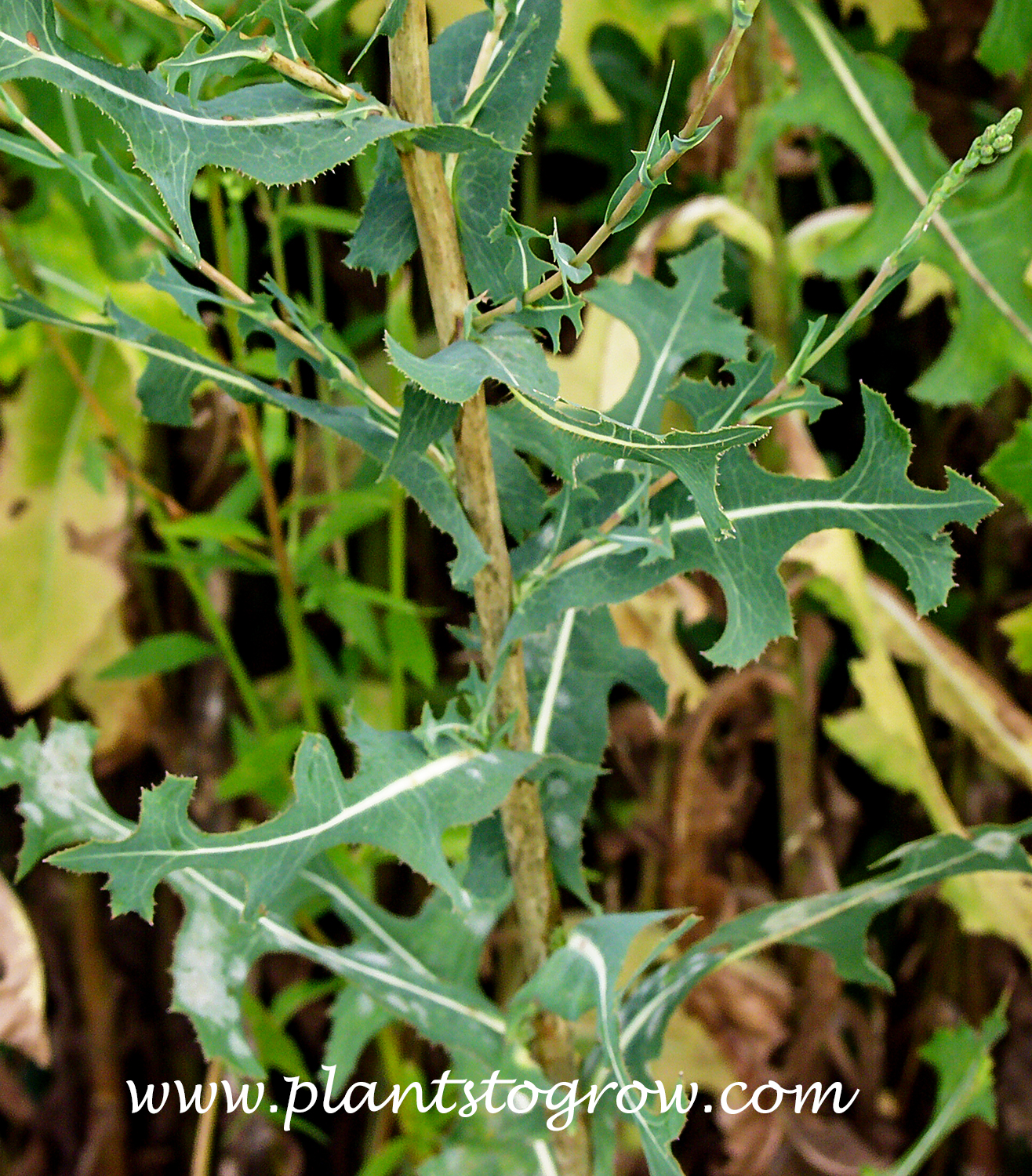
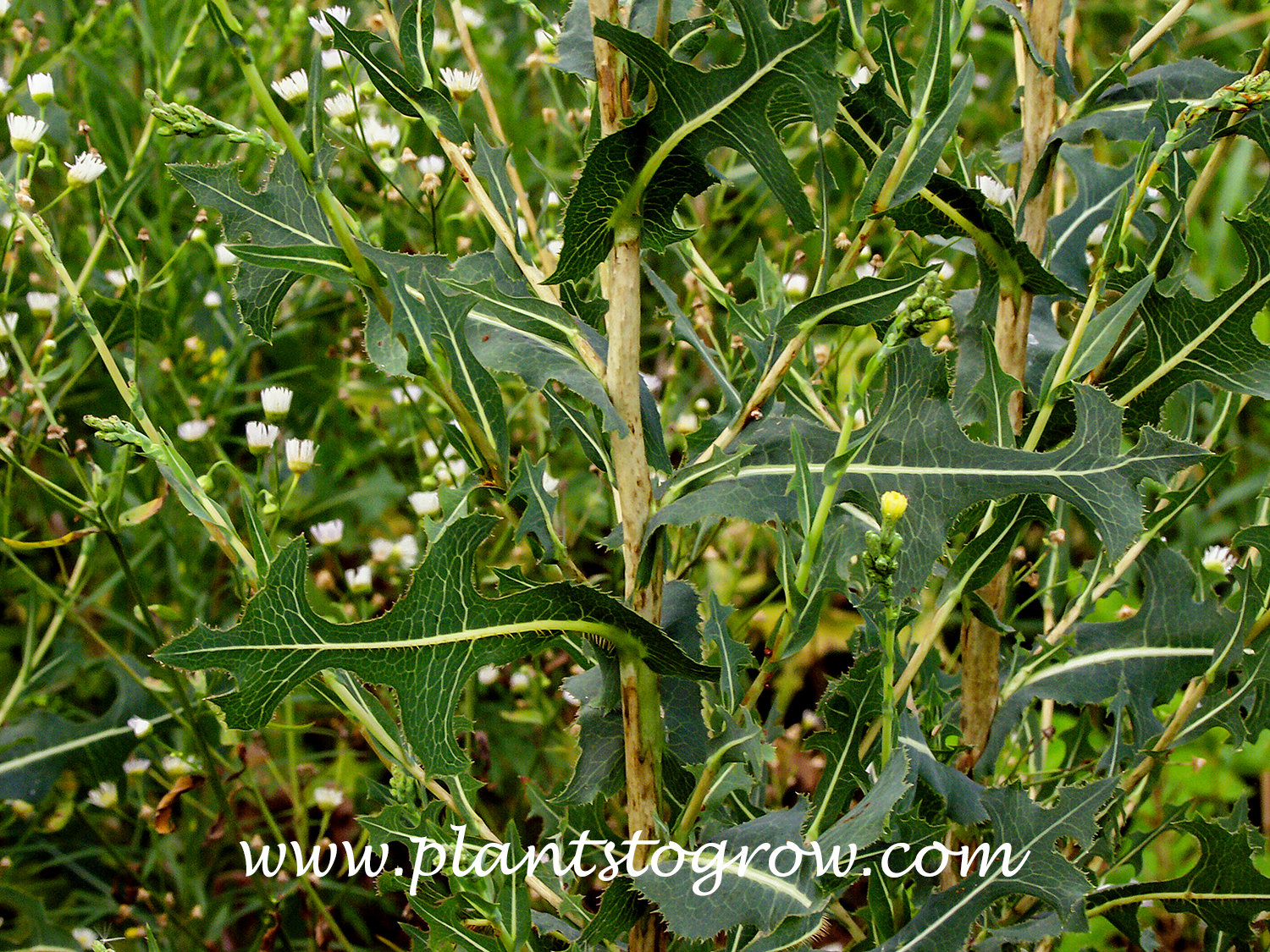
| Description | Prickly Lettuce (Lactuca serriola) is a widespread weedy species of disturbed areas. They have small, yellow dandelion-type flowers. |
|---|---|
| Plant Type | Weeds |
| Sunlight | average |
| Moisture | average to dry |
| Soil & Site | average to dry |
| Flowers | Small yellow, 5-12-ray flowers, disc flowers absent, emerge from a narrow bud. |
| Fruit | Seeds are an achene with a fluffy pappus. This papus allows the seeds to float away and become a successful colonizer of disturbed sites. It can act as a winter annual, germinating with winter rains, grows a rosette, and then bolts and sets seed in the following spring or summer. |
| Leaves | alternate, simple, bluish-green, clasp stem, deep lobes often prickly, mid-vein on underside is prickly |
| Stems | Hollow, becoming woody-like. A white, milky latex (sap) is released when the plant is cut or broken. |
| Roots | Forms a deep tap root |
| Dimensions | I have seen these over three feet tall |
| Maintenance | Pull the plants before they are allowed to set seed and float away. |
| Propagation | propagates by seeds |
| Native Site | Native to Eurasia to the Himalayas. Has escaped and become a noxious weed. |
| Misc Facts | Cattle can develop pulmonary emphysema from overeating of this plant. The common name, compass plant, comes from the fact that the leaves often point east and west. Lactuca means milk, serriola refers to ranks. (syn. L. scariola). Prickly lettuce is the wild progenitor of cultivated lettuce |
| Notes & Reference | #19-Common Weeds ( USDA Agricultural Research Service), #81-Weeds of Northern US and Canada (Royer and Dickinson), #100-Wildflowers of Wisconsin and the Upper Midwest (Merel Black and Emmet Judziewicz) |

Cart