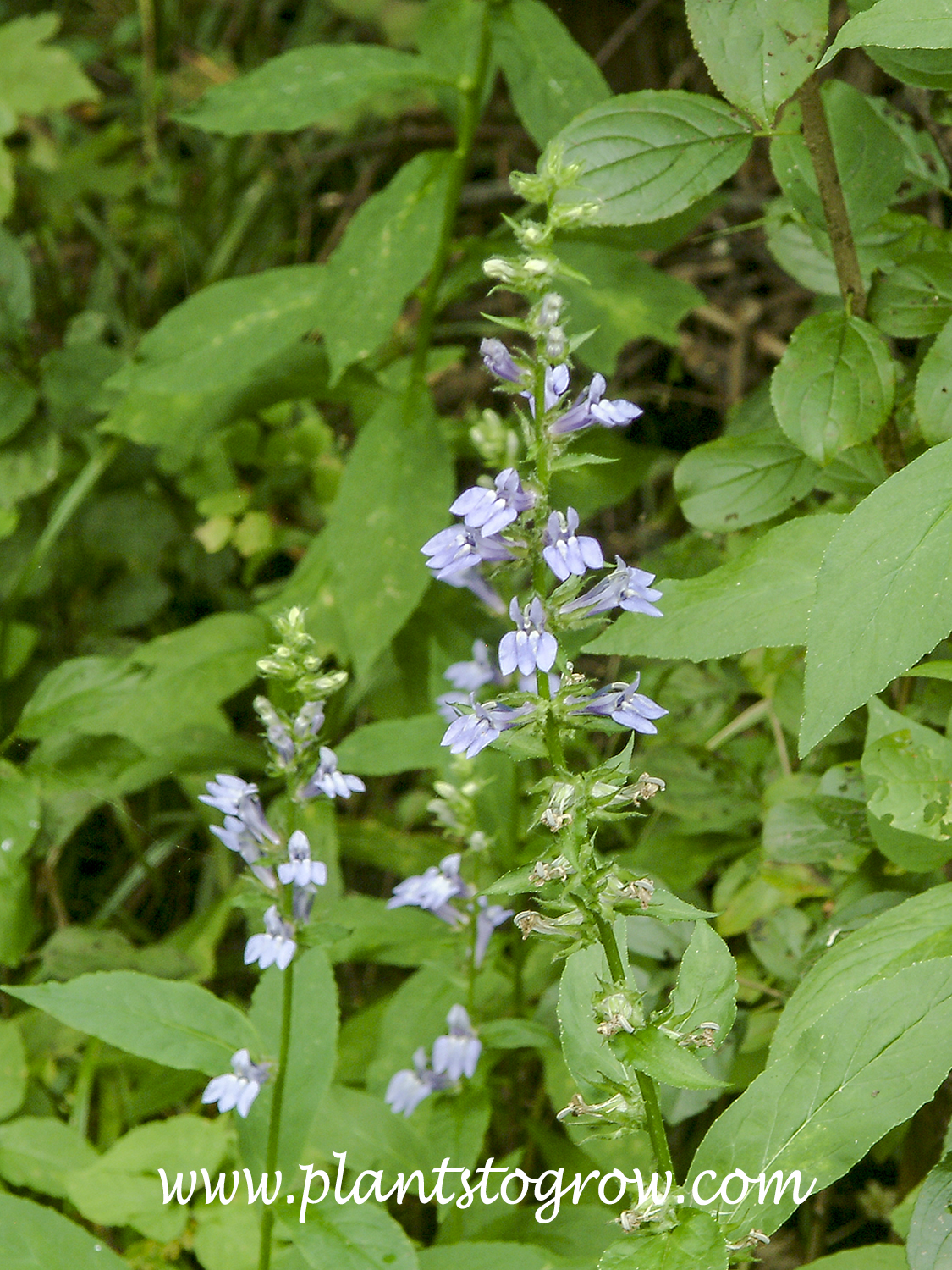
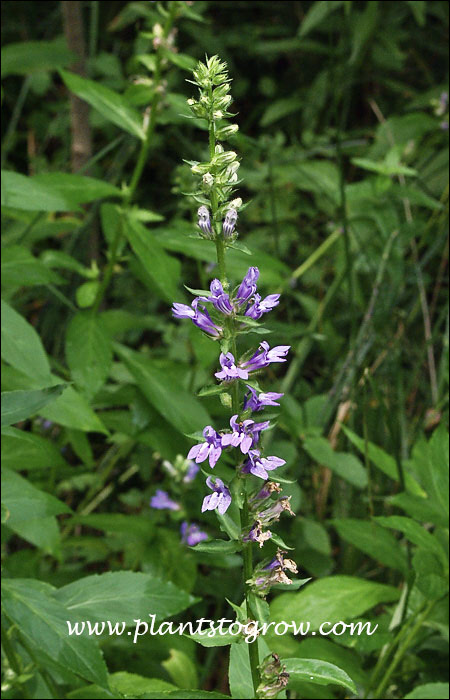
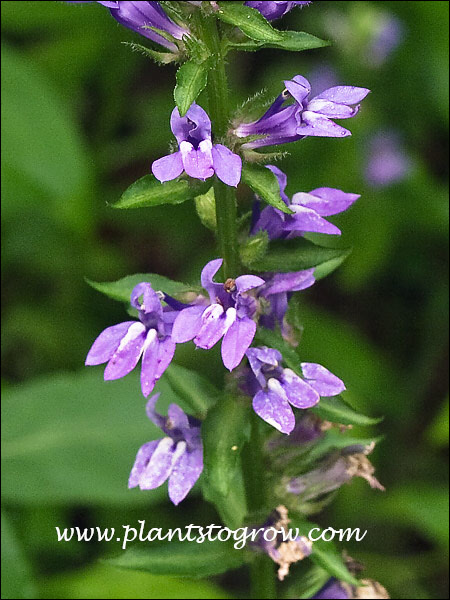
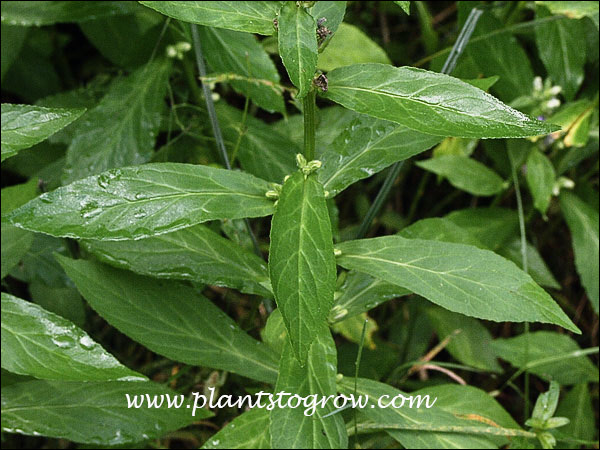
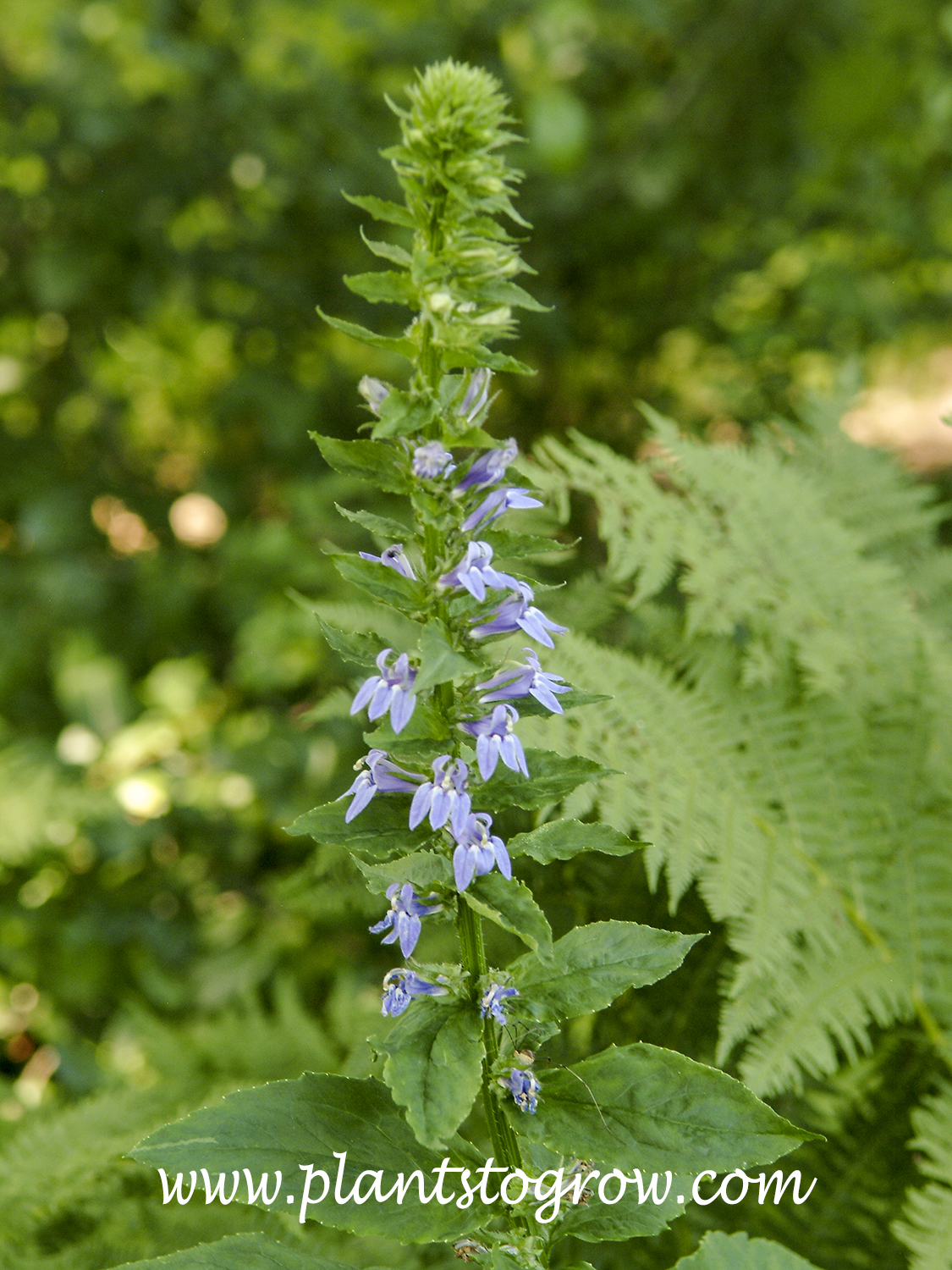
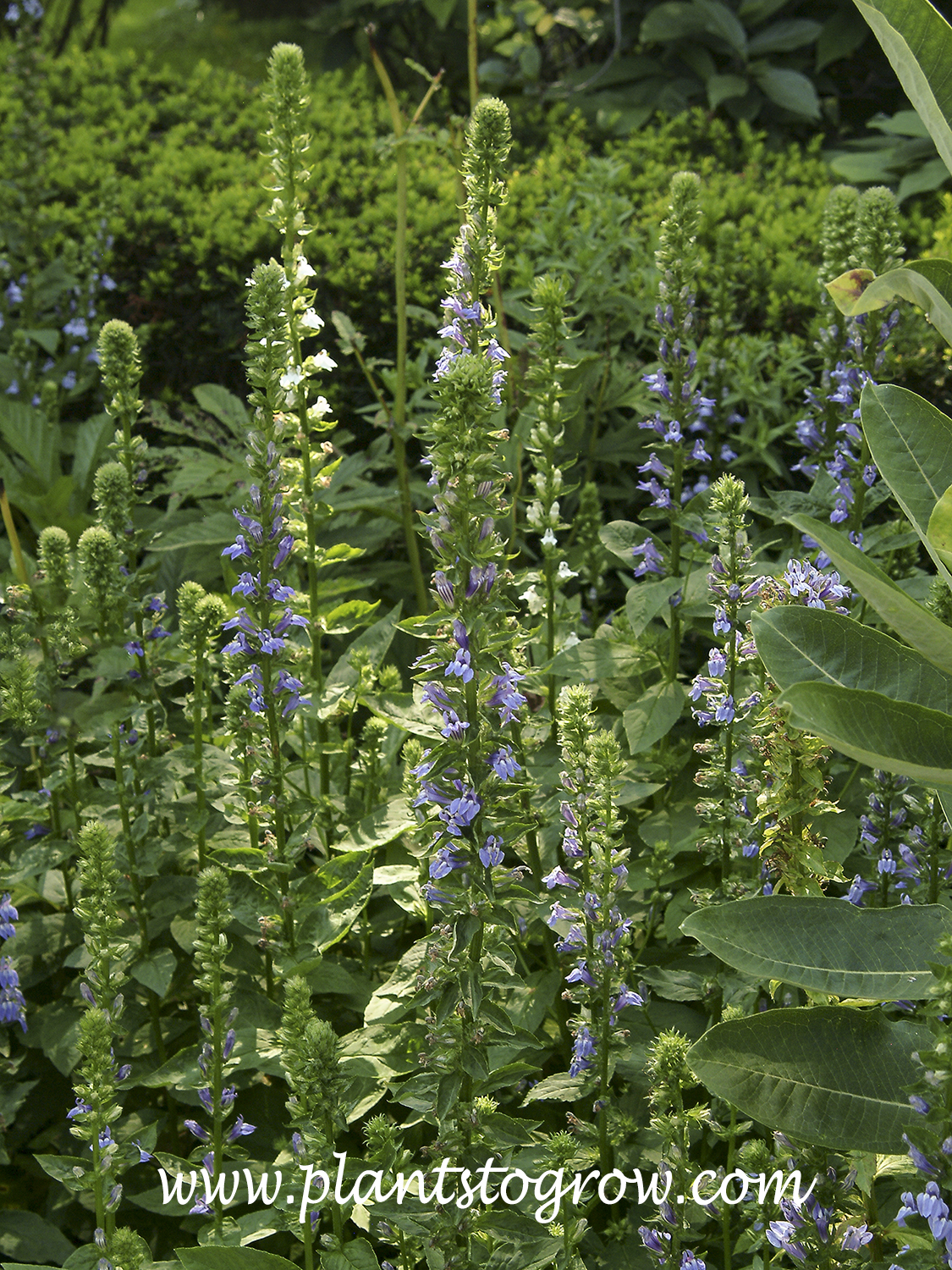
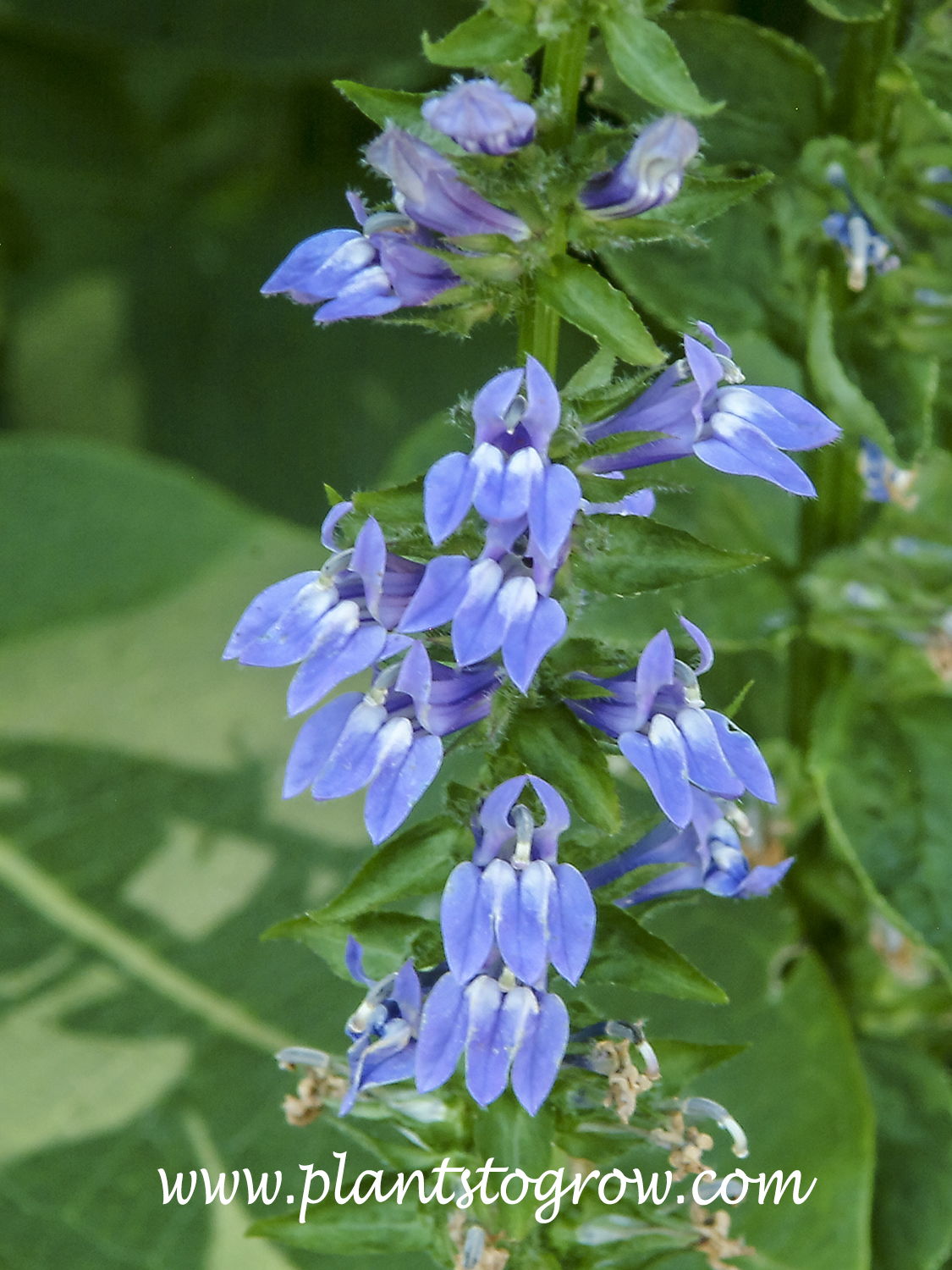
| Description | Great Lobelia (lobelia siphilitica) is a native wildflower found growing in moist to wet sites. |
|---|---|
| Plant Type | All Plants, Wild Flowers |
| Hardiness Zone | 5 |
| Sunlight | full to partial sun |
| Moisture | wet to moist |
| Soil & Site | wet to moist |
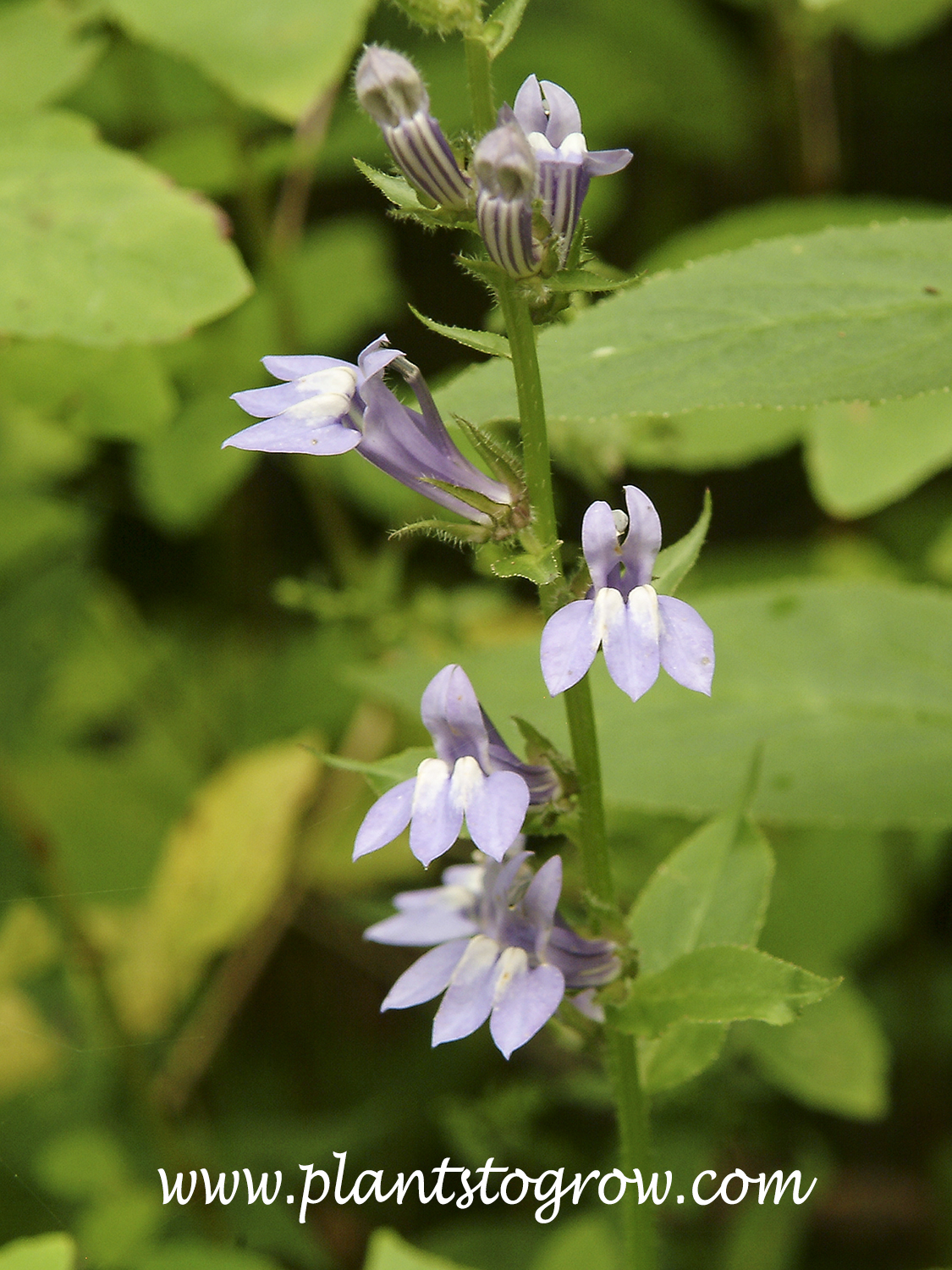
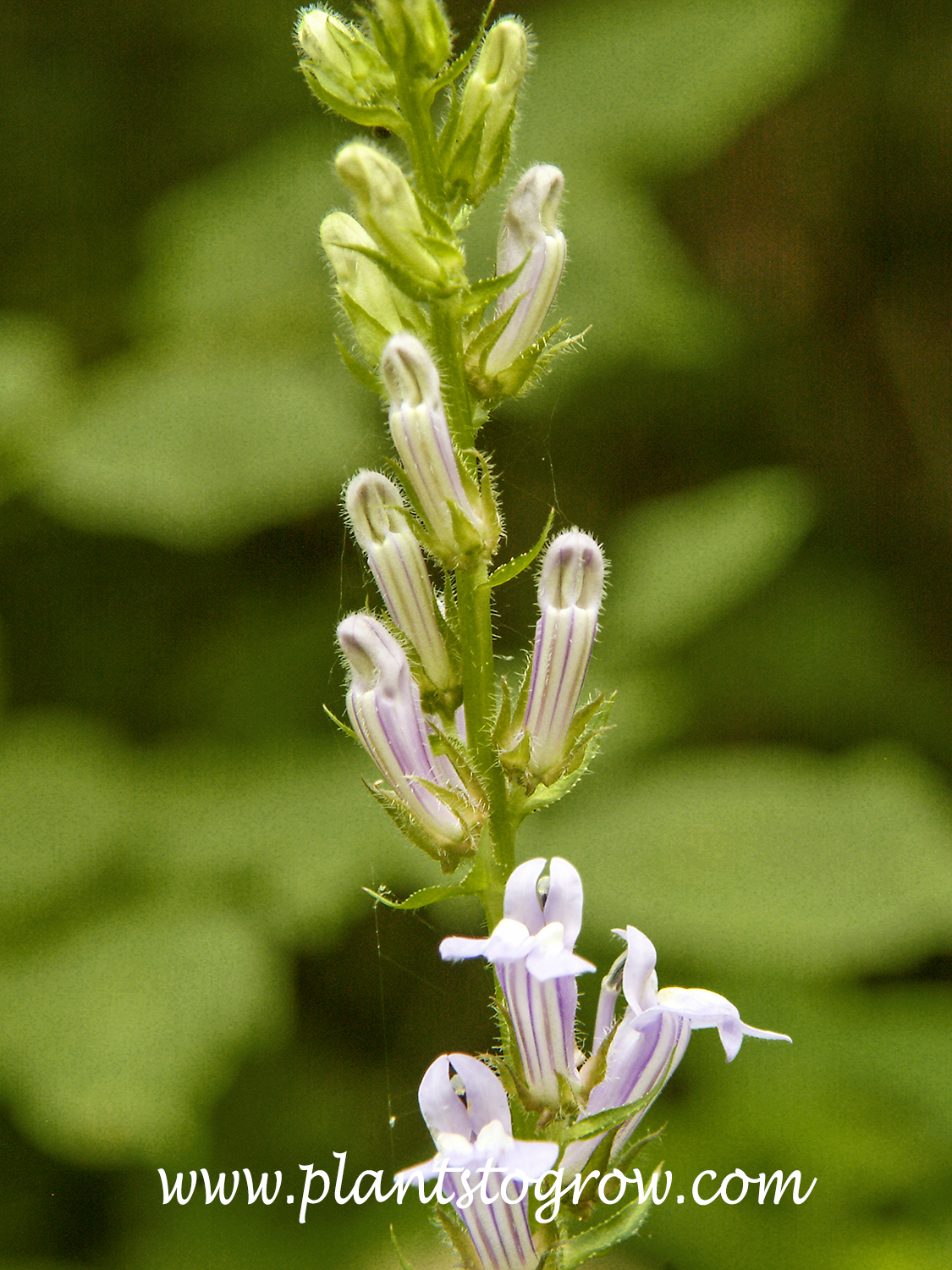
| Flowers | blue, borne on a dense raceme in leaf bracts, irregular shaped, lipped flower, white stripes in the throat act as nectar guides |
| Fruit | brown seeds found in seed capsules |
| Leaves | finely toothed alternate leaves |
| Stems | usually unbranded, erect, stout, angular stem with juicy sap |
| Dimensions | 1-4 plus feet tall |
| Propagation | seeds |
| Misc Facts | Lobelia after Matthias de l'Obel (1538-1616), a Flemish botanist; also written as Matthias von Lobel. Siphilitica because once thought to cure syphillis. (#100) Lobelias are rich in poisonous alkaloids. |
| Notes & Reference | #56-Tall Grass Prairie Wildflowers (Doug Ladd), #100-Wildflowers of Wisconsin and the Upper Midwest (Merle Black and Emmet Judziewicz), #140-Prairie Plants of the UW Madison Arboretum (Theodore Cochrane, Kandis Elliot, Claudia Lipke) |

Cart