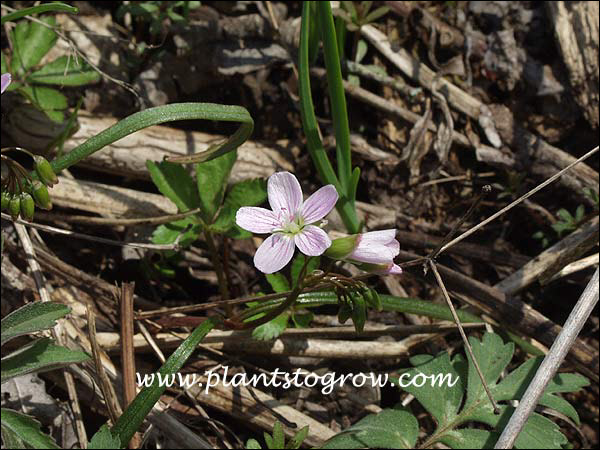
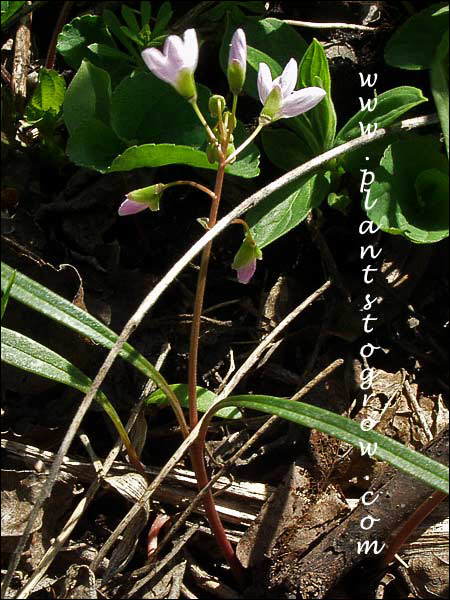
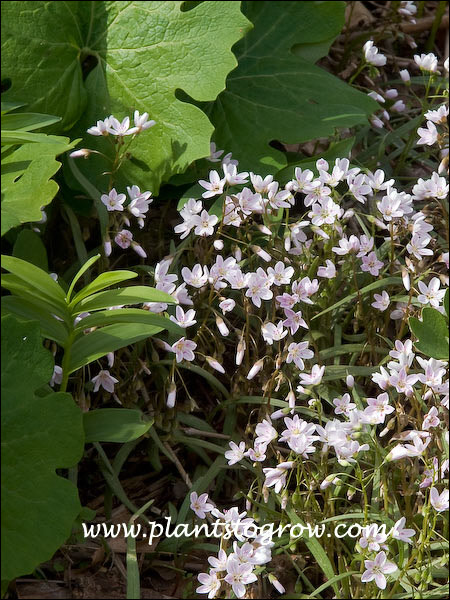
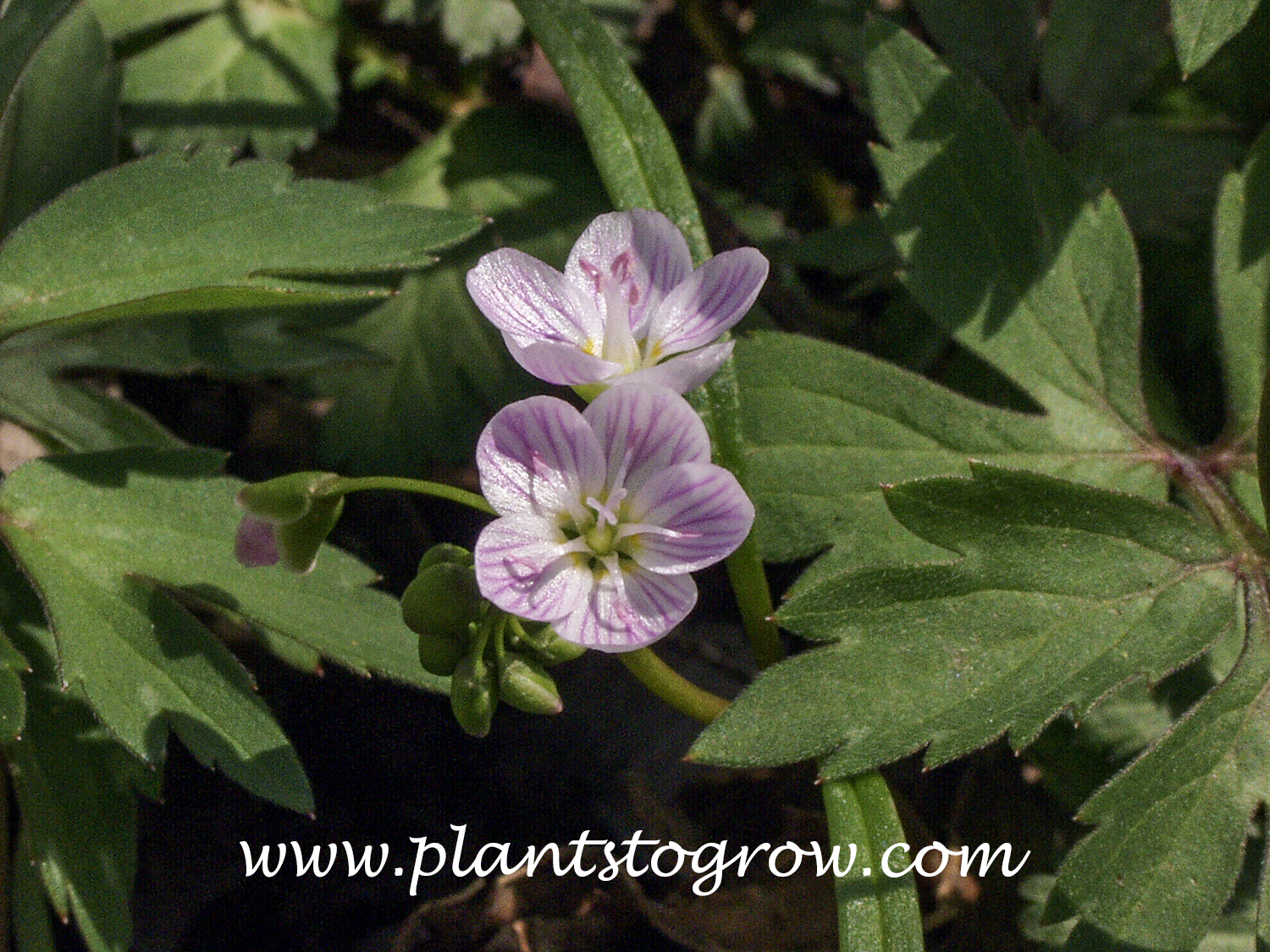
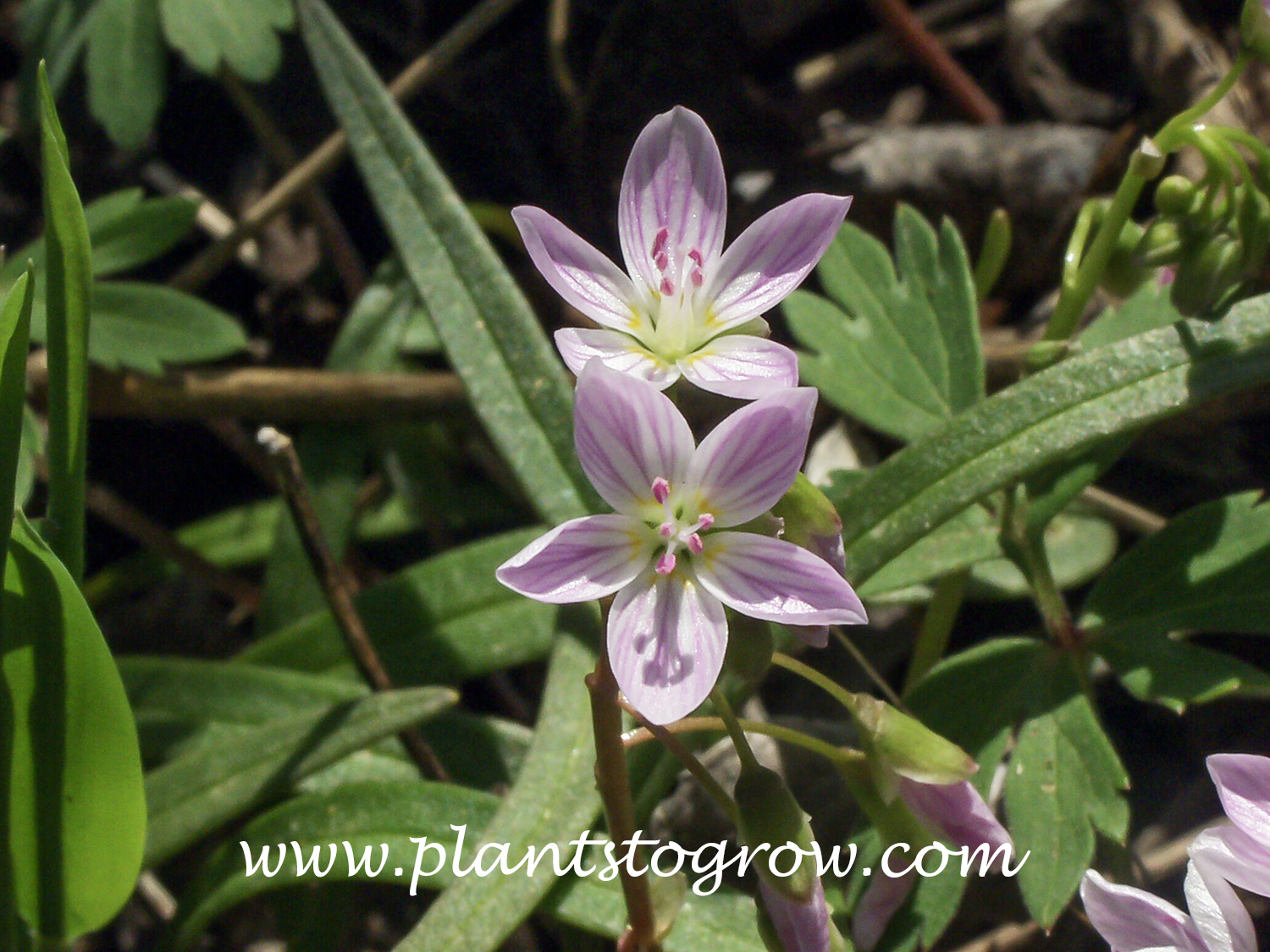
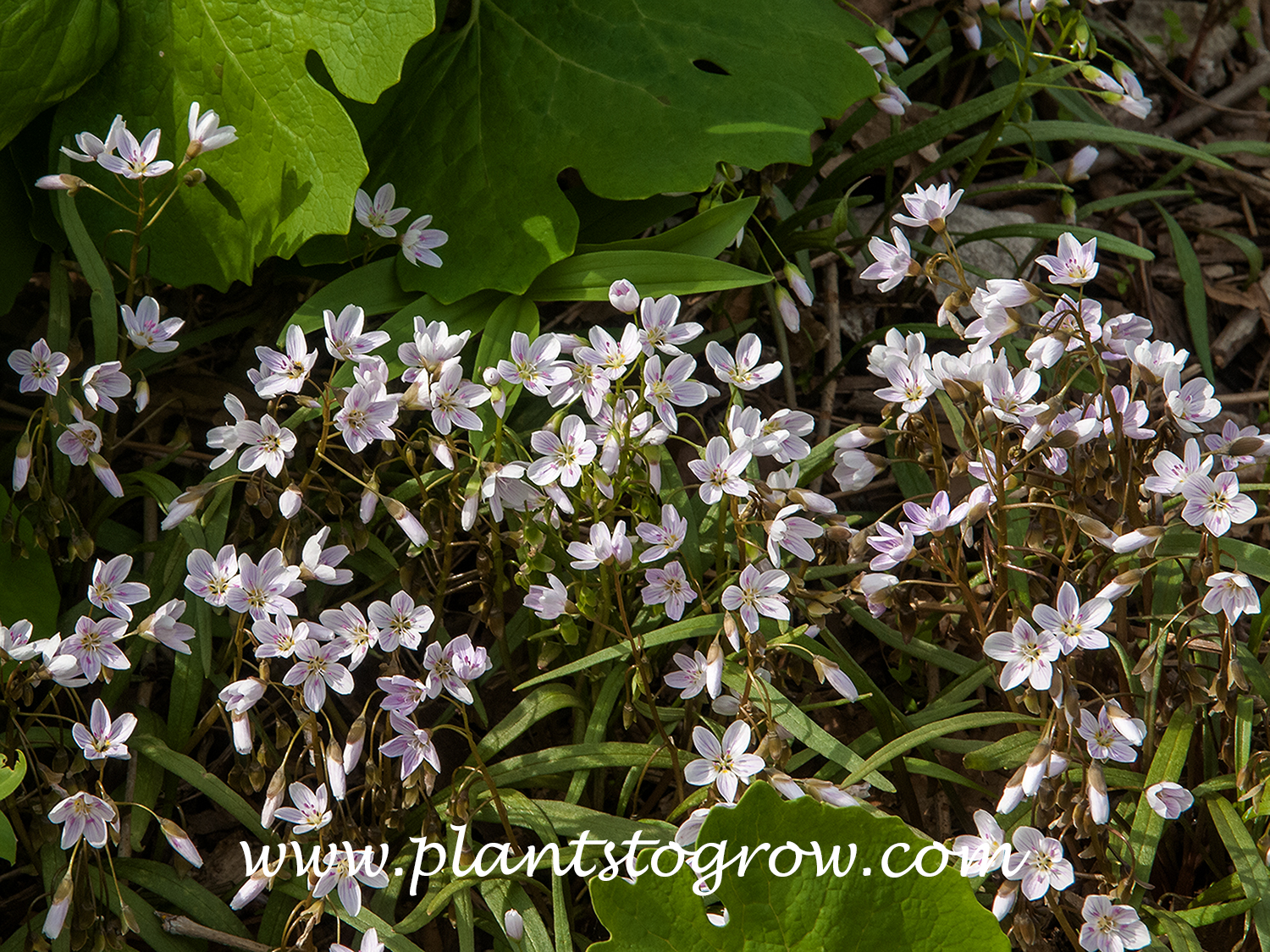
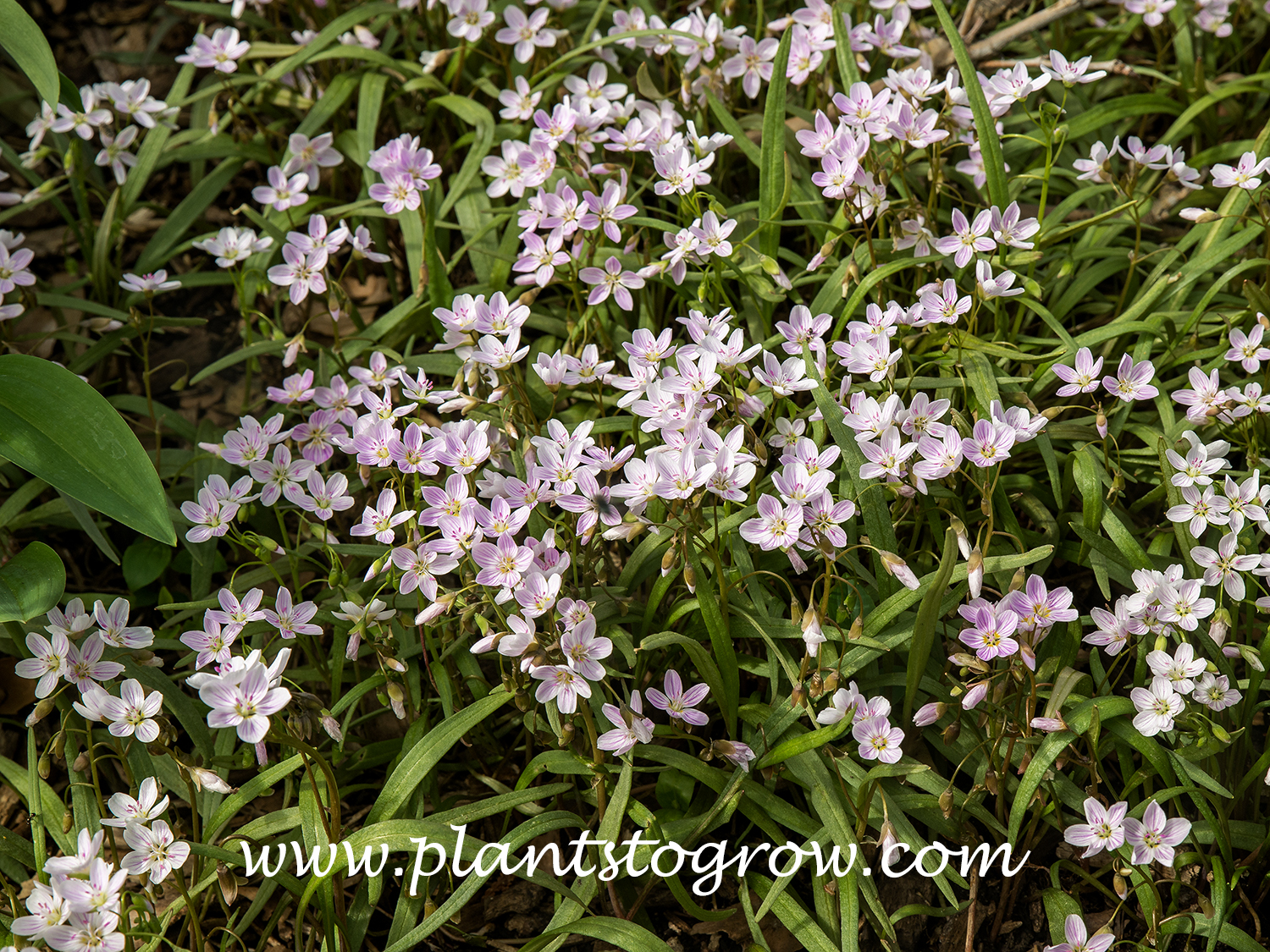
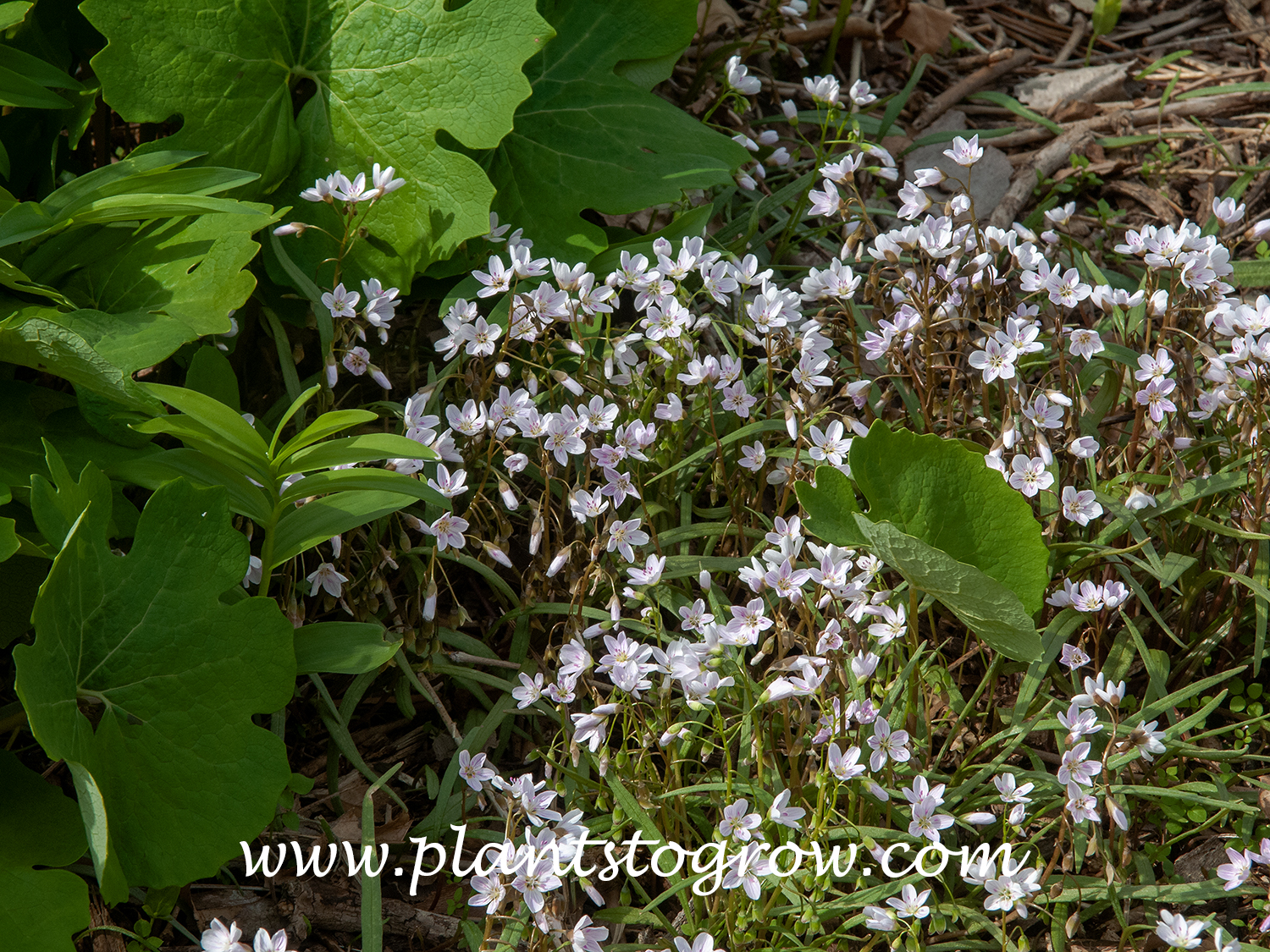
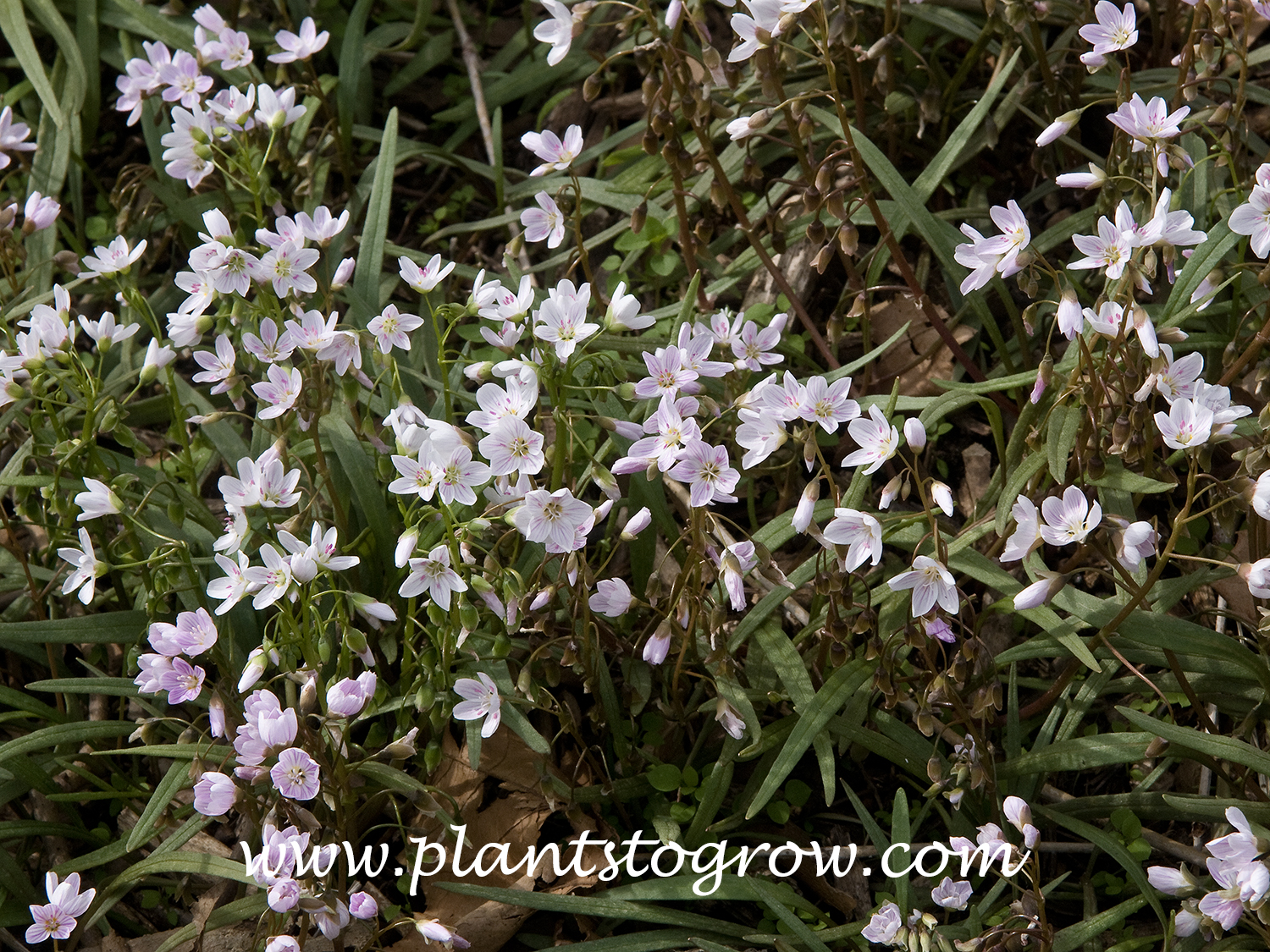
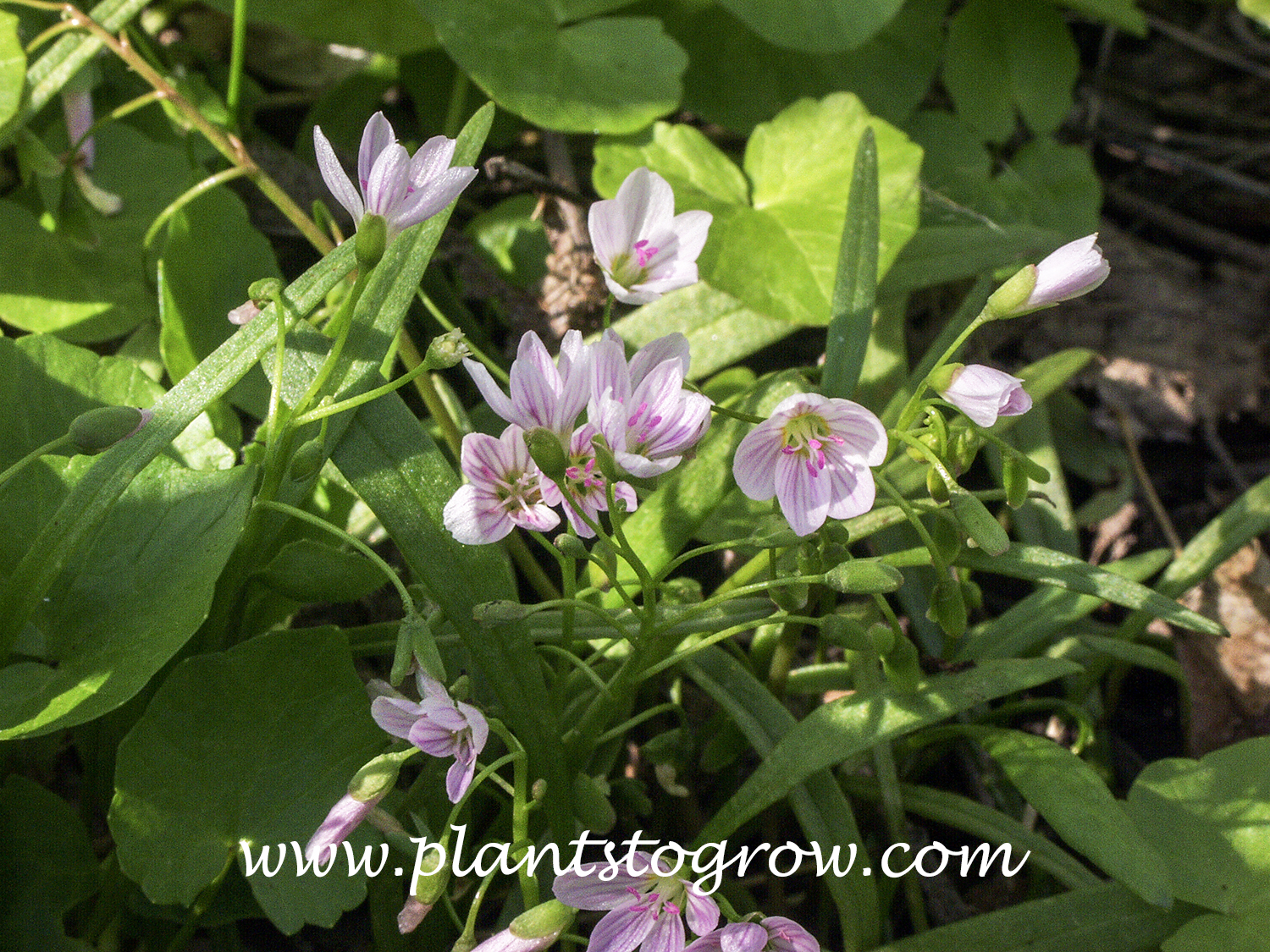
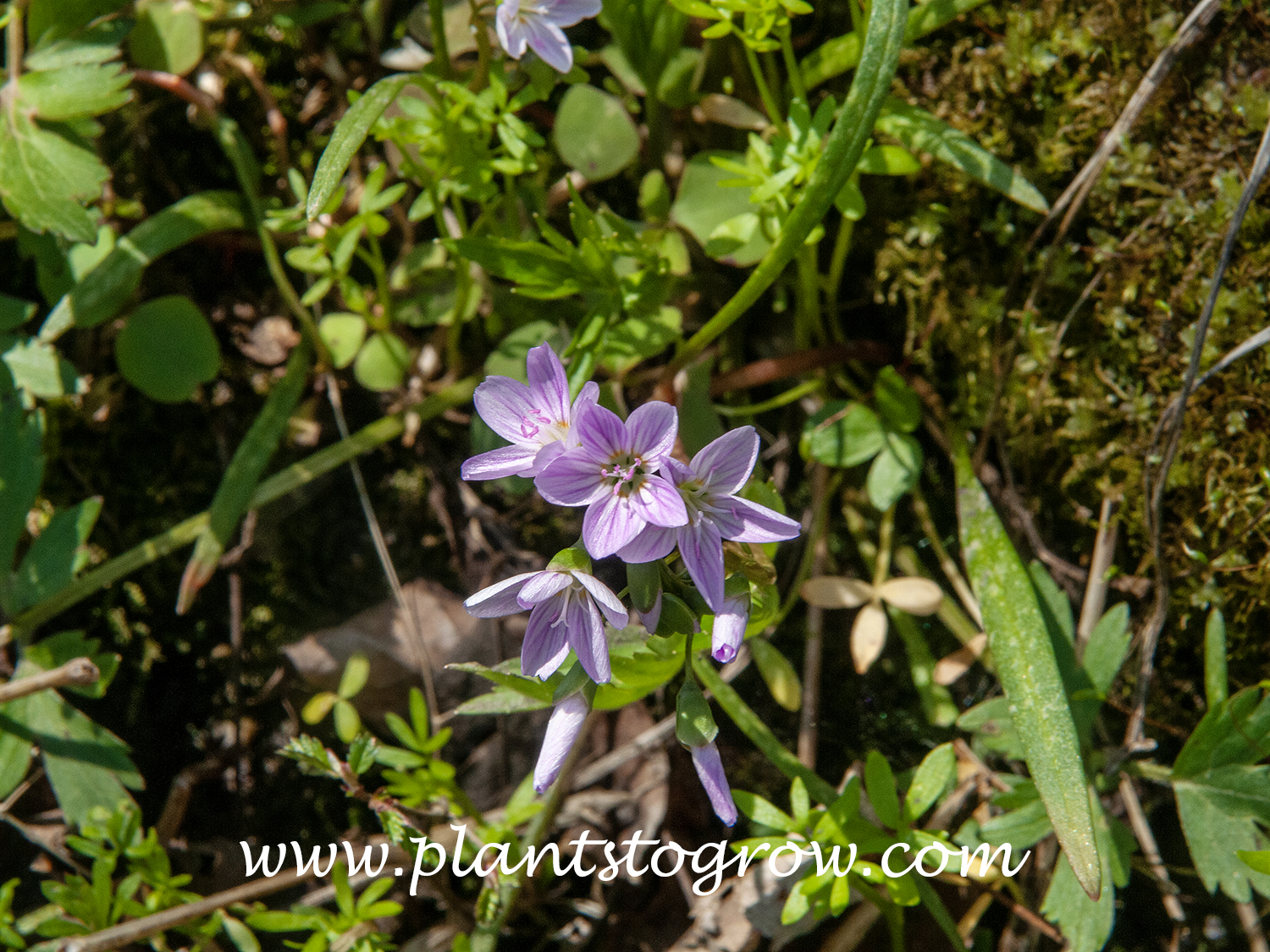
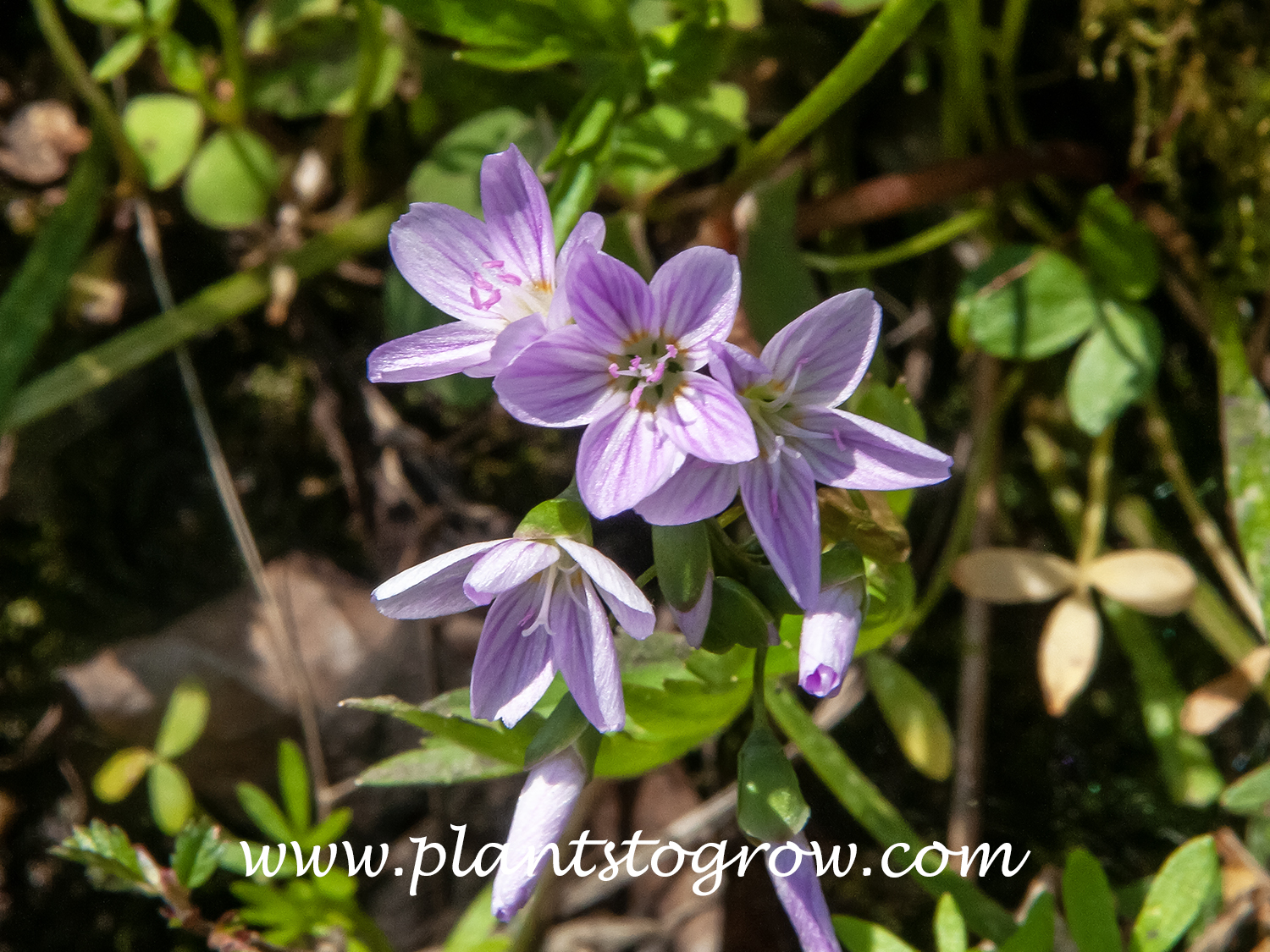
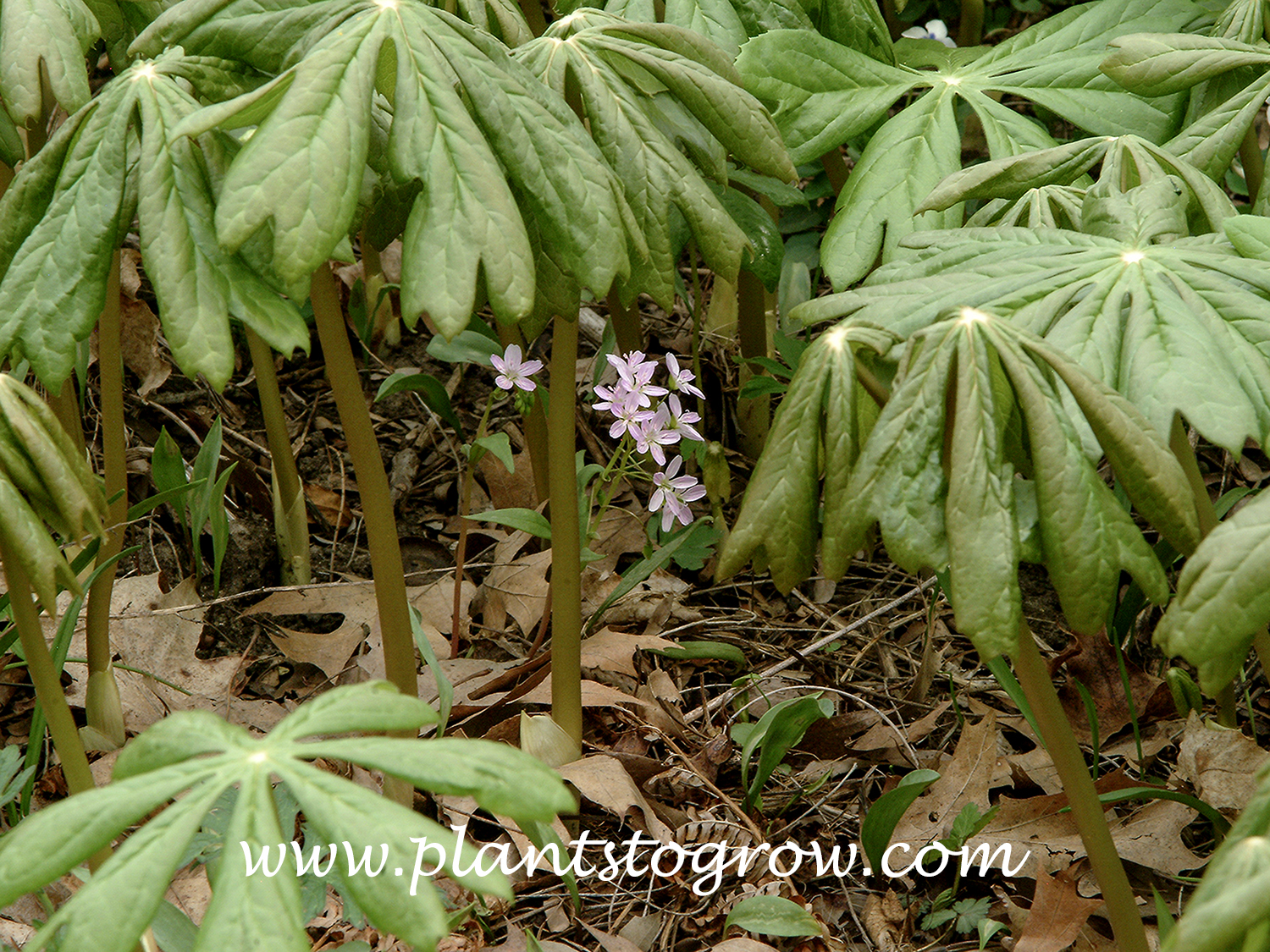
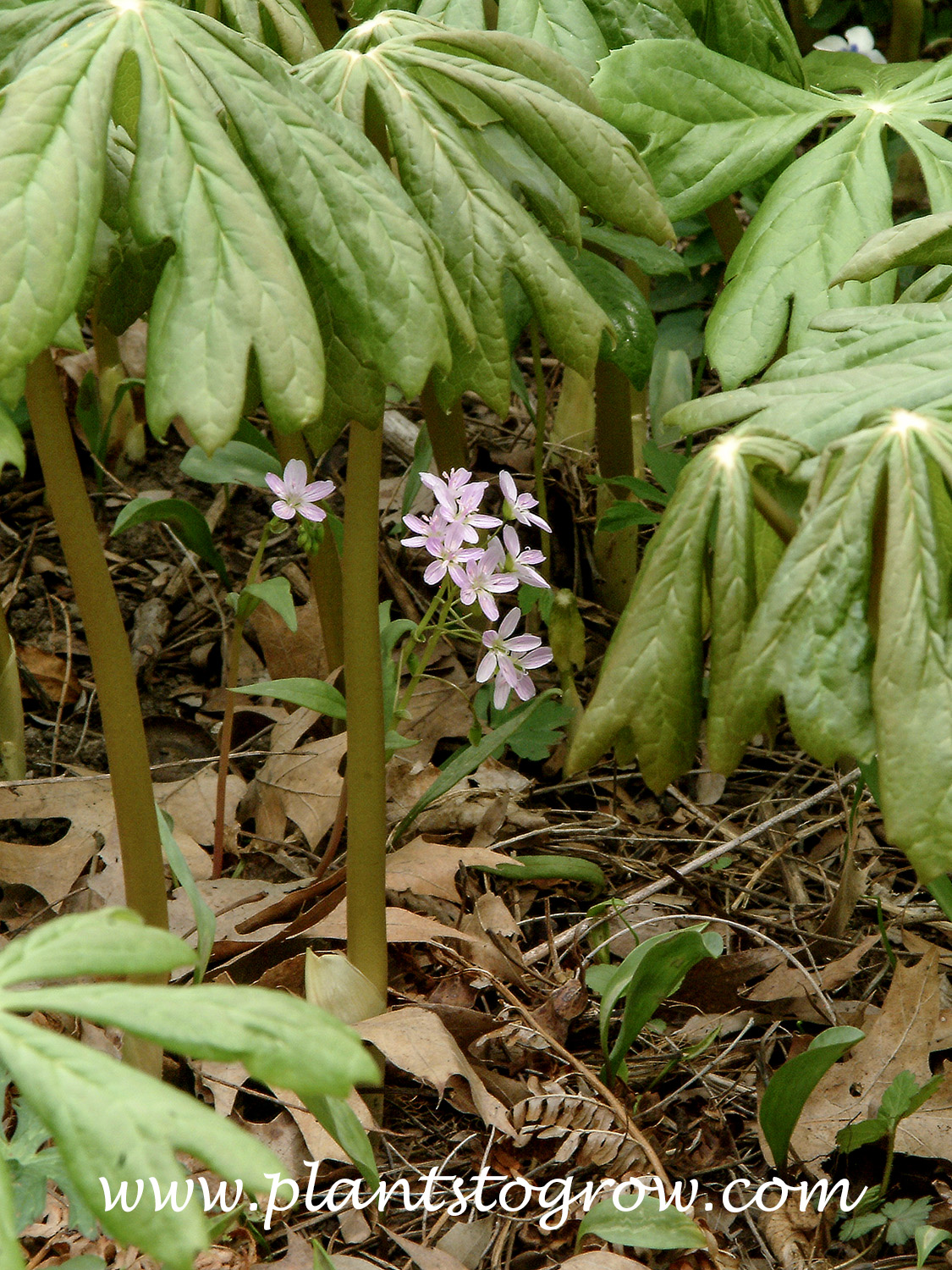
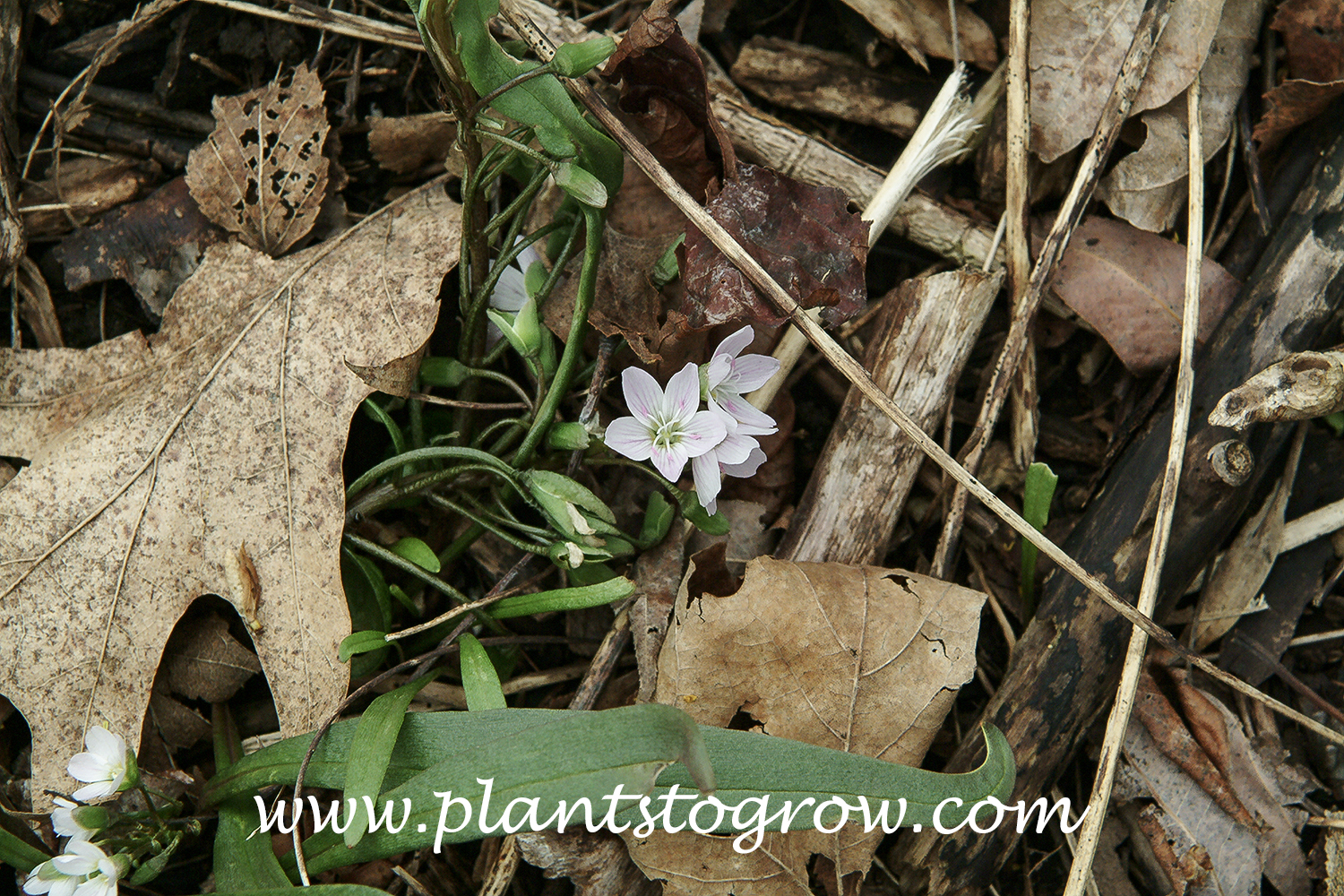
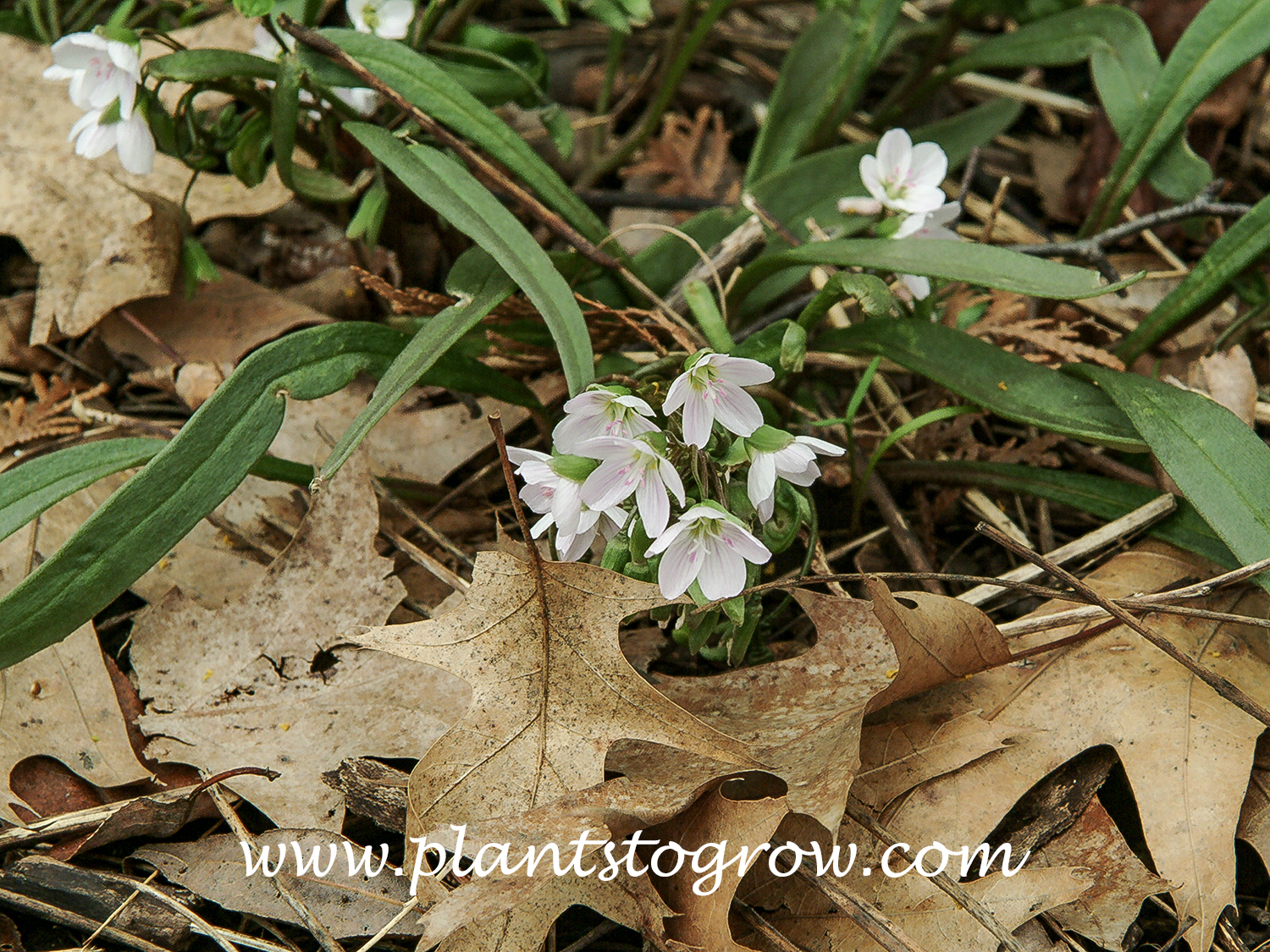
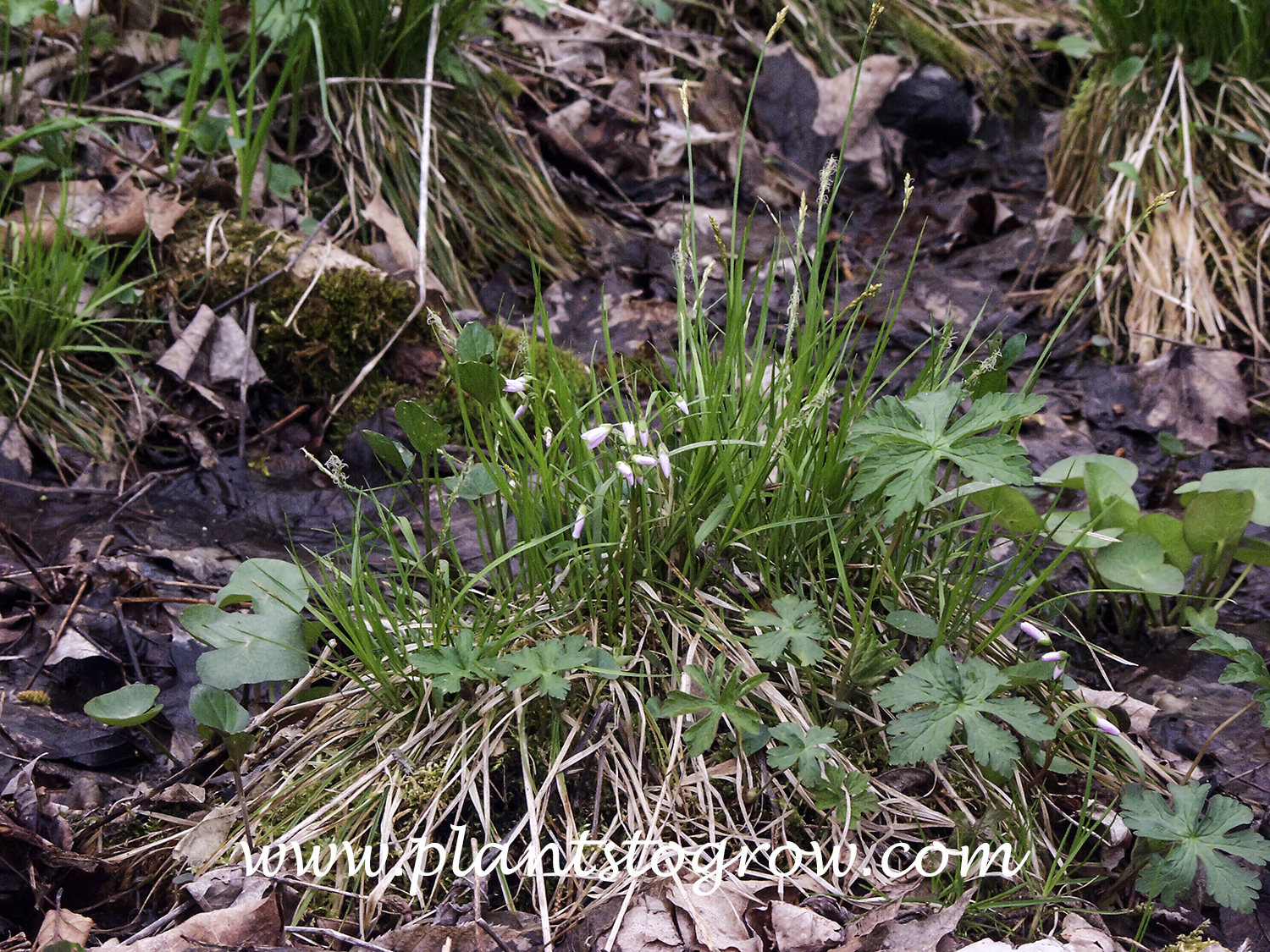
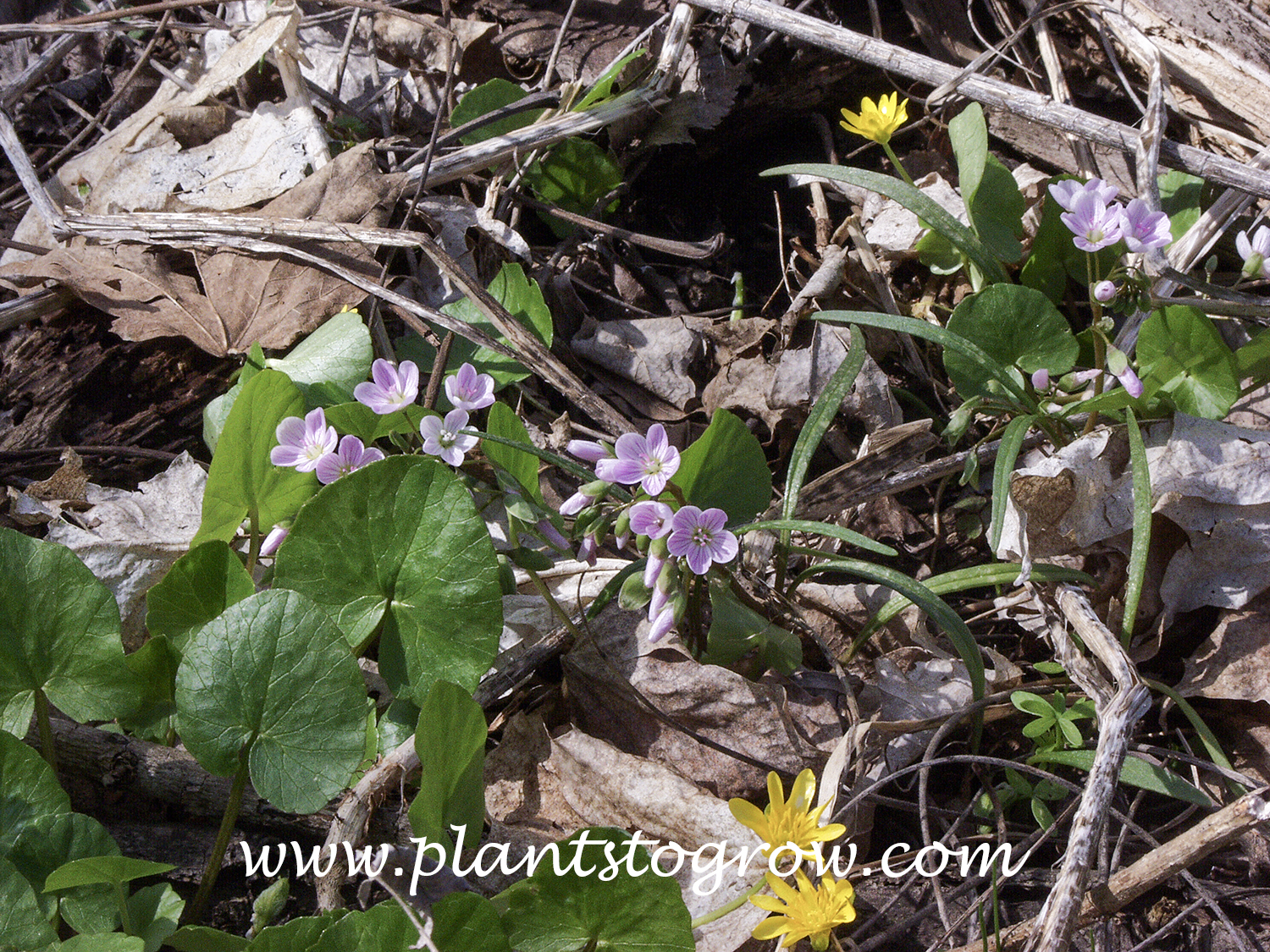
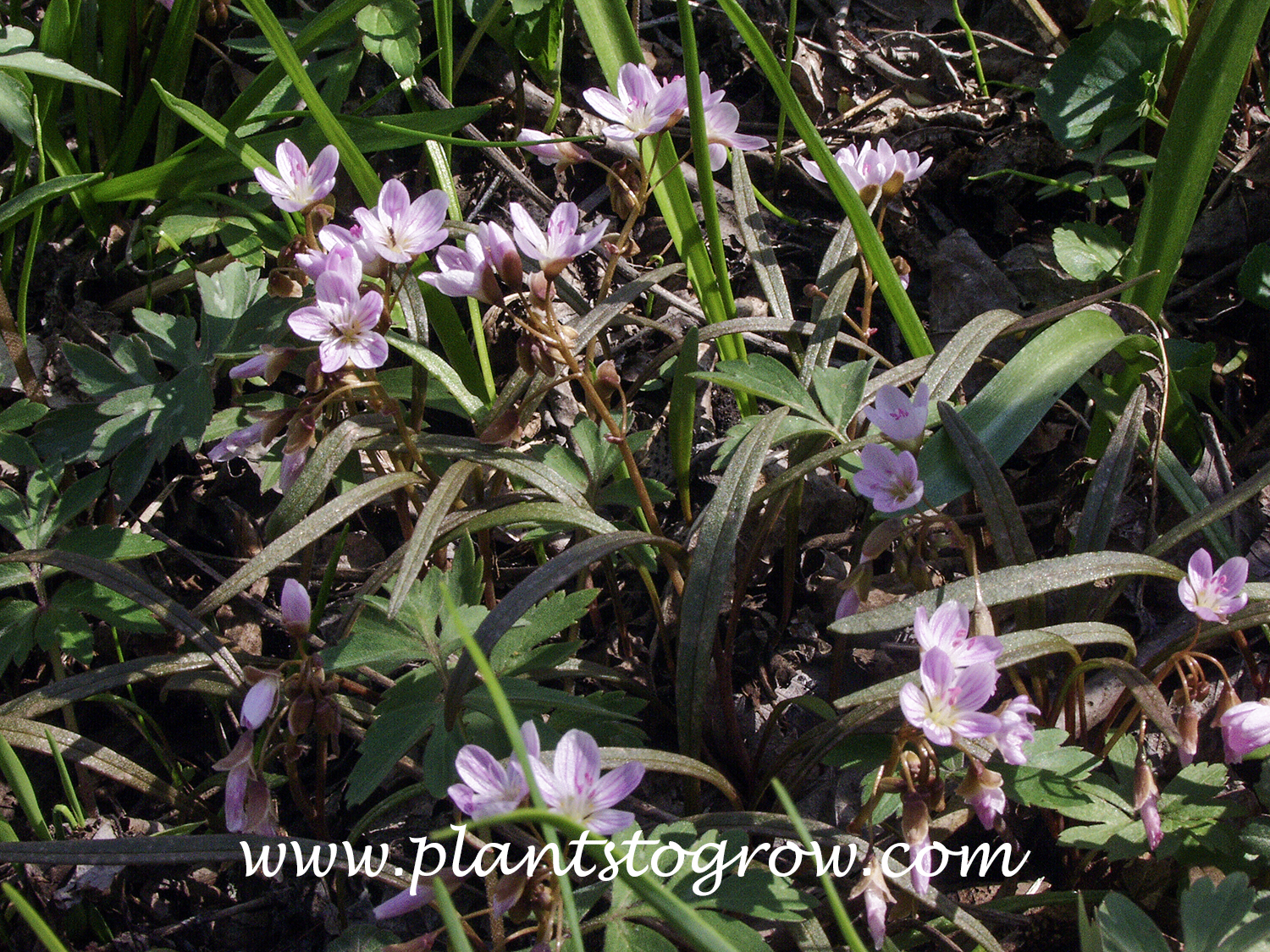
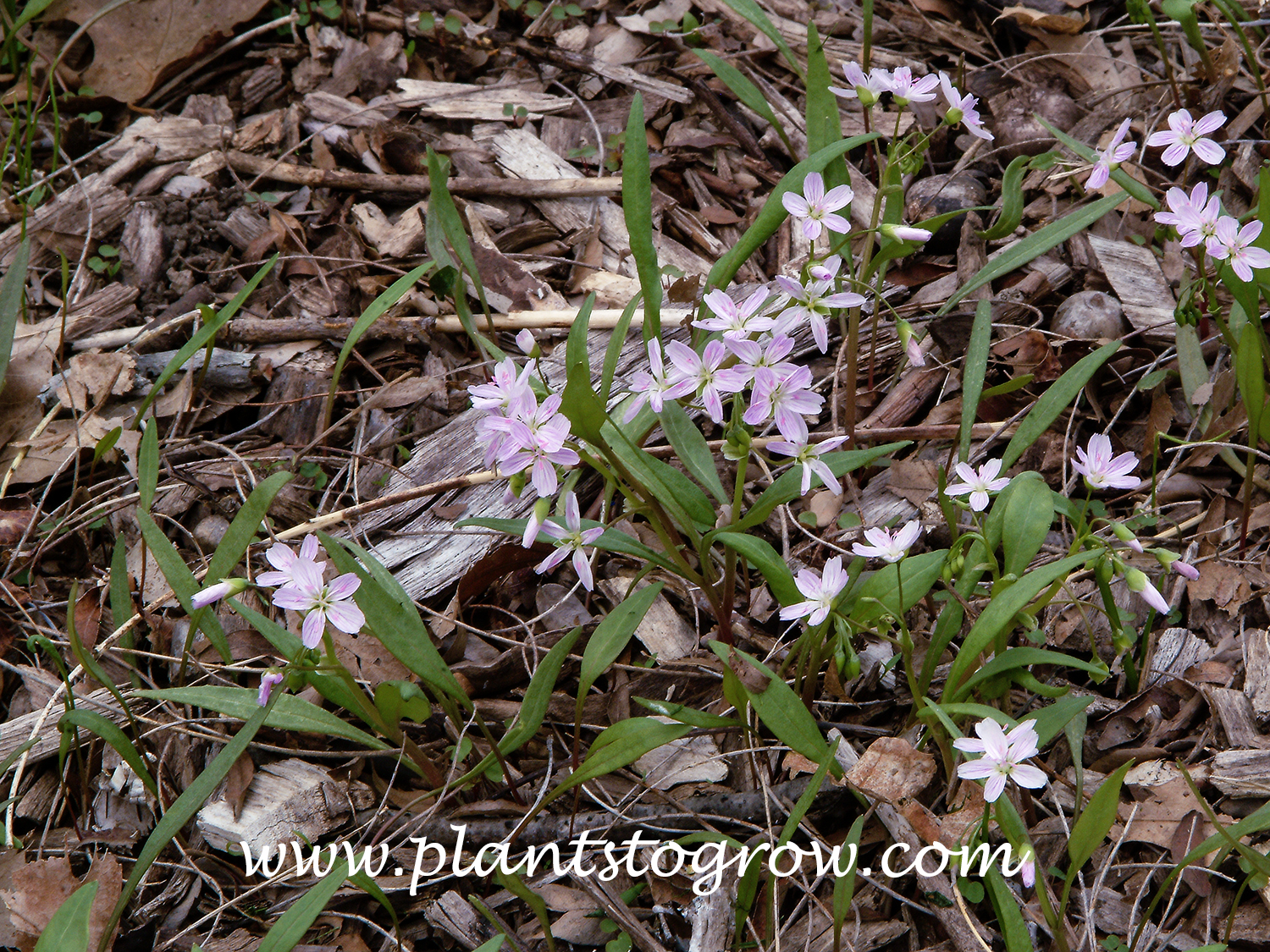
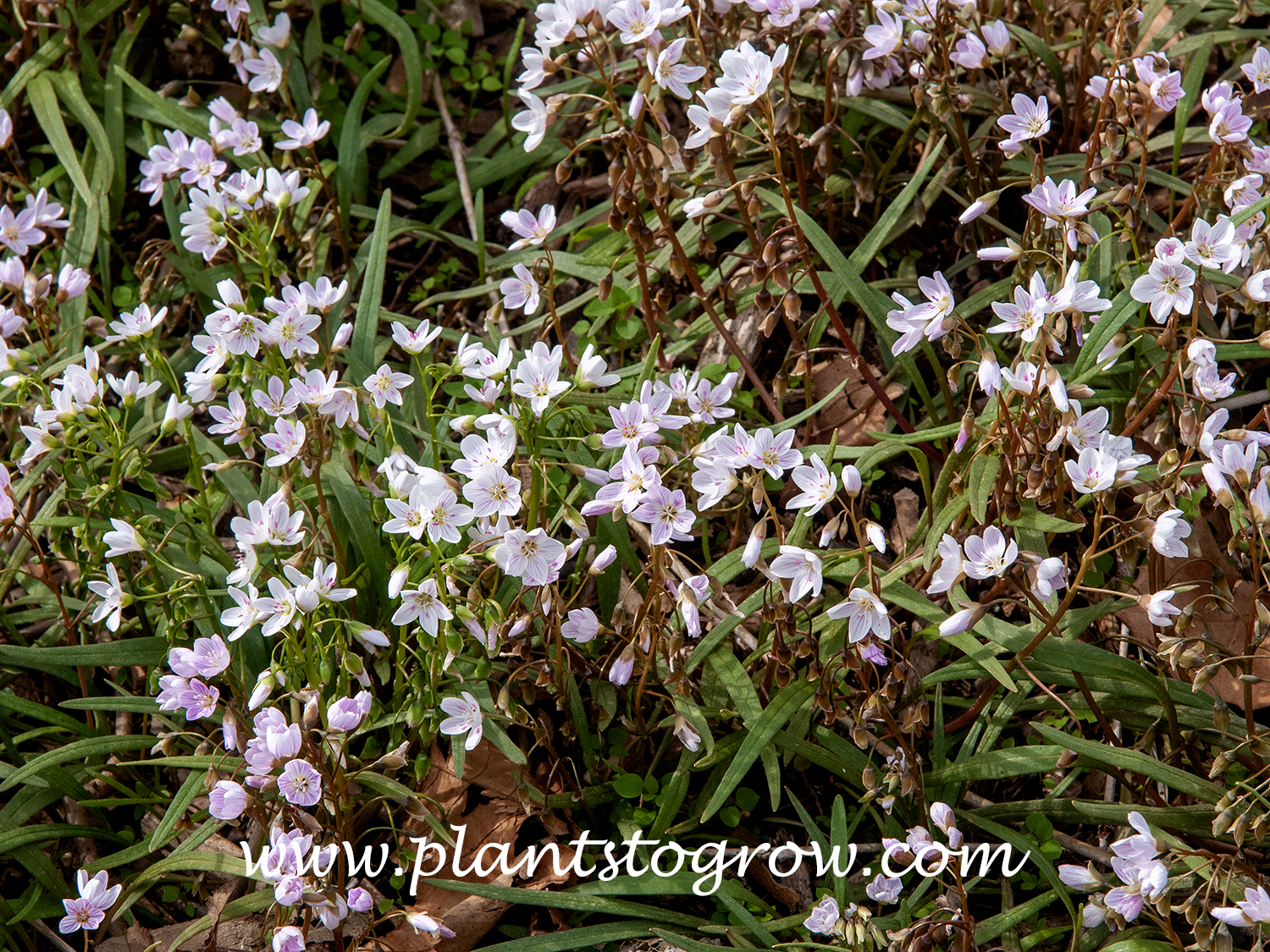
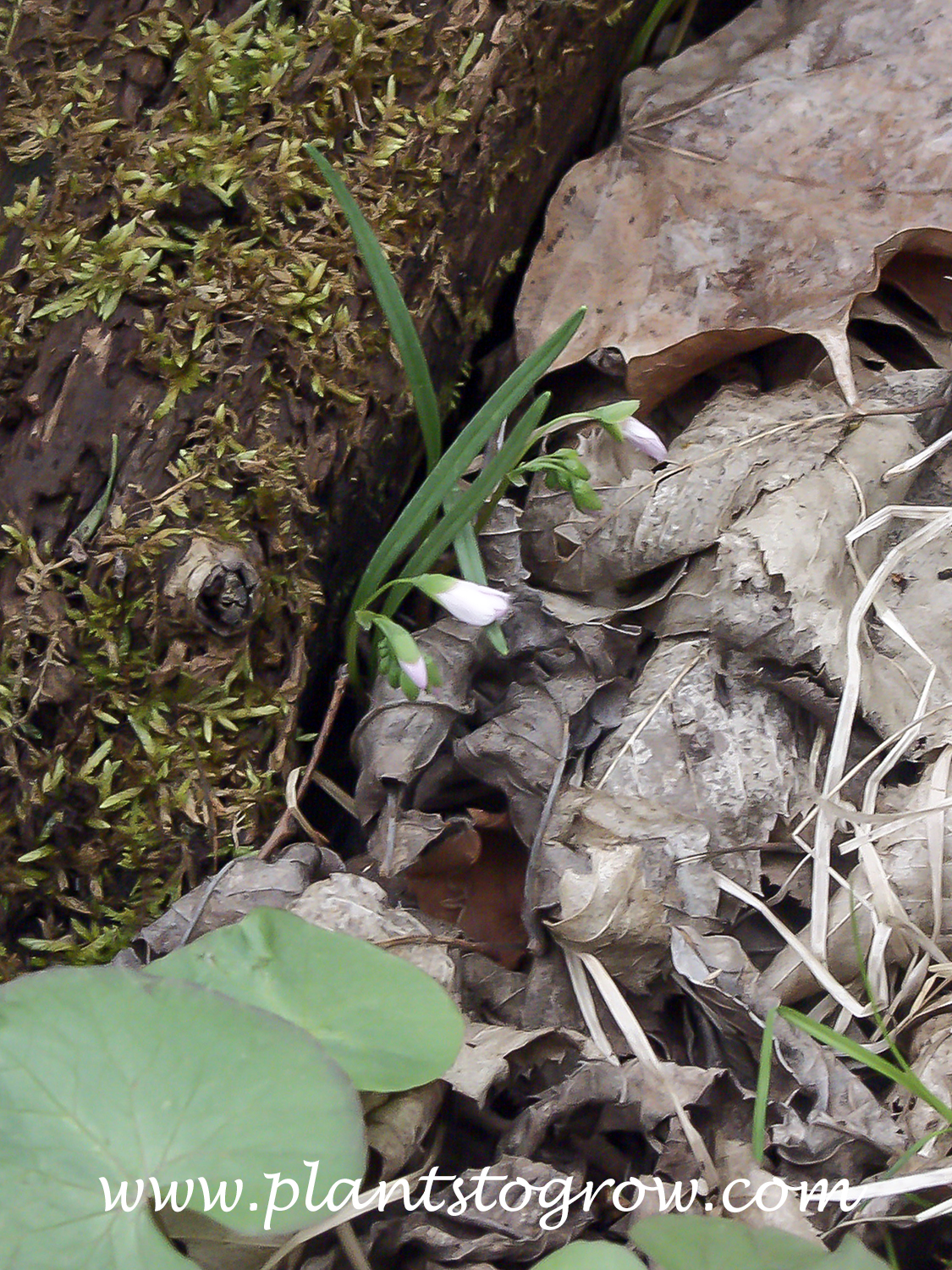
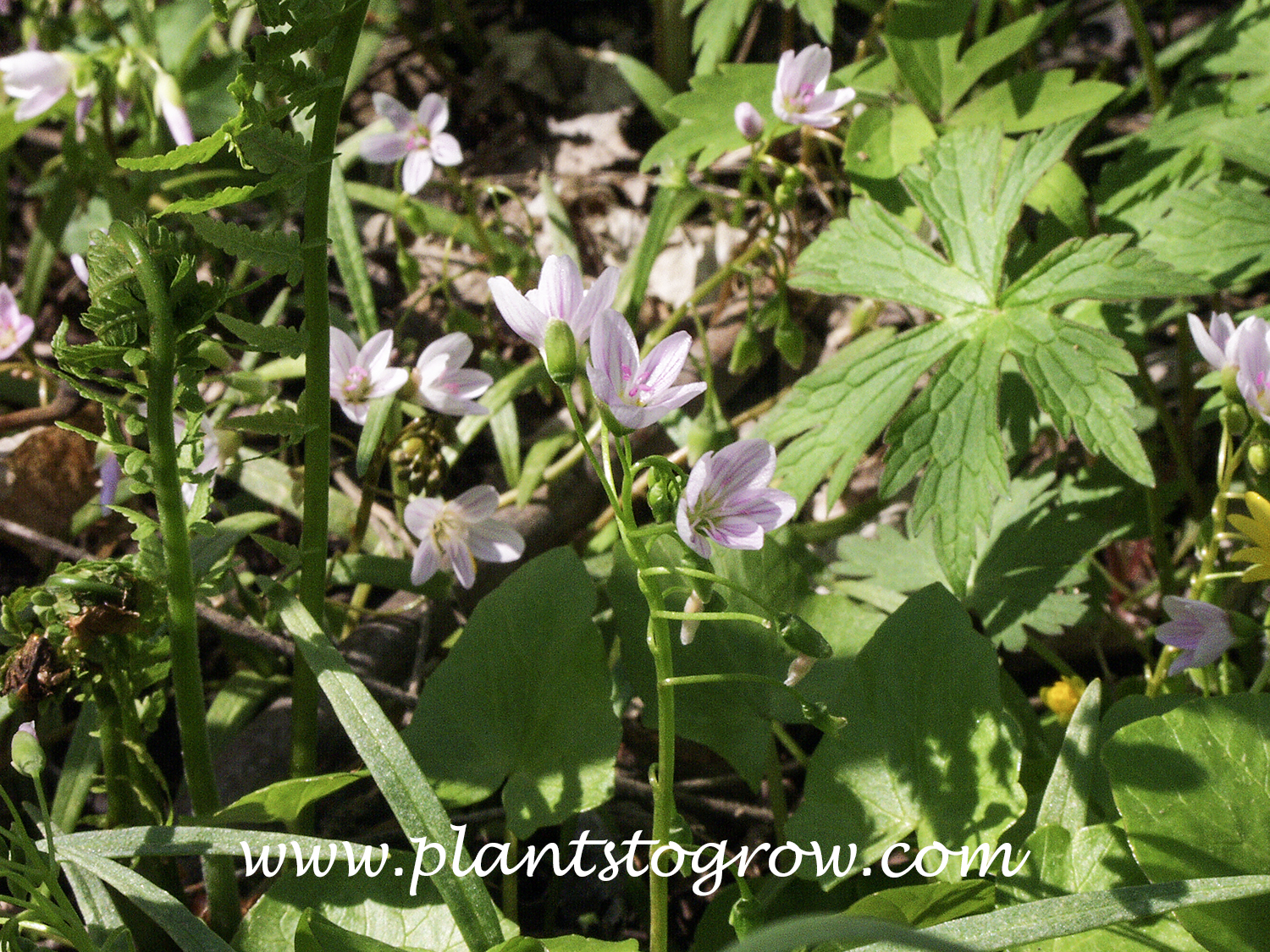
| Description | Spring Beauty (Claytonia virginica) An ephemeral wildflower that blooms in the early spring. Found growing in shaded, moist woodland sites. |
|---|---|
| Plant Type | Wild Flowers, Site author's observations |
| Hardiness Zone | 5 |
| Sunlight | Found growing in the shaded areas of the woods. This could be considered sort of a misnomer. Since they grow in the shade of deciduous trees. In the springtime of the year the leaves haven't opened so the Spring Beauty is growing in the spring sun but as the summer progresses and the leaves unfold on the trees, these spots become shaded. A fairly typical situation for spring blooming, ephemeral plants. |
| Moisture | prefers the moist sites |
| Soil & Site | woodsy, moist |
| Flowers | Flowers are small, 1/2" to 7/8", white to pink with dark veins and five petals, mid to late April into mid May |
| Fruit | Seeds are found in an oval capsule. |
| Leaves | Leaves are green, grass-like, and linear to linear-lanceolate, occurring in pairs on the stem with a few basal leaves. They may reach 6-12 inches long before going dormant and are around 0.5 inches wide. |
| Stems | Forms small, edible, potato-like underground tubers (corms). They have a chestnut-like flavor and were, in fact, consumed by early Americans, but collecting them in quantities sufficient for a meal is time-consuming |
| Dimensions | 6-12" |
| Propagation | Seeds may be difficult because Mother Nature probably has introduced a dormancy into the germination process? Easiest way is by division. |
| Native Site | Widely distributed throughout the Eastern and Midwestern United States, including the Mid-Atlantic region. |
| Misc Facts | Claytonia was named in honor of John Claytonia ( 1694-1773) a botanist who lived in Virginia. The tubers were boiled and ate having the flavor of Chestnuts. |
| Author's Notes | I will always enjoy walking into the woods and viewing the carpet of floral color produced by these plants. I have been at sites where there seems to be thousands and have also found the plant growing in small patches. Spring Beauty is ephemera going dormant and disappearing as the season changes. Grows flowers and produces seed with the aid of the bright spring sun, than disappears as the growing sites fall into deeper shade. |
| Notes & Reference | #13-Growing Woodland Plants, #41-Wildflowers of Wiscon#13-Growing Woodland Plants (Birdseye), #49-The History and Folklore of North American Wildflowers (Timothy Coffey), #274-Site Authors' observations |

Cart